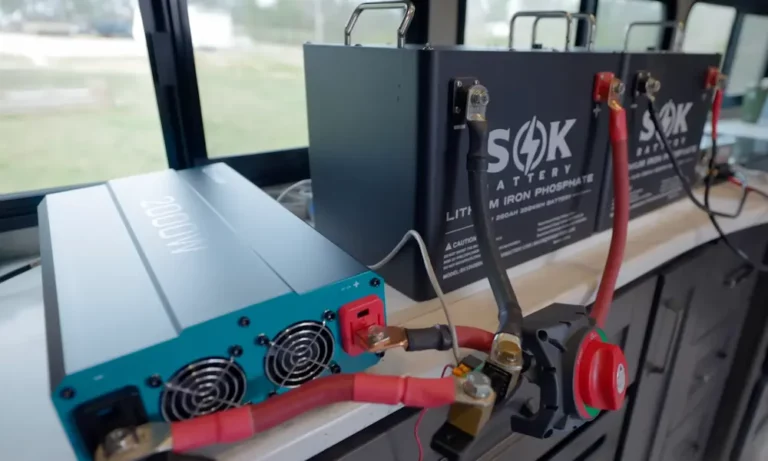
Is your RV adventure coming to a halt because your battery won’t charge? You’re facing one of the most common problems RV owners encounter. This comprehensive guide will walk you through every possible cause and solution for when your RV battery isn’t charging, helping you get back on the road quickly and with confidence.
Understanding Your RV Battery System
RVs typically use a dual-battery setup that powers different aspects of your traveling home. Understanding this system is your first step toward solving charging problems.
Types of RV Batteries and Their Functions
Your RV likely has two main battery types:
- Starting (Chassis) Battery: Powers the engine and driving functions
- House (Deep Cycle) Battery: Powers interior lights, appliances, and systems
Each battery type has different charging requirements:
| Battery Type | Optimal Charging Voltage | Maximum Discharge | Typical Lifespan |
|---|---|---|---|
| Lead-Acid | 13.6-14.4V | 50% | 3-5 years |
| AGM | 14.2-14.4V | 50% | 4-7 years |
| Lithium | 14.6V | 90% | 8-10+ years |
How RV Batteries Get Charged
Your RV battery can receive power from multiple charging sources:
- Shore Power: When plugged into campground electricity
- Alternator: While driving your RV
- Solar Panels: When parked in sunny locations
- Generators: When boondocking without hookups
Each source feeds into your converter or charging system, which transforms the power into the proper voltage for your batteries.
Common Reasons Why Your RV Battery Isn’t Charging
Let’s examine the most frequent causes of charging failures in RVs.
Converter Issues
The converter transforms 120V AC shore power into 12V DC for battery charging. When it fails, your batteries won’t charge while plugged in.
Signs of converter problems include:
- Interior lights dimming when plugged in
- No voltage increase when connected to shore power
- Unusual noises from the converter unit
- Converter output below 13.5V
Battery Connection Problems
Poor connections are often the culprit behind charging failures. Check for:
- Corroded Terminals: White, blue, or green powder around connections
- Loose Connections: Terminals that wiggle or move
- Damaged Cables: Cracked insulation or visible wire damage
Battery terminal corrosion creates resistance that prevents proper charging. This is especially common in humid environments or with older batteries.
Blown Fuses and Tripped Breakers
Your RV’s electrical system has multiple protective devices that can interrupt charging:
- Main converter fuse
- Battery connection fuses
- Circuit breakers at power pedestal
- Internal RV breaker panel
Always check fuses and breakers first as they’re the easiest and least expensive fix.
Battery Disconnect Switch Position
Many RVs feature a battery disconnect switch that can prevent charging when in the wrong position. This switch is designed to prevent battery drain during storage but must be in the “connect” position for charging to occur.
Check your RV battery disconnect switch location in your owner’s manual—it’s often near the battery compartment or main control panel.
Faulty Alternator or Charging While Driving
If your battery only fails to charge while driving, your alternator may be the problem. Modern RVs often use temperature-compensating alternators that reduce voltage output as the engine warms up, which can limit house battery charging.
Alternator issues include:
- Output below 13.5V while running
- Charging only when cold
- Warning lights on dashboard
Dead or Damaged Batteries
Batteries have finite lifespans and will eventually lose their ability to hold a charge. Signs of battery failure include:
- Won’t maintain voltage under load
- Excessive heat during charging
- Physical damage or bulging
- Age beyond 3-5 years for lead-acid batteries
Batteries suffering from sulfation (a buildup of lead sulfate crystals) may appear to charge but quickly lose power when used.
How to Test Your RV Battery and Charging System
Follow this step-by-step approach to diagnose your charging problem.
Essential Tools You’ll Need
Before starting, gather:
- Digital multimeter
- Wire brush for cleaning terminals
- Basic hand tools (wrenches, screwdrivers)
- Safety glasses and gloves
- Flashlight
Testing Battery Voltage
Start by checking your battery’s state of charge:
- Turn off all power sources and loads
- Let the battery rest 2-3 hours
- Use a multimeter set to DC volts
- Test across battery terminals
Interpret your reading:
- 12.6-12.8V = 100% charged
- 12.4V = 75% charged
- 12.2V = 50% charged
- Below 12.0V = critically discharged
Testing the Converter
To test your converter’s charging function:
- Connect to shore power
- Set multimeter to DC volts
- Measure voltage at battery terminals
- Voltage should rise to 13.6-14.4V
If voltage doesn’t increase above 13.5V, your converter may be failing.
Checking for Voltage Drop
Voltage drop tests help identify connection problems:
- Set multimeter to DC volts
- Connect to shore power
- Measure voltage at converter output
- Measure voltage at battery terminals
- Difference should be less than 0.5V
A larger voltage drop indicates resistance in the charging path, often from poor connections.
Testing Solar Charging Systems
If your RV has solar panels, verify they’re working:
- Position panels in direct sunlight
- Disconnect from other power sources
- Measure solar panel output (should be 18-22V for 12V panels)
- Check charge controller output (should match battery charging requirements)
Solar systems typically require specialized testing due to their variable output and charge controllers.
How to Fix RV Battery Charging Problems
Once you’ve diagnosed the issue, here are the solutions.
Cleaning Battery Connections
To clean corroded terminals:
- Disconnect negative terminal first
- Mix baking soda with water to make a paste
- Apply paste to corroded areas
- Scrub with a wire brush
- Rinse with clean water and dry completely
- Apply terminal protector spray
- Reconnect terminals (positive first)
This simple maintenance can solve many charging issues.
Replacing Fuses and Resetting Breakers
When replacing blown fuses:
- Identify the blown fuse (look for broken filament)
- Replace with same amperage rating
- Never substitute with higher-rated fuses
- Check for underlying causes if fuses blow repeatedly
For breakers, simply reset by pressing the button or moving the switch to the reset position.
Repairing or Replacing the Converter
If your converter has failed, you have two options:
- Repair: Some units have replaceable components like cooling fans or circuit boards
- Replace: Often more cost-effective to install a new converter
Modern replacement converters often feature improved multi-stage charging that extends battery life.
Fixing Alternator Charging Issues
For alternator charging problems:
- Check engine belt tension
- Inspect wiring between alternator and battery
- Test alternator output while engine is running
- Consider adding a DC-DC charger for improved house battery charging
Many RVs benefit from aftermarket charging systems that optimize alternator power for house batteries.
Addressing Solar Charging Problems
Solar charging issues typically involve:
- Panel positioning and shading
- Dirty panel surfaces
- Charge controller settings
- Wiring connections
Ensure panels receive direct sunlight, are clean, and have proper controller settings for your battery type.
When to Replace Your RV Battery
Sometimes replacement is the only solution. Consider replacing your battery when:
- It’s beyond its expected lifespan (3-5 years for lead-acid)
- It fails load testing despite showing good voltage
- Physical damage is present
- It won’t hold charge after proper conditioning
When replacing, consider upgrading to newer battery technologies like AGM or lithium that offer improved performance.
Preventing Future RV Battery Charging Problems
Adopt these practices to prevent future charging issues:
Regular Maintenance Schedule
Implement a monthly maintenance routine:
- Check and clean battery terminals
- Inspect all charging system connections
- Verify proper electrolyte levels (flooded batteries only)
- Test voltage and state of charge
This preventive approach extends battery life and catches problems early.
Proper Battery Charging Practices
Follow these charging best practices:
- Avoid deep discharges below 50% for lead-acid batteries
- Use appropriate charging voltage for your battery type
- Allow full charging cycles occasionally
- Don’t overcharge batteries
Storage Considerations
When storing your RV:
- Fully charge batteries before storage
- Disconnect batteries or use disconnect switch
- Apply trickle charge during long-term storage
- Store in moderate temperatures when possible
Proper storage prevents sulfation and extends battery life.
Diagnosing RV Battery Issues While on the Road
What if charging problems occur during your trip? Here’s a quick roadside troubleshooting guide:
- Check for simple issues first (connections, fuses, breakers)
- Use a multimeter to verify battery voltage
- Try alternate charging sources if available
- Look for visible damage to wiring or components
- If shore power isn’t working, try the generator or driving to charge
Keep basic tools and spare fuses in your RV for emergency repairs.
Interpreting Battery Voltage Readings
Understanding voltage readings helps diagnose problems:
| Voltage (12V System) | State of Charge | Action Required |
|---|---|---|
| 12.6-12.8V | 100% | None, fully charged |
| 12.4V | 75% | Charge soon |
| 12.2V | 50% | Charge immediately |
| 12.0V | 25% | Critical – charge now |
| Below 11.8V | Discharged | Possible damage occurred |
Voltage under load provides more accurate information than resting voltage. A healthy battery should maintain above 11.5V under normal loads.
Advanced Charging System Troubleshooting
For persistent charging problems, try these advanced techniques:
- Load Testing: Applies controlled current draw to test battery capacity
- Individual Component Isolation: Test each charging source independently
- Current Measurement: Use an ammeter to verify charging current
- Parasitic Draw Testing: Check for components draining the battery when off
These methods help identify intermittent or complex issues that basic testing might miss.
Remember – most RV battery charging problems stem from simple issues like connections, settings, or aging components. By following this systematic troubleshooting approach, you’ll solve your charging problems and enjoy more reliable power during your RV adventures.