Cold showers aren’t fun, especially when you’re camping. If your RV hot water heater isn’t working, you’re probably wondering what went wrong and how to fix it fast. The good news? Most RV water heater problems have simple solutions you can tackle yourself before calling in the pros.
Common Causes of RV Hot Water Heater Failures
No Power to Your Water Heater
One of the most common reasons your RV water heater isn’t heating is simply a lack of power. Before panicking about major repairs, check these basics:
- Is your RV connected to shore power?
- Has a circuit breaker tripped?
- Are both interior and exterior water heater switches turned on?
- Is your RV battery charged (if boondocking)?
For electric water heaters, make sure your RV is plugged in properly with an undamaged power cord. Even a loose connection can prevent your water heater from operating.
Out of Propane
If your RV uses a propane water heater, check your fuel supply first. Running out of propane is incredibly common and easy to fix. Verify:
- Do your propane tanks have fuel?
- Is the valve on your propane tank open?
- If you have multiple tanks, is the selector valve pointing to a tank with fuel?
After replacing or refilling propane tanks, you’ll often need to purge air from the lines before your water heater will work properly.
Bypass Valve in Wrong Position
Many RVers don’t realize their bypass valve position can prevent hot water from reaching their faucets. These valves are typically used during winterization but sometimes get left in the wrong position.
Most RVs have bypass valves located near the back of the water heater. When properly set for normal use, water should flow through (not around) your water heater.
Step-by-Step Troubleshooting Guide
1. Check Your Power Source
For Electric Water Heaters:
- Confirm shore power is connected securely
- Check your RV’s breaker panel for tripped circuits
- Verify both internal and external water heater switches are on
- If boondocking, ensure your battery has sufficient charge
For Propane Water Heaters:
- Check propane level in tanks
- Make sure tank valves are open
- Verify gas regulator is working properly
2. Reset Safety Switches
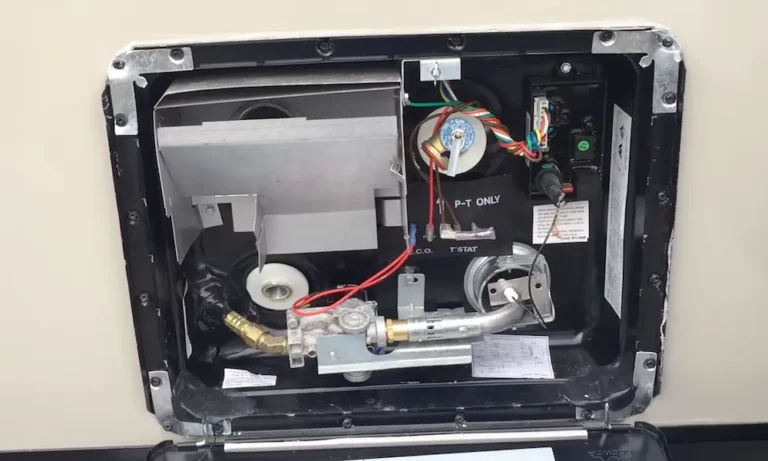
RV water heaters have several safety features that can shut down operation. Two important ones to check:
The ECO (Emergency Cut Off) Switch
This safety feature cuts power when water gets too hot. To reset it:
- Locate the red reset button (usually near the thermostat)
- Press firmly to reset
- If it trips again immediately, you likely have a faulty thermostat or heating element
DSI Fault (Direct Spark Ignition)
If your control panel shows a DSI fault light, your ignition system tried to light three times without success. Common causes include:
- Empty propane tanks
- Air in the propane lines
- Dirty burner assembly
- Faulty igniter
To clear a DSI fault:
- Reset the system by turning the water heater off for 30 seconds
- Check propane supply and connections
- Try turning it back on
3. Clear Air from Propane Lines
After changing propane tanks, air often gets trapped in the lines, preventing your water heater from lighting. To purge air from the system:
- Turn on your stove burners for a minute or two
- Once stove burns steadily, try your water heater again
- It may take several attempts before all air is purged
4. Test Heating Components
If basic troubleshooting doesn’t work, you may need to test individual components:
Testing Electric Heating Element:
You’ll need a multimeter for this test. With power disconnected:
- Remove access panel and disconnect wires
- Test resistance across the heating element terminals
- A reading between 9.6 and 11.5 ohms indicates a good element
- Higher readings (or infinity) mean a bad element needs replacement
Checking Thermostats:
RV water heaters typically have two thermostats:
- Operating thermostat (set around 140°F)
- ECO thermostat (safety cutoff at 180°F)
A faulty thermostat can prevent heating or cause overheating. Testing requires a multimeter and basic electrical knowledge.
5. Fix Bypass Valve Configuration
Different RVs have different bypass systems. Here’s how to set them correctly:
Three-Valve System:
- Valves on hot and cold water lines: Turn perpendicular to line (open)
- Bypass valve: Turn parallel to line (closed)
Two-Valve System:
- Both valves should be parallel to the water lines
One-Valve System:
- Turn valve perpendicular to the line for normal operation
Comparison of Common RV Hot Water Heater Issues
| Problem | Symptoms | Likely Causes | DIY Fix |
|---|---|---|---|
| No hot water at all | Water runs cold from all taps | Power issues, propane empty, bypass valve, tripped ECO | Check power/propane, reset ECO, check bypass valve |
| Water lukewarm | Some heat but not hot enough | Partially open bypass valve, sediment buildup, faulty thermostat | Close bypass valve, flush tank, check thermostat |
| DSI fault light | Control panel shows error, no heating | Empty propane, air in lines, dirty burner | Check propane, purge air, clean burner assembly |
| Repeatedly trips ECO | Water heater works briefly then cuts out | Faulty thermostat, sediment buildup, defective ECO | Replace thermostat, flush tank, replace ECO switch |
Preventive Maintenance Tips
Regular maintenance prevents most hot water heater problems:
Flush Your Tank Annually
Sediment buildup is your water heater’s enemy. To flush the tank:
- Turn off power/gas and let water cool
- Remove drain plug and anode rod
- Open pressure relief valve
- Connect hose to drain or use bucket
- Flush until water runs clear
- Replace anode rod with new one if corroded
Check Bypass Valves Seasonally
Every camping season, verify your bypass valves are positioned correctly. This simple check prevents frustrating shower experiences and unnecessary service calls.
Inspect the Burner Assembly
For propane heaters, inspect and clean the burner assembly annually:
- Turn off gas and disconnect power
- Remove burner access panel
- Blow out dust and debris with compressed air
- Check for spider webs (common problem!)
- Inspect igniter electrode for damage
Test Safety Valves
Your pressure relief valve is a critical safety component. Test it by:
- Lifting the lever slightly
- Verify water releases and valve reseats properly
- If it leaks after testing, replacement may be needed
Signs You Need Professional Help
While many RV water heater problems are DIY-friendly, certain issues require professional attention:
• Repeated tripping of the ECO switch despite reset attempts
• Water leaking from tank (not relief valve)
• Gas smell around water heater
• Electrical problems beyond basic connections
• Control board failures
• Water heater making unusual noises
If you’re uncomfortable working with propane or electrical systems, it’s always safer to consult an RV service technician. The cost of service is minimal compared to potential safety risks.
RV water heater problems are frustrating but often fixable without professional help. By following this troubleshooting guide, you’ll be back to hot showers in no time – and you’ll have saved yourself a potentially expensive service call in the process.