Is your RV shower suddenly ice-cold? Nothing ruins a camping trip faster than a malfunctioning water heater. Whether you’re dealing with no hot water at all or just lukewarm temperatures, most RV water heater problems have straightforward solutions you can tackle yourself. I’ve helped hundreds of RVers diagnose and fix their water heater issues, and I’m sharing everything you need to know to get your hot water flowing again.
Understanding Your RV Water Heater Type
Before jumping into troubleshooting, you need to know what type of water heater you’re working with.
Tank-Style Water Heaters
Most RVs come equipped with traditional tank-style water heaters that hold 6-12 gallons of water. These units typically run on:
- Propane gas
- Electric (120V AC)
- Dual-fuel (both propane and electric)
The two most common manufacturers are Suburban (with steel tanks featuring porcelain lining) and Atwood/Dometic (with lightweight aluminum tanks). The main difference? Suburban models require anode rods for corrosion protection, while Atwood’s aluminum tanks don’t.
Tankless Water Heaters
Newer RVs might feature tankless (on-demand) water heaters. These units heat water as it flows through, providing endless hot water as long as you have:
- Sufficient water pressure
- Adequate propane or electricity
- Proper flow rates
While tankless systems offer efficiency advantages, they require specific flow rates and water pressure to function properly.
Quick Fixes to Try First
Before diving into complex troubleshooting, try these simple fixes that solve most RV water heater problems:
1. Check Your Power Sources
For electric water heaters:
- Is the 120V breaker switched on?
- Is shore power connected properly?
- Is your generator running (if using one)?
For propane water heaters:
- Are your propane tanks turned on?
- Do you have sufficient propane?
- Are other propane appliances working?
2. Reset the System
Many water heater issues resolve with a simple reset:
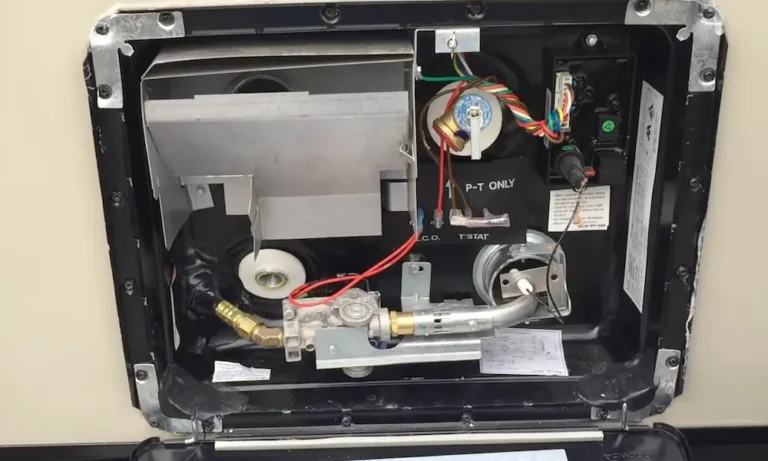
- Locate the water heater access panel on your RV’s exterior
- Find the ECO (Energy Cut-Off) reset button(s)
- Press and hold for several seconds
- Try operating the water heater again
This reset often solves unexpected shutdowns caused by safety features engaging.
3. Check Water Heater Bypass Valves
During winterization, bypass valves redirect water around your water heater. If these valves are in the wrong position, you’ll get no hot water or lukewarm water.
Locate your bypass valves (usually near the water heater or under your RV) and ensure they’re in the normal operating position, not the bypass position.
No Hot Water at All? Try These Solutions
If your water heater isn’t producing any hot water, work through these common causes:
Propane Ignition Problems
If you hear clicking but no ignition when your propane heater tries to start:
- Check for air in the propane lines: Run another propane appliance first to purge air
- Inspect the burner tube: Spiders and insects commonly build nests in burner tubes, blocking gas flow
- Clean the burner assembly: Use compressed air to remove debris
Electric Element Failures
For electric water heaters not heating:
- Turn off power to the water heater
- Access the heating element (usually behind an exterior panel)
- Test the element with a multimeter set to ohms
- A properly functioning element should read between 10-13 ohms
- If you get no reading or infinity, the element needs replacement
| Water Heater Type | Normal Ohm Reading | What It Means If Outside Range |
|---|---|---|
| 6-gallon electric | 10-13 ohms | Element needs replacement |
| 10-gallon electric | 9.6-10.5 ohms | Element needs replacement |
Thermostat Issues
If your element tests good but you still have no hot water:
- Test the thermostat with a multimeter
- With the temperature dial turned up, the thermostat should show continuity
- No continuity means the thermostat needs replacement
Getting Only Lukewarm Water?
If your water heater runs but doesn’t get hot enough, consider these issues:
Sediment Buildup
Over time, minerals accumulate in your water heater tank, reducing heating efficiency:
- Turn off the water heater and let it cool completely
- Drain the tank using the drain plug
- Flush with clean water using a tank rinse wand
- Refill and restart
Bypass Valve Partially Open
A partially open bypass valve lets cold water mix with hot:
- Locate all bypass valves
- Ensure they’re fully in the “normal” position, not partially open
- Verify water flow direction through the system
Thermostat Set Too Low
Check the temperature setting on your water heater thermostat:
- Locate the temperature control (often behind the exterior access panel)
- Adjust to a higher setting
- Wait 30-60 minutes for the water to heat
Tankless Water Heater Specific Issues
Tankless systems have their own unique problems:
Flow Rate Problems
Tankless heaters need minimum water flow to activate:
- Check water pump pressure (should be 40-50 PSI)
- Clean any intake filters that could restrict flow
- Ensure city water pressure isn’t too low
Cold Water Sandwich Effect
This happens when you get hot water, then a burst of cold, then hot again:
- This is normal for tankless units as they detect flow and start heating
- Avoid adjusting water temperature during use
- Use single-handle faucets to maintain consistent flow
Scale Buildup
Tankless units are especially vulnerable to mineral buildup:
- Descale regularly (2-4 times per year depending on water hardness)
- Use vinegar solution or commercial descaler
- Follow manufacturer instructions for proper descaling procedure
Preventative Maintenance to Avoid Future Problems
Keep your RV water heater running reliably with these maintenance tasks:
Monthly Checks
- Inspect the exterior for spider webs, debris, or signs of damage
- Listen for normal operation during startup
- Check connections for leaks
Annual Maintenance
- Flush the tank: Remove sediment that causes inefficiency
- Check/replace anode rod: For Suburban heaters, replace when 75% consumed
- Test pressure relief valve: Lift lever briefly to ensure proper operation
- Inspect burner assembly: Clean any debris or corrosion
| Maintenance Task | Suburban Heaters | Atwood/Dometic Heaters |
|---|---|---|
| Anode rod inspection | Required annually | Not needed (aluminum tank) |
| Tank flushing | Required annually | Required annually |
| Burner cleaning | Required annually | Required annually |
Winterization and Storage
Proper winterization prevents costly freeze damage:
- Turn off power and propane to the water heater
- Drain tank completely
- For Suburban models, remove and inspect the anode rod
- For all models, leave the drain plug out during storage
- Set bypass valves to “bypass” before adding antifreeze to plumbing system
When de-winterizing in spring:
- Replace drain plug or anode rod with proper thread sealant
- Return bypass valves to normal position
- Fill tank completely before turning on
When to Call a Professional
While many RV water heater issues are DIY-friendly, some require professional help:
- Gas leaks: If you smell propane, turn off the gas supply and contact a professional immediately
- Control board failures: Electronic control issues often require specialized diagnostics
- Tank leaks: Internal tank damage usually means replacement is needed
- Persistent ignition failures: After basic troubleshooting, recurring failures suggest deeper issues
Professional RV technicians have specialized tools and knowledge to safely diagnose complex problems.
The Bottom Line on RV Water Heater Repair
Most RV water heater issues come down to a handful of common problems:
- Power supply issues
- Propane delivery problems
- Sediment buildup
- Tripped safety switches
- Improper bypass valve settings
By systematically working through the troubleshooting steps in this guide, you can solve most water heater problems without an expensive service call. Regular maintenance—especially annual flushing and cleaning—will keep your system running efficiently for years of comfortable camping.