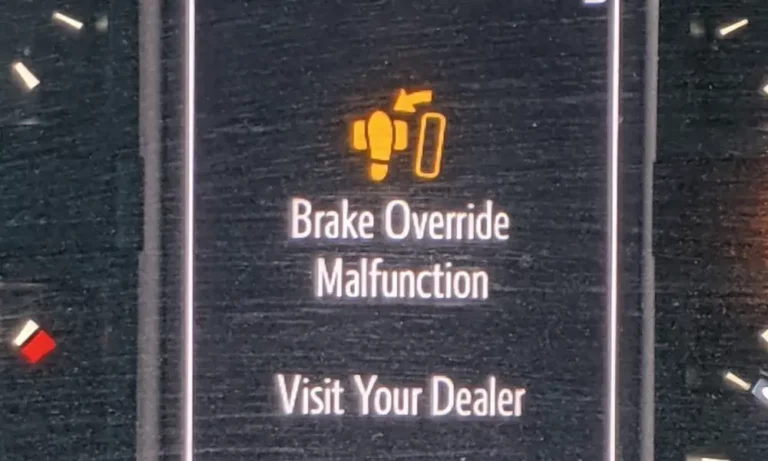
You’ve seen it flash on your dashboard – “Brake Override Malfunction” – followed by that sinking feeling in your stomach. Your Toyota suddenly feels sluggish, barely crawling along at 5-10 mph, or worse, refusing to start at all. If you’re dealing with this frustrating issue, you’re about to discover what causes it and how to fix it without breaking the bank.
What Is the Toyota Brake Override System?
The brake override system in your Toyota is a safety feature designed to prevent unintended acceleration. When functioning correctly, it automatically reduces engine power when both the accelerator and brake pedals are pressed simultaneously.
This technology was implemented following Toyota’s widely publicized unintended acceleration issues between 2009 and 2011, which affected approximately 8 million vehicles worldwide. The National Highway Traffic Safety Administration (NHTSA) investigations ultimately led to requirements for brake override systems across the automotive industry.
How the System Works
The brake override system kicks in only when specific conditions are met:
- The throttle is opened more than one-third
- Vehicle speed exceeds 5 mph
- Brakes are firmly applied
- Both pedals are pressed for at least half a second
When these conditions exist, the system cuts fuel delivery to the engine, reducing speed while maintaining enough power for steering control.
Importantly, the system won’t activate if you press the brake before the accelerator, allowing for legitimate driving scenarios like hill starts. It also remains inactive in 4WD vehicles operating in low range, recognizing the need for simultaneous pedal application in off-road conditions.
Common Symptoms of Toyota Brake Override Malfunction
When your Toyota’s brake override system malfunctions, several unmistakable symptoms typically appear:
Dashboard Warning Messages
The most obvious sign is a dashboard message stating “Brake Override Malfunction” or “Visit Your Dealer.” This warning rarely appears alone – you’ll likely see multiple warning lights illuminated simultaneously, creating what mechanics call a “Christmas tree” effect on your dashboard.
Reduced Power (Limp Mode)
Your vehicle will enter “limp-home mode,” severely restricting performance to speeds as low as 5-10 mph. This safety measure prevents normal driving until the issue is resolved, which can leave you stranded in potentially dangerous locations.
Starting Problems
In more severe cases, the malfunction may prevent your vehicle from starting entirely. You might see messages like “not ready to start” when attempting to start your Toyota.
What Causes Toyota Brake Override Malfunctions?
Understanding the causes can help you quickly diagnose and fix the problem:
1. Blown STOP Fuse
The most common cause is a blown 10-amp STOP fuse in the engine compartment fuse box. This fuse protects the brake light circuit, and when it fails, the brake override system can’t properly detect brake pedal application. The STOP fuse typically blows due to electrical shorts in the tail light assembly.
2. Aftermarket Tail Light Issues
Many Toyota owners report brake override warnings appearing after installing LED tail lights, particularly on Tacoma models. These problems often stem from:
- Incorrect wiring
- Missing bulbs in new assemblies
- Faulty resistors creating short circuits
The electrical inconsistencies confuse the brake override system’s monitoring circuits, triggering false malfunction warnings.
3. Sensor and Wiring Problems
Brake pedal position sensors and associated wiring can develop faults that trigger malfunctions. These failures typically result from:
- Normal wear and tear
- Water damage
- Physical damage to connections
- Environmental factors (sand, dirt, moisture)
Beach driving or off-road use often introduces contaminants into electrical connections, causing resistance changes that affect sensor readings.
4. Control Module Communication Errors
Modern Toyotas rely on communication between multiple electronic control modules. When these modules lose communication or encounter software errors, brake override malfunctions can occur. These issues are particularly common in 2016-2017 Tacoma models.
5. Battery-Related Issues
Voltage drops or complete power loss can disrupt electronic control module operation. When your vehicle’s 12-volt electrical system experiences problems, control modules may lose calibration settings or encounter communication errors that persist even after power is restored.
Toyota Models Most Affected by Brake Override Malfunctions
While any Toyota with the brake override system can experience malfunctions, certain models have reported higher incident rates:
| Model | Years | Common Issues |
|---|---|---|
| Tacoma (3rd gen) | 2016-2023 | Electronic control module failures, tail light electrical issues |
| RAV4 | 2013-2021 | Brake sensor malfunctions, electrical system faults |
| Tundra | 2014-2022 | STOP fuse failures, especially with aftermarket lighting |
| Camry | 2007-2022 | Sensor failures, control module communication errors |
| 4Runner | 2010-2022 | Electrical shorts after off-road use |
The brake override system was initially implemented on select models between 2007-2010 but became standard on all Toyota vehicles by the 2011 model year.
How to Fix Toyota Brake Override Malfunction
Before paying for expensive dealer repairs, try these solutions that have worked for many Toyota owners:
Check and Replace the STOP Fuse
The quickest and most common fix is replacing the blown STOP fuse:
- Locate your engine compartment fuse box (usually near the battery)
- Find the 10-amp STOP fuse (check your owner’s manual for exact location)
- Inspect the fuse – a broken metal strip inside indicates it’s blown
- Replace with an identical 10-amp fuse
- Start your vehicle to see if the warning is gone
This simple fix resolves a significant percentage of brake override malfunctions and costs less than $5.
Perform an Electronic Reset
If the fuse is good, try resetting the system:
Method 1: Six-Cycle Reset
- Turn ignition to ON position (don’t start the engine)
- Wait 5-10 seconds
- Turn ignition OFF
- Repeat steps 1-3 six complete times
- Start the engine normally
Method 2: Battery Disconnect Reset
- Disconnect the negative terminal of your 12-volt battery
- Wait 5-7 minutes
- Reconnect the battery
- Start the engine normally
These reset procedures can clear temporary system glitches and restore normal operation without any parts replacement.
Fix Electrical Shorts
When fuses blow repeatedly, you need to find the underlying electrical short:
- Inspect all tail light assemblies for water intrusion or damage
- Check trailer wiring connections if applicable
- Look for exposed or damaged wires near the brake lights
- Clean electrical connections and apply dielectric grease
- If you have aftermarket tail lights, ensure they’re properly installed with appropriate resistors
Many Toyota owners report success after thoroughly cleaning electrical connections, particularly after beach driving or off-road adventures.
Check Brake Light Operation
Properly functioning brake lights are essential for the brake override system:
- Have someone watch your brake lights while you press the brake pedal
- Ensure all brake lights illuminate properly
- Replace any burnt-out bulbs
- Check for moisture in tail light assemblies
- Verify that brake light switches are properly adjusted
Even a single non-functioning brake light can trigger the brake override malfunction warning.
Advanced Diagnostic and Repair Procedures
When simple fixes don’t work, more advanced diagnosis may be needed:
Scan for Diagnostic Trouble Codes
Using an OBD-II scanner, check for specific codes:
- P0121: Indicates “Throttle/Pedal Position Sensor/Switch ‘A’ Circuit Range/Performance” problems
- U0101: Lost communication with TCM (Transmission Control Module)
- C1513: Brake switch circuit malfunction
These codes provide valuable information about which specific components or circuits are experiencing faults.
Inspect Sensor Connections
- Locate the brake pedal position sensor (typically near the brake pedal assembly)
- Check all electrical connections for corrosion or damage
- Clean connections with electrical contact cleaner
- Ensure all wiring harnesses are properly secured
Loose connections can cause intermittent problems that are difficult to diagnose.
Software Updates
Toyota has released software updates for certain models to address brake override system glitches. Check with your dealer to see if any updates are available for your specific model and year.
Prevention Tips for Toyota Owners
Prevent brake override malfunctions with these maintenance practices:
Regular Electrical System Maintenance
- Periodically inspect tail light assemblies for water intrusion
- Apply dielectric grease to electrical connections, particularly if you drive in wet or sandy conditions
- Check for corrosion on battery terminals and clean as needed
- Keep battery connections tight and secure
Be Cautious with Modifications
- When installing aftermarket lighting, use proper load resistors
- Have electrical modifications performed by qualified technicians
- Avoid aftermarket “pedal commander” devices that can interfere with the brake override system
- Use factory-equivalent parts when replacing electrical components
Understand Warning Signs
Be alert to early warning signs of developing issues:
- Intermittent warning lights
- Unusual brake pedal behavior
- Electronic system glitches
- Brake lights functioning inconsistently
Addressing these early symptoms can prevent complete system failures that result in vehicle immobilization.
The Toyota Brake Override System: Safety Feature or Design Flaw?
Despite the frustrations caused by malfunctions, the brake override system serves an important safety purpose. When working correctly, it provides a critical fail-safe against unintended acceleration scenarios.
The system’s design is inherently complex, involving multiple sensors, control modules, and software algorithms. This complexity creates multiple potential failure points, which is why the system sometimes triggers false warnings.
What’s important to remember is that many brake override malfunctions don’t indicate an actual brake system problem but rather an electronic monitoring issue. Your vehicle’s mechanical braking system typically remains fully functional even when the brake override system reports a malfunction.
Toyota’s implementation of this technology helped establish an industry standard now present in most modern vehicles. While the system occasionally causes headaches for owners, its safety benefits generally outweigh the inconvenience of occasional malfunctions—especially considering that many fixes are simple and inexpensive when you know what to look for.
With the diagnostic steps and solutions outlined in this guide, you’re now equipped to handle Toyota brake override malfunctions confidently and get back on the road quickly without unnecessary dealer expenses.