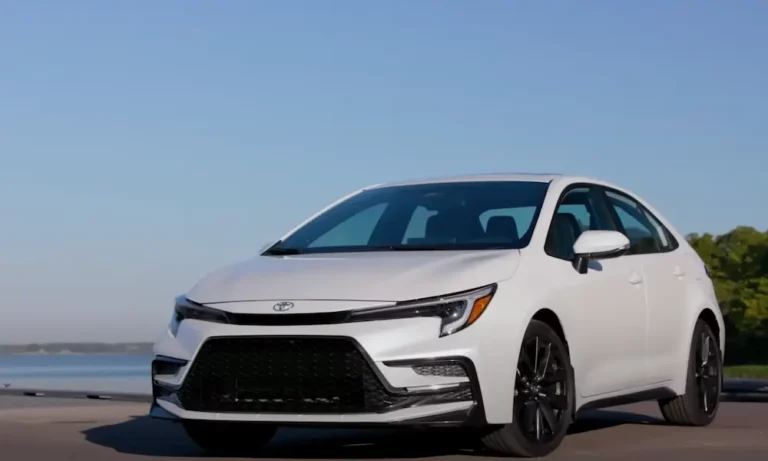
Feeling hot and bothered because your Toyota Corolla’s AC has stopped blowing cold air? You’re facing one of the most frustrating car problems, especially during warm weather. The good news is that most Toyota Corolla air conditioning issues have clear causes and solutions. This guide walks you through why your AC might be failing and what you can do about it.
How Your Toyota Corolla’s AC System Works
Your car’s air conditioning doesn’t actually create cold air—it removes heat from inside your car and transfers it outside. Pretty clever, right?
The process works like this:
- The compressor (the heart of your AC) pressurizes refrigerant gas
- This hot, high-pressure gas flows to the condenser at the front of your car, where it cools down and becomes liquid
- The liquid passes through an expansion valve where it rapidly depressurizes and becomes super cold
- This cold refrigerant travels to the evaporator inside your dashboard
- Your blower motor pushes cabin air across the cold evaporator, cooling the air that blows into your cabin
Each component depends on the others to work properly. If one part fails, the whole system suffers—which is why diagnosing AC problems requires a systematic approach.
Common Reasons Your Toyota Corolla’s AC Isn’t Working
1. Low Refrigerant (The Most Common Culprit)
If your Corolla’s AC is blowing warm air, you’re probably low on refrigerant. Since the AC system is sealed, low refrigerant almost always means you have a leak somewhere.
Signs of low refrigerant:
- Warm air from vents when AC is on max
- AC works sometimes but not consistently
- AC starts cold then gradually gets warmer
What to do: While DIY recharge kits are available for $40-60, they only mask the problem temporarily. The National Highway Traffic Safety Administration recommends having a professional find and fix the leak, then properly recharge the system. A proper AC recharge costs between $226-$340.
2. Failed AC Compressor
The compressor is the workhorse of your Corolla’s AC system, and unfortunately, it’s a common failure point in these vehicles.
Signs of compressor problems:
- Loud grinding or squealing when AC is on
- No cold air at all
- Compressor doesn’t engage (no “click” when you turn on AC)
- AC works at highway speeds but not at idle (common in 2014 models)
What to do: Compressor replacement isn’t a DIY job. It requires special tools and knowledge to properly evacuate the system and recharge it. Expect to pay between $896-$1,221 for professional replacement.
3. Damaged Condenser
The condenser sits at the front of your car and is vulnerable to road debris damage, especially in 2005 Corollas that lack protective grilles.
Signs of condenser issues:
- AC works poorly or intermittently
- Visible damage to front of condenser
- Refrigerant leaks
What to do: A condenser replacement costs between $604-$921. It’s another job best left to professionals due to the need to properly handle refrigerant.
4. Electrical Problems
Toyota Corollas can experience various electrical issues that prevent the AC from working properly.
Signs of electrical problems:
- AC doesn’t turn on at all
- No blower operation
- Strange behavior from climate controls
What to do: Check your fuses first—particularly those labeled “AC,” “AC MG,” or “HTR” in your fuse box. This simple check might save you hundreds in repair costs. If fuses are good, you’ll need diagnostic equipment to trace electrical problems.
5. Clogged Cabin Air Filter
This easy-to-fix issue can dramatically affect your AC performance in a Toyota Corolla.
Signs of a clogged filter:
- Weak airflow from vents
- AC doesn’t seem cold enough
- Musty smell from vents
What to do: This is a great DIY job! The cabin air filter is typically located behind the glove box. In most Corollas, you can:
- Open the glove box
- Detach the support arm
- Press in the sides to fully lower the glove box
- Remove the filter cover
- Replace the filter (about $15-20 at auto parts stores)
Toyota Corolla AC Issue Costs
| Repair Service | Parts Cost | Labor Cost | Total Cost |
|---|---|---|---|
| AC Recharge (Professional) | $56-$89 | $171-$251 | $226-$340 |
| Compressor Replacement | $658-$872 | $237-$348 | $896-$1,221 |
| Condenser Replacement | $304-$480 | $300-$441 | $604-$921 |
| Evaporator Replacement | $281-$423 | $735-$1,079 | $1,016-$1,501 |
| Cabin Air Filter | $15-$25 | DIY | $15-$25 |
Known Toyota Corolla AC Issues by Model Year
2014 Corolla: Poor Cooling at Idle
The 2014 Toyota Corolla has a known AC compressor issue that causes poor cooling specifically when the car is idling. Toyota issued a technical service bulletin (TSB SB-10061340-2273) addressing this problem. If you have this issue, mention this TSB to your mechanic.
2005 Corolla: Unprotected Condenser
The 2005 Corolla lacks proper protection for the condenser, making it vulnerable to damage from road debris. Many owners report leaks and failures.
Multiple Model Years: Clogged Evaporator Drain
Many Corollas develop clogged evaporator drains, leading to water on the passenger-side floor. If you notice dampness in this area, the drain likely needs clearing.
DIY AC Checks You Can Perform
Before heading to a shop, try these simple checks:
1. Visual Inspection
Look for obvious damage to visible AC components in the engine bay. Check if the compressor clutch engages (the center part of the compressor pulley should spin when AC is on).
2. Check and Replace Cabin Air Filter
As mentioned earlier, this simple maintenance task can dramatically improve airflow.
3. Verify Proper Fan Operation
Make sure your fans work at all speeds. If not, check the related fuses.
4. Look for Leaks
With the engine running and AC on max, look underneath your car for any drips or puddles (note: clear water from the evaporator drain is normal).
Why DIY Recharging Is Problematic
While DIY recharge kits are tempting, they can cause serious problems:
- They don’t fix the actual leak
- Overcharging is common and can damage your compressor
- Many contain “stop leak” additives that can clog components
- They can contaminate professional equipment, causing some shops to refuse service
- Refrigerant should be handled by certified professionals for environmental safety
Finding a Qualified AC Technician
When selecting a shop for your Toyota Corolla’s AC repair, look for:
- ASE certification: Specifically, look for technicians with A7 certification (Heating and Air Conditioning)
- Proper equipment: They should use modern refrigerant recovery and recharging machines
- Diagnostic approach: A good shop will diagnose the root cause rather than just “topping off” refrigerant
- Toyota experience: Shops familiar with Toyota systems will be aware of common issues and TSBs
- Reviews mentioning AC repairs: Look for specific mentions of successful AC work
Questions to Ask Your AC Technician
Be prepared with these questions:
- “Will you perform a leak test to find the source of the problem?”
- “Do you charge the system by weight rather than pressure?”
- “If my compressor has failed, will you also replace the receiver/drier and flush the system?”
- “Are you aware of any technical service bulletins for my model year Corolla’s AC system?”
- “What warranty do you offer on your AC repairs?”
How to Tell If You Need Professional Help
While some AC issues can be addressed with DIY checks, you need a pro if:
- You’ve confirmed a refrigerant leak
- The compressor isn’t engaging despite good electrical connections
- You hear unusual noises from the compressor
- You’ve tried basic troubleshooting with no improvement
- Your 2014 Corolla exhibits the exact symptoms in the TSB
Your Toyota Corolla’s air conditioning can be fixed, and now you have the knowledge to approach repairs with confidence. Whether you’re tackling simple maintenance yourself or communicating effectively with a shop, you’re on your way to restoring cool comfort to your daily drives.