Shopping for a Toyota with a CVT? Already own one and wondering how long it’ll last? The answer isn’t as simple as “Toyota equals forever.” Your transmission’s lifespan depends heavily on which CVT you’ve got under the hood—and whether you’re actually changing that “lifetime” fluid.
The Two Types of Toyota CVT (And Why It Matters)
Here’s where things get confusing. Toyota slaps the “CVT” badge on two completely different transmissions.
The e-CVT (Hybrid Models)
If you’re driving a Prius, RAV4 Hybrid, or Camry Hybrid, you’ve got an e-CVT. This isn’t really a CVT at all—it’s a planetary gearset with electric motors. No belts. No pulleys. No hydraulic nightmares.
Life expectancy: 300,000 to 400,000+ miles with basic maintenance. Taxi fleets regularly push these transmissions past half a million miles. The e-CVT typically outlasts the engine itself.
The Mechanical CVT (Gas Models)
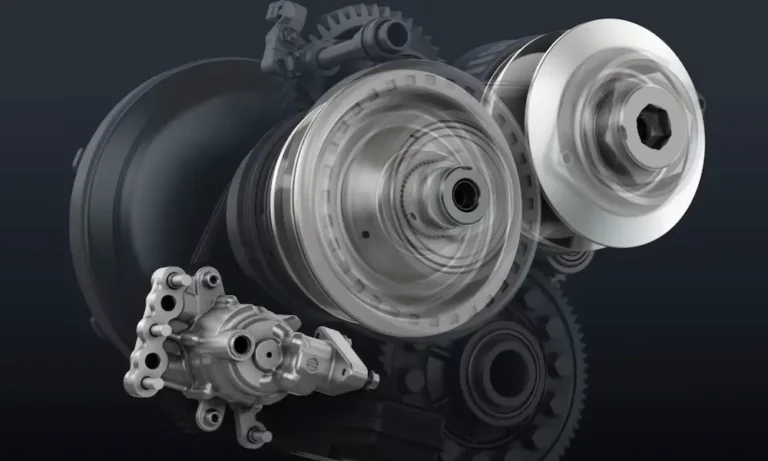
Your Corolla, C-HR, or non-hybrid RAV4? That’s a traditional belt-and-pulley CVT. Toyota builds several versions—the K313, K114, and the newer K120 “Direct Shift.”
Life expectancy: It depends. A lot.
- With proper fluid changes: 150,000 to 250,000 miles
- Without maintenance: 80,000 to 150,000 miles
- Worst case (C-HR with K114): Some fail around 80,000 miles
The Game-Changer: Direct Shift Technology
In 2019, Toyota introduced the K120 “Direct Shift-CVT” in the redesigned Corolla and RAV4. This transmission uses a physical first gear to handle launches from a stop—the most stressful moment for any CVT.
Why does this matter? Because traditional CVTs destroy themselves during launches. The belt has to grip smooth metal pulleys while fighting the inertia of a 3,000-pound car. High pressure, high heat, high wear. The Direct Shift system bypasses the belt entirely during this phase, using a mechanical gear instead.
The result: Early data shows the K120 lasting significantly longer than previous generations. Owners are hitting 200,000+ miles without major issues.
The “Lifetime Fluid” Lie
Toyota claims their CVT fluid lasts the “lifetime” of the vehicle. Here’s what they’re not telling you.
“Lifetime” means the warranty period—roughly 60,000 to 100,000 miles. After that? You’re on your own.
CVT fluid breaks down under intense shear forces. The polymers that give the fluid its slippery properties literally get chopped into smaller pieces. By 60,000 miles, the fluid has lost its protective qualities. When that happens, the steel belt starts slipping against the steel pulleys.
The shudder phenomenon: Feel a vibration during acceleration, like you’re driving over rumble strips? That’s your belt slipping. It’s also the beginning of the end. Once the pulleys get scored, you’re looking at a full replacement.
When to Actually Change Your Fluid
Don’t wait for the owner’s manual to tell you. It won’t.
Recommended interval: Every 30,000 to 60,000 miles.
This single maintenance task is the difference between a CVT that dies at 120,000 miles and one that makes it past 200,000. Multiple studies confirm that regular fluid changes dramatically extend CVT life.
Which Toyota CVT Models to Avoid
Not all Toyota CVTs are created equal. Here’s the breakdown.
High Risk: 2018-2021 C-HR
The C-HR uses the K114 transmission, which has a documented bearing defect. Owners report a loud whining noise starting around 60,000 miles. The bearings shed metal into the system, contaminating everything downstream.
Expected lifespan: 80,000 to 120,000 miles before catastrophic failure. Class action lawsuits are pending.
Moderate Risk: 2014-2017 Corolla
These models use the K313, which had a software problem that destroyed the valve body solenoids. Toyota issued a special service campaign (JSD) to fix it, but many vehicles never got the update.
If you’re buying a used 11th-gen Corolla, verify the recall was completed. Without it, the transmission often fails around 120,000 to 150,000 miles.
Best Bet: 2019+ Corolla (2.0L) or RAV4
The Direct Shift K120 transmission is proving far more durable. It’s still early, but high-mileage drivers are reporting 200,000+ trouble-free miles.
Safest Choice: Any Hybrid
The e-CVT has been bulletproof for 20+ years. If longevity is your priority, buy the hybrid.
How to Spot a Failing CVT Before It’s Too Late
CVTs don’t fail gradually like old automatics. They work fine, then they die. But there are warning signs.
The Shudder
A vibration or jerking during acceleration, especially at low speeds (10-30 mph) or going uphill. This means the belt is slipping. You’ve got maybe 5,000 miles before it’s toast—if you’re lucky.
Fix: Immediate fluid change might save it if caught instantly. If the pulleys are already scored, it’s terminal.
The Whine
A high-pitched noise that changes with vehicle speed, not engine RPM. Persists even when coasting in neutral.
This is bearing failure. It’s common in the C-HR, and there’s no cheap fix. Once the bearings start shedding metal, the entire transmission gets contaminated.
Fix: Replacement. Rebuilds rarely work because Toyota doesn’t sell individual internal parts.
The Delay
More than 1-2 seconds between shifting from Park to Drive.
This indicates low hydraulic pressure, usually from a clogged filter or failing pump. It’s an early sign that the fluid is full of debris.
Fix: Drop the pan, replace the filter, and flush the fluid. If the pump is worn, you’re looking at a rebuild.
The Fluid Compatibility Minefield
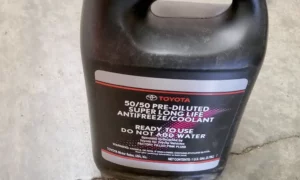
Using the wrong fluid will destroy your transmission. Toyota uses three different fluids across its lineup.
| Fluid Type | Used In | Viscosity | Warning |
|---|---|---|---|
| CVT FE (Fuel Economy) | Gas CVTs (Corolla, RAV4, C-HR) | Low | Do NOT use in hybrids |
| ATF WS (World Standard) | Hybrids (Prius, Camry Hybrid) | Medium | Do NOT use in belt CVTs |
| CVT TC | Pre-2013 CVTs | High | Obsolete for newer models |
The friction coefficient of CVT FE is calibrated to the exact clamping pressure of the K-series valve body. Using a generic “universal CVT fluid” can cause slip.
Using ATF WS in a belt CVT? You’ll get shudder within 1,000 miles.
Using CVT FE in a hybrid? The viscosity is wrong for the motor generator bearings.
Bottom line: Use exactly what Toyota specifies. It’s expensive ($120+ for 4 quarts), but it’s cheaper than a $6,000 transmission.
The No-Dipstick Problem
Toyota CVTs don’t have dipsticks. Checking the fluid requires a specific temperature range (95-113°F) and a paperclip.
Seriously.
You jump pins 4 and 13 in the OBD-II port with a paperclip, start the engine, cycle the shifter, and wait for the dash light to tell you when the temperature is correct. Only then can you check the level.
Why the precision? Because transmission fluid expands with heat. Check it at 150°F instead of 110°F, and you’ll drain too much. The transmission will run low, cavitate, and fail.
This procedure discourages DIY maintenance. Most independent shops don’t bother. You’ll end up at the dealer paying $300+ for a fluid change that costs $80 in parts.
What It Costs When It Fails
CVT replacement isn’t cheap, and rebuilds are rare.
Dealer replacement (new OEM): $6,000 to $9,000 installed
Remanufactured unit: $3,500 to $4,500 installed
Used/salvage: $1,500 to $2,500 (high failure risk)
Why so expensive? Toyota doesn’t sell individual internal components. You can’t just replace the belt or the valve body. You buy the entire assembly.
For a 2018 C-HR worth $14,000, a transmission failure is nearly a total loss.
The Legal Situation
Toyota has avoided the reputational meltdown that buried Nissan’s CVTs, but they’re facing lawsuits.
Class actions target the C-HR and 2014-2017 Corolla, alleging Toyota knew about bearing and solenoid defects but concealed them to avoid warranty claims.
Unlike Nissan, which extended warranties to 10 years/120,000 miles for millions of vehicles, Toyota fights these cases individually. That means you’re paying out-of-pocket if your CVT fails at 80,000 miles.
Important: These lawsuits concern the belt CVTs (K313, K114). Don’t confuse them with the separate lawsuits about the UA80E 8-speed automatic in the Highlander and Tacoma—that’s not a CVT.
Which Toyota CVT Can You Trust?
Here’s the reality check.
If you want 300,000+ miles: Buy a hybrid. The e-CVT is the most reliable transmission Toyota makes. It’s not even close.
If you want a gas model: Buy a 2019+ model with the Direct Shift K120. Change the fluid every 50,000 miles. Budget $200-300 per service.
If you’re buying used: Avoid the 2018-2021 C-HR entirely. If you’re looking at a 2014-2017 Corolla, verify that recall JSD was completed.
If you already own one: Start a maintenance log. Change the fluid religiously. Watch for shudder, whine, or delays. Catch problems early, because once a CVT starts failing, it cascades fast.
The Toyota CVT transmission life expectancy isn’t a single number. It’s a range—and you control where you land on it. Treat it like a “lifetime fluid” appliance, and you’ll get 100,000 miles. Treat it like a precision instrument that needs feeding, and you might see 250,000.