Confused about what your Toyota hybrid battery warranty actually covers? You’re probably not the only one squinting at the fine print. This guide breaks down exactly what’s covered, for how long, and what could void your protection. Stick around — there’s some genuinely useful info here, especially if you’re buying used.
What Is the Toyota Hybrid Battery Warranty?
The Toyota hybrid battery warranty covers the high-voltage traction battery — the big battery that powers your electric motor. Starting with 2020 model year vehicles, Toyota extended this coverage significantly.
Here’s what you get based on your vehicle’s year:
| Vehicle Type | Model Year | Battery Coverage |
|---|---|---|
| Hybrid / PHEV / FCEV | 2019 and older | 8 years / 100,000 miles |
| Hybrid / PHEV / FCEV | 2020 and newer | 10 years / 150,000 miles |
| Battery Electric (bZ4X) | 2020 and newer | 8 years / 100,000 miles |
| Toyota Certified Used | Varies | Up to 100,000–150,000 miles |
That jump to 10 years and 150,000 miles wasn’t just a marketing move. Toyota had two decades of real-world hybrid data behind that decision. High-mileage drivers — think daily commuters or rural drivers — can now reach the warranty limit in mileage rather than age. That’s a meaningful shift.
Hybrid Battery Warranty vs. Hybrid System Warranty: What’s the Difference?
This is where most people get confused. Toyota actually splits the coverage into two separate tiers.
Hybrid Battery Warranty covers the physical high-voltage battery pack. For 2020+ models, that’s 10 years or 150,000 miles.
Hybrid System Warranty covers the electronics and hardware that manage the battery. This stays at 8 years or 100,000 miles — even on newer vehicles.
Components under the Hybrid System Warranty include:
- Hybrid battery control module — monitors voltage and battery cell health
- Hybrid control module — decides when to use electric vs. gas power
- Inverter with converter — converts DC power from the battery into AC for the motors
So yes, you can have a longer battery warranty but still face out-of-pocket costs for a failed inverter after year 8. Know the difference before you assume everything’s covered.
Does the Battery Warranty Transfer to a New Owner?
Yes — and this is one of Toyota’s best features. The Toyota hybrid battery warranty transfers automatically to any subsequent owner at zero cost. No paperwork, no fees, no drama.
This makes used Toyota hybrids significantly more attractive than competitors where battery coverage disappears after the first sale.
To check coverage on a used Toyota:
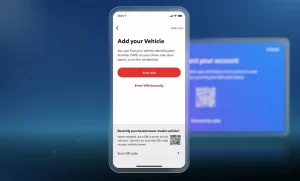
- Find the 17-digit VIN on the dashboard or door jamb
- Visit the Toyota Owners dashboard and enter the VIN
- Confirm the “date of first use” — that’s when the warranty clock started, not the model year
Don’t assume the clock started January 1st of the model year. A car sold in October 2019 might be a 2020 model year vehicle, meaning it gets the extended 10-year coverage. Always verify.
How the 70% Capacity Rule Works for EVs
For fully electric models like the bZ4X, Toyota guarantees the battery will retain at least 70% of its original capacity throughout the 8-year/100,000-mile warranty window. If it drops below that, you may have a valid warranty claim.
A few important clarifications here:
- Range estimates aren’t proof of degradation. Cold weather, tire pressure, and driving habits all affect range display. Toyota dealers use specialized diagnostic tools to measure actual state-of-health.
- Traditional hybrids don’t have the same guarantee because Toyota’s software intentionally buffers the charge — never fully charging or fully depleting the pack — which dramatically reduces chemical stress.
This conservative battery management is why some Toyota hybrid batteries reportedly last well past 200,000 miles.
| Degradation Factor | Impact | What to Do |
|---|---|---|
| Extreme heat | High | Park in shade or garage |
| Daily DC fast charging | Moderate | Stick to Level 2 charging mostly |
| Charging above 85% | Moderate | Set charge limit to 80-85% for daily use |
| Deep discharge (near 0%) | Severe | Don’t leave the battery sitting empty |
| Cold temperatures | Temporary | Range returns as battery warms up |
Federal vs. CARB States: Your Location Affects Your Coverage
Here’s something most Toyota owners don’t realize: where you live changes your warranty coverage.
Federal law requires a minimum of 8 years or 100,000 miles on high-voltage batteries. Toyota already exceeds that standard nationally with the 10-year/150,000-mile policy.
But if you live in a CARB state — one that follows California Air Resources Board emissions standards — you get even more protection on emissions-related components.
| Standard | Battery Coverage | Emissions Component Coverage | Who It Applies To |
|---|---|---|---|
| Federal (EPA minimum) | 8 years / 100,000 miles | 2 years / 24,000 miles | Non-CARB states |
| Toyota Standard | 10 years / 150,000 miles | 8 years / 100,000 miles | All 50 states |
| California PZEV | 10 years / 150,000 miles | 15 years / 150,000 miles | CA, NY, MA, VT + others |
Under the California emissions warranty, components like the engine control module, catalytic converter, and onboard diagnostics system can be covered for up to 15 years or 150,000 miles in PZEV-certified vehicles.
As of the 2024–2026 model years, CARB states include: California, Colorado, Connecticut, Delaware, Maine, Maryland, Massachusetts, Minnesota, Nevada, New Jersey, New Mexico, New York, Oregon, Rhode Island, Vermont, Virginia, Washington, and Washington D.C.
If you’re in Vermont and your engine control module fails at year 14, Toyota covers it. In Arizona? You’re paying out of pocket after year 5. The geographic difference is real money.
What Can Void Your Toyota Hybrid Battery Warranty
Your warranty isn’t unconditional. Toyota outlines specific exclusions in its documentation. Here’s what puts your coverage at risk:
Environmental damage — flooding, fire, hail, and lightning are excluded. If you drove through high water and the battery shorted out, that’s an insurance claim, not a warranty claim.
Improper maintenance — specifically neglecting the hybrid battery cooling filter. This filter (usually behind the rear seat or in the cargo area) keeps your battery from overheating. Toyota recommends inspecting and replacing it every 30,000 miles. Clog it up, and Toyota can deny your claim on grounds of negligence.
Unauthorized modifications — any aftermarket changes to the high-voltage system void your coverage. Same goes for odometer tampering, which voids the entire warranty.
Racing or off-road competition use — Toyota’s warranty covers normal driving. Track days don’t count.
Commercial rideshare or delivery — If you’re running your Prius 20 hours a day for rideshare, check your regional warranty supplement. Standard terms may not fully apply.
The 12-volt accessory battery also plays a supporting role here. A dying 12-volt battery can trigger hybrid system error codes and prevent the car from entering “Ready” mode. It’s covered under the 36-month basic warranty, but keeping it healthy is part of protecting the whole system.
Toyota Certified Used Vehicles and Battery Coverage
Buying used? A Toyota Certified Used Vehicle (TCUV) adds an extra layer of protection. Hybrid models go through a 174-point inspection and receive:
- An additional 12-month / 12,000-mile Limited Comprehensive Warranty
- Powertrain coverage extended to 7 years / 100,000 miles from the original in-service date
Combined with the transferable factory battery warranty, a well-selected certified used Toyota hybrid can still carry several years of meaningful coverage. Just verify the original in-service date — that’s the number that matters, not the odometer reading alone.
What’s Coming in 2026: Stronger Standards Ahead
The Advanced Clean Cars II regulations will raise the bar further starting with 2026 model year vehicles in CARB states.
| Model Year Range | Capacity Requirement | Warranty Term | New Feature |
|---|---|---|---|
| 2026–2029 | Retain 70% of electric range | 10 years / 150,000 miles | Durability standards |
| 2030+ | Retain 80% of electric range | 10 years / 150,000 miles | Mandatory state-of-health display |
The 2030 requirement — retaining 80% of range rather than 70% — reflects growing expectations around long-term battery performance. A mandatory state-of-health display on the infotainment screen means drivers will have direct, real-time visibility into battery condition. No guessing, no third-party diagnostic tools required.
Toyota’s upcoming 2026 lineup, including updated bZ electric models and hybrid variants of the Corolla Cross and Sequoia, will need to meet these stricter standards in participating states.
What Happens to Your Battery After the Warranty Ends
Toyota runs a closed-loop battery program designed to extract value from packs long after they leave the road. The process works in three stages:
- Remanufacturing — Failed cells get replaced, and packs get rebuilt for use in certified pre-owned vehicles
- Second-life use — Batteries with reduced automotive capacity get repurposed for stationary energy storage like solar and wind projects
- Recycling — At end of life, raw materials like nickel, cobalt, and lithium compounds get extracted and fed back into new battery production
This isn’t just good optics. It supports the long-term reliability story and reduces the environmental cost of battery manufacturing. For owners, it also means Toyota has a vested interest in building batteries that actually last.
The One Maintenance Task That Protects Your Warranty Most
If you take one thing from this entire guide, make it this: don’t neglect the hybrid battery cooling filter.
It’s a small, inexpensive part. It protects a battery that costs several thousand dollars to replace out of warranty. Replacing it every 30,000 miles — or more often if you live somewhere dusty or experience heavy seasonal pollen — is one of the cheapest ways to stay in Toyota’s good graces on a warranty claim.
Everything else — keeping charge levels between 15% and 85%, verifying your in-service date before buying used, checking if you’re in a CARB state — builds on that foundation. The Toyota hybrid battery warranty is genuinely strong. Keeping it intact just takes a bit of attention.