Your check engine light is on, your scanner says P0172, and now you’re wondering how bad this actually is. Good news — it’s fixable. Bad news — ignoring it can turn a $70 MAF cleaning into a $1,500 catalytic converter job. Here’s everything you need to know to diagnose and fix Toyota P0172 the right way.
What Does Toyota P0172 Actually Mean?
Toyota P0172 means your engine is running “too rich” on Bank 1. In plain terms, there’s too much fuel and not enough air in the combustion mix.
Your engine needs a precise air-to-fuel ratio of roughly 14.7:1 to run cleanly. When that balance tips toward too much fuel, the ECM (engine control module) stores P0172 and turns on the check engine light.
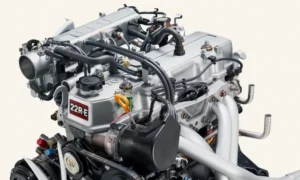
For Toyota inline-four engines like the Corolla and RAV4, the entire engine is Bank 1. On V6 and V8 engines found in the Tacoma, Tundra, and Sequoia, Bank 1 is the side containing cylinder number one.
Symptoms You’ll Notice First
Don’t wait for symptoms to get worse. Here’s what a rich-running Toyota feels like:
- Black smoke from the exhaust — unburned fuel escaping
- Strong fuel smell from the tailpipe or engine bay
- Reduced fuel economy — a noticeable drop at the pump
- Rough idle or engine hesitation under acceleration
- Spark plug fouling — black, sooty deposits on the plugs
- Failed emissions test — a P0172 code automatically fails state inspections
How Your Toyota Detects P0172
Your Toyota uses a system called fuel trim to constantly adjust the air-fuel mixture. Think of it as the ECM’s correction dial.
| Fuel Trim Type | What It Does | Normal Range | Problem Threshold |
|---|---|---|---|
| Short-Term Fuel Trim (STFT) | Makes instant adjustments based on O2 sensor data | -5% to +5% | Erratic swings beyond ±10% |
| Long-Term Fuel Trim (LTFT) | Stores learned corrections over time | Near 0% | -10% to -25% |
| Total Fuel Trim | Combined correction value | Near 0% | Exceeding -25% triggers P0172 |
When the ECM can’t reduce fuel delivery enough to hit stoichiometry, it hits a wall. That’s when P0172 gets stored. Seeing your LTFT sitting at -15% or lower? You’ve confirmed a rich condition.
The Most Common Causes of Toyota P0172
A rich condition rarely comes from one single failure. It usually builds gradually. Here are the most likely culprits.
Dirty or Failing MAF Sensor
The mass air flow sensor measures incoming air. When it gets coated with dust, oil, or debris, it reports incorrect readings — and your ECM dumps in too much fuel in response.
MAF sensors are especially vulnerable on Corollas and RAV4s positioned close to the air box. Poor-quality aftermarket filters are often the culprit.
The good news? A dirty MAF is often a $10 fix with a can of MAF cleaner.
Clogged Air Filter
A severely restricted air filter chokes the engine. Less air in means the existing fuel load creates a rich condition. Check your air filter — if it’s dark gray or black, swap it out before doing anything else.
Leaking Fuel Injectors
An injector that doesn’t fully close drips unmetered fuel into the cylinder. On Tacoma V6 models with direct injection, high-pressure injector leaks can cause severe rich conditions alongside hard-start complaints.
Stuck-Open EVAP Purge Valve
The EVAP system stores fuel vapors in a charcoal canister and purges them at the right time. If the purge valve sticks open, those vapors flood the intake constantly — even at idle — sending fuel trims negative fast.
Faulty Oxygen or Air-Fuel Ratio Sensor
A drifting upstream O2 sensor can report a false lean signal. The ECM responds by adding more fuel, creating a real-world rich condition even though nothing is actually wrong with fueling. Sensor drift is sneaky because the sensor stays within electrical range — it just lies.
Overfilled Fuel Tank
Toyota’s EVAP systems hate being overfilled. Topping off your tank past the first click can saturate the charcoal canister with liquid fuel. When the purge cycle kicks in, your engine gets flooded with vapors. Don’t top off.
Fuel Dilution in Engine Oil (Hybrid and Short-Trip Drivers)
This one surprises people. On Hybrid RAV4s and Camrys, the engine cycles on and off repeatedly. If it never reaches full operating temperature, raw fuel contaminates the engine oil. The PCV system then pulls those fuel vapors into the intake — and there’s your rich condition.
Toyota P0172 by Model: What to Watch For
Corolla and RAV4 (Inline-4)
Short-trip driving is the enemy here. These engines are prone to fuel dilution when they don’t warm up fully. Check the oil dipstick — if it smells like gasoline, an oil change and PCV inspection come first.
Tundra and Sequoia (5.7L V8 Flex-Fuel)
This is where things get interesting. Many 2009–2019 Tundras have a known issue where the ECM miscalculates the alcohol content of standard E10 fuel, treating it like high-ethanol blend. Since ethanol has lower energy density, the ECM over-fuels to compensate.
This NHTSA technical service bulletin (TSB-0166-19) covers the fix — it requires an ECM software update, potentially a new fuel pump assembly, and a specific learning value reset. If you own a Tundra and your fuel trims are all over the place, this TSB is your first stop.
Tacoma (3.5L V6 D4-S)
The dual-injection 2GR-FKS engine uses both direct and port injection. High-pressure direct injectors on this engine can develop internal leaks, causing Bank 1 to run rich. A telltale sign is an extended crank time after the vehicle sits — fuel is bleeding into the cylinders during the soak period.
How to Diagnose Toyota P0172 Step by Step
Step 1: Read Live Fuel Trim Data
Grab a scanner and check your live data. You’re looking for LTFT at idle and at 2,500 RPM.
| What You’re Checking | Action | Good Result |
|---|---|---|
| LTFT at Idle | Scan live data | Near 0% |
| LTFT at 2,500 RPM | Rev engine, read trim | Near 0% |
| MAF g/s Reading | Compare to engine size | ~2.5L engine: ~3-5 g/s at idle |
| ECT Reading | Verify against actual temp | 185–210°F when fully warm |
| Freeze Frame Data | Check conditions when code set | Did it happen at idle or WOT? |
A highly negative LTFT confirms the rich condition and tells you where to start.
Step 2: Do a Visual Inspection
Before buying parts, look at these:
- Air intake hoses — check for cracks, tears, or collapse
- Air filter — replace if it’s dirty
- MAF housing — look for oil residue or debris on the sensing wire
- Oil dipstick — smell for gasoline contamination
- Exhaust ahead of the O2 sensor — use soapy water or a smoke machine to check for leaks. An exhaust leak pulls in outside air, causing the sensor to call for more fuel
Step 3: Clean the MAF Sensor
If your MAF readings look off, clean it first. Use a dedicated MAF sensor cleaner — spray perpendicular to the sensing wires. Never touch them.
Clear the code and test drive. If LTFT returns to normal, you’re done.
Step 4: Test the EVAP Purge Valve
Disconnect the vacuum hose from the purge valve with the engine running. You should feel zero suction. Any pull on the hose means the valve seat has failed mechanically — replace the valve.
Step 5: Check Fuel Pressure
Connect a mechanical gauge to the fuel rail. Toyota port injection systems typically hold 44–50 PSI. After shutting the engine off, the pressure should hold. A rapid drop points to a leaking injector or failing pump check valve.
The “Missing Link” — Coolant Temp and Thermostat
Here’s what most people miss. If your engine runs just a few degrees below its closed-loop threshold, the ECM stays in warm-up enrichment mode indefinitely. Always verify the engine reaches at least 185°F (85°C) before drawing conclusions from fuel trim data. A stuck-open thermostat causes exactly this — chronic mild enrichment with no obvious sensor failure.
What Does It Cost to Fix Toyota P0172?
| Repair | Parts Cost | Labor Cost | Total Estimate |
|---|---|---|---|
| Diagnostic Scan | — | $50–$150 | $50–$150 |
| Air Filter | $15–$60 | $15–$30 | $30–$90 |
| MAF Sensor Cleaning | $10 | $30–$60 | $40–$70 |
| O2 Sensor | $50–$250 | $85–$125 | $135–$375 |
| A/F Ratio Sensor | $150–$365 | $100–$175 | $250–$540 |
| Fuel Injector (Single) | $50–$200 | $150–$350 | $200–$550 |
| EVAP Purge Valve | $35–$100 | $50–$100 | $85–$200 |
| Tundra TSB Reprogramming | — | $100–$250 | $100–$250 |
Why You Can’t Ignore Toyota P0172
Driving with P0172 isn’t just a check engine light problem. Here’s what actually happens:
Fuel economy drop: A rich-running Toyota can lose 15–25% fuel efficiency. Over a year of high-mileage driving, that adds up to hundreds of dollars at the pump.
Catalytic converter damage: Excess unburned fuel ignites inside the converter’s honeycomb substrate. Temperatures spike, the ceramic melts, and you’re looking at $800–$1,500 for a replacement — far more than the original repair.
Spark plug fouling: Rich mixture coats plugs in black soot, causes misfires, and compounds the original problem.
Emissions failure: Any active P0172 code means an automatic emissions test failure and blocked registration in most states.
Preventing P0172 from Coming Back
Fix the root cause, then build these habits:
- Change oil every 5,000 miles or 6 months — especially on GDI engines and hybrids prone to fuel dilution
- Clean the MAF sensor at every 30,000-mile service — inexpensive and effective
- Use Top Tier detergent fuel — it prevents injector carbon buildup that causes dripping and poor atomization
- Take a highway drive weekly — short-trip-only driving prevents oil and exhaust components from self-cleaning at operating temperature
- Never top off the fuel tank — one extra click can saturate the EVAP canister and trigger a rich condition days later
Toyota P0172 is one of those codes that rewards a methodical approach. Start with the cheap and easy checks first — MAF cleaning, air filter, fuel trim data — before throwing parts at it. Most of the time, the fix costs less than $100 if you catch it early.