Your Toyota Tundra’s engine is a serious piece of machinery. Put the wrong oil in it — or skip the filter details — and you’ll pay for it later. This guide covers every engine, every generation, and every spec you actually need for a proper Toyota Tundra oil change. Stick around. The reset procedure at the end trips up more owners than anything else.
What Oil Does Your Toyota Tundra Actually Need?
The answer depends entirely on which engine sits under your hood and what year your truck rolled off the line.
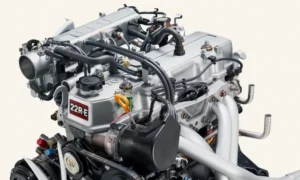
Toyota made significant powertrain changes across three generations, moving from naturally aspirated V6 and V8 engines to a twin-turbocharged V6 in 2022. Each shift brought new oil viscosity requirements.
Here’s the full breakdown:
| Generation | Model Years | Engine | Viscosity | Capacity (With Filter) | Oil Standard |
|---|---|---|---|---|---|
| 1st Gen | 2000–2004 | 5VZ-FE 3.4L V6 | SAE 5W-30 | 5.49 qts | API SJ / ILSAC |
| 1st Gen | 2005–2006 | 1GR-FE 4.0L V6 | SAE 5W-30 | 4.75 qts | API SJ / ILSAC |
| 1st Gen | 2000–2006 | 2UZ-FE 4.7L V8 | SAE 5W-30 | 6.55 qts | API SJ / ILSAC |
| 2nd Gen | 2007–2010 | 1GR-FE 4.0L V6 | SAE 5W-30 | 5.49 qts | API SN / ILSAC GF-5 |
| 2nd Gen | 2011–2021 | 1GR-FE 4.0L V6 | SAE 0W-20 | 6.44 qts | API SN / ILSAC GF-5 |
| 2nd Gen | 2007–2009 | 2UZ-FE 4.7L V8 | SAE 5W-30 | 6.55 qts | API SN / ILSAC GF-5 |
| 2nd Gen | 2010–2021 | 1UR-FE 4.6L V8 | SAE 0W-20 | 7.90–8.50 qts | API SN / ILSAC GF-5 |
| 2nd Gen | 2007–2021 | 3UR-FE 5.7L V8 | SAE 0W-20 | 7.40–8.50 qts | API SN / ILSAC GF-5 |
| 3rd Gen | 2022–Present | V35A-FTS 3.4L Twin-Turbo V6 | SAE 0W-20 | 7.70 qts | API SP / ILSAC GF-6A |
Notice that the 5.7L V8 capacity increased over time — from 7.4 quarts (2007–2009) to 7.9 quarts (2010–2017) to 8.5 quarts (2018–2021). Toyota made those changes to expand the thermal buffer and slow oil breakdown under heavy towing loads.
Don’t Overfill. Seriously.
Overfilling causes real engine damage. When the oil level climbs too high, the spinning crankshaft physically strikes the oil surface and whips air into the fluid. That creates foam. Foamy oil can’t hold hydraulic pressure.
The result? Camshaft bearings, timing chains, and cylinder walls starve for lubrication. Overfilling also spikes crankcase pressure, which blows out gaskets and seals. Always fill to spec, then check the dipstick.
The 3rd Gen Twin-Turbo and the 0W-20 vs. 5W-30 Debate
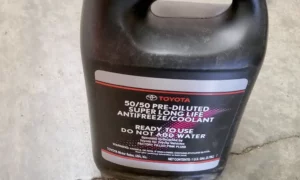
If you own a 2022-and-newer Tundra with the V35A-FTS 3.4L twin-turbocharged engine, Toyota officially recommends SAE 0W-20 full synthetic to meet U.S. CAFE fuel economy standards. The thinner viscosity cuts hydrodynamic drag and optimizes cold-start efficiency.
Here’s the catch: markets outside the U.S. spec SAE 5W-30 or 5W-40 for the exact same engine. Under sustained towing or high-temperature off-road use, the turbocharger bearing housings generate intense heat. A 0W-20 oil can shear and thin out under those conditions, reducing bearing film strength.
Many experienced Toyota technicians recommend running a high-quality full synthetic 5W-30 for Tundras working hard regularly. It’s a reasonable call for heavy-use trucks.
Whatever you choose, the 3rd Gen engine requires API SP / ILSAC GF-6A (or the newer API SQ / ILSAC GF-7A). These standards include additives that suppress low-speed pre-ignition (LSPI) — a violent, uncontrolled combustion event specific to direct-injected turbocharged engines. LSPI can crack pistons and bend connecting rods. Don’t use an off-spec oil and gamble with that risk.
Oil Filter Guide: What Changed and Why It Matters
Toyota changed the filtration system three times across the Tundra’s production run. Each design has specific handling requirements.
1st Gen: Classic Spin-On Canister
First-generation models used a straightforward spin-on steel canister filter. The bypass valve and anti-drainback valve are built into the canister. You remove the whole unit, lube the rubber seal on the new one, and spin it on. Simple, clean, foolproof.
2nd Gen V8: Cartridge-Style Housing
Second-generation V8 models switched to a reusable cartridge housing with a replaceable paper filter element inside. The goal was to reduce landfill waste by not tossing a metal canister every service. The trade-off: the bypass valve lives permanently in the engine-side housing and never gets replaced. The plastic housing caps are also notorious for seizing from heat cycling.
When a cap seizes, don’t use a standard strap wrench. It shears the plastic alignment tabs. Use a specialized 64mm 14-flute oil filter cap wrench that distributes torque evenly across all flutes. Many owners upgrade to aftermarket CNC-machined billet aluminum caps to eliminate this problem entirely.
Filter Media Comparison: Is OEM Worth It?
Surface area directly affects how long a filter lasts before the bypass valve opens. Here’s how the main cartridge options stack up:
| Filter | Surface Area (cm²) | Pleats | Dry Weight (g) |
|---|---|---|---|
| OEM Toyota (01452-YZZA4) | 1,967.89 | 43 | 45 |
| WIX (57041) | 1,927.56 | 43 | 40 |
| MicroGard (MGL10295) | 1,902.57 | 45 | 61 |
| Fram Standard (CH10295) | 1,903.23 | 45 | 61 |
| Fram ExtraGuard (CH10295) | 1,765.06 | 44 | 61 |
More surface area means higher dirt-holding capacity and lower initial restriction to oil flow. The Fram ExtraGuard’s smaller surface area means its bypass valve opens sooner, cycling unfiltered oil through the engine under high-load or cold-start conditions. OEM and WIX lead the pack.
3rd Gen: Back to Spin-On
For the 2022-and-newer twin-turbo Tundra, Toyota returned to a spin-on canister filter (OEM Part Number 90915-YZZN3, superseding 90915-10010). Technician feedback and the demands of a high-pressure twin-turbocharged oiling circuit drove the change. Every oil change now refreshes the bypass valve and the factory-sealed gasket — no manual O-ring replacement, no housing thread stripping risk.
The 3rd Gen setup also includes an integrated under-filter catch pan with a drain spout. Slide a standard 3/4-inch garden hose onto it and route waste oil straight into a container. Zero mess on the frame or sway bar.
2nd Gen Cartridge Filter: Step-by-Step Procedure
The filter sits on the front left (driver’s side) of the engine block, directly above the front sway bar. Follow this sequence:
- Insert a 3/8-inch square ratchet drive into the square recess on the bottom drain cover. Turn counterclockwise to remove the small cap.
- Grab the plastic drain/bleeder tool from inside the new Toyota filter box. Slide 12–15 inches of clear flexible tubing onto the nipple end.
- Lightly coat the small O-ring from the bottom cap with fresh oil. Place it on the top of the drain tool.
- Push the tool up firmly into the housing center until it snaps in. Oil drains cleanly through the hose into your waste container.
- Remove the tool. Use the 64mm 14-flute wrench socket to unscrew the full cartridge housing counterclockwise.
- Remove the old element. Clean the housing. Replace the large threaded O-ring and coat it with fresh oil to prevent tearing.
- Reinstall the housing cap to 18 ft-lbs. Torque the bottom drain plug cap to 9 ft-lbs.
Skid Plate Removal: Don’t Strip Those Bolts
You need to pull the engine undercover on most 2nd and 3rd Gen Tundras before accessing the drain plug and filter.
On standard 2nd Gen models, that means removing three 10mm fasteners up front and five recessed 12mm bolts. TRD Off-Road and 3rd Gen heavy-duty plates use four 12mm or 13mm bolts.
Road salt and debris rust-weld these fasteners. When one starts rounding:
- Drop the 12-point socket immediately
- Tap a high-quality six-point socket onto the head
- For fully rounded heads, use spiral-fluted extraction sockets or turbo-sockets
When reinstalling the skid plate, start every bolt by hand before touching a wrench. If you torque one bolt before the others are threaded, the plate shifts and you’ll cross-thread the captive nut welded inside the frame rail — an expensive mistake.
Drivetrain Fluid Specs (Don’t Skip These)
A Toyota Tundra oil change is the right time to check every underbody fluid. Here’s what’s specified:
| Application | Fluid | Service Fill Capacity |
|---|---|---|
| 2nd/3rd Gen Auto Trans (AB60E/F, AJA0E) | Toyota ATF World Standard (WS) | 2.2 qts (2nd) / 5.3 qts (3rd) |
| 3rd Gen Transfer Case | Toyota ATF WS | 2.2 qts |
| 2nd Gen Front Differential | Toyota Gear Oil LT GL-5 75W-85 | 2.2 qts |
| 3rd Gen Front Differential | Toyota Gear Oil LT GL-5 75W-85 | 1.35 qts |
| 3rd Gen Rear Differential (with locker) | Toyota Gear Oil LT GL-5 75W-85 | 5.6–5.8 qts |
| 1st Gen Rear Diff (LSD) | Hypoid Gear Oil GL-5 + friction modifier | 3.01–3.33 qts |
Limited-slip differentials need GL-5 gear oil with friction modifiers already blended in. Without them, the clutch plates chatter and wear fast through tight turns.
The Fumoto Drain Valve Upgrade
Many Tundra owners install the Fumoto F133N brass ball-valve drain plug in place of the standard steel drain plug. You flip a lever to drain the oil — no tools, no burned hands, no drain plug to strip. The valve accepts a drain hose to route waste oil cleanly into a container. Over a truck’s lifetime, it eliminates the risk of stripping soft aluminum oil pan threads entirely.
Reset the Maintenance Required Light (Every Generation)
The “MAINT REQD” light triggers every 5,000 miles based on the odometer. It won’t reset itself. Here’s how to clear it for each generation.
2000–2006 (1st Gen)
- Key to “On” (position II), don’t start the engine
- Press the odometer stem until total mileage shows
- Turn ignition to “Off”
- Press and hold the odometer stem
- While holding, turn ignition back to “On”
- Hold for about 10 seconds until the display flashes dashes, then shows zeros — light goes out
2007–2017 (2nd Gen)
- Key to “On,” don’t start the engine
- Cycle the display stem until Trip A shows
- Turn ignition to “Off”
- Press and hold the Trip stem
- While holding, turn ignition back to “On”
- Hold until dashes disappear one by one and display hits zeros — light clears
2018–2021 (Late 2nd Gen)
- Key to “On”
- Use the right steering wheel arrows to highlight the Gear/Settings icon
- Scroll to Vehicle Settings → press OK
- Scroll to Maintenance Reset → press OK
- Select “Yes” and confirm
- When “Reset Complete” appears, turn ignition off
2022–Present (3rd Gen)
- Press push-button start twice without touching the brake
- Use left steering wheel controls to reach the Gear/Settings menu
- Scroll to Vehicle Settings → press and hold OK
- Select Oil Maintenance → Yes → OK
- Press back, scroll to Scheduled Maintenance → Yes → OK
- Turn ignition off — both monitors are now reset
Getting a Toyota Tundra oil change right means matching the correct viscosity to your exact engine, using a filter with adequate surface area, respecting torque specs on every fastener, and actually resetting the maintenance monitor when you’re done. Do it properly and this truck will reward you with hundreds of thousands of miles of reliable service.