Your Ford needs the right coolant — and picking the wrong one can turn into a costly mess. This guide breaks down exactly what the VC-13-G coolant is, which aftermarket options actually work, and what you must never mix it with.
What Is VC-13-G Coolant?
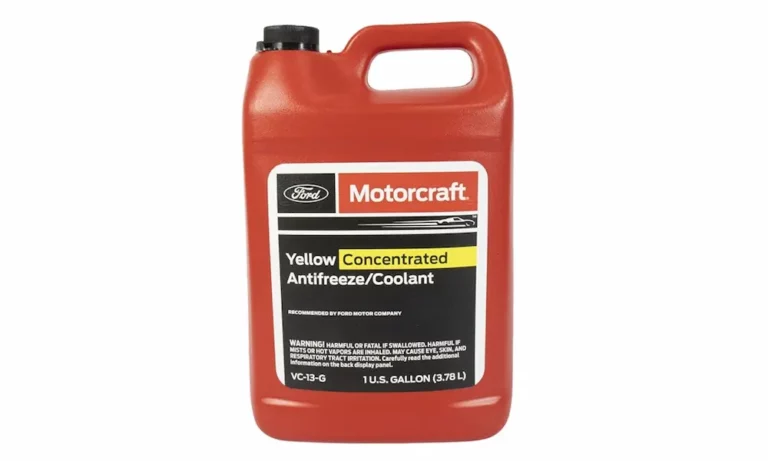
Motorcraft VC-13-G is Ford’s yellow-colored engine coolant. It meets Ford engineering specification WSS-M97B57-A2 and uses Phosphated Organic Acid Technology (P-OAT).
Ford introduced this yellow P-OAT formula for vehicles from 2018 onward. It replaced the older orange (OAT) coolant used from 2011 to 2018.
You’ll also see it sold as VC-13DL-G — that’s just the pre-diluted (50/50) version. Same fluid, ready to pour.
This coolant is designed for:
- Ford, Lincoln, and Mercury vehicles (2018–present)
- Engines with heavy aluminum content
- High-output engines that run at elevated temperatures
Why Ford Switched to Yellow P-OAT
Ford didn’t change the coolant color just for fun. Each generation of coolant solved a real engineering problem.
| Ford Specification | Color | Technology | Era |
|---|---|---|---|
| ESE-M97B44-A | Green | Inorganic Additive (IAT) | Pre-2002 |
| WSS-M97B51-A1 | Gold | Hybrid Organic Acid (HOAT) | 2002–2011 |
| WSS-M97B44-D | Orange | Organic Acid (OAT) | 2011–2018 |
| WSS-M97B57-A2 | Yellow | Phosphated Organic Acid (P-OAT) | 2018–Present |
Modern engines run hotter, move coolant faster, and use more aluminum than ever. Organic acids alone weren’t fast enough at protecting freshly exposed aluminum surfaces. Adding phosphates to the mix fixed that — they create an instant protective layer the moment the fluid touches metal.
The result? A coolant rated for 10 years or 200,000 miles on the first fill, then 5 years or 100,000 miles after each subsequent change.
What Protection Does VC-13-G Actually Offer?
A proper 50/50 mix (concentrate + distilled water) or the ready-to-use VC-13DL-G gives you:
| Protection Type | Fahrenheit | Celsius |
|---|---|---|
| Freeze Protection | -34°F | -36.7°C |
| Boiling Protection | 265°F | 129°C |
That 265°F boiling point is measured under normal system pressure (around 15 psi). It’s high enough to prevent steam pockets from forming in your cylinder head — which is one of the fastest ways to warp an engine.
The Best VC-13-G Coolant Equivalents
When Motorcraft VC-13-G isn’t on the shelf, these aftermarket options actually meet the spec. Always check the bottle for WSS-M97B57-A2 before you buy.
Prestone North American Yellow
Prestone is a major factory-fill supplier for North American automakers. Their North American Yellow product explicitly meets the Ford WSS-M97B57-A2 standard.
It comes in both concentrate and 50/50 form. Prestone claims a 15-year or 150,000-mile guarantee with this formula. It protects all common cooling system metals including aluminum, copper, and iron.
PEAK OET North American Yellow
PEAK’s Original Equipment Technology (OET) North American Yellow is built specifically for Ford and Lincoln vehicles from 2018 onward.
It’s silicate-free, borate-free, nitrite-free, and amine-free — matching the exact chemical profile required by WSS-M97B57-A1 and A2. Available in both concentrate and pre-diluted versions.
Zerex HD Nitrite-Free Yellow (Not Zerex G-05)
Here’s where people get tripped up. Zerex G-05 is yellow but it’s NOT a VC-13-G equivalent. G-05 uses HOAT chemistry and meets the older WSS-M97B51-A1 spec. Using it in a modern Ford that needs P-OAT is the wrong call.
The correct Zerex product is their HD Nitrite Free Yellow or specific passenger car formulations that clearly state WSS-M97B57-A2 compliance on the label.
ShopPro Yellow Engine Coolant
ShopPro’s yellow coolant also lists WSS-M97B57-A2 compliance and works as a budget-friendly alternative in a pinch. It’s less commonly discussed but meets the same spec standard.
| Brand | Product Name | Meets WSS-M97B57-A2? |
|---|---|---|
| Motorcraft | VC-13-G Yellow Antifreeze | ✅ Official OEM |
| Prestone | North American Yellow | ✅ Yes |
| PEAK | OET North American Yellow | ✅ Yes |
| Zerex | HD Nitrite Free Yellow | ✅ Yes (check label) |
| Zerex | G-05 Yellow | ❌ No — wrong technology |
| ShopPro | Yellow Engine Coolant | ✅ Yes |
What You Can and Can’t Mix With VC-13-G
This is the section that matters most. Mixing the wrong coolants together creates a gelatinous paste that clogs your radiator tubes and heater core. That’s not an exaggeration — it’s a documented failure mode.
Safe to Mix or Replace With Yellow VC-13-G
Ford officially approves using yellow P-OAT coolant to service vehicles originally filled with:
- Orange coolant (WSS-M97B44-D or WSS-M97B44-D2) — no flush required if the fluid is clean
- Dark green Specialty Green coolant (WSS-M97B55-A) — no flush required if the fluid is clean
You can top off, do a drain-and-fill, or do a complete flush with yellow coolant in these cases.
Never Mix With Yellow VC-13-G
Keep yellow VC-13-G away from:
- Gold coolant (WSS-M97B51-A1) — incompatible chemistry, full flush required first
- Legacy green coolant (ESE-M97B44-A) — incompatible, flush the system completely before switching
If these fluids mix, the inhibitor packages fall out of solution. You get a thick, gummy residue that blocks coolant flow. The NHTSA cooling system failure database documents real-world overheating incidents tied to improper coolant mixing — it’s a genuine risk, not just a precaution on a label.
| Your Current Coolant | Can You Top Off With Yellow? | Flush Required First? |
|---|---|---|
| Orange (OAT) | ✅ Yes | ❌ No (if clean) |
| Dark Green (Specialty) | ✅ Yes | ❌ No (if clean) |
| Gold (HOAT) | ❌ No | ✅ Yes |
| Legacy Green (IAT) | ❌ No | ✅ Yes |
Special Rules for the 6.7L Power Stroke Diesel
If you work on Ford Super Duty trucks with the 6.7L Power Stroke diesel, there’s an extra rule you need to know.
Older 6.7L trucks were factory-filled with orange coolant. That system used the Motorcraft VC-12 Specialty Orange Engine Coolant Revitalizer to refresh the inhibitor package when levels dropped.
Once you switch that system to yellow VC-13-G:
- The orange-specific “Coolant Test” procedure no longer applies
- Do not add VC-12 revitalizer to a system filled with yellow coolant — the chemical interaction can damage the system
This is a critical distinction for fleet managers and diesel technicians. Check the current fill before you reach for a revitalizer.
How to Mix and Check VC-13-G the Right Way
Always Use Distilled Water
Never dilute VC-13-G concentrate with tap water. Tap water contains calcium, magnesium, and chlorides. These minerals react with the phosphates in P-OAT coolant, form insoluble deposits, and neutralize the corrosion protection. The result is scale buildup that blocks heat transfer and eats through water pump seals.
Distilled or deionized water only. Always.
Use a Refractometer, Not a Hydrometer
Old-school floating-ball hydrometers are calibrated for inorganic green coolants. They give inaccurate readings with P-OAT formulas.
A refractometer gives you an accurate concentration reading for modern coolants. It’s a small investment that tells you whether your mix is actually protecting the engine or just sitting there looking yellow.
Drain-and-Fill vs. Full Flush
You don’t always need a full flush:
- Clean orange or specialty green fluid? → Drain and fill with yellow coolant. Done.
- Unknown history, rust, scale, or discoloration? → Full chemical flush first. Then fill with yellow.
A clean flush lets the P-OAT package build its protective layer on bare metal — not on top of existing deposits.
How P-OAT Protects Each Part of Your Cooling System
The phosphates and organic acids in VC-13-G target different failure points across the entire cooling system.
| Component | Main Threat | What Protects It |
|---|---|---|
| Water Pump | Cavitation erosion / pitting | Phosphates + surfactants |
| Aluminum Radiator | Internal corrosion / scale | Phosphates + organic acids |
| Heater Core (Copper) | Solder bloom / corrosion | Organic acid technology |
| Engine Block (Iron) | Rust / oxidation | Organic acids |
| Gaskets & Seals | Swelling / hardening | Elastomer-compatible glycol |
Cavitation deserves a mention here. As your water pump spins, it creates microscopic vacuum bubbles that collapse with enough force to pit metal surfaces. Over time, that destroys the impeller. The surfactants in VC-13-G reduce bubble formation, which directly extends water pump life.
A Quick Word on Safety and Disposal
VC-13-G is ethylene glycol-based — it’s toxic if swallowed. All compliant versions include a bittering agent (typically denatonium benzoate) to prevent accidental ingestion by kids or pets. When choosing an aftermarket equivalent, confirm this additive is present. It’s often a legal requirement depending on your location.
On disposal: used coolant should never go down a storm drain or into the ground. The EPA’s guidelines on used coolant disposal point recyclers toward facilities that can process or reclaim the ethylene glycol safely. Most auto parts stores and service centers accept used coolant for recycling.
The Bottom Line on Finding a VC-13-G Equivalent
When Motorcraft VC-13-G isn’t available, your checklist is simple:
- Look for yellow-colored P-OAT coolant
- Confirm it states WSS-M97B57-A2 on the label
- Avoid Zerex G-05 — same color, completely different chemistry
- Don’t mix with gold or legacy green coolant without a full flush
- Use distilled water if diluting concentrate
- Test concentration with a refractometer, not a hydrometer
Prestone North American Yellow and PEAK OET North American Yellow are your safest aftermarket bets. Both explicitly meet the Ford spec and are easy to find at most auto parts retailers.
Pick the right fluid, mix it right, and your cooling system will do exactly what Ford engineered it to do — keep that engine running clean for the long haul.