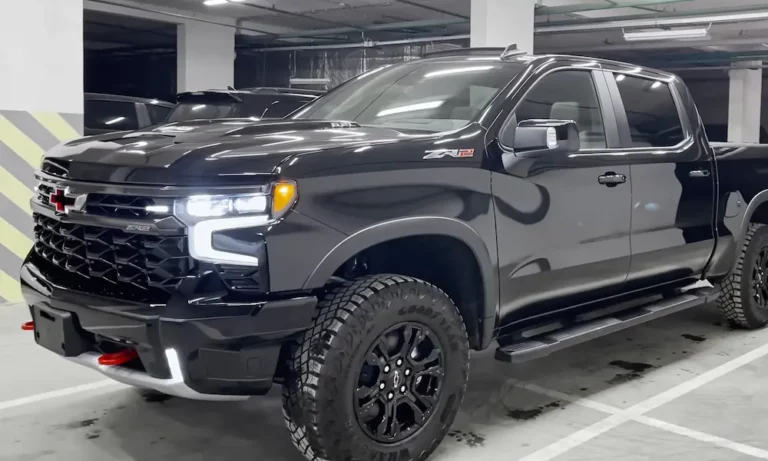
You’ve seen the Z71 badge on Chevrolet trucks, SUVs, and crossovers — but what does it actually mean? If you’re wondering whether the z71 off road package is just a sticker or a genuine capability upgrade, this post breaks it all down. Stick around, because the answer might surprise you.
What Is the Z71 Off-Road Package?
The z71 off road package started life in 1988 as a simple internal option code for an upgraded suspension on the C/K truck lineup. Today, it’s one of Chevy’s most recognized sub-brands.
Depending on which vehicle you’re shopping, Z71 shows up three different ways:
- A standalone trim level (Colorado, Traverse, Tahoe, Suburban)
- An add-on package (Silverado 1500)
- A configuration badge on heavy-duty HD trucks
As of 2026, you’ll find the Z71 badge on six vehicle lines: the Silverado 1500, Silverado 2500/3500 HD, Colorado, Tahoe, Suburban, and Traverse.
What’s Actually Inside the Z71 Package?
This is where it gets good. The Z71 package isn’t cosmetic. It’s a collection of purpose-built hardware that makes a real difference on unpaved terrain.
Rancho Shocks: Tuned for Dirt, Not Just Pavement
Standard truck shocks are designed for smooth roads. Z71 models use Rancho off-road dampers tuned specifically for rapid, high-impact suspension cycling on trails.
Most Z71 packages use the Rancho RS5000X — a twin-tube shock that balances comfort on the highway with enough durability for moderate trail use. Twin-tube shocks are great for daily driving, but they can experience “shock fade” under extreme off-road abuse when the hydraulic fluid aerates.
For tougher conditions, monotube shocks like the Rancho RS7MT use a floating piston to keep the oil and gas separated completely. No foaming, better heat dissipation, more precise control — but a slightly stiffer highway ride.
| Shock Type | Best For | Main Drawback |
|---|---|---|
| Twin-Tube (RS5000X) | Daily driving + moderate trails | Can fade under extreme, rapid cycling |
| Monotube (RS7MT) | Aggressive off-road use | Firmer ride on pavement |
The Eaton G80: The Star of the Show
The Eaton G80 automatic locking rear differential is the most important mechanical piece in the Z71 package. Here’s why it matters.
A standard open differential sends power to the wheel with the least resistance. On a slippery trail, that means the wheel spinning in the air gets all the torque while the wheel with grip gets nothing. You’re stuck.
The G80 fixes that automatically. When it detects roughly 100 RPM of speed difference between your rear wheels, a flyweight governor triggers and mechanically locks both rear axle shafts together. Both wheels spin at the same speed. You move forward.
No buttons. No switches. No driver input required.
There’s one thing to know, though: aggressive throttle while the wheel is already spinning can shock-load the axle when the G80 engages. Use steady, moderate throttle and the G80 will last hundreds of thousands of miles with regular fluid changes. Mash the pedal during slip and you might crack a spider gear.
A built-in safety feature also disables the locking function above 20–25 mph, so you can’t accidentally lock the axle at highway speeds.
Autotrac Transfer Case and Hill Descent Control
The Autotrac two-speed transfer case adds a critical low-range (4Lo) setting that multiplies engine torque dramatically for rock crawling, steep climbs, and slow-speed maneuvering. The standard single-speed case only gives you 4Hi — decent for snow, not enough for serious trails.
The Auto mode works like AWD, splitting power to the front axle automatically when rear slip is detected. It’s seamless and works well in patchy ice or rain.
Hill Descent Control interfaces with the ABS to manage brake pressure at each individual wheel on steep descents. You set the speed, keep your hands on the wheel for steering, and let the system handle the braking. It prevents brake fade and lets you focus entirely on picking your line through obstacles.
Skid Plates, Air Filtration, and All-Terrain Tires
Three more pieces of the z71 off road package that often get overlooked:
- Metal skid plates replace plastic splash guards, protecting the oil pan, front differential, and transfer case from rock strikes. A punctured oil pan in the backcountry means a dead engine and an expensive recovery.
- High-capacity air filter captures fine dust particles during off-road convoy driving, where standard filters get saturated fast. Silica dust bypassing a clogged filter will score your cylinder walls.
- All-terrain tires feature aggressive tread blocks, wider voids for mud evacuation, and reinforced sidewalls to resist rock punctures on tight trails.
| Z71 Component | What It Replaces | Why It Matters |
|---|---|---|
| Rancho Shocks | Pavement-biased dampers | Manages severe trail impacts |
| Eaton G80 Locker | Open differential | Automatic 100% torque lock during wheel slip |
| Autotrac Transfer Case | Single-speed case | Adds 4Lo for torque multiplication |
| Metal Skid Plates | Plastic splash guards | Protects oil pan and drivetrain from rocks |
| Heavy-Duty Air Filter | Standard paper element | Prevents internal engine damage in dusty conditions |
| All-Terrain Tires | Highway tires | Mud evacuation + reinforced sidewalls |
Z71 vs. Trail Boss vs. ZR2: Which Is Right for You?
Chevrolet runs a three-tier off-road system, and understanding the differences saves you from either overpaying or underbying.
Z71 is the dual-purpose sweet spot. It keeps the factory ride height, preserves full towing capacity, and stays comfortable on the highway. It handles moderate trails, muddy campsites, slippery boat ramps, and unpaved forest roads without drama. This is the “weekend warrior” build.
Trail Boss builds on the Z71 mechanical package — same G80 locker, same Rancho shocks — and adds a factory 2-inch suspension lift. The lift improves approach angles, adds ground clearance, and fits larger aggressive tires. You gain more capability but sacrifice a bit of fuel economy and highway smoothness.
ZR2 is a different animal entirely. It ditches the Rancho shocks for Multimatic DSSV dampers originally developed for motorsport. It replaces the automatic G80 with driver-selectable electronic lockers front and rear. It adds a 3-inch lift, high-clearance cut-away bumpers, and boron steel underbody armor. It’s purpose-built for high-speed desert running and technical rock crawling.
The trade-off? A Colorado ZR2 tows just 6,000 pounds. A Colorado Z71 tows 7,700 pounds. The Silverado ZR2 averages about 15 MPG combined. If you tow often or commute daily, the ZR2 punishes you financially every week.
The Z71 Package Across Every Chevy Model
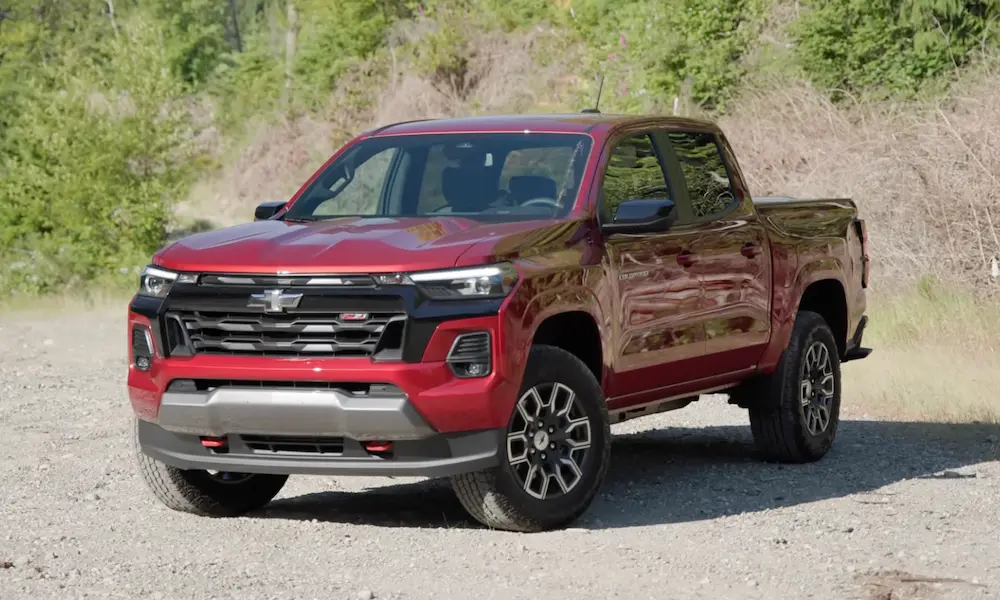
Colorado Z71
On the Colorado, Z71 is a standalone trim level priced around $46,495 for 2026. It pairs the full off-road hardware suite with the 2.7-liter TurboMax engine producing 310 hp and 430 lb-ft of torque — numbers that match old V8s.
You get an 11.3-inch touchscreen with Google built-in, Jet Black interior with Adrenaline Red stitching, and 32-inch all-terrain tires. Ground clearance sits at 8.9 inches — less than the Trail Boss (9.5 inches) or ZR2 (10.73 inches), but enough for most weekend adventures. Fuel economy averages up to 21 MPG combined.
Want more? Aftermarket options like Icon Vehicle Dynamics Stage 3 and 4 kits replace the factory Rancho shocks with 2.5-inch remote reservoir coilovers and billet upper control arms for up to 2.5 inches of additional lift.
Silverado 1500 Z71
On the full-size Silverado, Z71 works as an add-on package available on the Work Truck, LT, RST, LTZ, and High Country trims. Chevy offers two versions:
- Z71 Off-Road Package: Core hardware (Rancho shocks, G80 locker, transfer case, skid plates) for approximately $1,250
- Z71 Off-Road and Protection Package: Adds all-weather floor liners, rear wheelhouse liners, and a spray-on bedliner for approximately $2,210
Because the package doesn’t alter the frame or cooling geometry, a properly equipped Silverado 1500 Z71 still tows up to 13,300 pounds. You can configure it with multiple engines including the 5.3L V8 or 3.0L Duramax diesel. It’s the most flexible application of the Z71 badge in the entire lineup.
Silverado HD Z71
The 2500 HD and 3500 HD trucks also carry the Z71 package, which is particularly useful on construction sites and rutted forest service roads while towing heavy loads. The 6.6-liter Duramax diesel mated to an Allison 10-speed produces 470 hp and 975 lb-ft of torque, with maximum towing up to 36,000 pounds.
Tahoe and Suburban Z71
Here’s where things get interesting. The Tahoe and Suburban Z71 redesign the entire front fascia. Standard models have a low-hanging plastic air dam that scrapes on any serious incline. The Z71 replaces it with a high-clearance front bumper with cut corners, prominent red recovery hooks, and an aluminum skid plate.
The result? Approach angle jumps from 24.5 degrees to 31.5 degrees. That’s a massive difference on steep obstacles.
One thing to know: the base Tahoe/Suburban Z71 doesn’t include a lifted suspension out of the box. Ground clearance stays at the standard 8.0 inches. To unlock the full potential, you need the Four-Corner Air Ride Adaptive Suspension, which raises the ride height on demand up to 10 inches of total clearance. It’s often bundled with Magnetic Ride Control dampers and adds significantly to the purchase price — but transforms these family haulers into capable luxury overlanders.
Starting MSRP for the Tahoe Z71 runs approximately $70,495–$73,495. The extended Suburban Z71 starts around $71,500–$73,700.
Traverse Z71
The Traverse Z71 is the most technically unique application of the badge. Because the Traverse is a unibody crossover, it doesn’t use the Eaton G80 or the Autotrac transfer case.
Instead, it uses an Advanced Twin-Clutch AWD system with dual clutch packs on the rear axle, independently vectoring torque to the wheel with the most grip. It’s proactive, not reactive — and it’s significantly more sophisticated than the brake-based AWD systems in typical crossovers.
Other Z71-specific additions include a factory 1-inch ride height increase, frequency-based off-road dampers (they adjust firmness based on impact frequency), aluminum skid plates, all-terrain tires on 18-inch black wheels, and a dedicated Terrain Mode.
The 2.5-liter turbo four-cylinder produces 328 hp and 326 lb-ft of torque. Starting MSRP runs approximately $48,900–$50,895 with a 5,000-pound tow rating.
| Model | Z71 Type | Key Differentiator | Tow Rating | Starting MSRP |
|---|---|---|---|---|
| Colorado | Standalone trim | TurboMax engine, 32-in tires | 7,700 lbs | ~$46,495 |
| Silverado 1500 | Add-on package | Flexible trim/engine options | 13,300 lbs | Base + ~$1,250 |
| Silverado HD | Add-on package | Duramax diesel, 975 lb-ft torque | 36,000 lbs | ~$45,900+ |
| Tahoe | Standalone trim | 31.5° approach angle, air ride option | 8,400 lbs | ~$70,495 |
| Suburban | Standalone trim | Longest wheelbase, 144.5 cu ft cargo | ~8,200 lbs | ~$71,500 |
| Traverse | Standalone trim | Twin-Clutch AWD, unibody platform | 5,000 lbs | ~$48,900 |
Does the Z71 Package Hold Its Value?
Short answer: yes, and notably so. Data tracking the mechanically identical GMC X31 package — which is the same hardware with a different badge — shows trucks with off-road packages typically add $2,500–$4,500 to resale value and sell 15–20% faster on the used market.
The reason makes sense: the Eaton G80, the skid plates, and the transfer case don’t degrade with cosmetic wear. A truck with 60,000 miles still locks that rear axle just as effectively as it did new. Functional value doesn’t fade the same way leather trim or paint does.
That said, keep total cost of ownership in mind. The all-terrain tires cost you 1–2 MPG versus a street-biased RST trim. Annual insurance on a Silverado 1500 runs around $1,858. And the Traverse, despite its Z71 premium, still faces steep general depreciation — around 36% in the first two years and 54% over five years. The Z71 badge helps retention, but it doesn’t override the model’s baseline depreciation curve.
Is the Z71 Off-Road Package Worth Buying?
If you spend any time on unpaved roads — boat ramps, campsite access roads, snowy driveways, muddy farm tracks, or mountain trails — the z71 off road package pays for itself quickly. The Eaton G80 alone is worth the price of admission. It keeps you moving when a standard open differential would leave you spinning in the dirt.
If you never leave pavement? The Z71 still gives you better resale value, more capable hardware for unexpected situations, and the peace of mind that your truck can handle whatever surprise the road throws at it. The daily compromise is minimal: a slight fuel economy dip and a barely perceptible change in ride quality.
That’s a pretty solid deal for hardware that’s been earning its reputation since 1988.