Your Pentastar V6 makes decent power stock. But “decent” doesn’t cut it when you’re hauling 37-inch tires up a trail or trying to merge onto the freeway with a loaded Gladiator. A 3.6 Pentastar supercharger fixes that problem fast, without selling your kidney for a V8 swap. Here’s everything you need to know before buying.
Why the 3.6 Pentastar Handles Boost Better Than You Think
A lot of people assume you can’t safely boost a high-compression, naturally aspirated engine. That assumption is wrong.
The Pentastar was built tougher than its “economy V6” reputation suggests. Chrysler’s engineers made several smart choices that accidentally made this engine perfect for forced induction:
- Piston oil squirters spray pressurized oil onto the underside of each piston, pulling heat away from the crown during combustion
- Cast-iron bore liners inside a die-cast aluminum block give you rigidity without excessive weight
- Polymer-coated piston skirts reduce friction and manage lateral loads under pressure
- Thick connecting rods handle the extra downward force boost creates
The stock Pentastar internals safely handle 7 to 12 psi of boost when properly tuned and fed 91 or 93 octane premium fuel. Hundreds of thousands of real-world miles back that up.
Centrifugal vs. Positive Displacement: Which Type Fits Your Build?
Before comparing brands, you need to pick a supercharger type. They behave very differently on the road and on the trail.
Centrifugal Superchargers
Centrifugal units mount off to the side of the engine on a bracket, driven by the serpentine belt. An internal impeller spins at up to 50,000 RPM, building boost progressively as engine speed climbs.
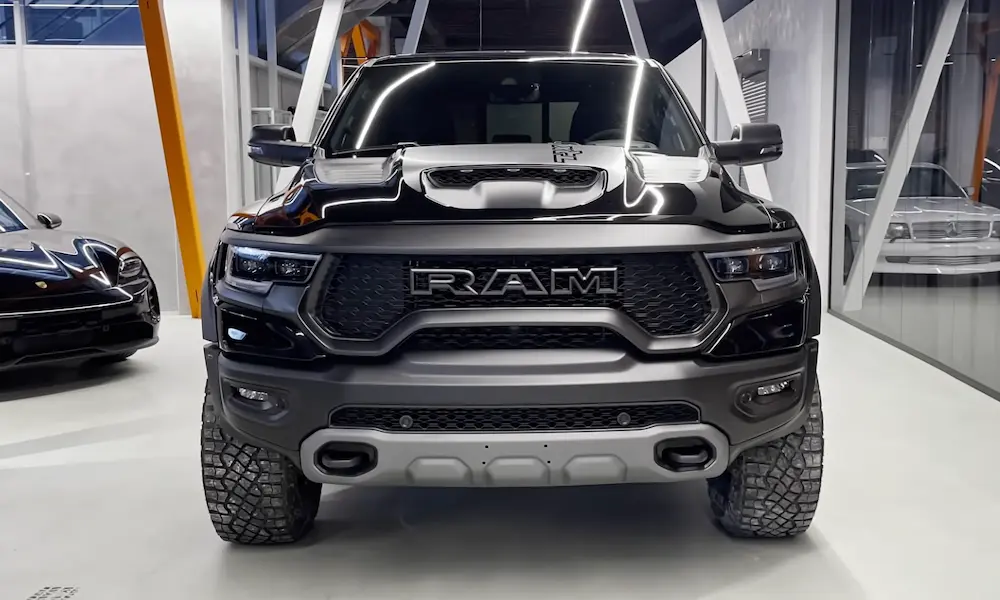
Best for: Dodge Charger, Challenger, Ram 1500 owners who want massive top-end power and highway passing performance.
The catch: Boost builds with RPM, so you get minimal grunt at idle or low speeds. That’s a problem on slow, technical off-road sections.
Positive Displacement Superchargers
These bolt directly on top of the engine, replacing the factory intake manifold entirely. They deliver maximum boost the instant you open the throttle, regardless of RPM.
Best for: Heavily loaded Jeep Wranglers and Gladiators turning oversized tires, towing trailers, or rock crawling.
The catch: They sit in the engine valley, absorbing heat from the block. Heat soak is a real concern if you don’t manage it properly.
Here’s a quick side-by-side so you can see the difference clearly:
| Feature | Centrifugal | Positive Displacement |
|---|---|---|
| Boost Delivery | Progressive (RPM-dependent) | Instant (flat torque curve) |
| Best Application | Highway, drag, street | Off-road, towing, crawling |
| Heat Soak Risk | Low (remote mount) | Higher (valley mount) |
| Factory Manifold | Usually retained | Replaced entirely |
| Idle Behavior | Normal | Normal |
Every Major 3.6 Pentastar Supercharger Kit Compared
Ripp Superchargers: The Power-Hungry Option
Ripp dominates the Jeep community and has expanded strongly into the Charger and Challenger market. They pair a Vortech V3 Si-Trim self-contained centrifugal head unit with aggressive calibration — pushing the Pentastar to 11 or 12 psi in some applications.
On a Dodge Charger or Challenger, a Ripp system pushes output past 400 to 450 rear-wheel horsepower, which genuinely rivals a factory 6.4 Hemi. In Jeep applications, you’re looking at 325 to 376 wheel horsepower and 300 to 350 lb-ft of wheel torque — even through the drivetrain losses of massive mud-terrain tires.
Every complete kit includes:
- Vortech V3 centrifugal head unit
- Front-mounted air-to-air intercooler
- Mandrel-bent aluminum charge pipes
- High-flow Siemens fuel injectors
- Proprietary MAP sensor
- High-boost PCV valve
- Custom intake system
For extreme heat or desert driving, Ripp’s oversized intercooler upgrade adds 35% more cooling surface area. PCM unlocking is included with the kit using HP Tuners software — no mailing your computer anywhere.
Price range: $6,000 – $7,500
ProCharger: The Street-Legal Workhorse
ProCharger brings decades of forced induction experience and impressive manufacturing scale to the Pentastar platform. Their systems use the P-1SC-1 self-contained centrifugal head unit with billet aluminum internals and heavy-duty billet bracketry that survives violent off-road vibration.
ProCharger runs a conservative 7 psi, yielding a reliable 40 to 45% horsepower increase — roughly 425 crank horsepower. That progressive power delivery pairs cleanly with the ZF 8-speed automatic, preserving smooth shift logic while adding serious highway grunt.
The three-core air-to-air intercooler mounts behind the front grille and relies entirely on airflow — no electric pumps or coolant reservoirs. Want a quieter install? ProCharger offers an optional helical gearset that dramatically reduces gear whine for a more factory-like experience.
Crucially, ProCharger systems carry full California Air Resources Board (CARB) certification, meaning they’re street legal in all 50 states.
Price range: $6,300 – $9,400
Hamburger’s Superchargers: The Quiet Innovator
Hamburger’s takes a genuinely different approach. Instead of traditional metal step-up gears, their centrifugal unit uses a traction drive system — arguably the quietest forced induction setup available for the Pentastar.
Their Stage 1 kit produces 425 horsepower and 365 lb-ft of torque at 8 psi using an air-to-air intercooler. The traction drive system requires specialized fluid, so Hamburger’s includes a dedicated oil cooler with dual electric fans to keep fluid temperatures stable at low vehicle speeds. Maintenance intervals stretch to 24,000 miles or two years.
CARB certification is currently pending, so check your state’s emissions rules before ordering.
Price range: Variable
VT Superchargers: The Budget-Friendly Off-Road Kit
VT Superchargers targets cost-conscious buyers comfortable handling their own tuning. Their centrifugal kit uses a one-piece die-cast aluminum housing with a mid-mounted water-to-air intercooler and front-mounted heat exchanger.
At 7 psi, expect a 40% horsepower and 30% torque increase with a bolt-on installation requiring no cutting or welding. The major caveat: VT sells hardware only — you source the ECU tune yourself. These kits are also explicitly sold for off-road use only with no CARB compliance.
Price range: $4,550 – $5,500
Magnuson: The Instant-Torque Champion
Magnuson builds positive displacement systems using Eaton’s Twin Vortices Series technology, deploying either the TVS1320 or the larger TVS1900 depending on your vehicle. These kits completely replace the factory plastic intake manifold with a cast, heat-treated aluminum unit housing the supercharger, high-flow injectors, and a massive internal air-to-water intercooler.
The TVS1900 system for the Jeep Wrangler JK produces 404 crank horsepower and 367 lb-ft of torque at 6 to 7 psi. Because boost arrives instantly off idle, this setup is ideal for low-speed rock crawling, towing, and moving heavy rigs over technical terrain.
To fight heat soak, Magnuson pairs the internal intercooler with a custom low-temperature radiator, electric coolant pump, and degas bottle. A built-in bypass valve opens at light throttle, eliminating parasitic drag during normal cruising. Systems carry 50-state legal CARB certification (D-488-53).
Price range: $7,500 – $7,900
Edelbrock E-Force: The Daily Driver’s Choice
Edelbrock uses the Eaton TVS R1320 rotor assembly inside a proprietary manifold featuring a dual-pass air-to-water intercooler. Their unique front-inlet, front-drive, blow-down design minimizes air path length for zero boost lag.
At 6 to 7 psi, Edelbrock delivers roughly 317 rear-wheel horsepower and 278 lb-ft of wheel torque — a 40% horsepower and 35% torque increase. The calibration software automatically optimizes transmission shift points to match the new torque curve.
What really separates Edelbrock is their commitment to long-term ownership: kits are 50-state legal (CARB D-215-96) and backed by a 3-year, 36,000-mile warranty. Cast in high-grade aluminum in the USA with a powder-coated finish.
Price range: $7,000 – $8,300
Sprintex: The Twin-Screw Alternative
Sprintex uses true twin-screw compression — physically compressing air internally between male and female rotors before discharge. This produces a denser air charge and better adiabatic efficiency than hybrid-roots designs.
Their S5-335 compressor pairs with a proprietary Laminova-tube water-to-air intercooler that packs enormous heat transfer surface area into a compact package. Portions of the housing use glass-filled nylon polymer, reducing weight and acting as a thermal insulator against engine valley heat.
On early Jeep Wrangler models, Sprintex delivers a 54% horsepower increase, pushing from roughly 195 to 302 rear-wheel horsepower. The system is fully self-contained (no oil pan taps required) and carries CARB certification (D-695-1).
Price range: $5,500 – $6,700
Full Kit Comparison Table
| Manufacturer | Type | Cooling | Boost | Power Gain | 50-State Legal | Price (USD) |
|---|---|---|---|---|---|---|
| Ripp | Centrifugal | Air-to-Air | 7–12 psi | 161–170+ whp | Varies | $6,000–$7,500 |
| ProCharger | Centrifugal | Air-to-Air | 7 psi | ~45% | Yes (CARB) | $6,300–$9,400 |
| Hamburger’s | Centrifugal (Traction) | Air-to-Air | 8 psi | Up to 425 HP | Pending | Variable |
| VT Systems | Centrifugal | Air-to-Water | 7 psi | 40% HP / 30% TQ | No | $4,550–$5,500 |
| Magnuson | Positive Displacement | Air-to-Water | 6–7 psi | ~105 whp | Yes (D-488-53) | $7,500–$7,900 |
| Edelbrock | Positive Displacement | Air-to-Water | 6–7 psi | ~110 whp | Yes (D-215-96) | $7,000–$8,300 |
| Sprintex | Twin-Screw | Air-to-Water | 7 psi | ~54% HP | Yes (D-695-1) | $5,500–$6,700 |
The PCM Problem Nobody Warns You About
Installing the hardware is only half the job. Without proper engine calibration, a supercharged Pentastar will detonate, run lean, and destroy itself.
Starting in 2015, Fiat Chrysler locked all factory PCMs with cryptographic security that blocks standard diagnostic port access. You can’t just flash a tune through your OBD-II port. There are two common solutions:
Option 1 – In-driveway flash: Ripp includes HP Tuners software and bypass cables with their kits. You plug in, flash, done. No mailing required.
Option 2 – Mail-in unlock: Some manufacturers partner with DiabloSport, requiring you to remove and ship your PCM. This takes several days. Some suppliers sell pre-unlocked replacement PCMs to skip the wait entirely.
For maximum safety and performance, consider a custom tune from a specialist like Hemifever Tuning. Custom calibration is especially critical if you’ve added long-tube headers, an aftermarket cam, or significantly larger tires — all of which change the engine’s air and fuel requirements.
Your transmission needs attention too. The ZF 8HP45 found in V6 models can handle supercharged torque, but its shift logic needs updating. A custom tuner can firm up hydraulic clutch pressures and raise shift points to prevent slipping under the new power curve.
Maintenance Essentials After Adding Boost
The Pentastar has two well-documented weak points. Adding a supercharger makes them worse. Address both before you boost.
Replace the Oil Filter Housing First
The factory plastic oil cooler and filter housing is a known failure point. Thermal cycling makes the plastic warp and crack, causing oil and coolant to mix or leak. A supercharger raises under-hood temperatures further, accelerating the failure.
Replace it with an aluminum unit (Dorman makes a well-regarded option) before or during supercharger installation. Here’s a detailed walkthrough of the Wrangler-specific replacement process if you’re doing it yourself.
Address the Pentastar Tick Proactively
The “Pentastar Tick” comes from failing needle bearings inside the rocker arms. If a bearing seizes, it grinds the camshaft lobes down and sends metal debris through the entire engine. Supercharging doesn’t cause this failure, but aggressive driving accelerates wear on already-marginal components.
Change your oil every 5,000 miles maximum using quality full-synthetic and inspect for ticking sounds during warm-up.
Three More Upgrades Worth Doing
Colder spark plugs: Boost raises cylinder temperatures. A one-step colder heat range keeps the spark kernel stable under pressure. Ripp includes these in their kits.
Oil catch can: Blow-by gases push oily vapor into your intake tract under boost. That oil coats your intercooler fins, kills heat transfer efficiency, and drops the effective octane of your fuel mixture. An oil catch can keeps the intake clean and prevents knock.
Upgraded coil packs: High-performance coil packs deliver a stronger spark to those colder plugs, improving combustion efficiency and throttle response. Ripp makes direct-fit units for 2012–2018 JK models.
Supercharger vs. V8 Swap: The Real Numbers
The V8 swap conversation comes up constantly in Wrangler and Gladiator forums. Let’s look at what it actually costs.
| Upgrade Path | Cost (USD) | Power Output | Install Time | Weight Added |
|---|---|---|---|---|
| V6 Supercharger | $5,500–$9,500 | 375–450 crank HP | 8–12 hours | ~50–80 lbs |
| 5.7L Hemi Swap | $25,000–$30,000 | 375–395 crank HP | 2–4 weeks | Moderate |
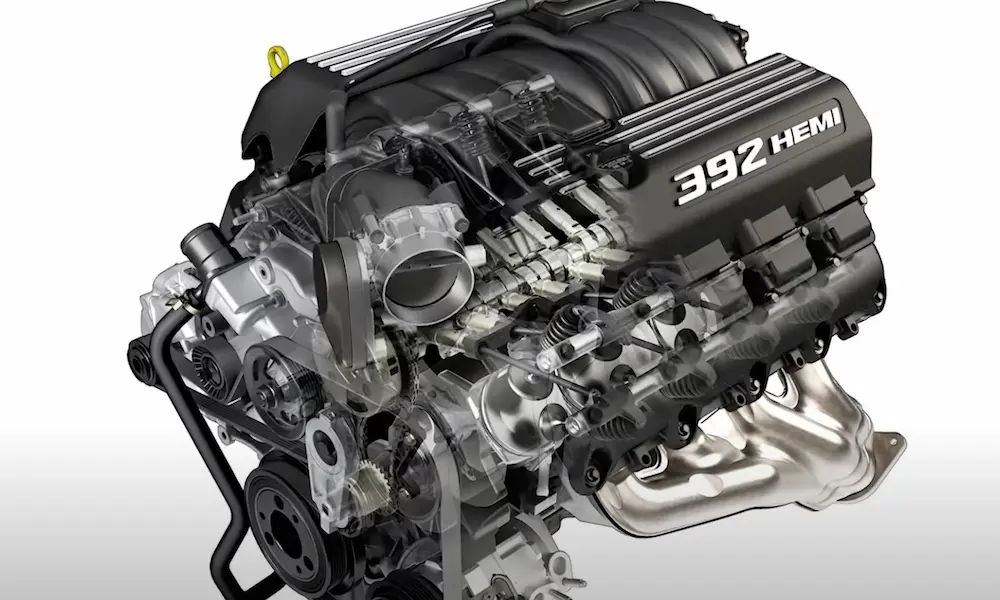
| 6.4L 392 Hemi Swap | $34,000–$40,000 | 485–505 crank HP | 3–6 weeks | High |
| 6.2L Hellcat Swap | $60,000–$75,000+ | 707+ crank HP | 4–8 weeks | Very High |
A professional 6.4 Hemi swap routinely runs $34,000 to $40,000 — and that’s before accounting for the weeks your vehicle sits at a shop. For that money, you could buy a different vehicle entirely.
A supercharger kit gets you comparable wheel-horsepower figures for roughly 20% of that cost, with your Jeep back on the trail in a weekend. You also keep the factory weight distribution. A heavy iron-block V8 over the front axle shifts your center of gravity forward, compresses front springs, and makes the vehicle nose-heavy on steep descents — the exact opposite of what you want off-road.
A well-chosen 3.6 Pentastar supercharger solves the power problem cleanly, keeps your build budget intact, and leaves your handling balance exactly where the factory put it.