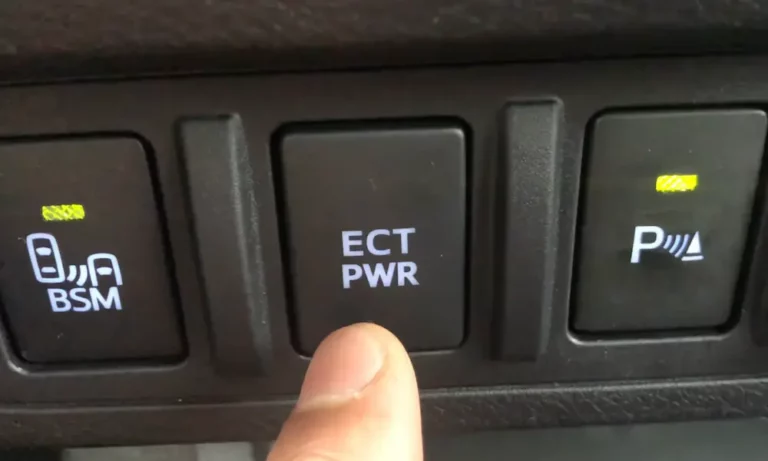
You’ve probably spotted that ECT PWR button in your 4Runner and wondered what magic it unlocks. Here’s the truth: it won’t turn your SUV into a race car, but it’ll change how your transmission behaves. Let’s break down what 4Runner ECT Power actually does and when you should press that button.
What Does ECT Power Mean in a 4Runner?
ECT Power stands for Electronically Controlled Transmission Power. Think of it as Toyota’s version of a tow/haul mode, but with a fancier name.
Here’s what happens when you press it: your transmission holds onto gears longer before shifting up. Instead of shifting at 3,000 RPM, it might wait until 4,500 RPM. The engine revs higher, stays in the power band longer, and gives you more oomph when you need it.
What ECT Power doesn’t do? It doesn’t add horsepower or torque to your engine. Your 4Runner’s engine makes the same power whether that button’s lit up or not. The difference is all about when that power gets delivered.
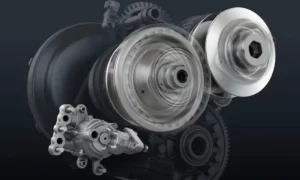
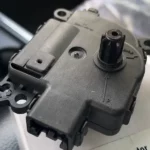
The system works through electronic solenoids inside your transmission. These little valves control hydraulic pressure, managing clutch packs and timing gear changes. Modern Toyota ECT systems use up to seven different solenoids working together to nail the perfect shift timing.
How ECT Power Changes Your Driving Experience
Press the ECT Power button and you’ll notice the difference immediately. Your 4Runner feels more responsive. Step on the gas and the truck reacts quicker, without that annoying delay you get in normal mode.
The transmission becomes more predictable, too. In normal mode, you might experience that frustrating lag-then-lurch cycle: nothing happens, nothing happens, then suddenly the transmission kicks down two gears and the truck surges forward. ECT Power smooths this out by keeping the transmission ready to deliver power.
Your engine will run louder because it’s spending more time at higher RPMs. Some drivers love this sporty feel. Others find it annoying during their morning commute. That’s why ECT Power works best as a situational tool rather than an all-the-time setting.
Best Times to Use 4Runner ECT Power
ECT Power shines in specific situations where you need extra responsiveness:
Towing a trailer: The delayed shift points help maintain momentum and reduce gear hunting when pulling heavy loads. Your transmission won’t frantically search for the right gear on hills.
Climbing steep grades: Mountain driving becomes less stressful. The transmission holds lower gears longer, giving you consistent power uphill and better engine braking downhill.
Highway merging and passing: Need to slot into traffic quickly? ECT Power eliminates throttle lag and gives you immediate acceleration response.
Off-road driving: When crawling over rocks or navigating technical terrain, the predictable power delivery helps you maintain control. The transmission won’t unexpectedly upshift when you’re halfway up an obstacle.
Heavy cargo hauling: Loading up your 4Runner with camping gear, tools, or people? ECT Power helps compensate for the extra weight.
Many experienced 4Runner owners actually prefer driving with ECT Power engaged permanently, citing better throttle response and more enjoyable driving dynamics.
When to Skip ECT Power
Don’t use ECT Power during steady highway cruising at constant speeds. The higher shift points waste fuel without providing any benefit. You don’t need extra power to maintain 65 mph on flat interstate.
Skip it during normal city commuting, too. Stop-and-go traffic doesn’t require aggressive shift patterns, and you’ll just burn extra gas for no reason.
Turn it off during gentle driving when fuel economy matters more than performance. Your wallet will thank you.
Does ECT Power Hurt Your Gas Mileage?
Yes, ECT Power typically reduces fuel economy. Higher RPMs mean your engine burns more fuel per mile traveled.
How much worse? That depends on how you drive. Some users report minimal impact, while others notice a measurable drop. Interestingly, some long-term ECT Power users claim they get equal or slightly better fuel economy with the system engaged, possibly because the transmission stops hunting for gears and operates more efficiently.
The fuel economy hit is worst during highway cruising, where ECT Power might cause unnecessary downshifting. In hilly terrain or stop-and-go traffic, the impact might be negligible or even positive due to more efficient power delivery.
Here’s a practical breakdown:
| Driving Condition | Fuel Economy Impact | Worth Using ECT? |
|---|---|---|
| Flat highway cruising | Moderate decrease | No |
| Mountain driving | Minimal impact | Yes |
| City stop-and-go | Small decrease | Sometimes |
| Towing | Variable (offset by efficiency gains) | Yes |
| Off-roading | Not a concern | Yes |
The Real Performance Impact
Let’s address something important: ECT Power doesn’t make your 4Runner faster in 0-60 tests. Some real-world testing shows no improvement or even slightly slower times with ECT Power engaged, with one test showing a half-second slower 0-60 mph run.
Wait, slower? How’s that possible if it keeps you in the power band longer?
Because ultimate acceleration depends on getting to higher speeds quickly, not just revving higher. ECT Power might keep you in second gear when third would actually be faster. The system prioritizes power delivery feel over raw acceleration numbers.
The real benefit is perceived performance. Your 4Runner feels more responsive and powerful even if the stopwatch doesn’t show it. For daily driving, that subjective improvement matters more than lap times.
Will ECT Power Damage Your Transmission?
Short answer: no, not when used appropriately.
Toyota designed ECT Power as a normal operating mode. The slightly higher RPMs during shifts fall well within your engine’s safe operating range. Your 4Runner’s powertrain was engineered to handle this stress.
However, some considerations exist. Running at high RPMs constantly could theoretically increase wear on engine and transmission components over the very long term. Some users notice torque converter behavior changes during highway driving, with the converter unlocking more frequently and potentially increasing transmission temperature.
The key is using ECT Power for its intended purpose: demanding driving situations. Don’t leave it on 24/7 for years and expect zero consequences, but don’t worry about pressing it when you need extra performance.
How to Tell If ECT Power Is On
Most 4Runners show an “ECT PWR” indicator light on the dashboard when the system’s active. The button itself might also illuminate.
The easiest way to tell? Feel how your transmission behaves. With ECT Power on, the engine revs noticeably higher before upshifting. You’ll hear and feel the difference.
To turn it off, just press the button again. The indicator light goes out, and the transmission returns to normal shift patterns. The system doesn’t automatically reset when you turn off your 4Runner—it remembers your preference until you change it.
ECT Power Across Different 4Runner Generations
ECT Power functionality has evolved over the years, but the core concept remains consistent across generations.
Third-generation 4Runners (1996-2002) featured the ECT button on the dashboard near the steering wheel. These older systems worked more mechanically, with simpler solenoid control.
Fourth-generation models (2003-2009) refined the system with more sophisticated electronic control, providing smoother transitions between normal and power modes.
Fifth-generation 4Runners (2010-present) continue offering ECT Power, though some owners report the system’s calibration differs from earlier versions. The modern system makes more intelligent decisions about when to shift but still benefits from manual activation during challenging driving.
Button placement varies by generation, but you’ll typically find it either on the dashboard or integrated into the center console area near the shifter.
Smart ECT Power Strategies
Here’s how savvy 4Runner owners maximize the ECT Power feature:
Use it proactively: Turn on ECT Power before you need it. Approaching a mountain pass? Activate it at the base, not halfway up when you’re already struggling.
Create a mental checklist: Hook up a trailer? ECT Power on. Finished towing? ECT Power off. Loading heavy cargo? Turn it on until you unload.
Try the hybrid approach: Many drivers use ECT Power during spirited weekend driving or challenging conditions but switch to normal mode for weekday commuting. This balances performance and efficiency.
Monitor your fuel economy: Track whether ECT Power actually hurts your mileage in your specific driving patterns. You might be surprised.
Trust your ears: If the engine sounds like it’s working too hard for the situation, you probably don’t need ECT Power engaged.
The Bottom Line on 4Runner ECT Power
ECT Power isn’t a magic performance button, but it’s a genuinely useful feature when you understand what it does. Think of it as a tool in your 4Runner’s capability toolkit—valuable in the right situations, unnecessary in others.
Use it when you need responsive power delivery: towing, climbing hills, off-roading, or just enjoying spirited driving. Skip it during relaxed highway cruising when fuel economy matters more.
The beauty of ECT Power is its simplicity. One button press gives you noticeably different transmission behavior. You don’t need a computer science degree to use it effectively—just press it when you want your 4Runner to feel more aggressive, and turn it off when you don’t.
Your 4Runner’s electronically controlled transmission was designed with this feature from the factory. Toyota didn’t add it as an afterthought—it’s part of the vehicle’s core capability set. Use it without guilt, but use it smartly.
The next time you’re about to merge onto a busy highway or hook up that boat trailer, give that ECT PWR button a press. You’ll immediately understand why Toyota included it.