Got a 6.0 Powerstroke and not sure if you’re filling it with the right amount of oil — or the right oil at all? This engine is notoriously picky, and getting either wrong can mean injector failures, rough starts, or worse. Stick around, because this guide covers the exact oil capacity figures, the right fluid specs, filter traps to avoid, and the maintenance habits that keep these engines alive.
How Much Oil Does a 6.0 Powerstroke Take?
The short answer: 15 quarts with a filter change. That’s your standard service fill for the 6.0 Powerstroke oil capacity every time you do an oil change.
But there’s more to it than just that number.
The total system volume — including the high-pressure oil reservoir, the cylinder head rails, and the oil cooler — sits at roughly 17.5 to 18 quarts. During a normal oil change, about 3 quarts stay trapped in those upper engine components. So you’re only replacing around 83% of the oil each time.
Here’s the full breakdown:
| Oil Capacity Type | Quarts (US) | Liters |
|---|---|---|
| Service Refill (with filter) | 15.0 | 14.2 |
| Service Refill (without filter) | 12.0 | 11.4 |
| Total System – Dry Fill | 17.5 – 18.0 | 16.6 – 17.0 |
| Oil Pan Capacity | 13.0 | 12.3 |
| Oil Filter Displacement | 1.0 – 2.0 | 0.95 – 1.9 |
Why does this matter? Because the 6.0 Powerstroke isn’t just using oil for lubrication. It’s using it as hydraulic fluid to fire the injectors. More on that below.
Why the 6.0 Powerstroke Oil System Is Different From Most Engines
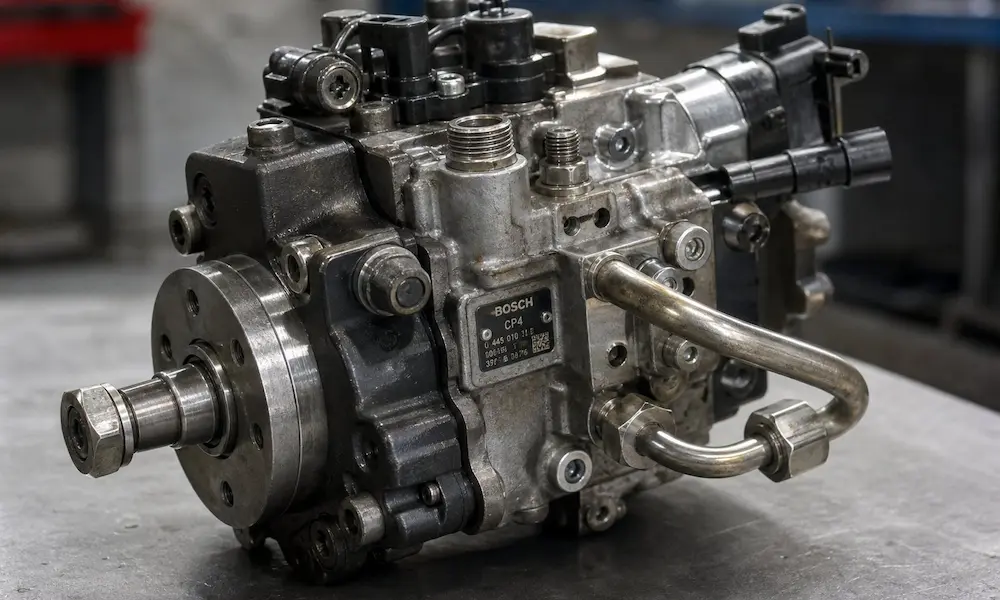
This engine runs a Hydraulic Electronic Unit Injection (HEUI) system. That means the fuel injectors don’t use a traditional high-pressure fuel pump to fire. Instead, they use pressurized engine oil — up to 4,000 PSI — to drive an intensifier piston that atomizes the diesel fuel into the combustion chamber.
Two separate oil circuits keep this all running:
Low-Pressure System: A gerotor-style pump draws oil from the pan, pushes it through the oil cooler and filter, then distributes it to the bearings, camshaft, and valvetrain. It maintains around 65 PSI.
High-Pressure System: The high-pressure oil pump (HPOP) sits at the rear of the engine valley, driven by the camshaft gear. It takes oil from a dedicated reservoir and pressurizes it between 500 and 4,000 PSI to actuate the injectors.
This is exactly why the 6.0 Powerstroke oil capacity and oil quality matter so much. If the HPOP doesn’t get a steady, clean, un-aerated supply of fluid, the injectors won’t fire — or they’ll fire poorly.
Getting the Oil Level Right
Don’t underfill and don’t overfill. Both cause real damage on a 6.0.
Too low: The HPOP pulls air into the high-pressure rails. Air is compressible. Oil isn’t. Once air gets in, injection pressure drops below the 500 PSI minimum required to fire the injectors. You’ll get misfires or a no-start condition.
Too high: The crankshaft whips through the oil and aerates it. Foamy oil is just as bad for the HPOP and injectors as low oil.
Keep the dipstick reading near the max line — not below half, not above the top mark.
What Oil Should You Use in a 6.0 Powerstroke?
The spec is Ford WSS-M2C171-F1, and you need to take it seriously.
When the API CK-4 standard replaced CJ-4 in 2016, Ford’s own testing found that many CK-4 oils didn’t protect the valvetrain well enough — specifically rocker arms and lifters. Ford’s response was to create the WSS-M2C171-F1 specification, which requires:
- Phosphorus content between 1,000 and 1,200 ppm for extreme-pressure protection
- Enhanced anti-foaming additives to prevent aerated oil from killing the HPOP
Don’t just grab any diesel oil off the shelf. Check the label for that F1 spec.
Viscosity by Temperature
| Ambient Temperature | SAE Grade | Status |
|---|---|---|
| Above 30°F (-1°C) | 15W-40 | Preferred |
| Above 10°F (-12°C) | 15W-40 | Acceptable |
| -10°F to 90°F (-23°C to 32°C) | 10W-30 | Acceptable (preferred below 30°F) |
| Below 30°F (-1°C) | 5W-40 | Recommended for cold starts |
| Below 0°F (-18°C) | 0W-30 / 0W-40 | Extreme cold conditions |
15W-40 is your go-to for most climates. Drop to 5W-40 or 10W-30 when temperatures dip. The injector spool valves have extremely tight tolerances — thick cold oil won’t flow through them fast enough on startup.
The Oil Shearing Problem Nobody Talks About Enough
Here’s something that catches a lot of 6.0 owners off guard: your oil shears down in grade within the first 1,000 miles.
According to DieselSite’s field testing, even premium 15W-40 or 5W-40 oil will shear down to a 30-weight viscosity quickly because the HPOP gears and injector intensifier pistons physically break apart the long-chain polymers used as viscosity improvers. The oil typically stabilizes after that initial shear, but it’s worth knowing your oil isn’t staying at the grade you put in.
More importantly, this shearing generates molecular-level heat that causes varnish and carbon deposits to build up inside the injectors. That’s where stiction comes from.
What Is Stiction and Why Should You Care?
Stiction is the sticky residue that builds up on the injector spool valves as oil breaks down. The spool valve moves less than half a millimeter inside a bore measured in microns. Even a thin film of lacquer-like varnish is enough to cause it to stick.
Symptoms of stiction:
- White smoke on cold start
- Rough, uneven idle when the engine is cold
- Misfires that clear up once the engine warms up
Why does it go away when warm? Because as the oil heats up, it thins and the varnish softens. The injectors free up temporarily — until the next cold start.
Two popular fixes that 6.0 owners actually use:
- Archoil AR9100 — a nano-friction modifier that cleans spool valves and coats metal surfaces
- Hot Shot’s Secret Stiction Eliminator — a cleaner designed specifically for HEUI-style injectors
These aren’t magic, but they work well as part of a regular maintenance routine.
The Oil Filter Trap That Kills Engines
The 6.0 Powerstroke uses a cartridge-style Motorcraft FL-2016 filter (Part No. 3C3Z-6731-AA) in a housing on top of the engine. It’s a clean design — until you use the wrong aftermarket filter.
Here’s the problem: the oil filter housing has a drain-back valve — a spring-loaded plunger at the base. When the filter is seated correctly, it depresses the valve, forcing oil through the filter media. When you remove the filter, the valve opens and drains the housing back to the pan.
If an aftermarket filter is even slightly too short, it won’t depress the valve. Oil bypasses the filter completely. The engine runs with zero filtration on its lubrication and hydraulic oil. Most owners don’t even know it’s happening.
There’s also a related problem with aftermarket “tall” filter caps. Some aftermarket kits include a taller cap to add filter surface area. If someone swaps back to a standard Motorcraft filter but keeps the tall aftermarket cap, the filter sits loose, the valve stays open, and — same result. No filtration.
The fix: Use the Motorcraft FL-2016 filter with the correct OEM cap (Part No. 3C3Z-6766-CA, EC-781). Don’t mix and match.
| Filter Component | Motorcraft Part No. | Notes |
|---|---|---|
| Engine Oil Filter | FL-2016 (3C3Z-6731-AA) | OEM spec only |
| Oil Filter Cap | EC-781 (3C3Z-6766-CA) | Must match filter height |
| Drain Valve Plunger | 3C3Z-6800-A | Replace if worn or stuck |
The Oil Cooler and Why You Need to Watch Your Temperature Delta
The 6.0’s oil cooler sits in the engine valley submerged in coolant. It uses very narrow coolant passages to pull heat out of the oil. Those narrow passages are also its Achilles’ heel.
Residual casting sand from manufacturing and coolant “gel” from degraded Motorcraft Gold coolant clog these passages over time. When the cooler clogs, oil temperature climbs. Because coolant must pass through the oil cooler before reaching the EGR cooler, a clogged oil cooler also starves the EGR cooler — and that leads to EGR cooler failure, coolant in the combustion chamber, and a very expensive repair.
The number to watch: The delta between Engine Coolant Temperature (ECT) and Engine Oil Temperature (EOT).
- Under 15°F delta during highway cruising = normal
- Over 15°F delta = oil cooler is restricting, needs replacement soon
- Oil temp above 255°F = the PCM kicks the engine into limp mode to prevent catastrophic failure
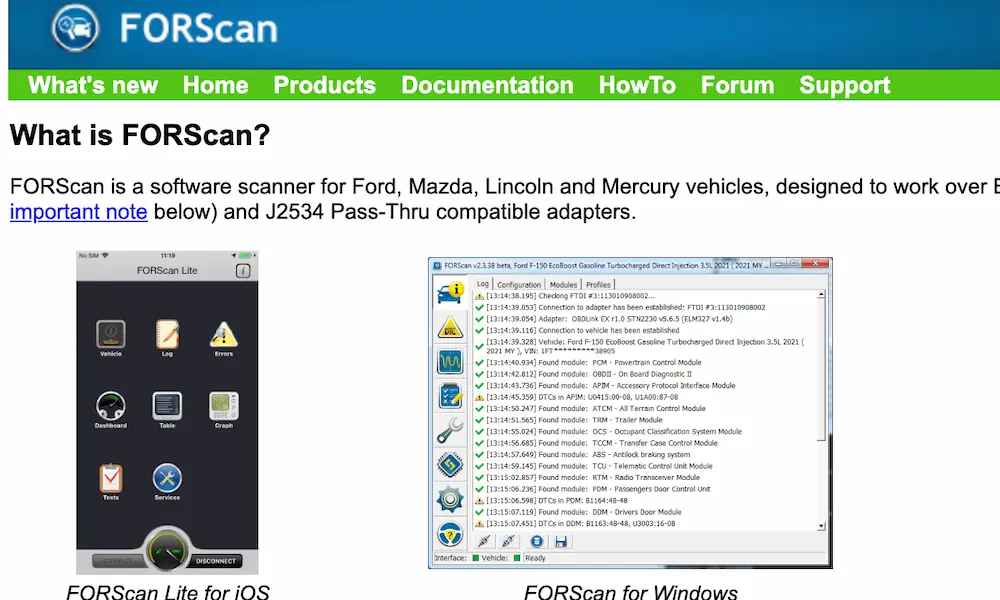
Get a live data scanner and watch those temps on long pulls. It’s the earliest warning you’ll get.
How Often Should You Change the Oil?
Ford’s official schedules are generous. Diesel specialists say they’re too generous for a 6.0.
| Service Task | Normal Duty | Severe Duty | Specialist Recommendation |
|---|---|---|---|
| Engine Oil & Filter | 7,500 mi / 6 mo | 5,000 mi / 6 mo | 3,000 mi |
| Fuel Filters | 15,000 mi | 10,000 mi / 6 mo | 10,000 mi |
| Coolant Flush (Gold) | 100,000 mi | 45,000 mi / 3 yrs | 45,000 mi |
What Counts as Severe Duty?
Per Ford’s own service guidance, severe duty includes:
- Regular towing or hauling heavy loads
- Extended idling (common in fleet or work trucks)
- Extreme hot or cold operating conditions
- Dusty or unpaved road driving
- Short trips where the engine never fully warms up
If any of those describe your driving, treat every oil change interval as severe duty — and consider shortening it further to the 3,000-mile specialist recommendation.
High-Pressure Oil System Weak Points to Fix Now
Two failure points in the HPOP circuit are responsible for a huge percentage of 6.0 breakdowns.
The STC Fitting: On 2005 and later engines, Ford added a Snap-to-Connect fitting on the HPOP outlet. This fitting cracks under pressure, causing massive high-pressure oil leaks that either shut the engine down while driving or prevent it from restarting. Replacing it with a solid-threaded fitting is one of the first steps in building a reliable 6.0.
Standpipe and Dummy Plug O-Rings: The oil rails in the cylinder heads use rubber O-rings on the standpipes and dummy plugs. These O-rings flatten or tear under 4,000 PSI. The sneaky part: the leak only gets bad when the oil warms up and thins out. Cold starts are fine. Hot restarts fail because thinned oil forces its way through the damaged O-ring, pressure drops below 500 PSI, and the injectors won’t fire.
Bypass Filtration: Worth Adding
A bypass oil filtration system routes a small percentage of oil through a high-efficiency 2-micron filter — far finer than the standard FL-2016’s capability. This catches the microscopic soot and metal particles that the stock filter misses, slows varnish buildup in the injectors, and extends the life of HPOP components significantly. It’s a worthwhile upgrade if you plan to keep the truck long-term.
Complete Fluid Capacities for the 6.0 Powerstroke Platform
Oil isn’t the only fluid that matters. Here’s what the rest of the drivetrain needs:
| Component | Fill Type | Fluid Spec | Capacity (Quarts) |
|---|---|---|---|
| Cooling System | Full Fill | Motorcraft Gold / ELC | 27.5 – 28.0 |
| 5R110W Auto Trans | Dry Fill | MERCON SP / LV | 17.5 – 19.0 |
| 5R110W Auto Trans | Service Refill | MERCON SP / LV | 7.4 – 7.5 |
| ZF6 Manual (6-Speed) | Service Refill | MERCON V | 5.5 – 5.8 |
| Transfer Case (4WD) | Service Refill | MERCON V / SP | 2.0 |
| Front Diff (Dana 60) | Service Refill | 80W-90 / 75W-90 | 2.7 – 3.0 |
| Rear Diff (Sterling 10.5) | Service Refill | 75W-140 Synthetic | 3.3 – 3.45 |
| Rear Diff (Dana 80) | Service Refill | 75W-90 / 75W-140 | 4.0 – 4.25 |
One quick note on coolant: many owners switch away from Motorcraft Gold (VC-7-B) to an extended-life coolant meeting CAT EC-1 specifications. The Gold formula is known to gel as it degrades, and that gel is a direct contributor to oil cooler clogging.
The Bottom Line on 6.0 Powerstroke Oil Capacity
The 6.0 Powerstroke oil capacity of 15 quarts isn’t just a fill number — it’s the foundation of how this engine makes power and stays alive. Use the right oil (WSS-M2C171-F1 spec, right viscosity for your climate), use the right filter with the right cap, keep an eye on your ECT-EOT delta, and don’t stretch your oil change intervals. These engines reward owners who pay attention and punish those who don’t.