Your 6.0 Powerstroke just coughed out a cloud of smoke on a cold start. Again. You’re wondering if it’s the oil—and you’re probably right. Here’s what you need to know about choosing the right oil type to keep your engine running instead of replacing injectors every 50,000 miles.
Why Your 6.0 Powerstroke Destroys Oil Faster Than Any Other Engine
Your 6.0 isn’t like other diesels. It doesn’t just lubricate with oil—it uses oil as hydraulic fluid to fire the injectors.
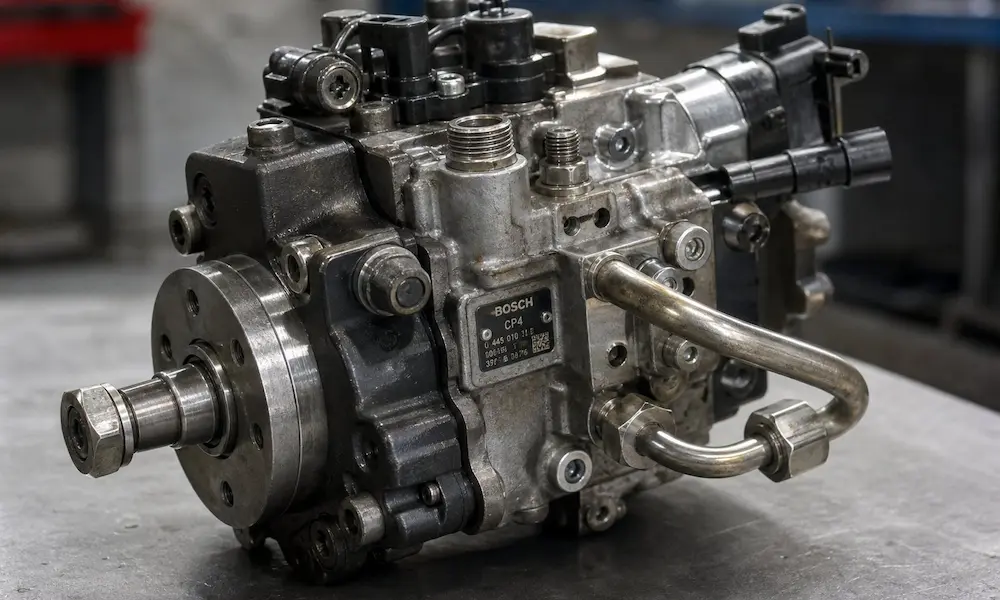
The HEUI (Hydraulic Electronic Unit Injector) system takes oil from your pan and pressurizes it to 3,000-4,500 psi. That’s not a typo. Your oil pressure gauge shows 40-60 psi, but inside the high-pressure oil pump, it’s experiencing forces that would make a normal engine cry.
This extreme pressure literally tears apart the oil molecules. Studies show the 6.0 shears 40-weight oil down to 30-weight in the first 1,000 miles. The broken-down oil then turns into sludge and varnish—the sticky gunk that causes injector stiction.
Add in the notoriously failure-prone oil cooler that lets oil temps skyrocket past 230°F, and you’ve got oil that’s both mechanically shredded and thermally cooked.
The Only Oil Specification That Matters: Ford WSS-M2C171-F1
Forget what the API donut says for a minute. In 2016, Ford did something unusual—they rejected the new API CK-4 standard for all their diesel engines.
Why? Because some CK-4 oils dropped their ZDDP (zinc) levels to play nice with modern emissions equipment. Ford’s testing found these oils caused valve train wear that didn’t happen with older formulations.
Ford created their own spec—WSS-M2C171-F1—which requires a minimum 1,000 ppm of phosphorus (the good stuff in ZDDP that prevents metal-on-metal contact). This spec also includes tougher requirements for shear stability and deposit control.
Here’s what you do: Turn the oil bottle around and look for “WSS-M2C171-F1” in the specifications list. If it’s there, you’re good. If it’s not, don’t use it in your 6.0.
Most major brands now offer oils meeting this spec:
- Motorcraft 5W-40 diesel oil
- Schaeffer’s SynShield
- AMSOIL Heavy Duty Diesel
- Lucas Oil CK-4
- Hot Shot’s Secret Green Diamond
5W-40 vs 15W-40: The Viscosity Debate Settled
You’ll see both viscosities recommended. Here’s the deal.
The “W” stands for winter. At operating temperature (212°F), both 5W-40 and 15W-40 perform as 40-weight oils. The difference is how they flow when cold.
15W-40 is the old-school heavy-duty diesel choice. It works fine if you live where it never drops below 30°F and you’re towing heavy loads regularly. The problem? It flows like molasses when cold, which makes cold-start stiction worse.
5W-40 full synthetic is the better choice for nearly everyone. Here’s why:
The synthetic base oil needs fewer viscosity-index improvers (those long-chain polymers) to achieve 40-weight performance. Since the HEUI system shreds these polymers anyway, starting with fewer of them means less sludge-forming breakdown products.
Plus, 5W-40 flows better at startup, reducing the sticky friction that causes injector stiction on cold mornings.
| Oil Viscosity | Best For | Temperature Range |
|---|---|---|
| 5W-40 Synthetic | Most 6.0 owners (best all-around choice) | -20°F and up |
| 15W-40 | Hot climates, heavy towing | 30°F and up |
| 10W-30 | Moderate climates | -10°F to 90°F |
Unless you’re in Arizona pulling a fifth-wheel in July, go with 5W-40 synthetic.
What Is Injector Stiction and Why Should You Care?
Stiction = static friction. It’s the gummy, sticky resistance that keeps things from moving smoothly.
Inside each HEUI injector sits a precision spool valve. This valve directs high-pressure oil thousands of times per minute with micrometer precision. When oil breaks down from heat and shearing, it creates varnish and carbon deposits on this valve.
The valve gets sticky. It hesitates. The injector can’t fire at the right time.
You’ll notice stiction when:
- Hard starting when cold
- Rough idle for the first few minutes
- White or black smoke puffs on startup
- Engine stumbles or hesitates
- Symptoms disappear once the engine warms up
That last point is the diagnostic key. If your 6.0 runs like garbage cold but smooths out when warm, you’ve got stiction, not failed injectors. The thick, cold oil can’t overcome the sticky valve. As the oil warms and thins, it flows better and the symptoms vanish.
The Stiction Fix: Do Oil Additives Actually Work?
Yes, but let’s be clear about what they do.
Products like Archoil AR9100 and Hot Shot’s Secret Stiction Eliminator aren’t snake oil. They’re aggressive detergents combined with nano-friction modifiers.
The detergent chemically dissolves the varnish and carbon stuck to the spool valve. The friction modifier then lays down a slippery coating that helps the valve slide freely even if minor deposits remain.
User reports show real results—rough cold starts cleaned up, smoke eliminated, codes cleared.
Two ways to use them:
- Restorative treatment: If you’ve got stiction symptoms now, add a full bottle to your oil at the next change. Run it for the full 5,000-mile interval to let it clean the system.
- Preventative maintenance: Many 6.0 owners add a smaller preventative dose with every oil change to stop deposits before they form.
But here’s the catch: additives treat the symptom (sticky valves), not the disease (oil breakdown). They can’t fix a clogged oil cooler or stop the HEUI system from shearing oil. They’re part of the solution, not the whole solution.
Oil Capacity and Filter: Getting the Basics Right
Your 6.0 holds 15 quarts total, including the filter. During a change, you won’t drain all of it—expect to refill with 12-14 quarts.
Critical point: Use your dipstick, not a quart count. The dipstick is the final authority.
The Filter Matters More Than You Think
Don’t cheap out on the oil filter. The 6.0’s filter housing has a bypass valve. If your bargain-bin filter clogs, the bypass opens and sends dirty, unfiltered oil straight to your injectors.
That’s a $4,000+ mistake.
Stick with OEM Motorcraft FL-2016 or equivalent quality. It’s cheap insurance.
The 5,000-Mile Rule: Why This Isn’t Negotiable
Ford lists two oil change intervals: 7,500 miles for “normal” use and 5,000 miles for “severe” conditions.
Here’s the truth: every 6.0 Powerstroke operates under severe conditions, even if you baby it.
The HEUI system is constantly shearing the oil. The EGR system is constantly contaminating it with soot. By 5,000 miles, your oil is already degraded and full of abrasive particles.
Expert consensus for HEUI engines is clear: 5,000 miles or 200 hours, whichever comes first. This interval drains the contaminated oil before it turns into the sludge that costs thousands in injector replacements.
Stretching to 7,500 miles to save $60 on an oil change is a great way to spend $4,000 on injectors later.
Your Complete 6.0 Powerstroke Oil Strategy
If you want your 6.0 to last, here’s your non-negotiable protocol:
1. Check your oil cooler health first
Monitor oil temps. If oil temperature exceeds 230°F or runs more than 15-20°F hotter than coolant temp, your oil cooler is failing. Fix this before anything else. No oil can survive a bad cooler.
2. Use only WSS-M2C171-F1 certified oil
Check the back label. If you don’t see this Ford spec number, don’t use it. Period. This guarantees the high-ZDDP content your engine needs.
3. Choose 5W-40 full synthetic
Unless you’re in a desert climate and never see cold weather, 5W-40 synthetic is your best defense. Better cold flow, superior shear resistance, fewer breakdown products.
4. Change at 5,000 miles, religiously
Set a reminder. This is your primary defense against the oil degradation that causes stiction. Don’t stretch it.
5. Use a quality filter
Motorcraft FL-2016 or equivalent. Every single time.
6. Add stiction treatment if needed
Already have symptoms? Add a full treatment of Archoil AR9100 or Hot Shot’s Secret at your next change.
7. Consider preventative additives
Many successful 6.0 owners add a preventative dose with every oil change. Combined with synthetic oil and short intervals, it’s the ultimate prevention strategy.
The Bottom Line on 6.0 Powerstroke Oil Type
Your 6.0 isn’t a normal diesel. It’s a high-pressure hydraulic system that happens to use engine oil as its working fluid. That means oil selection isn’t about lubrication alone—it’s about hydraulic stability, shear resistance, and deposit control.
The right oil type for a 6.0 Powerstroke is 5W-40 full synthetic meeting Ford WSS-M2C171-F1 specification, changed every 5,000 miles with a quality filter.
Do this, keep your oil cooler healthy, and your 6.0 can actually be reliable. Ignore it, and you’ll understand why these engines have a reputation for eating injectors.
The choice—and the repair bills—are yours.