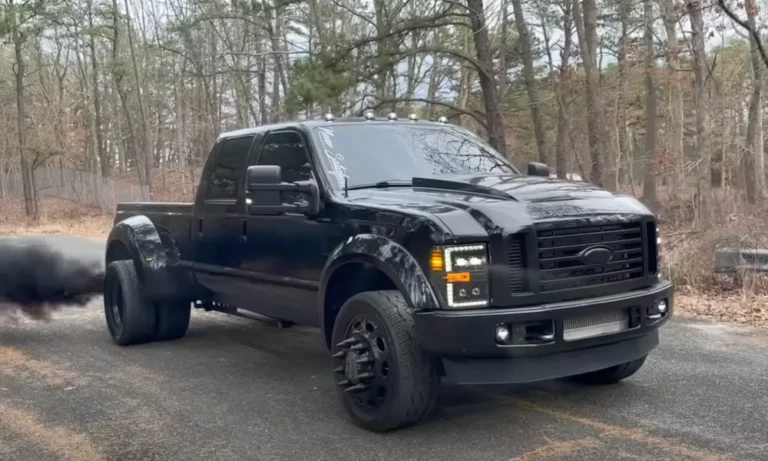
The 6.4 Powerstroke has a reputation that follows it everywhere. If you’re already hearing ticking noises, watching your oil level climb, or chasing mystery fault codes — this guide covers every major failure, why it happens, and what you can do about it. Stick around to the end, because the last section could save your engine.
What Makes the 6.4 Powerstroke So Problematic?
Ford introduced the 6.4 Powerstroke in 2008 to meet new EPA emissions rules. It replaced the troubled 6.0L and brought serious upgrades — a high-pressure common-rail injection system, sequential twin turbos, and the first diesel particulate filter (DPF) in a Ford diesel truck.
Those upgrades also introduced a web of interconnected failure points. When one system cracks, it tends to drag two or three others down with it. That’s the core story of the 6.4 Powerstroke engine problems every owner needs to understand.
6.4 Powerstroke Engine Problems: The Full Breakdown
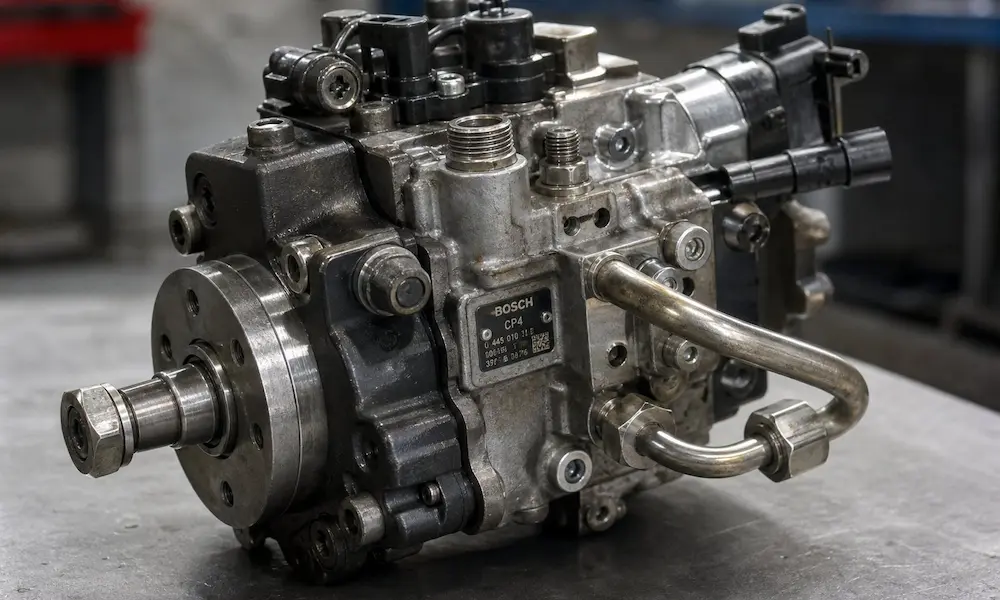
1. High-Pressure Fuel Pump (HPFP) Failure
The HPFP runs at up to 29,000 PSI. It relies entirely on diesel fuel for internal lubrication. Any water, air, or debris that sneaks in will score the pump’s internals — and when it fails, it sends metal shavings straight through your fuel rails and into your injectors.
The repair bill often exceeds $4,000 in parts alone. You’ll usually see fault code P0087 (Fuel Rail Pressure Too Low) before the full failure hits.
Fix it early: Install a quality lift pump like a FASS or AirDog to deliver clean, air-free fuel to the HPFP. Check your fuel rail pressure sensor first — a sensor that won’t read 0 PSI with key-on, engine-off will send you chasing the wrong problem.
| Fuel System Parameter | Spec / Value | What Happens When It’s Off |
|---|---|---|
| Maximum Rail Pressure | 29,000 PSI | Injector body and seal stress |
| Low Pressure Supply | 5–10 PSI | Air intrusion, pump cavitation |
| HPFP Drive Shaft Seal | Mechanical Seal | Fuel leaks into oil |
| Return System Pressure | Min. 3 BAR (45 PSI) | Injector cooling failure |
2. Diesel Particulate Filter (DPF) Clogging
The DPF catches soot and burns it off through a process called active regeneration. To hit the required 1,200–1,400°F, the 6.4 injects raw fuel into the cylinders on the exhaust stroke. It works — but at a serious cost.
Trucks that run short city trips never complete a full regen cycle. They stay in a perpetual regeneration loop, burning extra fuel, spiking exhaust temperatures, and accelerating wear on turbos and EGR components.
Symptoms to watch for:
- Frequent regen cycles (every 50–100 miles instead of 300+)
- Dropping fuel economy
- Fault codes P2002 or P2459
- Limp mode activation
| DPF Condition | Symptoms | Secondary Damage |
|---|---|---|
| Early Clogging | Frequent regens, reduced MPG | Turbo bearing wear, EGT spikes |
| Severe Blockage | Limp mode, P2002/P2459 codes | Melted components, exhaust leaks |
| Failed Sensor | Inaccurate pressure readings | Wrong regen timing, fast soot buildup |
3. Oil Dilution: The Silent Engine Killer
This is the most insidious 6.4 Powerstroke problem on the list. During regeneration, unburned diesel washes past the piston rings and drains into the crankcase.
The industry warns at 4–6% fuel dilution. The 6.4 routinely hits 15% or higher. Some owners notice their dipstick reading rising between oil changes — that’s not a good day.
Diluted oil loses viscosity. It can’t maintain the hydrodynamic film that protects your bearings. Diesel fuel also acts as a catalyst for oil oxidation, which creates sludge and attacks soft metals in your bearings and journals.
There’s a worse outcome too. Heavily diluted oil has a lower flashpoint. If oil vapors get sucked into the intake through the crankcase breather, you’re looking at an engine runaway.
The fix: Change your oil every 3,000–5,000 miles. No exceptions.
4. Rocker Arm and Valvetrain Failure
The 6.4’s hydraulic roller valvetrain feeds oil through small ports in the pushrods. That oil path is marginal even with perfect oil. When your oil is thinned by fuel dilution? It’s a disaster.
Rocker arm pivot feet lose their protective film and gouge into the valve bridges. You’ll hear a rhythmic tick or click that speeds up with RPM. Ignore it long enough and you’ll have a misfire, rough idle, or a full valvetrain collapse.
When a lifter roller “grenades,” the needle bearings scatter through the oiling system. They get sucked into the front cover, destroy the oil pump gears, and chew through the aluminum casting. At that point, most experienced techs recommend a full short block replacement.
The updated Motorcraft rocker arm (part 8C3Z-6564-D) has a thicker stamped body and better surface finish. It’s not optional during a rebuild — it’s mandatory.
| Component | Failure Mode | What You’ll Hear/See |
|---|---|---|
| Rocker Arm Pivot | Excessive ball pivot wear | Ticking noise, misfire, rough idle |
| Lifter Roller | Pin fracture / roller seizure | “Whop-whop” from intake area |
| Camshaft Lobe | Flat spots / metal shedding | Metal flakes in oil filter |
| Pushrod | Bending from seized valve | Loss of cylinder contribution |
5. Cracked Pistons
The OEM 6.4 pistons have a large fuel bowl with a sharp undercut lip. That sharp edge is a stress riser. After thousands of heat cycles — especially the extreme cycles driven by DPF regen — cracks form at that lip and spread across the piston crown.
When a piston cracks, compression drops in that cylinder. Unburned fuel pours out the tailpipe as thick white smoke. Combustion gases blow into the crankcase, pressure spikes, and oil vapor can enter the intake. That leads to engine runaway and total destruction.
The proven fix: Replace with MaxxForce 7 de-lipped pistons. The commercial truck version of the same engine used a rounded bowl edge that handles thermal stress far better. Many builders also add a ceramic thermal barrier coating on top.
| Piston Type | Design Feature | Durability |
|---|---|---|
| OEM Ford 6.4L | Sharp undercut bowl lip | Prone to fatigue cracking |
| MaxxForce 7 HD | Rounded / de-lipped bowl | Superior thermal cycle resistance |
| Ceramic Coated | Thermal barrier coating | Lower EGTs and oil temps |
| Teflon Coated | Skirt coating | Reduced friction, less cylinder wear |
6. Cooling System Failures
The 6.4 runs hot, and its cooling system has two specific weak points you need to know about.
Radiator Crimping
The factory radiator uses aluminum cores crimped to plastic end tanks. The Super Duty chassis flexes under heavy loads, and that flex stresses the crimp seals until they separate. Leaks typically start at the lower left corner. TSB 10-5-2 addressed repeat leaks by requiring replacement of both thermostats and the full radiator — hyper-extended thermostats were creating pressure spikes the crimps couldn’t survive.
Front Cover Cavitation
This one’s brutal. The water pump lives inside the aluminum front cover. Heat from the EGR system causes flash boiling behind the pump impeller, creating tiny bubbles that implode against the aluminum with enough force to erode holes through it. Coolant then pumps directly into your oil galleries.
The result: “milkshake” oil that provides zero lubrication. Main bearings and turbos fail fast. Repair requires pulling the entire front assembly — labor alone can push past $2,500.
7. Turbocharger Problems
The sequential twin-turbo setup is clever engineering. A small variable geometry turbo (VGT) handles low-end response. A larger fixed-geometry turbo takes over up top. The problem? Both turbos run on the same oil that’s being diluted by fuel — and both sit in the path of extreme DPF regeneration heat.
Common turbo failures include:
- Bearing wear from thin, diluted oil
- Oil leaks into intake or exhaust
- Variable vanes sticking from carbon buildup (causes overboost/underboost codes)
Turbo replacement on the 6.4 is notorious. Most techs prefer to do it cab-off, which adds 8–12 hours of labor to the job.
Cracked Up-Pipes are a related headache. The bellows-style expansion joints on the exhaust up-pipes corrode and crack over time. You’ll hear a hissing or whistling sound from the rear of the engine, see soot on the firewall, and notice a drop in boost and power.
8. EGR System Failures
The EGR system on the 6.4 recirculates exhaust gases back into the intake to lower combustion temperatures and reduce NOx emissions. It works — until the cooler clogs with carbon and soot.
A clogged EGR cooler restricts flow, triggers P0401 (EGR Flow Insufficient), and can cause the cooler itself to crack under thermal stress. When an EGR cooler cracks, it dumps coolant into the intake manifold. That coolant mixes with oil and soot to form a thick paste that clogs everything downstream.
Short-trip driving and stop-and-go traffic accelerate EGR clogging faster than almost anything else. Highway driving helps burn it off naturally.
Key Fault Codes Every 6.4 Owner Should Know
| Code | Definition | What It Points To |
|---|---|---|
| P0087 | Fuel Rail Pressure Too Low | HPFP failure, leaking injector, or restriction |
| P0401 | EGR Flow Insufficient | Clogged EGR cooler or bad valve |
| P0472 | Exhaust Pressure Sensor Low | Shorted wiring or clogged DPF |
| P0128 | Coolant Temp Below Regulating | Stuck-open thermostat, blocks DPF regen |
| P242D | EGT Sensor Circuit High | Failed exhaust temp sensor, can force limp mode |
| P2002 | DPF Efficiency Below Threshold | Severely clogged filter |
Safety Recalls You Should Verify
The 6.4 has a documented safety history worth checking. Safety Recall 07S50 covered 2008 model year trucks for a positive battery cable clearance issue — if the cable rubbed a splash shield bolt, it could create an electrical short and a fire risk.
Beyond that, fuel leaks near high-heat sources like the turbos and exhaust manifolds are a standing concern. Any injector jam nut leak or cracked filter housing near those heat sources creates a real fire hazard. Check your VIN at NHTSA’s database and confirm all outstanding recalls are resolved.
Ford also issued the 09M02 warranty extension for fuel injectors. Coverage was conditional on documented maintenance — specifically regular draining of the water-in-fuel separator. If you’re buying a used 6.4, ask for service records before assuming warranty coverage applies.
How to Keep a 6.4 Powerstroke Alive
You can run a 6.4 reliably. It just demands more attention than most trucks.
Non-negotiable maintenance habits:
- Oil changes every 3,000–5,000 miles — fuel dilution makes standard intervals dangerous
- Install a FASS or AirDog lift pump — clean, pressurized, air-free fuel protects your HPFP
- Add a bypass coolant filter — catches casting sand before it clogs your oil cooler
- Monitor EOT/ECT temperature delta — a rising gap between engine oil temp and coolant temp is an early warning sign of oil cooler restriction
- Drain the water-in-fuel separator regularly — water in the fuel kills HPFPs fast
- Run highway miles when possible — it helps complete DPF regen cycles and keeps the EGR cleaner
| Problem Area | Primary Part | Root Cause | Best Fix |
|---|---|---|---|
| Fuel System | HPFP / Injectors | Water / contamination | Lift pump + frequent filter changes |
| Valvetrain | Rocker Arms / Cam | Oil dilution, poor oil path | 8C3Z-6564-D rockers + 5k oil changes |
| Cooling | Radiator / Front Cover | Frame flex / cavitation | All-aluminum radiator + support bar |
| Engine Core | Pistons | Sharp bowl lip stress | MaxxForce 7 de-lipped pistons |
| Emissions | DPF / EGR | Soot loading / short trips | Highway driving + professional cleaning |
Is the 6.4 Powerstroke Worth Keeping?
That depends on how you approach it. The 6.4’s stock bottom end can support over 600 horsepower with the right tuning. The power potential is real.
The problem is cost. A proper rebuild — new pistons, updated rockers, fresh cooling system — often rivals what you’d pay for a newer truck. That’s why many mechanics call it a 150,000-mile engine. Hit that number without the right maintenance and you’re looking at a very expensive decision.
The 6.7 Powerstroke that replaced it in 2011 solved most of these issues by switching to a DEF (diesel exhaust fluid) system for emissions control, reducing the need for aggressive EGR and high-heat in-cylinder regeneration. It’s a fundamentally more durable design.
But if you already own a 6.4 and you’re willing to stay on top of maintenance, change your oil frequently, protect the fuel system, and address early warning signs fast — it can be a reliable workhorse. The key is treating ownership less like driving a truck and more like managing a machine that demands your attention.