If you own a 6.7 Powerstroke, getting the coolant right isn’t just important—it’s critical. Use the wrong type, and you’re looking at potential engine damage and voided warranties. The good news? Once you understand which coolant your specific model needs, the whole process becomes straightforward. Let’s break down everything you need to know about 6.7 Powerstroke coolant type.
What Coolant Does Your 6.7 Powerstroke Need?
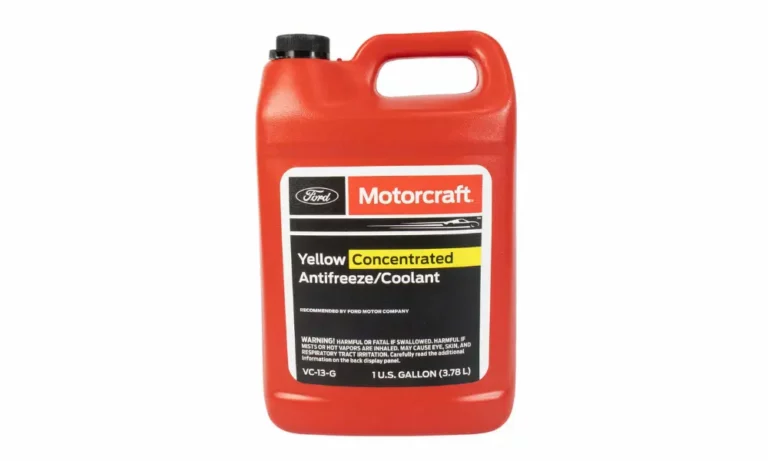
Here’s the short answer: Yellow Motorcraft coolant (VC-13-G) is the current standard for 6.7 Powerstroke engines. This coolant meets Ford specification WSS-M97B57-A2 and represents a significant upgrade from the original orange coolant.
But there’s a catch—it depends on your model year.
If you’re running a 2018 or newer 6.7 Powerstroke, yellow coolant is your go-to. For older models (2011-2018), you might have orange coolant from the factory. Don’t panic though—these coolants are compatible with each other.
The yellow coolant uses Phosphate Organic Acid Technology (P-OAT), which sounds fancy but basically means better protection for your engine’s aluminum components. It’ll protect your engine from -34°F to 265°F, covering pretty much any temperature you’ll encounter on the road.
You can buy it as a concentrate that you’ll mix 50/50 with distilled water, or grab the pre-diluted version if you want to skip the mixing step.
The Great Orange to Yellow Transition
Ford didn’t just change coolant colors for fun. Starting July 9, 2018, they switched from orange to yellow coolant because the phosphate-based chemistry offers superior corrosion protection.
Here’s what makes the yellow P-OAT coolant better:
- It’s nitrite-free, which means less risk of seal damage
- Enhanced aluminum protection (your engine will thank you)
- Better heat transfer for high-performance applications
- Longer service intervals—10 years or 200,000 miles for new installations
The orange OAT coolant (VC-3-B) that came in earlier models was good, but it only lasted 5 years or 100,000 miles. The upgrade was worth making.
Can You Mix Orange and Yellow Coolant?
Yes, you absolutely can. Ford Engineering officially approved this, which is rare—usually mixing coolant types is a big no-no.
The yellow coolant is fully backward compatible with:
- Orange OAT coolant (WSS-M97B44-D2) from 2011-2018 models
- Dark green specialty coolant (WSS-M97B55-A) from some 2009-2010 models
You don’t even need to flush the system first. Just add the yellow coolant directly to your existing orange coolant.
One major caveat: If you switch from orange to yellow, you’ve got to stick with the original service intervals (5 years/100,000 miles). You don’t get the extended 10-year service life until you do a complete flush and refill with 100% yellow coolant.
How Much Coolant Does Your 6.7 Powerstroke Hold?
This is where things get interesting. Ford significantly changed the cooling system design over the years, and newer models hold way more coolant than older ones.
| Model Year | Total Capacity | Notes |
|---|---|---|
| 2011-2016 | 29.4-30.3 quarts | Single cooling system |
| 2017-2020 | 39.8-50.2 quarts | Dual cooling system introduced |
| 2021+ | 50.2 quarts | 35.1 qt primary + 15.1 qt secondary |
Why the massive jump? Starting in 2017, Ford added a dual cooling system with separate primary high-temperature and secondary low-temperature loops. This design keeps things cooler under heavy loads, but it requires a lot more coolant.
If you’re doing a complete coolant change on a newer truck, stock up—you’ll need around 13 gallons of 50/50 mix for a 2021 or newer model.
When to Change Your 6.7 Powerstroke Coolant
Ford’s maintenance schedule depends on how you use your truck. If you’re just daily driving without heavy towing, you’ve got longer intervals. But if you’re towing heavy, idling a lot, or running biodiesel, you’ll need more frequent changes.
Normal Operating Conditions
- Initial change: 72 months or 105,000 miles (whichever comes first)
- Subsequent changes: Every 45,000 miles
- Regular inspection: Per your scheduled maintenance intervals
Special Operating Conditions
You’re in this category if you regularly:
- Tow heavy trailers
- Idle for extended periods
- Drive at low speeds for long distances
- Use biodiesel blends
- Operate in dusty or dirty environments
For special conditions:
- Initial change: 45,000 miles or 1,800 engine hours
- Subsequent changes: Every 45,000 miles or 1,800 hours
- Inspection: Every 15,000 miles or 600 engine hours
Don’t skip these inspections. Catching coolant issues early can save you thousands in engine repairs.
What About Other Coolant Types?
Here’s where you need to pay close attention. While yellow and orange coolants mix fine, don’t mix anything else with your 6.7 Powerstroke coolant.
Specifically avoid:
- Gold HOAT coolant (used 2001-2011): Not compatible
- Green IAT coolant (pre-2001): Not compatible
- Generic “universal” coolants: Skip these entirely
- Non-Ford approved coolants: Only use Ford specification WSS-M97B57-A2
Mixing incompatible coolant types creates chemical reactions that reduce corrosion protection, clog passages, and can lead to serious engine damage. It’s not worth saving a few bucks on off-brand coolant.
Testing and Maintenance for Mixed Coolant Systems
If you’ve got orange coolant or a mix of orange and yellow, Ford has specific testing protocols you should follow.
For trucks with orange coolant or mixed coolant:
- Perform regular coolant testing procedures
- Use VC-12 additive as specified
- Continue testing until you fully convert to yellow coolant
Once you’ve completely switched to yellow coolant (full system flush and refill), you can stop the testing protocol and skip the VC-12 additive. That’s one of the perks of upgrading to the newer coolant.
Pro Tips for Coolant Service
Getting the coolant right is half the battle. Actually servicing the system properly is the other half.
Use Distilled Water Only
If you’re mixing concentrate, always use distilled water—never tap water. Tap water contains minerals that create deposits and reduce coolant effectiveness. A gallon of distilled water costs a buck or two. Fixing a clogged cooling system costs thousands.
Consider Vacuum Filling
The dual-loop cooling system in newer 6.7 Powerstroke engines is complex. Air pockets can cause overheating and reduce coolant circulation. Professional technicians use vacuum filling systems to completely evacuate air before adding coolant.
If you’re doing it yourself, take your time bleeding the system. Run the engine with the radiator cap off (when cool enough to safely handle), squeeze the upper radiator hose to work out air bubbles, and top off as needed.
Keep Records
Document every coolant service—date, mileage, type used, and amount added. This helps you track service intervals and provides proof of maintenance if warranty issues arise.
Why P-OAT Chemistry Matters
You don’t need to be a chemist to own a 6.7 Powerstroke, but understanding why the yellow coolant works better helps you make informed decisions.
Traditional OAT (Organic Acid Technology) coolants work well, but they don’t provide optimal protection for modern aluminum engines running high temperatures. The phosphate addition in P-OAT coolant creates a protective layer on aluminum surfaces, preventing corrosion and pitting.
This is especially important in diesel engines that generate more heat than gas engines. Your 6.7 Powerstroke works hard, and it needs coolant that can handle the stress.
The P-OAT formulation also improves heat transfer, which means your engine runs cooler even under heavy loads. That’s a big deal when you’re pulling a trailer up a mountain pass.
System Capacity Changes You Should Know
If you’re used to working on older diesel trucks, the 6.7 Powerstroke cooling system might surprise you. The capacity nearly doubled from early models to current ones.
Early 6.7 Powerstroke engines (2011-2016) had a relatively straightforward single cooling system. You’d need about 7.5 gallons of mixed coolant for a complete change.
Then Ford introduced the dual cooling system. The primary loop handles the engine block and heads at higher temperatures. The secondary loop runs cooler and handles accessories like the intercooler and transmission cooler.
This split design is brilliant for performance and efficiency, but it means more coolant, more complexity, and higher service costs if you’re paying someone else to do it.
Making the Switch from Orange to Yellow
If you’re still running orange coolant in an older 6.7 Powerstroke, should you switch to yellow?
It depends on your plans for the truck. If you’re keeping it long-term, switching makes sense. The improved protection and longer service intervals justify the cost.
You’ve got two options:
Option 1: Gradual Mix
Just start adding yellow coolant when you need to top off or do regular changes. Over time, you’ll end up with mostly yellow coolant. Stick with the 5-year/100,000-mile service interval until you’ve done a complete flush.
Option 2: Complete Flush
Do a full system flush and fill with 100% yellow coolant. This immediately gets you the 10-year/200,000-mile service life and maximum protection. It costs more upfront but saves money over time.
Either way works. Ford officially approved both methods, so it comes down to your budget and how much protection you want.
Common Mistakes to Avoid
After working with 6.7 Powerstroke owners for years, I’ve seen the same mistakes pop up repeatedly. Here’s what to avoid:
Using “universal” coolant: These products claim to work with everything, but they don’t provide the specific protection your 6.7 needs. Stick with Ford specifications.
Mixing old green coolant: If you’ve got an older truck that someone serviced with green coolant, flush it completely before adding yellow or orange. Green and modern coolants don’t play nice together.
Ignoring the secondary loop: On dual-system trucks, both loops need proper coolant levels. Don’t just check one reservoir and call it good.
Skipping inspections: Coolant doesn’t just evaporate. If you’re constantly adding coolant, you’ve got a leak somewhere. Find it and fix it before it leaves you stranded.
Using concentrate without mixing: Straight concentrate actually provides less freeze protection than a 50/50 mix. Always dilute concentrate properly unless you’re topping off a system that’s already mixed.
The Bottom Line on 6.7 Powerstroke Coolant Type
Your 6.7 Powerstroke needs yellow Motorcraft VC-13-G coolant meeting Ford specification WSS-M97B57-A2 for the best protection. If you’ve got an older truck with orange coolant, that’s fine too—just follow the appropriate service intervals.
Don’t overthink this. Use the right coolant, change it when you’re supposed to, and your cooling system will take care of your engine for hundreds of thousands of miles. Cut corners with cheap coolant or skip maintenance, and you’re asking for expensive problems.
The 6.7 Powerstroke is a fantastic engine when properly maintained. Getting the coolant right is one of the easiest and most important things you can do to protect your investment.