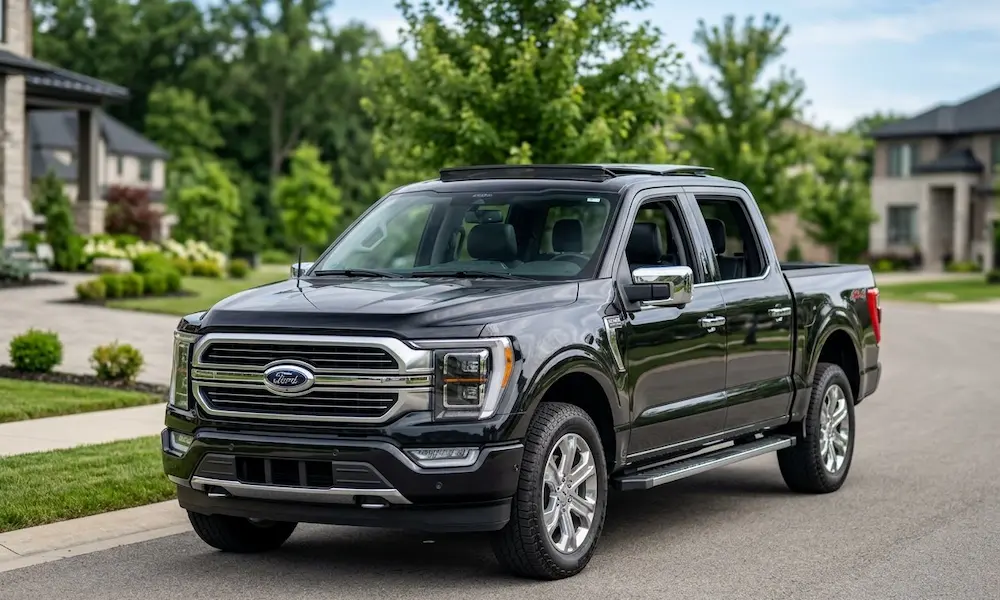
Your 7.3 Powerstroke won’t start on a cold morning. The engine cranks, but it won’t fire. You’re not dealing with a dead battery—you’re likely fighting thick oil that’s preventing your injection system from building pressure. Here’s what you need to know about picking the right oil to keep your legendary diesel running strong.
Why Your 7.3 Powerstroke Needs Different Oil Than Other Diesels
Your 7.3 Powerstroke isn’t like other diesel engines. It uses something called a Hydraulically Actuated Electronic Unit Injector (HEUI) fuel system, which is fancy talk for “your engine oil does double duty.”
Most diesels use oil just for lubrication. Your 7.3? It uses oil as hydraulic fluid to fire the injectors.
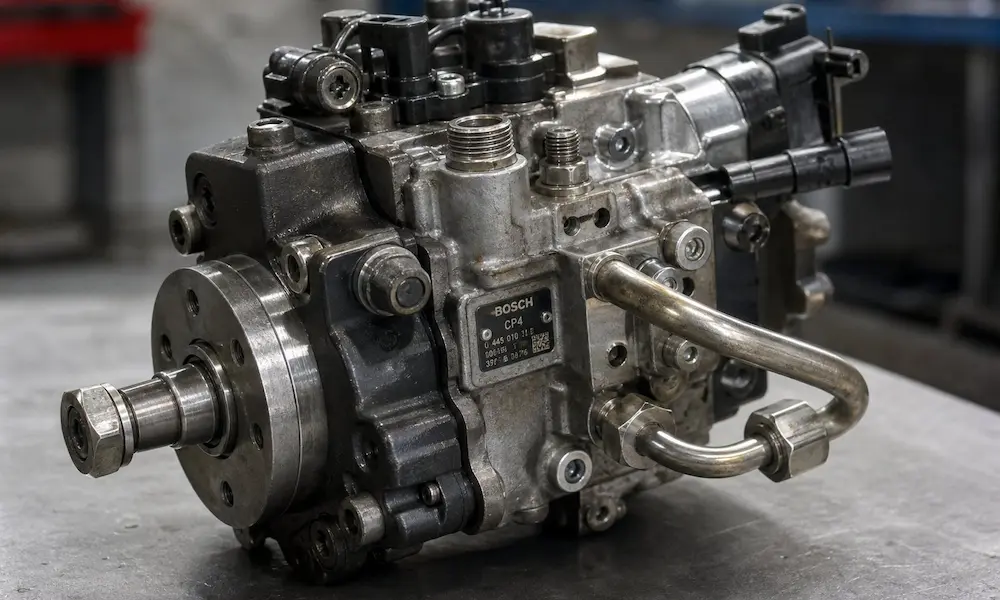
Here’s how it works: A High-Pressure Oil Pump (HPOP) cranks your engine oil up to insane pressures—we’re talking 500 psi at idle and over 3,600 psi when you’re hauling. This pressurized oil slams into your injectors, where it pushes a plunger that actually fires the fuel into your cylinders.
This setup was a smart bridge technology when Ford and Navistar built these engines from 1994.5 to 2003. It gave electronic precision without needing the complex fuel pumps that modern common-rail systems use. But it also means your oil takes a beating that no other light-duty diesel oil has to handle.
The Stiction Problem: Why Your 7.3 Gets Grumpy
Let’s talk about the issue that makes 7.3 owners lose sleep: stiction.
Stiction isn’t a broken part. It’s what happens when your oil breaks down and leaves gummy, varnish-like deposits inside your HEUI injectors. These deposits gunk up the spool valves—tiny components that need to move precisely to fire your injectors.
You’ll know you’ve got stiction when:
- Your truck won’t start when it’s cold
- The engine idles rough until it warms up
- You’re getting misfires
- Acceleration feels sluggish and unresponsive
Cold weather makes everything worse. When it’s freezing outside, thick oil combines with existing deposits to create a sludgy mess that your injectors can’t overcome until things heat up.
What Causes This Mess
Two things destroy your oil in a HEUI system: extreme heat and extreme pressure.
Inside your injectors, oil hits temperatures way higher than what’s sloshing around in your oil pan. This heat literally cooks the oil, causing it to oxidize and turn into the carbon deposits that cause stiction.
But here’s the kicker: Before the oil even gets to the injectors, the HPOP tears it apart. Multi-grade oils like 15W-40 use long-chain molecules to maintain their thickness. The brutal pressure inside your HPOP shears these molecules into smaller pieces, permanently thinning your oil.
Studies show a 40-weight oil can shear down to 30-weight in just 1,000 miles. This creates a vicious cycle:
- The HPOP shears your 15W-40 into basically a 15W-30
- This thinner oil can’t handle high temperatures as well
- The degraded oil goes to the injectors and cooks even faster
- More deposits form, causing worse stiction
It’s a snowball effect that destroys injectors if you don’t stay ahead of it.
Picking the Right 7.3 Powerstroke Oil Type: Viscosity Matters
Getting the viscosity right isn’t optional. It’s the difference between a truck that starts and one that leaves you stranded.
The Cold-Start Problem
When it’s freezing outside and your oil is too thick, your starter motor can’t spin the engine fast enough. The HPOP needs the engine turning at least 175-200 RPM to build pressure. If your oil is like molasses, the starter just grinds away, but the injectors never fire.
It’s not a fuel problem. It’s not a battery problem. It’s a fluid dynamics problem.
Your Three Viscosity Options
SAE 15W-40
This is the old-school choice—the oil Ford originally recommended. It works fine if you live somewhere warm, but it’s only good for temperatures above 20°F. Below that, it gets too thick and you’ll have cold-start issues. Most conventional and synthetic-blend diesel oils come in this weight.
SAE 10W-30
Ford lists this for temperatures between 0°F and 50°F, but here’s the catch: it’s meant for light-duty use only. If you’re towing or working your truck hard, a 30-weight oil will shear down to dangerously thin levels. Skip this unless you’re just cruising around town in mild weather.
SAE 5W-40
This is your best bet. It flows in temperatures as low as -20°F but still protects when it’s hot. To get this viscosity spread, 5W-40 oils are full synthetic, which gives you better protection against both the shearing and the heat. It’s the optimal all-season choice for most 7.3 owners.
Quick Viscosity Reference
| Viscosity Grade | Temperature Range | Oil Type | Best Use |
|---|---|---|---|
| 15W-40 | Above 20°F | Conventional/Synthetic-Blend | Hot climates, standard duty |
| 10W-30 | 0°F to 50°F | Conventional/Synthetic-Blend | Light duty only, not for towing |
| 5W-40 | -20°F to 100°F+ | Full Synthetic | All-season, all-duty, best protection |
Critical Warning: Don’t confuse 5W-30 gasoline engine oil with diesel oil. Ford recommended 5W-30 for the 7.3L gasoline V8, not the diesel. Using gas engine oil in your Powerstroke will wreck it.
The Oil Specification That Actually Matters
Here’s where most people screw up: they look at the big API “donut” on the oil bottle and think they’re good to go.
You’re not.
Modern diesel oils carry an API CK-4 rating. These oils are marketed as “backward-compatible” with older engines like your 7.3. But Ford’s own testing found that some CK-4 formulations don’t provide adequate wear protection for their engines.
Why CK-4 Isn’t Enough
CK-4 oils were designed for modern diesels with Diesel Particulate Filters. To protect these emissions systems, manufacturers reduced critical anti-wear additives—specifically zinc and phosphorus compounds called ZDDP.
Your 7.3 doesn’t have a DPF. It needs those additives.
Ford found the CK-4 spec lacking, so they created their own: Ford WSS-M2C171-F1. This specification starts with CK-4 requirements but adds stricter standards for wear protection. Oils meeting this spec contain over 1,000 ppm of phosphorus—far more than base CK-4 oils.
What to Look For
Ignore the big label on the front. Flip the bottle over and read the fine print. Your oil must explicitly state: “Meets Ford WSS-M2C171-F1”
This is the only guarantee you’re getting oil that Ford has actually tested and approved for your engine.
The API FA-4 Trap
There’s a newer oil spec called API FA-4. It’s designed for certain 2017+ engines to improve fuel economy.
Do. Not. Use. It.
FA-4 oils are not backward-compatible. Ford’s documentation for FA-4 oil explicitly warns: “Do not use in vehicles equipped with 7.3L Power Stroke Diesel engines.”
The danger? FA-4 oils come in 10W-30, which is on your approved viscosity list. An uninformed quick-lube tech could easily grab the wrong bottle. The oil is too thin and won’t provide enough film strength. You’ll damage bearings, and your HEUI system might not even build enough pressure to fire.
Synthetic vs. Conventional: The Real Cost Analysis
Can you run conventional 15W-40 oil in your 7.3? Sure. Plenty of trucks have made it past 400,000 miles on conventional oil.
But “sufficient” isn’t the same as “optimal.”
A quality conventional or synthetic-blend 15W-40 that meets Ford WSS-M2C171-F1 will work—if you change it religiously every 3,000 to 5,000 miles. Remember that vicious cycle we talked about? Conventional oil shears down and breaks down fast in a HEUI system. Frequent changes aren’t a suggestion; they’re mandatory.
Why Synthetic Is Worth It
Full synthetic oil doesn’t just offer “better performance.” It directly fixes the two core problems that plague the HEUI system:
Shear Stability
Synthetic oils are built from uniform molecules that naturally maintain their viscosity. They don’t rely as heavily on the fragile polymers that the HPOP tears apart. A synthetic 5W-40 stays a true 40-weight for the entire drain interval, not just the first 1,000 miles.
Thermal Stability
Synthetics resist oxidation far better than conventional oils. They won’t cook and turn into varnish inside your hot injectors. This directly prevents the deposits that cause stiction.
Plus, synthetic 5W-40 solves your cold-start problems. It flows at -20°F, so you’re not fighting to turn over a cold engine in winter.
The Real Return on Investment
Don’t think about synthetic oil as a way to extend drain intervals. Your 7.3 produces a lot of soot, and the HEUI system is brutal on oil. Even with synthetic, don’t push beyond 5,000-7,500 miles without Used Oil Analysis testing.
The real payoff? Preventing a $3,000+ injector job.
Stiction is caused by oil deposits. HEUI injectors are expensive to replace or rebuild. A $30-40 premium for synthetic oil every 5,000 miles is insurance against a multi-thousand-dollar repair. The superior thermal stability of synthetic oil is literally buying you injector life.
How to Actually Change Your Oil (The Step Everyone Misses)
Your 7.3 Powerstroke holds 15 quarts of oil with a filter change. That massive capacity is deliberate—it’s both a thermal buffer and a fail-safe for the HEUI system. If you develop a bad leak, the theory is that the HPOP will run dry around 7-8 quarts lost, shutting down the injectors before you seize the engine.
Use a Motorcraft FL-1995 filter. Don’t cheap out here.
The Critical Step: The HPOP Reservoir
Here’s what most DIY guides don’t mention: After you drain the crankcase, the HPOP reservoir on top of the engine still contains old, dirty oil. You need to siphon it out.
Before you start the engine, pre-fill that reservoir with fresh oil. If you don’t, the pump will suck air instead of oil. Your injectors won’t fire, and you’ll be sitting there cranking, thinking something broke.
Also pre-fill your new oil filter with 1-2 quarts of oil. This ensures immediate oil pressure when you fire up.
Change Intervals You Can’t Ignore
Normal Duty: 5,000 miles or 6 months
Severe Duty: 3,000 miles or 3 months
“Severe duty” means any of the following:
- Idling more than 10 minutes per hour
- Regular use of biodiesel blends (B20 or higher)
- Frequent short trips where the engine doesn’t fully warm up
- Heavy towing or hauling
- Dusty or off-road conditions
Don’t get tempted to extend these intervals just because you’re running synthetic. The HEUI system shears oil aggressively, and this pre-emissions engine produces lots of soot. Without a bypass filtration system and regular Used Oil Analysis, stick to these schedules.
What About Stiction Additives?
Products like Hot Shot’s Secret, Archoil AR9100, and Rev-X are designed to clean up stiction deposits. They work by combining strong detergents with friction modifiers.
These additives can save your bacon. If you’re dealing with rough idle or cold-start issues, adding a stiction treatment can clean the varnish off sticky spool valves and restore performance. It’s a legitimate diagnostic tool too—if the additive fixes your rough idle, you know it was deposits. If it doesn’t help, you’re probably looking at worn or electrically failed injectors.
But here’s the thing: If you need a stiction additive to keep your truck running smoothly, it’s telling you that your current oil isn’t cutting it. The real solution is switching to a quality full-synthetic oil that meets Ford WSS-M2C171-F1. That oil will prevent stiction from forming in the first place.
The Bottom Line on 7.3 Powerstroke Oil Type
Your 7.3 Powerstroke uses oil in ways no other diesel does. The HEUI system subjects oil to brutal pressure and extreme heat, creating unique challenges that require specific solutions.
The best oil for most 7.3 owners is a full-synthetic 5W-40 that meets Ford WSS-M2C171-F1. It flows in extreme cold, protects in extreme heat, resists shearing, and prevents the deposits that cause stiction.
If you’re in a hot climate and never see freezing temps, a quality 15W-40 synthetic-blend meeting WSS-M2C171-F1 works fine—just keep up with your oil changes.
Don’t gamble with base-spec CK-4 oils. Don’t accidentally grab FA-4 oil. Don’t use gasoline engine oil. And don’t skip pre-filling that HPOP reservoir.
Your 7.3 can run for 500,000+ miles if you treat it right. It all starts with putting the right oil in the crankcase.