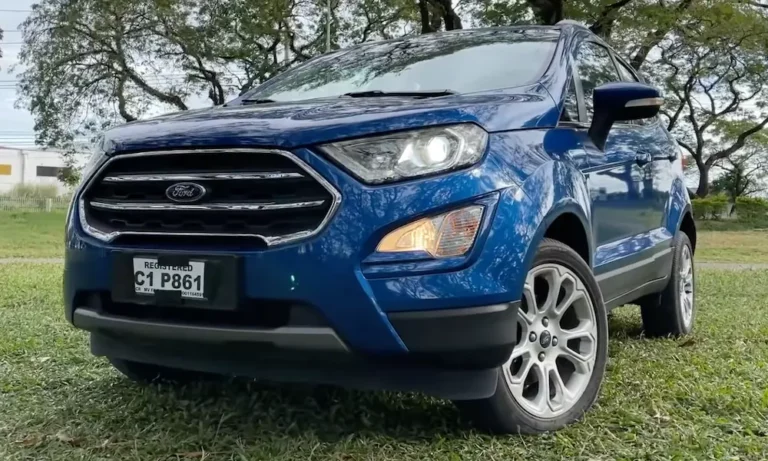
Thinking about buying a Ford EcoSport? You’re probably wondering if it’s worth your money or if you’ll end up with a vehicle that spends more time in the repair shop than on the road. This compact SUV has developed quite a reputation—some good, some concerning—and you deserve to know what you’re potentially getting into before making a purchase.
I’ve analyzed reliability data, owner experiences, and expert assessments to give you the complete picture of EcoSport reliability. Whether you’re considering a used model (since Ford discontinued North American sales in 2022) or just researching your options, this guide covers everything from common problems to best model years and maintenance costs.
How Reliable Are Ford EcoSports According to Industry Experts?
The Ford EcoSport receives mixed but generally above-average reliability ratings from automotive authorities:
| Rating Organization | Score | Scale | Assessment |
|---|---|---|---|
| RepairPal | 4.0 | 5.0 | Above Average |
| J.D. Power | 3.5 | 5.0 | Above Average |
| Consumer Reports | 3.0 | 5.0 | Average |
| MotorTrend | 4.0 | 5.0 | Good |
| AutoTrader | 4.2 | 5.0 | Very Good |
| Edmunds | 4.5 | 5.0 | Excellent |
These scores position the EcoSport as a moderately reliable subcompact SUV when functioning properly. In the UK’s Driver Power survey, the EcoSport ranked 35th out of 75 vehicles, with British owners specifically praising its reliability and build quality despite concerns about running costs.
The EcoSport’s Critical Engine Flaw You Need to Know About
Despite those positive ratings, there’s a serious reliability issue affecting many EcoSport models that can’t be ignored.
The Oil Pump Belt Crisis
The most significant reliability concern involves a fundamental design flaw in the 1.0-liter EcoBoost engine’s oil pump system. This issue prompted Ford to issue a major safety recall affecting 139,730 vehicles, including 113,689 EcoSport models manufactured between 2017 and 2021.
The problem centers on the oil pump drive belt tensioner arm, which can fracture or separate, causing:
- Complete loss of oil pressure
- Catastrophic engine damage
- Engine seizure
- Loss of power while driving
- Failure of power braking assist
What makes this particularly concerning is that Ford’s testing didn’t adequately represent real-world conditions, and according to NHTSA documentation, remedy parts weren’t scheduled to become available until 2025. As an interim solution, Ford authorized dealers to replace entire engine assemblies at no cost to affected owners.
Which EcoSport Model Years Are Most Reliable?
Not all EcoSport model years share the same reliability profile:
Best EcoSport Years for Reliability
- 2022 model year – The final production year benefited from accumulated engineering improvements and featured standard all-wheel drive with a naturally aspirated 2.0-liter engine, eliminating the problematic 1.0-liter EcoBoost option.
- 2020-2021 model years – More reliable than earlier versions with many initial issues addressed.
EcoSport Years to Avoid
- 2018 model year – The North American debut year suffered from numerous first-year production issues and the full impact of the oil pump belt design flaw.
- 2019 model year – Continued to experience significant problems with multiple technical service bulletins addressing various engine, transmission, and electrical issues documented by CarComplaints.com.
Common EcoSport Problems Beyond the Engine Issue
Engine and Powertrain Concerns
- Overheating issues – Often stem from malfunctioning thermostats, radiator problems, or faulty water pumps
- Cylinder misfires – Typically caused by faulty spark plugs, ignition coils, or fuel injectors
- Oil leaks – Usually result from deteriorated gaskets, loose oil filters, or worn engine components
Transmission Troubles
- Manual transmission models – Common clutch slipping during acceleration or deceleration, often requiring replacement ($400-$600)
- Automatic transmission models – PowerShift dual-clutch system shows poor reliability with delayed engagement, sudden jerking during shifts, and complete transmission failures requiring rebuilds or replacement ($1,000-$2,500)
Electrical System Malfunctions
- Battery drainage – Caused by faulty components drawing power when the vehicle is off
- Infotainment system issues – Unresponsive touchscreens, frequent system freezes, and connectivity problems
- Keyless entry malfunctions – Leaving owners unable to access their vehicles or experiencing intermittent operation
EcoSport Ownership Costs: What to Budget For
Routine Maintenance Expenses
The EcoSport has relatively affordable maintenance costs compared to competitors, with estimated annual expenses of $272.
| Maintenance Item | Typical Cost | Interval |
|---|---|---|
| Basic oil changes | $100-$140 | Every 5,000-7,500 miles |
| Routine service | $280-$420 | Every 10,000 miles |
| Comprehensive service | $618-$780 | Every 20,000 miles |
Major Repair Costs to Consider
While routine maintenance is affordable, major repairs can quickly escalate ownership expenses:
- Engine replacement due to oil pump belt failure: $3,000-$4,000
- Transmission repairs or replacement: $700-$2,500
- Timing belt service: $1,400-$2,000
- Air conditioning compressor: $1,636-$1,798
- Suspension system repairs: $80-$700
Safety and Recall History
The EcoSport achieved a four-star rating from Euro NCAP, falling short of the five-star standard achieved by many competitors. It scored well in adult occupant protection (93%) and child occupant protection (77%) but performed poorly in pedestrian protection (58%) and safety assistance systems (55%).
Beyond the major oil pump belt recall, a more recent recall affects 2021-2022 models due to front axle half shaft disconnection issues that can result in loss of drive power and potential rollaway incidents.
How Does the EcoSport Compare to Competitors?
Within the subcompact SUV segment, the Ford EcoSport’s reliability falls in the middle range:
- Better than the EcoSport: Honda HR-V and Toyota RAV4 consistently achieve higher reliability ratings (4/5 from Consumer Reports compared to EcoSport’s 3/5)
- Comparable to the EcoSport: Nissan Kicks, Mitsubishi Outlander Sport (though they experience different types of issues)
- Worse than the EcoSport: Chevrolet Trax, which suffers from significant engine problems with its 1.4-liter turbocharged engine
What EcoSport Owners Love and Hate
What Owners Appreciate
- Maneuverability in urban environments
- Compact size with adequate cargo space
- Elevated driving position with good visibility
- Side-opening rear door convenience
- Reasonable fuel economy (28-32 mpg in mixed driving)
- All-wheel drive capability in adverse weather
Common Owner Complaints
- Lack of power, particularly with the 1.0-liter engine
- Automatic transmission’s rough shifting and delayed response
- Poor build quality compared to competitors
- Harsh ride quality over rough road surfaces
- Infotainment system reliability issues
- Excessive road noise
The Impact of EcoSport’s Discontinuation
Ford discontinued EcoSport production in North America by mid-2022, reflecting the model’s commercial challenges and the company’s strategic shift toward more profitable vehicle segments. For current and prospective owners, this means:
- No new vehicle warranty coverage for future purchases
- Potential long-term impacts on parts availability
- Used EcoSport market now represents the only purchase option
- Downward pressure on used vehicle pricing (potentially beneficial for buyers)
Should You Buy a Used Ford EcoSport?
Consider a Used EcoSport If:
- You prioritize affordability over premium features
- You need a compact SUV for urban driving
- You’re looking at a 2020-2022 model year (especially 2022)
- You can confirm the oil pump belt recall has been addressed
- You’ve had a comprehensive pre-purchase inspection
Look Elsewhere If:
- Long-term reliability is your top priority
- You need highway passing power
- You’re considering a 2018-2019 model year
- You can’t verify recall completion status
- You want the latest technology and features
Maintenance Tips for EcoSport Owners
If you already own an EcoSport or decide to purchase one:
- Verify recall status – Use your VIN at Ford’s recall page or the NHTSA website
- Monitor oil levels regularly – Especially critical with the 1.0-liter engine
- Keep up with scheduled maintenance – Follow Ford’s recommended service intervals
- Address warning lights immediately – Don’t ignore check engine or oil pressure indicators
- Consider an extended warranty – Particularly valuable given potential major component failures
Final Verdict: Are Ford EcoSports Reliable?
The Ford EcoSport presents a mixed reliability picture. While it achieves above-average ratings from several professional organizations, the critical engine defect affecting 1.0-liter models represents a significant concern that can result in catastrophic failure and expensive repairs.
For budget-conscious buyers who understand the risks and focus on later model years (especially 2022 with the 2.0-liter engine), a well-maintained EcoSport can provide reasonable transportation value. However, those seeking trouble-free ownership would be better served by competitors like the Honda HR-V or Toyota C-HR despite their higher initial purchase prices.
The EcoSport requires more attentive ownership than many competitors, making it suitable for buyers who prioritize purchase price over potential maintenance concerns and are willing to stay vigilant about addressing issues promptly.