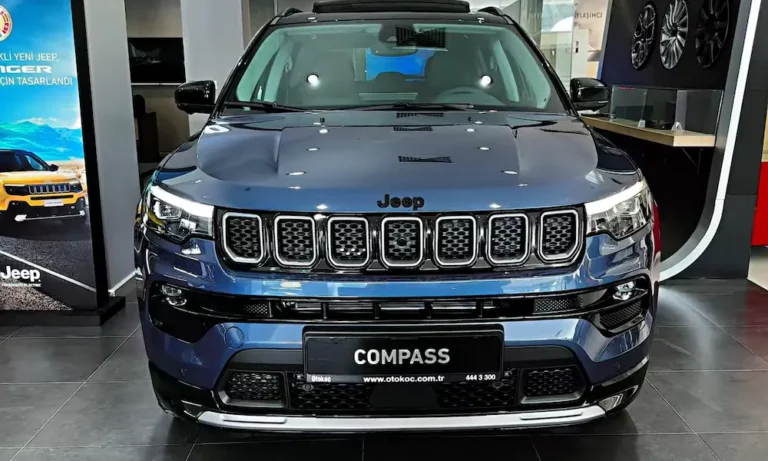
Shopping for a compact SUV and wondering if the Jeep Compass will drain your wallet at the pump? You’re asking the right question. The internet’s packed with conflicting numbers, outdated complaints, and even claims about a “hybrid” that doesn’t exist. Let’s cut through the noise and get you the straight facts about Jeep Compass gas mileage—what it really delivers, how it stacks up, and whether it’s the right fit for your driving style.
The Bottom Line: What EPA Numbers Tell You
Here’s what matters most: the 2025 Jeep Compass gets 24 MPG city, 32 MPG highway, and 27 MPG combined. That’s the official EPA-certified rating, and it’s the same across every single trim level.
Whether you’re eyeing the base Sport, the loaded Limited, or the trail-ready Trailhawk, you’re getting the same fuel economy. Why? Because Jeep made a smart move—they gave every 2025 Compass the same powertrain.
One Engine, One Rating, Zero Guesswork
Unlike some competitors that offer multiple engine options (each with different MPG ratings), the 2025 Compass keeps it simple. Every model comes with a 2.0L turbocharged four-cylinder engine paired with an eight-speed automatic transmission. It pumps out 200 horsepower and a healthy 221 lb-ft of torque.
And here’s the kicker: all-wheel drive isn’t an option—it’s standard. That means the 27 MPG combined figure already accounts for the AWD system’s weight and mechanical drag. You’re not comparing apples to oranges when you look at competitor MPG numbers (more on that later).
What About That Tank Range?
The Compass carries a 13.5-gallon fuel tank and runs on regular 87-octane unleaded gas—no premium required. Do the math with that 27 MPG combined rating, and you’re looking at roughly 364 miles per tank in mixed driving.
That’s not class-leading, but it’s respectable for a compact SUV with standard AWD. You won’t be stopping at gas stations constantly, but you’re not winning any hypermiling contests either.
Why You Can’t Trust Every MPG Number You See Online
If you’ve been researching the Compass, you’ve probably stumbled across wildly different fuel economy claims. Some dealer sites list 22/31 MPG. Others claim 24/29 MPG. A few even tout a magical “Compass Hybrid” with 50 MPG.
Here’s the truth: they’re all wrong.
The 22/31 MPG Myth
That 22 city/31 highway figure? It’s real data from the 2022 Compass—specifically the front-wheel-drive model with the old 2.4L engine. Problem is, that engine’s gone. Jeep ditched it after 2022 and made AWD standard starting in 2023.
Some dealer websites apparently didn’t get the memo and are still publishing outdated specs. It’s sloppy, and it’s misleading.
The 24/29 MPG Error
The 24 city/29 highway claim is trickier to explain. The city number matches the correct rating, but that 29 highway figure is three MPG short of the actual 32 MPG highway rating. This appears to be a data syndication error—a mistake that got copied across multiple dealer website platforms.
There’s no historical Compass model with this exact rating. It’s simply incorrect.
The “50 MPG Hybrid” That Doesn’t Exist
Now for the big one: claims about a 2025 Compass Hybrid delivering 50 MPG. If this were true, it’d be a game-changer—a plug-in hybrid compact SUV that outperforms nearly everything else.
Except it’s not true. Not in America, anyway.
The U.S. Department of Energy maintains an official list of all plug-in hybrid vehicles available in the United States. The 2025 Jeep Compass isn’t on it. You know what is? The 2025 Dodge Hornet PHEV and 2025 Alfa Romeo Tonale PHEV—both built on the same platform as the Compass.
So what’s going on? Jeep does sell a plug-in hybrid Compass in Europe called the 4xe, and it does achieve roughly 50 MPG in real-world driving over there. But it’s not sold here. Some dealer websites mistakenly grabbed European specs and applied them to the U.S. model.
It’s not just misleading—it’s phantomware. A product that doesn’t exist being marketed as if it does.
How the 2025 Model Changed Everything
If you’re reading owner complaints about terrible Compass fuel economy, pay attention to the model year. Nearly all the horror stories—people reporting 13-18 MPG—come from 2022 and earlier models.
Those complaints are valid. They’re also irrelevant to the 2025 model.
The 2023 Powertrain Revolution
Jeep completely overhauled the Compass for 2023. Out went the wheezy 2.4L naturally aspirated engine that made 177 horsepower and struggled to merge onto highways. In came the 2.0L turbocharged engine with 200 horses and significantly more torque.
The old engine was criticized by nearly every automotive journalist who drove it. Underpowered. Inefficient. Buzzy. Pick your complaint.
The new turbo engine delivers more power and better fuel economy—a rare engineering win. The 2022 Compass FWD model got 25 MPG combined. The 2023-2025 Compass AWD model gets 27 MPG combined, despite carrying the extra weight and mechanical complexity of all-wheel drive.
That’s a 2 MPG improvement while adding 23 horsepower and nearly 50 lb-ft of torque. It’s a completely different vehicle.
Don’t Trust Pre-2023 Owner Reviews
Here’s the deal: if you’re reading forum posts or owner reviews about Compass fuel economy, check the date and model year. Anything about a 2022 or older model with the 2.4L engine doesn’t apply to what you can buy today.
The complaints were legitimate. The engine was problematic. But it’s gone. Judging the 2025 Compass based on 2022 owner experiences is like judging a restaurant based on reviews from when it had a different chef.
What You’ll Actually Get in the Real World
EPA ratings are useful, but they’re lab numbers. What matters is what you’ll see on your own dashboard during your daily commute.
Here’s the good news: independent testers have found the new turbo engine meets or exceeds its EPA estimates.
Real-World Test Results
Autoweb spent a week with a 2023 Compass (same engine as the 2025) and averaged “a terrific 31 MPG”—four MPG better than the EPA combined rating.
A dedicated highway test by Daily Motor found the Compass achieved 31.9 MPG at highway speeds, essentially matching the 32 MPG EPA highway estimate. The tester suggested 33 MPG was achievable with careful driving.
These aren’t outliers. They’re consistent with what a modern turbocharged engine can deliver when driven reasonably.
The Turbocharged Engine Personality Split
Turbocharged engines have two distinct personalities, and your MPG will depend on which one you’re using.
Light throttle (eco mode): When you’re accelerating gently and keeping the turbo from “spooling up,” the 2.0L engine behaves like a small, efficient four-cylinder. This is where you’ll hit those 31-32 MPG highway numbers.
Heavy throttle (fun mode): When you mash the accelerator and demand all 221 lb-ft of torque, the turbo kicks in and starts gulping fuel. An aggressive driver who treats every stoplight like a drag strip will eat up gas.
The engine doesn’t change. Your right foot does.
Factors That Kill Your MPG
Beyond driving style, several real-world factors will push your mileage down from EPA estimates:
Weather: Cold temperatures increase fuel consumption. So does running the heater or AC at full blast. Rain and snow also reduce efficiency.
Traffic: Stop-and-go city driving is the enemy of fuel economy. The Compass gets 24 MPG city vs. 32 highway for a reason.
Vehicle condition: Under-inflated tires, dirty air filters, and excess weight (roof racks, cargo, etc.) all reduce efficiency. Keep up with basic maintenance.
Trailhawk-specific note: If you opt for the Trailhawk trim with its aggressive all-terrain tires, expect real-world MPG to trend slightly lower than the Sport or Limited, even though they share the same EPA sticker rating. Physics doesn’t lie—chunkier tires create more rolling resistance.
| Data Point | Type | MPG |
|---|---|---|
| EPA Combined Rating | Official | 27 |
| EPA Highway Rating | Official | 32 |
| Real-World Combined Test | Independent | 31 |
| Real-World Highway Test | Independent | 31.9-33 |
How It Stacks Up Against the Competition
The Compass’s 27 MPG combined rating puts it at the back of the pack—by one or two MPG. That’s the reality. But context matters.
The AWD Gasoline Comparison
Let’s compare apples to apples: AWD gasoline models only.
- 2025 Jeep Compass (AWD): 24/32/27 MPG
- 2025 Honda CR-V (AWD): 26/31/28 MPG
- 2025 Mazda CX-5 (AWD): 26/30/28 MPG
- 2025 Toyota RAV4 (AWD): 27/33/29 MPG
The Compass trails by 1-2 MPG combined. That’s the price you pay for its performance advantage.
The Performance Trade-Off
Here’s what that 1-2 MPG “deficit” buys you:
The Compass’s 2.0L turbo makes 221 lb-ft of torque. The CR-V’s 1.5L turbo? 179 lb-ft. The RAV4’s 2.5L? 184 lb-ft. The base CX-5’s 2.5L? 185 lb-ft.
That extra torque translates to real-world responsiveness. The Compass sprints to 60 MPH in 7.5 seconds—about 0.6 to 0.8 seconds quicker than its rivals with their base engines.
You’re getting the acceleration and passing power of a competitor’s upgraded turbocharged engine while achieving the fuel economy of their base AWD models. That’s not a bad trade-off for most drivers.
| Model | Engine | Torque | 0-60 MPH | Combined MPG |
|---|---|---|---|---|
| Toyota RAV4 AWD | 2.5L I-4 | 184 lb-ft | 8.3 sec | 29 |
| Honda CR-V AWD | 1.5L Turbo | 179 lb-ft | 8.1 sec | 28 |
| Mazda CX-5 AWD | 2.5L I-4 | 185 lb-ft | N/A | 28 |
| Jeep Compass AWD | 2.0L Turbo | 221 lb-ft | 7.5 sec | 27 |
What About Hybrids?
If maximum fuel economy is your only priority, the Compass isn’t your answer. Hybrid models dominate efficiency:
- 2025 Toyota RAV4 Hybrid (AWD): 41/38/39 MPG
- 2025 Honda CR-V Hybrid (AWD): 40/34/37 MPG
These models deliver 10-12 MPG better fuel economy than the Compass. They also cost several thousand dollars more and use CVT transmissions that some drivers find less engaging.
If you’re driving 20,000 miles per year and gas costs $3.50 per gallon, the RAV4 Hybrid saves you about $650 annually compared to the Compass. That’s real money, and it’s worth considering if you’re a high-mileage commuter.
But if you’re an average driver covering 12,000-15,000 miles per year, the fuel savings shrink to $350-450 annually—not enough to offset the hybrid’s higher purchase price within a typical ownership period.
Who Should Buy a 2025 Compass (And Who Shouldn’t)
The Compass’s 27 MPG combined rating isn’t a weakness. It’s a trade-off. And it’s the right trade-off for specific buyers.
You’re a Good Fit If You:
Want standard AWD capability. The Compass doesn’t nickel-and-dime you with a FWD base model. Every trim includes all-wheel drive for year-round security and capability.
Value responsive power. That 221 lb-ft of torque makes the Compass feel punchy in daily driving—merging onto highways, passing slower traffic, climbing hills. It doesn’t feel underpowered like some base-model competitors.
Don’t obsess over every MPG. If a 1-2 MPG difference compared to rivals keeps you up at night, this isn’t your SUV. But if you understand that slightly lower efficiency is the trade for better performance, you’ll be fine.
Appreciate a solid value. The Compass delivers a lot of capability and power for its price point. It’s positioned as a “real” Jeep with standard 4×4, not a compromised crossover.
You’re Not a Good Fit If You:
Maximize every penny at the pump. If fuel economy is your top priority, buy a hybrid. The RAV4 Hybrid’s 39 MPG combined crushes the Compass’s 27 MPG. It’s not even close.
Drive aggressively all the time. If you can’t resist flooring the accelerator and letting that turbo sing, your real-world MPG will drop significantly below the EPA estimates. Turbocharged engines reward gentle throttle application.
Want the absolute roomiest interior. The Compass is compact. If you need maximum cargo space or rear-seat legroom, the slightly larger CR-V or RAV4 might serve you better (though they won’t be as fun to drive).
Final Thoughts: The Compass Delivers More Than Numbers Suggest
The 2025 Jeep Compass’s gas mileage of 27 MPG combined won’t win any efficiency awards. It’s also not the liability that online forums (filled with complaints about discontinued engines) might lead you to believe.
What you’re getting is a powerful, capable, standard-AWD compact SUV that delivers better-than-expected real-world fuel economy when driven reasonably. The 1-2 MPG trade-off compared to rivals buys you significantly more torque and quicker acceleration—a fair exchange for most drivers.
Ignore the phantom “hybrid” claims. Disregard fuel economy complaints from pre-2023 models. Focus on the facts: 24/32/27 MPG from a 200-horsepower turbocharged engine with standard all-wheel drive.
That’s the real deal with Jeep Compass gas mileage in 2025. It’s not the most efficient choice in the segment, but it’s a lot more capable—and more fun—than the raw MPG numbers suggest.