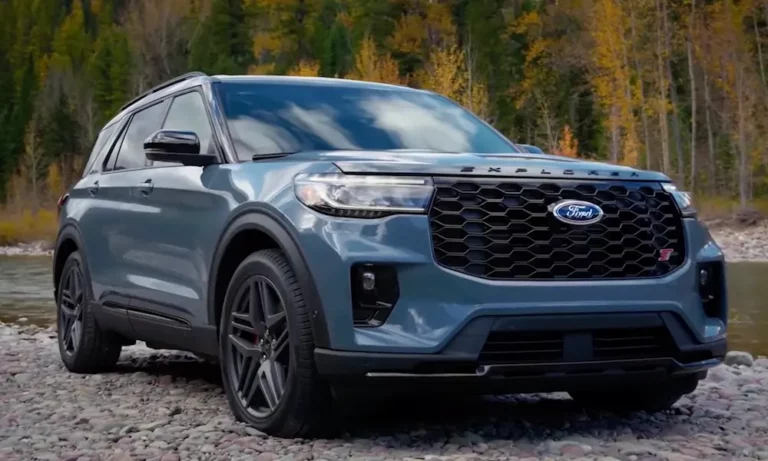
Thinking about buying a Ford Explorer? Smart move to research first. Some Explorer years will run past 400,000 miles with minimal fuss. Others will drain your wallet before hitting 100,000. This guide breaks down exactly which years to buy, which to skip, and what it actually costs to keep one on the road.
The Short Answer: It Depends on the Year
Are Ford Explorers reliable? Yes and no. Reliability varies wildly depending on the model year, the engine under the hood, and how seriously the previous owner treated the maintenance schedule.
Some generations are genuinely tough machines. Others carry engineering decisions that’ll cost you thousands in repairs. Knowing the difference saves you from a very expensive mistake.
Ford Explorer Reliability by Generation: The Full Breakdown
Here’s every Explorer generation ranked by what actually goes wrong — and how bad it gets.
| Generation | Years | Platform | Primary Reliability Concerns |
|---|---|---|---|
| First | 1991–1994 | Body-on-Frame | Coolant leaks, transmission cooling |
| Second | 1995–2001 | Body-on-Frame | Tire tread separation, speed control modules |
| Third | 2002–2005 | Body-on-Frame | Total transmission failure, rear differential |
| Fourth | 2006–2010 | Body-on-Frame | Timing chain tensioners, radiator leaks |
| Fifth | 2011–2019 | Unibody FWD | Internal water pumps, steering racks, PTUs |
| Sixth | 2020–Present | Unibody RWD | Software bugs, 10-speed transmission, PCM resets |
First Generation (1991–1994): Simple and Solid
These early Explorers used a 4.0L overhead valve V6 with almost no electronic interference. No turbochargers. No complex software. Just a straightforward engine that was easy to fix when something went wrong.
Common issues included coolant leaks and automatic transmission cooling failures — manageable stuff by 1990s standards. The 1993 model year stands out as particularly robust for its mechanical simplicity. If you want a cheap, old-school Explorer for light off-road use, first-gen models still deliver.
Second Generation (1995–2001): Good Engine, Bad Press
The 5.0L V8 introduced in this era was actually a strong performer. The mechanical reliability of the powertrain held up well. The problem? The Firestone tire tread separation scandal dominated this generation’s legacy.
High-speed rollovers tied to defective tires put the Explorer in the national spotlight for all the wrong reasons. The 1998 model year alone racked up over 2,200 NHTSA complaints — the highest complaint volume in Explorer history. The truck itself wasn’t the villain, but its reputation took a permanent hit.
Third Generation (2002–2005): The One to Avoid
This is where things get ugly. The 2002 Ford Explorer is widely flagged as the single worst model year to buy. Of the thousands of complaints filed, nearly half targeted the powertrain alone.
The 5R55W five-speed automatic transmission became notorious for failing before 100,000 miles. Owners reported harsh shifting, slipping gears, and transmissions that simply refused to engage Drive or Reverse. Rebuilds and replacements ran over $2,800.
There’s also a strange cosmetic-structural defect unique to this generation: the body panel below the rear window would crack without any impact. It happened on nearly every third-gen unit produced. Avoid the 2002–2004 models entirely. The 2005 is slightly better but still carries risk.
Fourth Generation (2006–2010): Recovering, With One Catch
Ford used this generation to clean up the mess left by the third gen. Build quality improved, and most of the transmission drama settled down. The 2009 and 2010 models are solid used-market picks.
The hidden danger here is the 4.0L SOHC V6’s timing chain setup. Plastic timing chain guides can break, and when they do, the engine doesn’t survive. The fix is preventive: strict oil change intervals every 5,000 miles keep those guides from failing prematurely. Skip the oil changes, lose the engine. It’s that binary.
The Fifth Generation’s Secret Killer: The Internal Water Pump
The 2011–2019 Explorer moved to a car-based unibody platform. It drove better, looked modern, and targeted suburban families instead of trail riders. It also introduced one of the most expensive engineering decisions in the Explorer’s history.
On the 3.5L Cyclone V6, Ford placed the water pump inside the engine block, driven by the timing chain. This compact design saved space but created a critical failure path.
When the pump’s bearing fails — typically between 80,000 and 150,000 miles — the coolant seal often breaks too. Because the pump sits behind the timing cover, the leaking coolant doesn’t drip onto your driveway. It mixes with your engine oil instead, creating a thick sludge that destroys lubrication in minutes.
- Proactive water pump replacement cost: $2,000–$3,000
- Engine replacement after failure: $7,000+
The math is obvious. Replace it early or risk a catastrophic engine loss.
Fifth Generation Engine Reliability at a Glance
| Engine | Type | Water Pump Location | Common Issues |
|---|---|---|---|
| 2.0L EcoBoost | Turbo I4 | External | Turbocharger seals, cooling fans |
| 2.3L EcoBoost | Turbo I4 | External | Exhaust manifold cracks, carbon buildup |
| 3.5L Ti-VCT V6 | Natural Aspiration | Internal | Water pump, throttle body |
| 3.5L EcoBoost | Twin-Turbo V6 | Internal | Water pump, turbo oil lines, PTU |
The 2.0L and 2.3L EcoBoost four-cylinders dodge the water pump problem entirely. Their pumps sit externally and cost far less to replace. Many experienced owners recommend the four-cylinder specifically for this reason.
The PTU Fluid Problem No One Talks About
Here’s a maintenance insight that saves drivetrains: Ford labeled the Power Transfer Unit fluid on AWD fifth-gen Explorers as “lifetime fill” — meaning it never needs changing.
That’s wrong, and it’s expensive to be wrong about.
Heat from the nearby exhaust causes the small volume of PTU gear oil to thicken into a solid mass over time. Owners who successfully crossed 200,000 miles consistently changed this fluid every 30,000 miles — regardless of what the manual says.
The Sixth Generation: A Rocky Start That Got Better
The 2020 Explorer launched on a rear-wheel-drive platform that brought real towing capability and better driving dynamics. It also launched with extraordinary quality control problems.
The 2020 model accumulated over 30 recalls targeting everything from rear axle bolts to wiring harnesses to seat frames. The most serious issue involved a rear axle mounting bolt that could fracture under hard acceleration, allowing the axle housing to shift and potentially disconnecting the driveshaft. Ford’s initial fix was a software patch to automatically engage the electronic parking brake — not a mechanical replacement — which drew sharp criticism from safety advocates.
The good news? Ford improved fast.
| Model Year | J.D. Power Score | Recalls | Reliability Verdict |
|---|---|---|---|
| 2020 | 60 / 100 | 30 | Avoid |
| 2021 | 81 / 100 | 15 | Improving |
| 2022 | 82 / 100 | 10 | Stable |
| 2023 | 82 / 100 | 8 | Recommended |
| 2024 | 87 / 100 | 2 | Best Current Option |
The 2024 Explorer scores 87 out of 100 with J.D. Power and carries just two recalls. That’s a dramatic turnaround from the 2020 disaster. It takes most new automotive platforms three to four years of production refinements to stabilize — and the Explorer follows that pattern closely.
The 2025 Explorer: Software Is the New Transmission
The 2025 refresh brought a new infotainment system powered by Google, a redesigned 2.3L EcoBoost with dual-injection technology, and a refreshed interior. It also brought a new category of reliability problem: software failures.
Early 2025 owners have reported the 13.2-inch touchscreen blacking out while driving, the Google-based system hanging mid-route, and the BlueCruise hands-free system disengaging without warning. One owner of a brand-new 2025 Platinum reported a stall at 4,000 miles caused by a Powertrain Control Module (PCM) software reset — which killed power steering at highway speed.
The most serious 2025 concern is Recall 25V239, affecting over 24,000 units. The PCM can reset unexpectedly, causing an engine stall. Worse, the reset can trigger the transmission’s park pawl to engage while the vehicle is still moving faster than 10 mph, potentially shattering the pawl and making the Park position useless for holding the vehicle.
Additional 2025 recalls include:
- 25V730000 – Windshield air bubbles obstructing the driver’s view
- 25V691000 – Hybrid pedestrian alert failing to emit warning sounds at low speeds
- 26V122000 – EGR valve failure causing sudden power loss (remedy still pending as of March 2026)
The 2025 Explorer has already lost its Consumer Reports recommendation. For now, it’s a “wait and see” year.
How Does the Explorer Stack Up Against Rivals?
According to RepairPal’s 2026 reliability ratings, the Explorer costs noticeably more to maintain than both the Toyota Highlander and Honda Pilot.
| Vehicle | Annual Repair Cost | Reliability Rating | Segment Rank |
|---|---|---|---|
| Toyota Highlander | $489 | 4.0 / 5.0 | 7th of 26 |
| Honda Pilot | $542 | 3.5 / 5.0 | 13th of 26 |
| Ford Explorer | $732 | 3.5 / 5.0 | 19th of 26 |
| Midsize SUV Average | $573 | 3.5 / 5.0 | — |
The Explorer’s $732 annual repair cost runs nearly 28% higher than the midsize SUV segment average. The turbo engines and frequent electronic diagnostics drive that number up. The Explorer often delivers more power and tech than the Highlander or Pilot — but that gap comes with a real ownership cost.
Resale value tells the same story. The Toyota Highlander retains about 64.5% of its value after five years. The Ford Explorer retains just 48.8%. The used market prices in the Explorer’s reliability uncertainty once that factory powertrain warranty expires.
The Maintenance Schedule That Gets You to 250,000 Miles
Owners who reach high mileage on their Explorers don’t follow Ford’s official maintenance schedule. They go further. The Reddit community r/FordExplorer includes multiple owners reporting 361,000 and even 407,000 miles on original powertrains — and they all share the same approach.
| Interval | Service | Why It Matters |
|---|---|---|
| 5,000 miles | Full synthetic oil & filter | Protects turbos and timing chain guides |
| 30,000 miles | PTU fluid change | Prevents drivetrain-destroying sludge buildup |
| 30,000 miles | Coolant flush | Maintains seal integrity around the water pump |
| 50,000 miles | Transmission fluid exchange | Clears metallic debris from 10-speed shifting |
| 60,000 miles | Spark plugs | Keeps fuel combustion efficient in turbo engines |
| 100,000 miles | Proactive water pump (3.5L V6) | Prevents catastrophic oil-coolant mixing |
The 2025’s new 2.3L EcoBoost dual-injection system is a genuine improvement. By adding port injection alongside direct injection, fuel now washes the intake valves — preventing the carbon buildup that plagued older EcoBoost engines. Long-term data isn’t available yet, but it’s a promising design change.
The Best and Worst Ford Explorer Years to Buy
Best years to buy:
- 2018–2019 – Peak fifth-generation refinement. Most kinks worked out. Water pump risk manageable with proactive replacement.
- 2024 – Best sixth-generation model available. High J.D. Power scores, minimal recalls, improved transmission software.
- 2009–2010 – Solid fourth-gen options with improved build quality over earlier years.
Years to avoid:
- 2002–2004 – Transmission failure epidemic, body panel cracking. Stay away.
- 2020 – 30+ recalls, axle bolt failures, poor initial quality scores.
- 2025 (currently) – Software recalls, lost Consumer Reports recommendation. Give it a year.
What “Reliable” Really Means for an Explorer Owner
Are Ford Explorers reliable? They can be — but they reward owners who treat them like performance machines, not appliances that run forever without attention.
The Explorer gives you more power, more towing capacity, and more driving engagement than a Toyota Highlander or Honda Pilot. You pay for that with higher maintenance costs, a steeper learning curve on what to watch, and the need to stay ahead of known failure points before they become catastrophic ones.
Buy the right year. Change your fluids more often than the manual says. Don’t skip the PTU service. Do those things, and a Ford Explorer will absolutely earn its reputation as one of America’s most capable family SUVs.