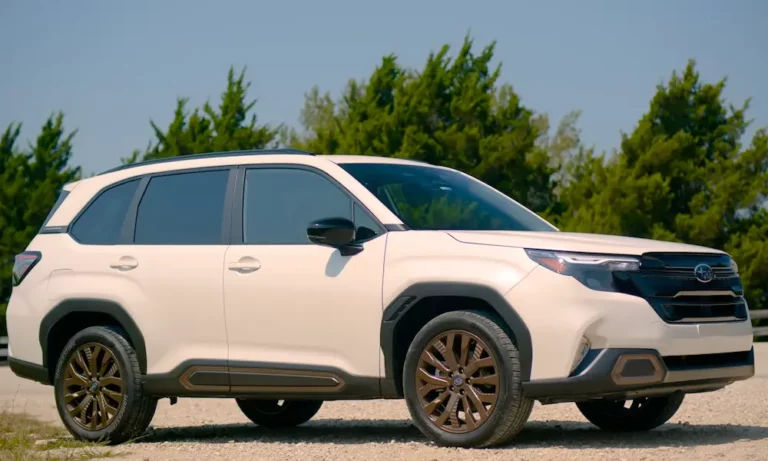
You’ve probably heard two very different things about the Subaru Forester. Some owners swear by them. Others warn you to run. The truth? It depends entirely on which Forester, how it’s maintained, and what you expect from it. Stick around — by the end of this post, you’ll know exactly what you’re getting into.
The Short Answer: Conditionally, Yes
Are Subaru Foresters reliable? They can be — but not in the “buy it and ignore it” way that a Toyota RAV4 or Honda CR-V might be.
Subaru claims that 96% of its vehicles sold in the last ten years are still on the road. That’s an impressive stat. But high-mileage survival and low maintenance headaches aren’t the same thing. The Forester rewards attentive owners and punishes neglectful ones. That distinction matters more here than with most compact SUVs.
What Makes the Forester Different (and Fussier)
The Forester runs a horizontally opposed “Boxer” engine — a layout most competitors don’t use. This design sits lower in the chassis, which improves handling and safety. It also pairs with Subaru’s full-time symmetrical all-wheel drive, which delivers genuinely superior traction in snow and rain.
But there’s a catch.
The Boxer engine’s flat layout means oil and coolant stay in constant contact with the head gaskets, even when the engine sits off. If coolant turns acidic — which happens when you skip changes — it eats through gasket material. Electrolysis from poor grounding near the battery can accelerate this. The result is an engine that needs more proactive care than a standard inline-four.
The full-time AWD system also means higher tire and fluid costs compared to part-time or front-wheel-drive-based systems. The Forester’s Lineartronic CVT adds another layer of maintenance sensitivity.
Bottom line: the Forester’s engineering is clever, but it comes with strings attached.
Subaru Forester Reliability by Generation
Not all Foresters are created equal. Here’s a clear-eyed breakdown of every generation.
| Generation | Years | Engine | Reliable Years | Avoid |
|---|---|---|---|---|
| 1st | 1998–2002 | EJ25 SOHC | Avoid most | All — head gaskets |
| 2nd | 2003–2007 | EJ25 | 2004, 2005 | 2003, 2006, 2007 |
| 3rd | 2008–2013 | FB25 (2011+) | 2012, 2013 | 2011 (oil consumption) |
| 4th | 2014–2018 | FB25 | 2017, 2018 | 2014, 2015 |
| 5th | 2019–2024 | FB25D | 2022, 2023 | 2019, 2020 |
| 6th | 2025–present | FB25 / Hybrid | 2025 Hybrid | Early non-hybrid TBD |
First and Second Generation (1998–2007): The Head Gasket Era
The early Foresters became notorious for head gasket failures in the 2.5-liter EJ25 engine. Single-layer composite gaskets degraded when coolant turned acidic. Failures typically appeared between 50,000 and 100,000 miles — first as oil or coolant seeps, then as overheating and engine damage.
The second generation improved build quality, with the 2004 and 2005 model years earning strong praise from independent reviewers. But the same EJ25 architecture meant the same vulnerabilities without diligent maintenance.
Third Generation (2008–2013): The Oil Consumption Era
The 2011 Forester introduced the FB25 engine with a timing chain instead of a timing belt — good news for long-term costs. But early FB25 engines brought a new problem: excessive oil consumption caused by low-tension piston rings. Some owners lost a quart every 1,000–2,000 miles. A class-action lawsuit led to extended warranties on affected short blocks. The 2012 and 2013 models largely resolved this issue.
Fourth Generation (2014–2018): The Convergence of Failures
This generation introduced the Lineartronic CVT as standard. The 2014 model year stands out as the worst Forester ever made — a convergence of engine, transmission, and suspension failures hit simultaneously.
Key problems from 2014–2016:
- Rear coil spring fractures — often before 50,000 miles
- CVT shuddering and surging — traced back to insufficient factory fluid
- Valve body solenoid failures — causing limp mode and costly repairs
- Accelerated wheel bearing wear
The 2017 and 2018 models ironed out most of these issues. The 2018 Forester is widely considered one of the most reliable of the generation.
Fifth Generation (2019–2024): The TCV and Windshield Era
This generation added the EyeSight driver assistance suite as standard and improved ride quality. But two new failure modes emerged.
The Thermal Control Valve (TCV): Subaru replaced the traditional thermostat with a plastic-housed TCV for more precise thermal management. The plastic housing cracked and leaked, triggering check engine lights and disabling safety systems. Repairs ran up to $3,500 out-of-pocket. A NHTSA-documented warranty extension (TSB 09-119-24) now covers TCV failures up to 15 years or 150,000 miles.
The Windshield Problem: Acoustic glass on 2019–2022 models cracked spontaneously under minimal stress. This isn’t just cosmetic — a cracked windshield disables the EyeSight cameras, knocking out adaptive cruise control and pre-collision braking. The Powell v. Subaru windshield settlement extended warranty coverage to 8 years or 100,000 miles and covers EyeSight recalibration costs.
The 2022 and 2023 models rate better, but always check your TCV and windshield warranty status first.
Sixth Generation (2025–Present): The Hybrid Future
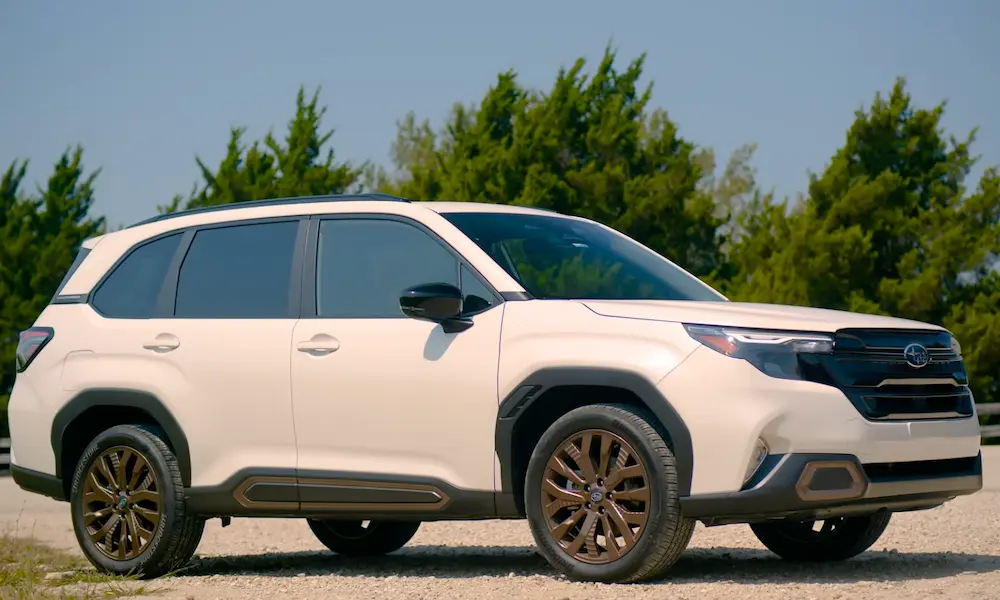
The 2025 Forester ditches the TCV entirely and returns to a mechanical thermostat — a direct response to widespread TCV failures. The 2025 Hybrid pairs with a Toyota-derived eCVT using planetary gears instead of friction-based pulleys. This architecture has proven itself in millions of Prius units and should dramatically improve long-term drivetrain reliability.
JD Power rates the 2025 Forester 81–84 out of 100 for Quality & Reliability. Early reception is positive, though infotainment responsiveness remains a sticking point for some owners.
The CVT: Subaru’s Most Controversial Decision
Subaru owners previously praised their four-speed automatics as nearly bulletproof. The switch to CVTs changed that reputation.
The most common CVT failure symptoms include:
- Shuddering or jerking during acceleration
- Valve body solenoid failure — costing $1,200–$1,800
- Chain slip — requiring full replacement at $7,000–$9,000
The biggest mistake Forester owners make? Trusting the “lifetime fluid” label. Transmission specialists and high-mileage owners consistently recommend draining and refilling CVT fluid every 30,000–60,000 miles, regardless of what the dealer says. Skipping this step is one of the fastest ways to kill an otherwise healthy Forester.
How Subaru Foresters Compare to the Competition
Here’s the hard truth about where Subaru Foresters reliable ratings land against direct rivals.
| Metric | Subaru Forester | Toyota RAV4 | Honda CR-V |
|---|---|---|---|
| RepairPal Rank | 21 out of 26 | 3 out of 26 | 2 out of 26 |
| Annual Repair Cost | $632 | $429 | $407 |
| Repair Frequency | 0.37 per year | 0.26 per year | 0.30 per year |
| Urgent Repair Probability | 13% | 10% | 9% |
The numbers don’t lie. Subaru owners spend about 40% more per year on unscheduled repairs than Toyota owners. Over ten years, that gap compounds — CarEdge estimates $7,291 in total maintenance costs for a Forester versus $5,470 for a Toyota RAV4.
That said, the Forester consistently wins KBB’s Best Resale Value awards and holds its price better than most crossovers. The market clearly values what the Forester offers — AWD capability, visibility, and safety — enough to absorb the higher running costs.
Maintenance Habits That Actually Keep Foresters Running
Owners who consistently hit 200,000 or even 300,000 miles on their Foresters don’t treat them like disposable appliances. They follow a different playbook.
Engine care:
- Change synthetic oil every 5,000 miles — not the manufacturer’s 6,000–7,500 recommendation
- Check the dipstick monthly; Subaru considers one quart per 3,000 miles “acceptable”, but that’s a low bar
- Use the correct Subaru Long Life Coolant and change it every 30,000–50,000 miles
- Keep battery terminals and ground wires corrosion-free to prevent electrolysis
Transmission care:
- Service the CVT every 30,000–60,000 miles regardless of dealer advice
- Avoid towing near the maximum capacity — CVTs overheat under sustained stress
Daily habits:
- Let the engine warm up briefly before pushing it hard
- Avoid “flooring” it from a cold start — the Boxer engine needs time to circulate oil evenly
The Build Quality Conversation Nobody Wants to Have
Mechanical reliability is only part of the story. Owners of 2022–2024 Foresters frequently report interior rattles from dashboards, B-pillars, and sunglasses holders — sometimes appearing within the first 10,000 miles.
These rattles don’t affect how the car drives, but they shape how reliable the car feels. Several owners have traded their Foresters for Mazda or Lexus alternatives specifically because of this issue. It’s a legitimate frustration worth knowing before you buy.
The Real Cost Breakdown
| Component | Common Failure Mileage | Estimated Repair Cost |
|---|---|---|
| Head Gasket (pre-2012) | 50,000–100,000 | $2,500–$3,500 |
| Rear Coil Springs (2014–2016) | 50,000–70,000 | $800–$1,200 |
| Control Arm Bushings | 60,000–90,000 | $600–$900 |
| Wheel Bearings | 80,000–110,000 | $500–$700 each |
| CVT Valve Body Solenoid | 80,000–120,000 | $1,200–$1,800 |
| TCV Housing (2019–2022) | 40,000–80,000 | $1,500–$2,200 (warranty may cover) |
| Windshield + EyeSight Recalibration | Variable | $1,500+ (warranty may cover) |
Which Forester Years Should You Actually Buy?
Best used options:
- 2004–2005 if you want an older, simpler Forester and commit to coolant changes
- 2012–2013 for the timing chain upgrade without first-year oil consumption problems
- 2017–2018 for the most polished fourth-generation model
- 2022–2023 for modern safety tech with most TCV issues under warranty
Avoid these years:
- 2014 — the worst convergence of failures across every system
- 2019–2020 — TCV and windshield problems peaked; check warranty status carefully
Best new option:
- 2025 Forester Hybrid — drops the TCV, adopts Toyota’s proven eCVT, and carries the most resolved platform in the model’s history
So, Are Subaru Foresters Reliable?
Yes — if you pick the right year and treat the car right. No — if you expect Toyota-level set-it-and-forget-it reliability.
The Forester delivers class-leading AWD performance, exceptional visibility, and top-tier safety ratings that genuinely save lives. It holds its value better than almost any competitor. But it asks for something in return: your attention.
Check your oil monthly. Change your CVT fluid. Use the right coolant. Know your warranty coverage — especially the 150,000-mile TCV extension and the windshield settlement if you own a 2019–2022 model.
Do all that, and a Forester can absolutely be a long-term partner worth every mile. Skip it, and you’ll learn the hard way why the “are Subaru Foresters reliable” debate never quite dies down.