Your car won’t start, and you’re staring at battery prices wondering if the Super Start brand at O’Reilly’s is legit or just cheap junk. You’re about to drop $100-$250 on a battery, and you need straight answers. Let’s cut through the marketing and figure out if Super Start batteries are actually good—and which ones are worth your money.
Who Actually Makes Super Start Batteries?
Here’s the truth: Super Start doesn’t make their own batteries. They’re O’Reilly Auto Parts’ private label, manufactured by two industry giants—Clarios (formerly Johnson Controls) and East Penn Manufacturing.
This matters because these are the same companies that make batteries for practically every major brand you recognize. Clarios powers roughly one in three vehicles worldwide. East Penn makes the respected Deka brand and has been O’Reilly’s battery supplier since 1999.
You can actually spot who made your battery. Many Super Start batteries have a “J” suffix on the part number (like 78PRMJ). That “J” signals Johnson Controls—now Clarios—built it.
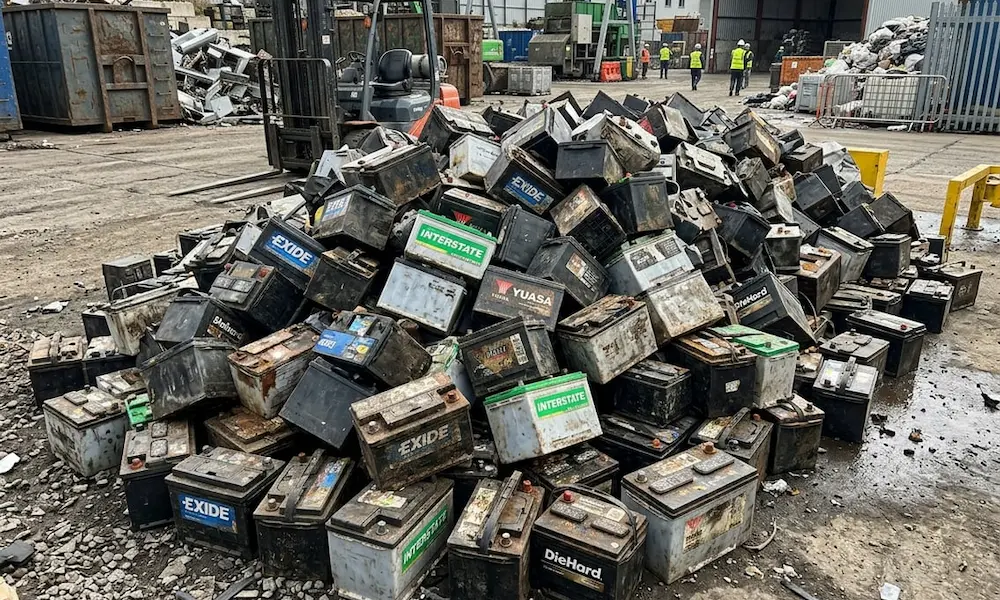
The bottom line? Super Start batteries roll off the same assembly lines as DieHard, Duralast, and Interstate. The sticker’s different, but the guts are identical.
Understanding the Super Start Battery Lineup
Not all Super Start batteries are created equal. O’Reilly sells four distinct tiers, and understanding them is critical because “are Super Start batteries good” depends entirely on which Super Start battery you’re buying.
The Four Tiers Explained
Super Start Economy (1-Year Warranty)
This is the budget option. It’s designed to meet—not exceed—your car’s original specs. Think of it as the “get you running” choice when money’s tight.
Super Start Premium (2-Year Warranty)
Standard flooded lead-acid technology. This is the workhorse tier that most drivers should consider. It’s built for reliable starting in all climates and costs significantly less than the fancy stuff.
Super Start Extreme (3-Year Warranty)
Available in both flooded and AGM versions. These use heavier grids and beefier plate designs for maximum starting power in harsh conditions—whether that’s Arizona heat or Minnesota winters.
Super Start Platinum (4-Year Warranty)
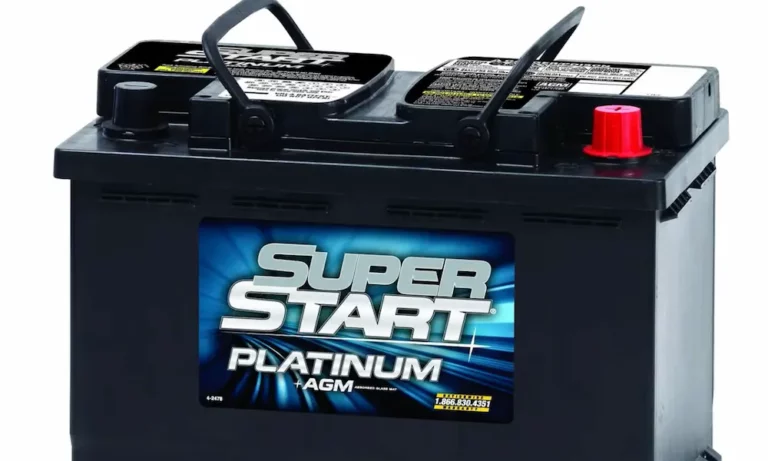
Top-shelf AGM (Absorbed Glass Mat) technology. These batteries are spill-proof, charge faster, and handle heavy electronic loads. O’Reilly claims they offer twice the cycle life of traditional batteries.
Here’s the key insight: the warranty length directly reflects the battery’s engineered lifespan. The 2-year Premium isn’t built with the same internal components as the 4-year Platinum.
Real-World Performance: The Premium Tier Shines
Consumer reviews tell a fascinating story. The Super Start Premium line punches way above its weight class.
One customer wrote: “I bought this battery to replace the identical model/size that I bought 9 years ago! I’ve never had a car battery last that long.”
Another reported their Premium battery “lasted 7 years with no issues” in a zero-turn mower application—one of the toughest environments for a battery.
The consistent theme? These 2-year warranty batteries routinely deliver 7-9+ years of service. That’s exceptional value.
Take the Group Size 65 Premium as an example. It delivers 750 CCA and 140 minutes of reserve capacity—specs that often exceed what your car came with from the factory.
The AGM Battery Problem You Need to Know About
Here’s where things get weird. While the Premium flooded batteries get glowing reviews, the expensive Platinum AGM line generates serious complaints.
One frustrated owner bluntly stated: “The SuperStart AGM batteries are absolute trash.”
A Miata owner went through two Platinum AGM batteries in less than a year, with both testing bad.
Another customer installed a brand new Platinum AGM and immediately measured 11.5V with no load—that’s a significantly discharged battery right out of the box.
Why This Happens (And It’s Not the Battery’s Fault)
This paradox—where the cheaper battery lasts 9 years and the expensive one is “trash”—isn’t about quality. It’s about application.
AGM batteries and traditional flooded batteries aren’t interchangeable. They have different internal resistance and require different charging voltages to reach full capacity.
Here’s the problem: many drivers “upgrade” to an AGM battery when their car originally came with a flooded battery. They think “more expensive equals better.” But your car’s alternator and voltage regulator are calibrated for the original battery type.
A charging system designed for a flooded battery typically outputs 13.8V-14.2V. That voltage will maintain a flooded battery just fine. But AGM batteries need higher voltage—often 14.4V-14.8V—to fully charge.
When you stick an AGM battery in a car with a 13.8V charging system, it never fully charges. This causes sulfation (lead sulfate crystal buildup), which rapidly kills the battery.
Here’s the kicker: sulfation and undercharging void your warranty. So you’re stuck with a dead $200+ battery and no recourse.
How Super Start Compares to Duralast, DieHard, and EverStart
Want to know a secret? There’s almost no meaningful difference between these brands at equivalent tiers.
They’re all made by the same manufacturers:
- Super Start (O’Reilly): Clarios and East Penn
- Duralast (AutoZone): Clarios
- DieHard (Advance Auto): Clarios
- EverStart (Walmart): Clarios and East Penn
- Interstate (Costco): Clarios
A Super Start Platinum AGM is a Clarios-made AGM. A Duralast Platinum AGM is also a Clarios-made AGM. Any quality difference is marketing, not manufacturing.
Consumer rankings reflect this parity. One comparative analysis placed Super Start Platinum, Duralast Platinum, and Super Start Extreme in the same top-performance cluster.
What Actually Matters When Choosing
Since the products are essentially identical under different labels, focus on these real differentiators:
Price: Sales and promotions create temporary advantages. A Duralast Gold might be cheaper this week; a Super Start Extreme might be on sale next month.
Warranty Length: This is critical. A Duralast Gold (3-year) might cost slightly more than a Super Start Premium (2-year), but you’re buying an extra year of coverage.
Store Convenience: The warranty only matters if you can easily access a store for free testing and replacement. If there’s an O’Reilly 2 miles away but AutoZone is 20 miles, that matters.
What the Warranty Actually Covers (Read This Carefully)
Super Start promotes “nationwide warranty and free replacement” up to four years. Sounds great, right? But there are critical limitations.
The “Limited” Part
The warranty covers defects in materials and workmanship. It doesn’t cover the most common failure causes: improper installation, freezing, abuse, misuse, low fluid level, or another faulty part.
Industry standards also exclude sulfation and overcharging/undercharging. Remember that AGM problem we discussed? That’s an undercharging failure—which means no warranty coverage.
The Warranty Doesn’t Reset
This is widely misunderstood and costs people money.
When a battery fails under warranty, you get a free replacement. But that replacement is only covered for the remaining time on your original warranty.
Example: You buy a 3-year Extreme battery. It fails after 2.5 years. You get a free replacement, but that new battery only has 6 months of coverage left. If it dies 7 months later, you’re buying a new battery.
One user reported their Extreme batteries “keep failing the last year to 4 months before the warranty expires.” That’s not coincidence—it’s the engineered lifespan. The manufacturers build 2-year batteries differently than 3-year batteries.
Which Super Start Battery Should You Buy?
Let’s get practical. Here’s your decision tree:
For Most Drivers: Super Start Premium (Best Value)
If you drive a conventional car or truck that came with a standard battery, the Super Start Premium flooded line is your sweet spot.
It costs significantly less than the Extreme or Platinum lines, but field data shows it routinely exceeds 7 years of service. That’s a 2-year warranty battery lasting 7-9 years. The math works heavily in your favor.
For Modern Vehicles: Check What You Have First
If your car has start-stop technology, advanced electronics, or came from the factory with an AGM battery, the Super Start Platinum is a direct, high-quality replacement.
Critical warning: Don’t “upgrade” to AGM if your car was designed for flooded. You need to verify your alternator’s charging voltage is appropriate for AGM (typically above 14.4V). Otherwise, you’re setting yourself up for premature failure.
For Extreme Climates: Super Start Extreme
If you regularly face brutal heat or severe cold, the Extreme line’s heavier construction justifies the extra cost. The Group Size 49 Extreme AGM delivers 900 CCA and 180 minutes of reserve capacity—serious power.
Skip the Economy Unless You’re Desperate
The 1-year warranty Economy line is fine if you’re selling the car next month or genuinely strapped for cash. Otherwise, spend the extra $20-40 for the Premium tier.
The Smart Buyer’s Strategy
Here’s how to actually shop for a battery:
Step 1: Look up your vehicle’s BCI Group Size (it’s in your owner’s manual or on the old battery). Common sizes include 24F, 35, 48, 65, and 78.
Step 2: Decide your warranty tier based on how long you’ll keep the car. Planning to drive it for 5+ years? The 2-year or 3-year warranty makes sense.
Step 3: Price-compare that exact tier across O’Reilly (Super Start), AutoZone (Duralast), Advance Auto (DieHard), and Walmart (EverStart).
Step 4: Buy the cheapest option for that tier. Since they’re made by the same manufacturers, you’re just picking the best price for an identical product.
Step 5: Consider store location. A warranty is worthless if the nearest store is 50 miles away. O’Reilly, AutoZone, and Advance all offer free battery testing and installation.
Performance Specs That Matter
When comparing batteries, focus on these numbers:
Cold Cranking Amps (CCA): How much power the battery delivers at 0°F for 30 seconds. Higher is better for cold climates. Match or exceed your vehicle’s original spec.
Reserve Capacity (RC): How long (in minutes) the battery can run your car’s electrical system if the alternator fails. The Super Start Premium Group 65 offers 140 minutes—more than enough.
Group Size: This is physical dimensions. Get this wrong and the battery won’t fit. Non-negotiable.
Here’s a quick reference for popular Super Start models:
| Model | Type | CCA | RC | Warranty |
|---|---|---|---|---|
| 49PLT | Platinum AGM | 850 | 170 min | 4 years |
| 49EXTAGM | Extreme AGM | 900 | 180 min | 3 years |
| 65PRM | Premium Flooded | 750 | 140 min | 2 years |
| 24RPRM | Premium Flooded | 650 | 115 min | 2 years |
So, Are Super Start Batteries Good?
Yes. Unequivocally.
Super Start batteries are manufactured by Clarios and East Penn—the same world-class companies that make batteries for virtually every major brand. The quality is there.
The Super Start Premium (2-year flooded) line represents exceptional value, with documented real-world performance of 7-9+ years. That’s a battery with a 2-year warranty routinely lasting nearly a decade.
The Super Start Platinum (4-year AGM) line is technologically advanced and high-quality, but it’s frequently misapplied. Don’t install an AGM battery in a car designed for flooded unless you’ve verified your charging system is compatible.
The “brand” doesn’t matter. Super Start, Duralast, DieHard, and EverStart are effectively the same products with different stickers. Buy based on warranty length, price, and which store is most convenient.
For most drivers, the sweet spot is the Super Start Premium flooded battery. It’s proven, reliable, and offers extraordinary longevity for the money. Match the group size, meet or exceed your CCA requirements, and you’re set.
The warranty is your most honest indicator of quality. A 2-year warranty battery is engineered for 2 years minimum. A 4-year warranty battery is built tougher. Pay for the warranty you need, not the badge on the label.