Shopping for a used Hyundai Santa Fe? The wrong model year can cost you thousands in repairs. The right one can be one of the smartest SUV purchases you’ll ever make. This guide breaks down every generation, flags the years to skip, and tells you exactly which models deserve your money.
Why the Model Year Matters So Much With the Santa Fe
Not all Santa Fes are created equal. This nameplate has lived through five distinct generations, each with its own strengths and landmines.
Some years had engines that seized at 80,000 miles. Others earned the highest reliability scores in the entire midsize SUV segment. Knowing the difference isn’t just smart — it’s essential.
Here’s what each generation actually looks like from a reliability standpoint.
Generation 1 (2001–2006): Simple, Durable, and Underrated
The first-gen Santa Fe ran on the same Hyundai-Kia Y4 platform as the Sonata. It wasn’t flashy, but it was surprisingly tough.
The 2.7-liter Delta V6 engine ran at lower thermal stress than later turbocharged engines. This meant fewer catastrophic failures and more miles without drama. Early complaints were mostly cosmetic — think squeaky interiors and minor electrical gremlins — not blown engines.
Watch out for:
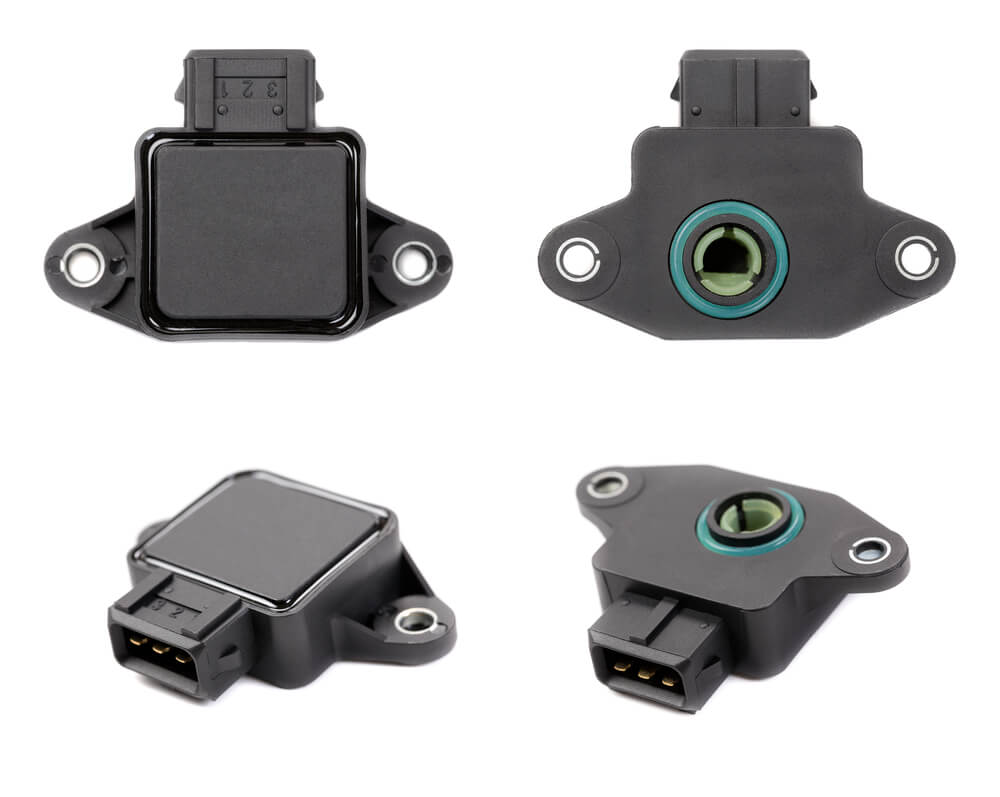
- 2004 models: crankshaft position sensor failures cause random stalling
- 2003–2006: airbag warning lights flickering due to early sensor integration issues
- Timing belt maintenance on the 2.4L four-cylinder — don’t skip it
| Engine | Reliability | Key Risk |
|---|---|---|
| 2.4L Sirius I4 | High | Timing belt neglect |
| 2.7L Delta V6 | Exceptional | Spark plug access |
| 3.5L Sigma V6 | Moderate-High | Fuel consumption |
| 4/5-Speed Auto | High | Shift solenoid wear |
If you want a cheap, functional beater SUV under $5,000, a well-maintained 2001–2003 with the Delta V6 still does the job.
Generation 2 (2007–2012): A Tale of Two Halves
The Years to Avoid: 2007 and 2008
These two are frequently flagged by experts as the worst of the second generation. The 2007 and 2008 models carried a persistent fuel level sensor fault that made the gauge drop to empty regardless of how much fuel was actually in the tank. That’s not just annoying — it’s a genuine safety risk.
Both years also had documented issues with airbag non-deployment and premature suspension wear on struts and ball joints.
The Sweet Spot: 2009
The 2009 model year stands out as the best of this generation. Hyundai fixed most of the electronic headaches from 2007–2008 by this point, and the naturally aspirated V6 was still intact before the 2010 facelift introduced new complexity.
Consumer ratings for the 2009 average a strong 4.6 out of 5. Owners consistently praise the balance of comfort and durability.
The Disaster Year: 2012
The 2.4-liter Theta II engine arrived in 2012, and it brought trouble with it. Engine knocking and total failure before 80,000 miles became a defining complaint, often requiring a full engine replacement.
| Year | Reliability | Main Issue | Consumer Rating |
|---|---|---|---|
| 2007 | Poor | Fuel system/Airbags | 2.9/5.0 |
| 2008 | Poor | Fuel gauge/Stalling | 3.1/5.0 |
| 2009 | Good | Minor wear | 4.6/5.0 |
| 2010 | Average | Airbag sensors | 3.9/10 |
| 2011 | Moderate | Speaker failures | 4.0/10 |
| 2012 | Poor | Engine failure | 4.5/10 |
Generation 3 (2013–2018): The Theta II Engine Saga
This generation split the Santa Fe into two models: the shorter Sport and the longer XL. It also introduced what became one of the most expensive reliability crises in Hyundai’s history.
The Theta II Problem (2013–2014)
The 2.4L GDI and 2.0L turbocharged Theta II engines suffered from manufacturing debris in the crankshaft oil passages. This blocked oil from reaching the connecting rod bearings, causing premature wear, metallic knocking, and in some cases, engine fires.
This failure triggered massive class-action settlements and the creation of a Knock Sensor Detection System (KSDS) software update, which provides a lifetime warranty on the engine block for affected vehicles that receive it. If you’re buying a 2013 or 2014, confirm the KSDS update is installed first.
The NHTSA has documented these failures extensively, and the recall history on these years is significant.
The Safe Choice Within Gen 3: 3.3L V6 and 2018
The 3.3-liter Lambda V6 didn’t share the same rod bearing defects as the Theta II four-cylinders. It’s the engine to look for if you want a third-gen Santa Fe.
The 2018 model also stands out for its minimal recall history and high J.D. Power scores. By this point, Hyundai had cleaned up quality control on the Theta II engines and refined the 6-speed automatic to remove the hesitation issues that plagued the 2014 and 2017 models.
| Engine | Years | Power | Risk Level |
|---|---|---|---|
| 2.4L Theta II GDI | 2013–2018 | 190 HP | Extreme — rod bearing failure |
| 2.0L Turbo GDI | 2013–2018 | 264 HP | High — turbo and bearing issues |
| 3.3L Lambda V6 | 2013–2018 | 290 HP | Low-Moderate — minor oil leaks |
For families who need three rows, the 2018 Santa Fe XL with the 3.3L V6 remains a solid recommendation.
Generation 4 (2019–2023): The Reliability Era
The fourth generation moved to Hyundai’s N3 platform and finally delivered the quality control the brand had been promising. This generation is widely considered the best for used car shoppers.
Why 2020 Is the Best Year for Hyundai Santa Fe
The 2020 model is the pick of the entire Santa Fe lineup. It benefits from the 2019 redesign without carrying first-year production bugs. It also predates the 2021 facelift that introduced a new Wet Dual-Clutch Transmission (DCT) in turbocharged models.
The 2022 J.D. Power Vehicle Dependability Study ranked the 2019 Santa Fe as the most dependable midsize SUV — confirming this generation solved the quality issues of the early 2010s. The 2020 refined that further.
The 2020 uses a traditional 8-speed torque-converter automatic. No DCT drama, no recall anxiety. Just reliable daily driving.
The 2021 Complication
The 2021 facelift brought the new 8-speed Wet DCT for turbocharged models. This transmission is quicker and sportier, but it triggered a major recall when high-pressure electric oil pump failures caused complete loss of power while driving.
If you want a 2021 or newer with the turbo engine, confirm the recall work is completed.
2023: The Peak of the Generation
The 2023 model shows the highest owner recommendation rate in this generation, with 80% of KBB reviewers recommending it. Owners praise the spacious interior and premium feel. It’s also the best year to buy if you want the fourth-gen hybrid — more on that below.
| Trim | Engine | Best For |
|---|---|---|
| SE | 2.5L I4 NA | Budget buyers |
| SEL | 2.5L I4 NA | Best value overall |
| XRT | HTRAC AWD | Style-focused buyers |
| Limited | 2.5L Turbo I4 | Premium daily use |
| Calligraphy | 2.5L Turbo I4 | Luxury shoppers |
Generation 5 (2024–Present): Bold Design, Real Growing Pains
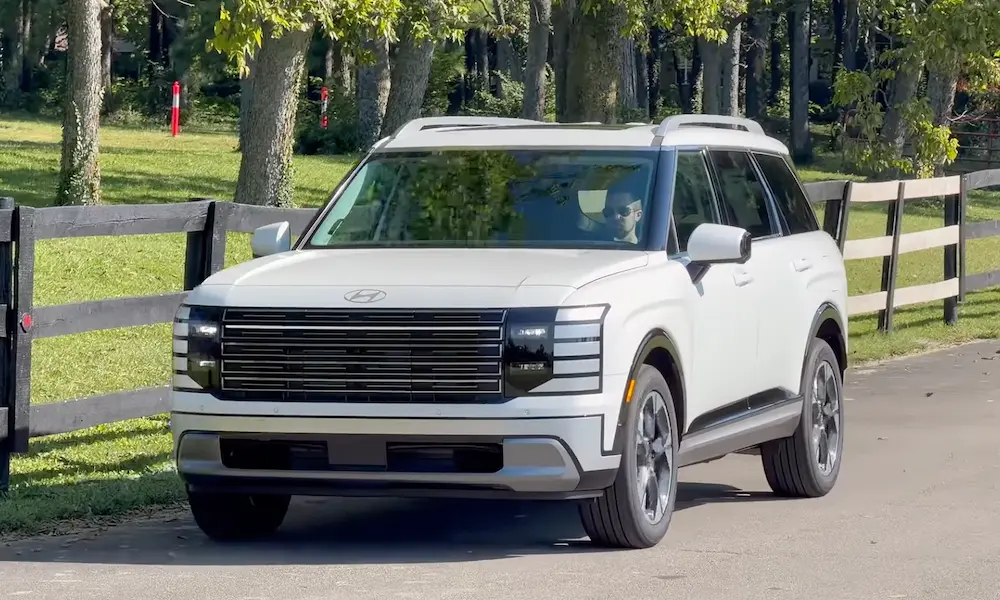
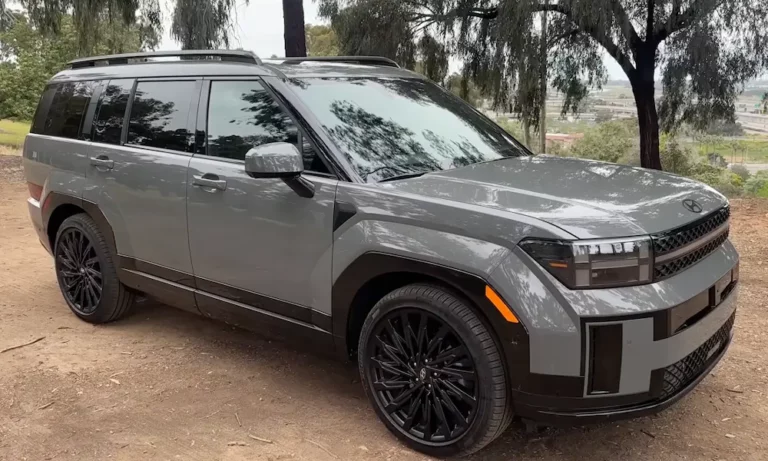
The 2024 Santa Fe brought a completely new boxy design with a standard third row. It’s a sharp-looking SUV, but early production has hit familiar first-year turbulence.
The DCT Problem — Again
Safety Recall 263 was issued for over 12,000 units of the 2024 gasoline model, with an estimated 100% defect rate in certain software and hardware parameters. The failure could cause vehicle rollaway or internal transmission damage.
As a result, Hyundai announced a major change: the 8-speed DCT will be replaced with a traditional torque-converter automatic for the 2026 model year. That’s a significant engineering reversal.
2024 Hybrid: The Smarter Buy Right Now
The 2024 Santa Fe Hybrid uses a different 6-speed automatic transmission that doesn’t share the DCT issues. Early owner reports show it runs smoothly, and it returns 34–36 MPG in real-world driving.
The 2025 model built after November 2024 also earns the IIHS TSP+ award, with Hyundai rapidly addressing the initial moderate overlap front test concern.
| Metric | 2.5L Turbo Gas | 1.6L Turbo Hybrid |
|---|---|---|
| Horsepower | 277 HP | 231 HP |
| Combined MPG | 23–24 MPG | 34–36 MPG |
| Transmission | 8-Speed DCT (2024–25) | 6-Speed Auto |
| Towing Capacity | 3,500–4,500 lbs | 2,000 lbs |
The Hybrid Models: What You Need to Know (2021–2025)
The 1.6-liter turbo hybrid system is genuinely impressive. Real-world fuel economy regularly hits 33–36 MPG, and the core hardware — engine and electric motor — has proven durable across the 2021–2025 range.
The 1.6T engine is an evolution of the well-established G4FJ family. It doesn’t share the Theta II rod bearing defect.
One real-world annoyance: The Digital Key and Passive Entry systems constantly scan for your phone or key fob, which prevents the car’s computers from entering sleep mode. Leave it parked for five to seven days and the 12V starter battery may go dead — even with a full high-voltage battery. Disabling passive entry helps, but it’s a clunky workaround for what should be a non-issue.
Safety Ratings: A Clear Upward Trend
The Santa Fe’s safety record has improved steadily across every generation.
- The 2022 Santa Fe earned the IIHS TSP+ designation, Hyundai’s highest safety recognition ever at that point
- The 2024 model initially received a “Marginal” rating in the updated IIHS moderate overlap front test, specifically for rear-seat protection
- Hyundai implemented structural fixes, and the 2025 model (built after November 2024) reclaimed TSP+
| Test Category | 2019 | 2022 | 2025 |
|---|---|---|---|
| Small Overlap Front: Driver | Good | Good | Good |
| Small Overlap Front: Passenger | Good | Good | Good |
| Moderate Overlap | Good | Good | Good |
| Front Crash Prevention | Superior | Superior | Good |
Total Cost of Ownership: Better Than You Think
Hyundai’s 10-year/100,000-mile powertrain warranty covers original owners against the exact types of failures discussed in this guide.
According to RepairPal, the Santa Fe averages lower annual repair costs than the midsize SUV class average and significantly lower than the all-vehicle average. It also requires fewer unscheduled repair visits — 0.2 per year versus 0.4 for competitors.
Santa Fe vs. Toyota Highlander Hybrid: A Quick Comparison
If you’re cross-shopping with the Highlander, here’s the honest breakdown.
The Highlander Hybrid has a longer hybrid track record and stronger towing (up to 3,500 lbs). But it starts nearly $6,000 higher than a comparable Santa Fe Hybrid and offers less standard tech at every trim.
The Santa Fe Hybrid’s 1.6T produces 271 lb-ft of torque versus the Highlander’s 175 lb-ft. Around town, the Santa Fe simply feels more responsive.
The Highlander wins on third-row legroom and total cargo volume (97.5 vs. 80 cubic feet with seats folded). The Santa Fe wins on front and second-row space, tech, warranty length, and price.
| Category | 2025 Santa Fe Hybrid | 2025 Highlander Hybrid |
|---|---|---|
| Combined MPG | 36 MPG | 35 MPG |
| Powertrain Warranty | 10 yr / 100,000 mi | 5 yr / 60,000 mi |
| Infotainment Screen | 12.3-inch standard | 8-inch standard |
| Reliability Score | 79/100 | 81/100 |
The Best Year for Hyundai Santa Fe: Our Picks by Buyer Type
Here’s the bottom line, sorted by what matters most to you.
Budget buyer under $10,000 → 2009 Santa Fe
The most reliable second-gen model with a proven V6, pre-Theta II simplicity, and enough features for secondary vehicle use. Consumer ratings average 4.6 out of 5.
Reliability-first used buyer → 2020 Santa Fe
This is the definitive expert pick for a modern, dependable Santa Fe. It’s got the fourth-gen tech without the DCT complications. The traditional 8-speed automatic keeps things simple and durable.
Fuel efficiency shopper → 2023 Santa Fe Hybrid
The 1.6T hybrid system is proven and smooth, the conventional 6-speed auto keeps reliability high, and the 2023 model sits at the peak of this generation before the fifth-gen redesign reset the clock.
New car buyer → Wait for the 2026
Hyundai is dropping the DCT for a conventional 8-speed torque-converter automatic. The 2026 model combines the bold new design with a far more conservative powertrain — exactly the combination smart buyers have been waiting for. Car and Driver confirmed the transmission swap, and it makes the 2026 the most anticipated Santa Fe in years.
The pattern is clear: skip the first year of every redesign (2007, 2013, 2019, 2024), and look for the late-cycle refinements. That’s where the best year for Hyundai Santa Fe always hides.