Shopping for a used 4Runner feels like navigating a minefield. One wrong year and you’re staring down a destroyed transmission, a rusted frame, or a blown head gasket. The good news? A few model years rise clearly above the rest. This guide breaks down every generation so you know exactly which year to buy — and which ones to skip entirely.
Why the “Best Year” Question Actually Matters
The Toyota 4Runner has been around since 1984. That’s four decades of model years, engine swaps, chassis changes, and engineering wins and losses. Not every year is created equal.
Some years came with engines that self-destructed before 100,000 miles. Others had frames that rotted through in snowy climates. A handful of years, though, hit a sweet spot — reliable engines, solid off-road hardware, and factory build quality that lets these trucks roll past 300,000 miles without complaint.
Your budget, your use case, and where you live all shape the answer. But data points to clear winners.
First Generation (1984–1989): The One Year That Stands Out
Most people skip first-gen 4Runners entirely. They’re old, parts are harder to find, and the cabin feels ancient. But if you’re a serious off-road enthusiast or a collector, one year stands alone.
Why 1985 Is the Best First-Gen 4Runner
The 1985 model is a genuine anomaly in automotive history. It’s the only year Toyota combined two features that were never offered together again:
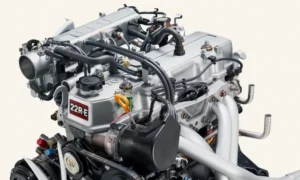
- The 22RE 2.4-liter four-cylinder with electronic fuel injection (EFI) — solving the altitude and incline fueling problems of the carbureted 1984 model
- A solid front axle (SFA) — which delivers maximum suspension travel for technical off-roading
By 1986, Toyota switched to independent front suspension to improve highway comfort. That improved the daily driving experience but killed front-end articulation off-road. So the 1985 sits in a unique window — modern enough to run reliably, old-school enough to flex like few trucks can.
| Component | 1984 (22R) | 1985 (22RE) | 1988–89 (3VZ-E V6) |
|---|---|---|---|
| Horsepower | 100 hp | 116 hp | 150 hp |
| Fuel Delivery | Carbureted | EFI | EFI |
| Front Axle | Solid | Solid | Independent |
| Reliability | Very High | Exceptional | Moderate (head gaskets) |
Avoid the late-first-gen 3.0-liter V6. It planted the seeds for the head gasket failures that would define the next generation.
Second Generation (1990–1995): Generally One to Avoid
The second gen brought a fully integrated steel body, four doors, and a much more comfortable cabin. Those were real improvements. The engine, though, was a problem.
The 3VZ-E Head Gasket Problem
The 3.0-liter 3VZ-E V6 earned the nickname “3.slow” because it drank fuel without delivering proportionate power. Worse, its exhaust crossover pipe routed excessive heat directly at the rear cylinder heads. The result? Premature head gasket failures, often before 100,000 miles.
If you must buy a second-gen, the 1994 or 1995 models are the least risky. Toyota made minor cooling revisions by then. But the head gasket risk never fully went away with this engine, so go in with eyes open and budget for the repair.
Third Generation (1996–2002): The Golden Era
The third gen N180 is where the 4Runner legend really took root. Toyota moved it off the old Hilux platform onto the J90 Land Cruiser Prado chassis, added coil-spring rear suspension, and dropped in the 5VZ-FE 3.4-liter V6 — one of the most celebrated truck engines ever built.
Why the 5VZ-FE 3.4L V6 Is So Respected
Toyota engineers built the 5VZ-FE specifically to fix the 3.0-liter’s failures. It worked. Here’s what makes it special:
- Non-interference design: If the timing belt snaps, the pistons don’t hit the valves. Your engine survives.
- Iron block durability: It handles heat and abuse without complaint.
- Longevity: With a timing belt and water pump swap every 90,000 miles, these engines regularly hit 300,000 to 500,000 miles.
Best Year: 1999 (and Why It Beats Everything Else in the Generation)
Within the third gen, 1999 and 2000 are the peak years. The 1999 Limited specifically checks every box:
- Multi-Mode 4WD: Lets you run 2WD, full-time AWD (safe on dry pavement), and part-time 4WD. Maximum versatility.
- Factory rear electronic locker: A feature Toyota quietly dropped in 2001–2002 in favor of traction control. Once it’s gone, it’s gone.
- “Highlander” Sport Edition springs: These gave the 1999 roughly one inch more ground clearance than other years — a favorite starting point for off-road builds.
- Interior refresh: Cupholders moved to the center console, better dash materials, digital odometer.
| Feature | 1996–1998 | 1999–2000 | 2001–2002 |
|---|---|---|---|
| Rear Locker | Available | Available | Not available |
| 4WD System | Part-Time | Multi-Mode (Limited) | Multi-Mode (all trims) |
| Safety | Dual airbags | Improved impact | VSC/TRAC added |
| Top Concern | Lower ball joints / radiator | Lower ball joints / radiator | “Pink Milkshake” |
The “Pink Milkshake” Problem You Must Know About
Every third-gen buyer needs to understand this. The factory radiator has internal cooling lines that can fail, letting engine coolant mix with automatic transmission fluid. The resulting pink fluid destroys the transmission. Most experts recommend replacing the radiator every 10 years or bypassing it with an external transmission cooler. Don’t skip this check on any third-gen purchase.
Fourth Generation (2003–2009): Powerful But Watch the Frame
The fourth gen N210 moved to the 120-series Land Cruiser platform. It’s bigger, more powerful, and more refined. It also introduced the only V8 ever offered in a 4Runner.
V8 vs. V6: Which Engine to Choose
The 4.7-liter 2UZ-FE V8 is a legendary engine. It generates 80% of its peak torque at just 1,100 RPM — outstanding for towing and low-speed crawling. It tows up to 7,300 pounds and shares its engine family with the Tundra and Lexus LX470. The downside: it needs a timing belt replacement every 90,000 miles.
The 4.0-liter 1GR-FE V6 has a maintenance-free timing chain, which simplifies ownership. But 2003 and 2004 V6 models had head gasket failures from a manufacturing defect. Toyota fixed the gasket design in 2005, making 2005–2009 V6 models significantly more reliable.
The Frame Rust Problem in the Fourth Gen
This is the fourth gen’s biggest flaw. 4Runners driven in the northern U.S. “Salt Belt” frequently developed severe frame corrosion. Unlike the Tacoma and Tundra, the 4Runner was excluded from Toyota’s $3.4 billion frame replacement settlement because it was built in Japan with different steel and coating processes.
Before you buy any 2003–2009 4Runner, get under it with a flashlight. Look for scaling, perforation, and flaking. A rusted frame is a safety issue, not just a cosmetic one.
Best Fourth-Gen Year: 2009 Trail Edition
The 2009 Trail Edition is the collector’s pick of this generation. Toyota released it as the final, most refined version of the fourth gen. It combined:
- The 4.0L V6
- Factory electronic rear locking differential
- Bilstein shocks
- Specialized 16-inch FJ Cruiser wheels
Toyota built an estimated 1,000 of them. That makes the 2009 Trail Edition both the most capable and rarest fourth-gen model on the used market.
Fifth Generation (2010–2024): Long-Running, Reliable, and Battle-Tested
The fifth gen N280 ran for 15 years with minimal mechanical changes. Critics called the interior dated and the fuel economy poor. Owners kept buying them anyway — because the 4.0L Dual VVT-i V6 and 5-speed automatic combination is simple, tough, and proven.
Which Fifth-Gen Year Is Actually Best?
Three years stand out for different reasons:
2012 — Best value buy. It clears the “first-year” issues that hit 2010 models (brake rotor warping, paint peeling) without costing as much as newer models.
2017 — Mechanical peak. It earned an 88 out of 100 quality score from J.D. Power. It carries the 2014 facelift styling and lacks the added sensor complexity that crept into 2020+ models.
2021 — Best for families. Toyota standardized Toyota Safety Sense P (TSS-P) in 2020, which includes pre-collision braking with pedestrian detection, dynamic radar cruise control, and lane departure alert. The 2021 gets all of that plus Apple CarPlay and Android Auto, while avoiding the airbag sensor complaints that spiked in 2022.
One note on safety ratings: the fifth-gen 4Runner received a “Marginal” rating from the IIHS in the small overlap front driver-side test. Its chassis predates that specific test by years. It’s something to weigh if crash test scores matter to you.
A Word on KDSS
Some TRD Off-Road trims include the Kinetic Dynamic Suspension System (KDSS), which disconnects sway bars off-road for more flex and stiffens them on-road. It works well — until it doesn’t. A failed KDSS hydraulic cylinder can cost up to $7,000 to repair. If you’re buying high-mileage, factor that risk in.
Common Fifth-Gen Issues at a Glance
| Problem | Years Affected | What It Means |
|---|---|---|
| Takata airbag recall | 2010–2017 | Dangerous propellant degradation |
| Peeling paint | 2010–2015 | Cosmetic; mainly white/pearl colors |
| Soy-based wiring | 2016 | Attracts rodents who chew through it |
| Airbag sensor complaints | 2022 | More complaints than nearby years |
Sixth Generation (2025–Present): Too New to Crown
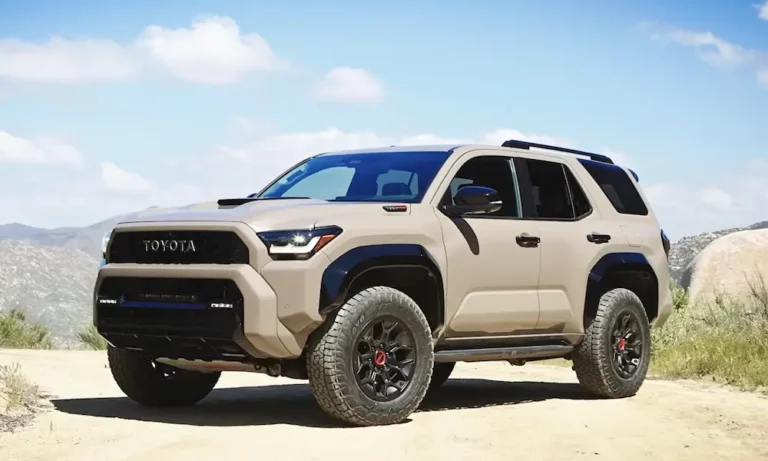
The 2025 4Runner swaps the V6 for a turbocharged 2.4-liter four-cylinder, with a hybrid i-FORCE MAX option producing 326 horsepower and 465 lb-ft of torque. It moves to the TNGA-F platform and tows up to 6,000 pounds.
The numbers are impressive. But there’s no long-term reliability data yet. It’s too early to call it the best year for a Toyota 4Runner. Check back in a few years once owners have put real miles on them.
The Definitive Rankings: Best Year for Toyota 4Runner by Category
| Category | Best Year | Why It Wins |
|---|---|---|
| Best vintage / off-road | 1985 | EFI + solid front axle — never repeated |
| Best overall / daily driver | 1999 Limited | Rear locker + Multi-Mode 4WD + 5VZ-FE |
| Best fourth-gen pick | 2009 Trail Edition | Factory locker, Bilstein shocks, rare |
| Best budget buy | 2012 | Past early issues, strong value |
| Best mechanical quality | 2017 | 88/100 J.D. Power, proven 4.0L V6 |
| Best modern family pick | 2021 | TSS-P safety suite + Apple CarPlay |
Years to Actively Avoid
- 1990–1995: Head gasket failures from the 3VZ-E are expensive and common
- 2003–2004 V6: Manufacturing defect in head gaskets; stick to 2005+
- Any 2003–2009 with frame rot: Check the undercarriage before you buy anything from this era in a salt-belt state
- 2010–2011: First-year gremlins including rotor warping and paint issues
- 2022: Higher-than-average airbag sensor complaints compared to nearby years
The best year for a Toyota 4Runner depends on what you need from it. But whether you’re chasing trail capability, daily reliability, or modern safety tech, the data points you toward a short list of clear winners. Stick to those years, check the frame, service the radiator, and you’ll have a truck that’ll outlast just about anything else on the road.