Thinking about buying a Subaru Forester but not sure which year to pick? You’re about to get the full picture — the good years, the bad ones, and exactly why it matters. Stick around, because picking the wrong year could cost you thousands.
Why the Year You Buy Actually Matters
Not all Foresters are built equal. The same badge can mean a bulletproof daily driver or a money pit depending on the model year. The Forester has gone through six generations since 1998, and each one carries its own strengths and landmines.
Subaru claims 96% of its vehicles sold in the last ten years are still on the road. That sounds great — until you dig into which years are holding that number up.
The Forester’s unique horizontally opposed Boxer engine and full-time symmetrical AWD make it genuinely capable. But that same engineering creates specific failure points that vary dramatically by model year. Here’s what you need to know.
The Best Years for Subaru Forester
2004–2005: The Original Sweet Spot
These two years earned what independent consumer advocates call the “Seal of Awesome.” Reliability data backs this up — the 2004 and 2005 models hit a quality peak for the second generation before age-related wear became a factor.
Yes, these cars use the EJ25 engine, which has a reputation for head gasket issues. But here’s the thing: if you find one that’s been properly maintained with regular coolant changes, it can still be a solid buy. The head gasket problem is mostly a maintenance story, not a design death sentence for these years.
What makes them stand out:
- Strong build quality for the era
- Rugged, utilitarian design that holds up well
- Parts are cheap and mechanics know them cold
- Great visibility and AWD capability
The catch: These are old cars now. Budget for head gasket work if it hasn’t been done. Check coolant condition before you buy.
2018: The Last and Best of the Fourth Gen
The 2018 Forester is arguably one of the most reliable models of its generation. It benefits from being the final year of the fourth-generation platform — meaning Subaru had years to iron out the early problems that plagued the 2014 and 2015 models.
By 2018, the rear coil spring fractures that hit 2014–2016 cars had been addressed. The CVT shuddering issues from early in the generation were largely sorted out. You get a refined, spacious interior with standard EyeSight safety tech and none of the first-year redesign chaos.
Key advantages of the 2018:
- Avoid the “convergence of failures” that hit 2014 models
- CVT reliability improved significantly by this point
- Full EyeSight driver assistance suite standard on higher trims
- No Thermal Control Valve issues (that came with the 2019 redesign)
- Strong resale value retention
This is the year most reliability analysts point to when someone asks for the best used Forester under $25,000.
2022–2023: The Fifth Gen After the Fixes
The fifth generation (2019–2024) had a rough start. The 2019–2021 models introduced the Thermal Control Valve (TCV), a plastic-housed valve that cracked and leaked — sometimes disabling the car’s safety systems entirely. The 2019–2022 models also had a windshield cracking problem that led to a class-action settlement.
By 2022 and 2023, Subaru had addressed most of the early issues. More importantly, both the TCV and windshield now carry extended warranty protection:
- TCV: Covered to 15 years or 150,000 miles under TSB 09-119-24
- Windshield: Covered to 8 years or 100,000 miles under the Powell v. Subaru settlement
If you’re buying a 2022 or 2023, confirm both warranties are still active on the VIN. That alone can save you $3,000–$5,000 in potential repairs.
The Years to Avoid
2014: The Worst Year for Subaru Forester
The 2014 Forester sits at the top of the avoid list. This was the first year of the fourth generation, and it suffered from what reliability analysts call a “convergence of failures”:
- Rear coil springs fracturing as early as 50,000 miles
- CVT units leaving the factory with insufficient fluid, causing shuddering and surging
- Transmission valve body solenoid failures
- Accelerated wheel bearing wear
None of these issues are cheap. A full CVT replacement can run $7,000–$9,000. Even the coil spring repairs hit $800–$1,200.
2019–2021: The TCV Generation
These years look appealing on the surface — fresh redesign, improved interior, great safety scores. But the TCV failure is a real problem. The plastic valve housing cracks, triggers a check engine light, disables EyeSight safety features, and can cause engine overheating if ignored.
Out-of-pocket repair costs hit $1,500–$3,500. If you’re buying one of these years, check that the extended warranty is active and get the TCV inspected before purchase.
| Model Year | Generation | Reliability Verdict | Key Issue |
|---|---|---|---|
| 2004–2005 | 2nd Gen | ✅ Best of era | Head gaskets (maintenance-dependent) |
| 2014 | 4th Gen | 🚫 Avoid | Coil springs, CVT failures |
| 2015–2016 | 4th Gen | ⚠️ Caution | Lingering coil spring issues |
| 2018 | 4th Gen | ✅ Top pick | Final-year refinement |
| 2019–2021 | 5th Gen | ⚠️ Caution | TCV failure, windshield cracking |
| 2022–2023 | 5th Gen | ✅ Good choice | Warranty protections cover known issues |
| 2025+ | 6th Gen | ✅ Promising | TCV removed; hybrid option available |
What Makes a Forester Last 200,000+ Miles
Reddit and Forester forums are full of high-mileage success stories. These owners aren’t just lucky — they treat the car differently than most drivers do.
Oil Is Everything
The Boxer engine’s horizontal cylinder layout means oil sits in contact with seals and gaskets even when the engine is off. Oil consumption is real — Subaru calls one quart every 3,000 miles “acceptable.” Many owners change oil every 5,000 miles with full synthetic rather than waiting for the 6,000–7,500 mile manufacturer recommendation.
Check the dipstick monthly. That’s not optional with these cars.
Don’t Trust “Lifetime” CVT Fluid
Subaru markets CVT fluid as lifetime. Transmission specialists disagree strongly. Drain and fill every 30,000–60,000 miles. CVT fluid degrades from heat, especially if you tow, drive in mountains, or push the car hard during highway merges.
A valve body solenoid failure costs $1,200–$1,800. A full CVT replacement costs $7,000–$9,000. Fresh fluid costs $150.
Coolant Chemistry in Older Models
For anyone buying a pre-2012 Forester with the EJ25 engine, coolant maintenance is critical. Use Subaru Long Life Coolant and change it every 30,000–50,000 miles. Old coolant turns acidic and eats head gaskets. Also check battery terminals and ground wires for corrosion — electrolysis through a contaminated cooling system accelerates gasket degradation.
How the Forester Compares to Its Rivals
The Forester’s reliability sits above average for the broader automotive market but below its direct Japanese competitors when you look at hard data.
| Metric | Subaru Forester | Toyota RAV4 | Honda CR-V |
|---|---|---|---|
| RepairPal Rank | 21/26 | 3/26 | 2/26 |
| Annual Repair Cost | $632 | $429 | $407 |
| Repairs Per Year | 0.37 | 0.26 | 0.30 |
| Urgent Repair Probability | 13% | 10% | 9% |
The Forester costs about 40% more to maintain annually than a Toyota RAV4. Over ten years, CarEdge estimates that gap adds up to roughly $1,800 more than a RAV4.
That said, the Forester holds its value remarkably well. KBB consistently awards it for best resale value in its class. The unique AWD capability, class-leading visibility, and safety ratings keep demand high even on high-mileage examples.
What’s Coming: The 2025 and 2026 Forester
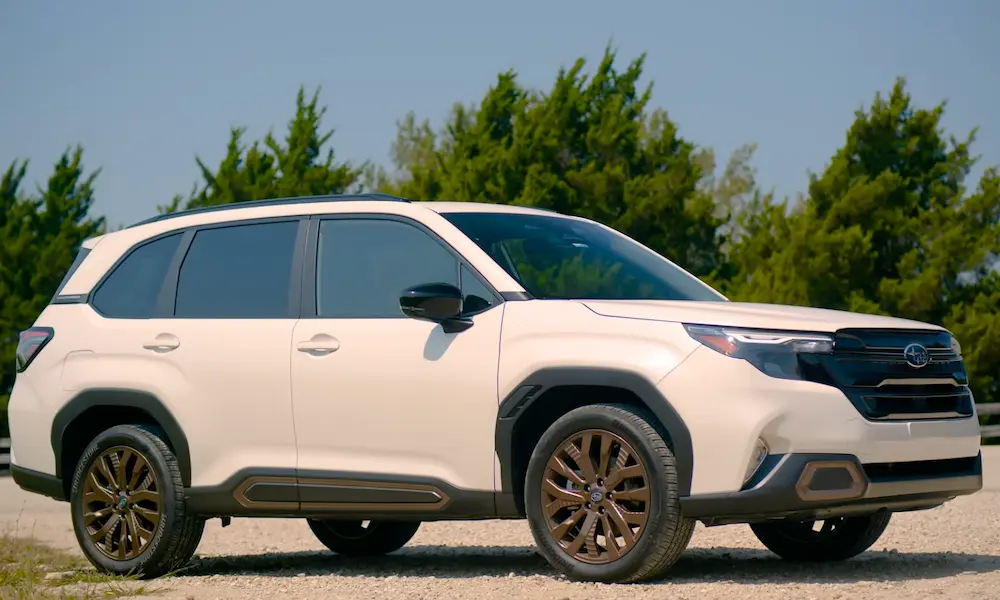
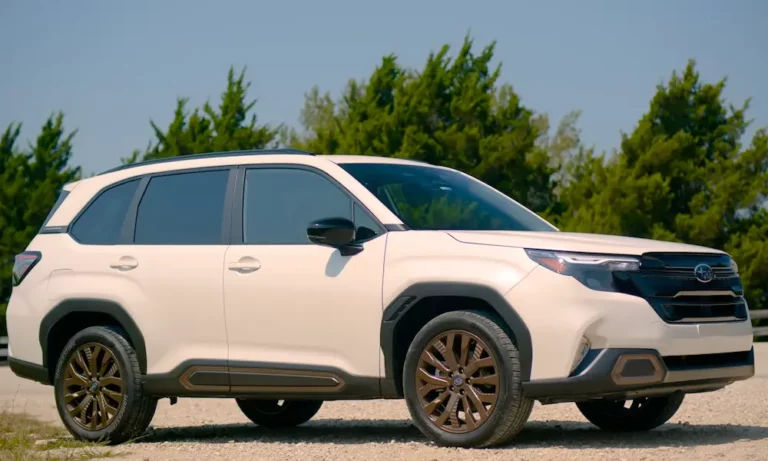
The 2025 model made two significant changes that matter for reliability. First, Subaru removed the Thermal Control Valve and went back to a traditional mechanical thermostat — a direct response to the TCV failure epidemic. Second, the 2026 Forester Hybrid uses a Toyota-derived eCVT with planetary gears instead of the friction-based pulleys in the standard CVT.
That planetary gear system is the same basic architecture found in the Toyota Prius, which regularly reaches 300,000+ miles in taxi fleets. If the hybrid powertrain proves as durable as Toyota’s version, the 2026 Forester Hybrid could be the most reliable Forester ever made.
Early 2025 models do have some teething issues — JD Power rates them at 81–84 out of 100, which is solid but not exceptional. Some owners report interior rattles appearing within the first 10,000 miles, and infotainment responsiveness lags behind rivals. These aren’t mechanical deal-breakers, but they’re worth knowing before you sign paperwork.
The Bottom Line on Best Years for Subaru Forester
The best years for Subaru Forester ownership break down like this:
- Best used buy under $15K: 2018 — refined, reliable, no TCV headaches
- Best used buy with modern tech: 2022–2023 — strong warranty coverage on known issues
- Best new buy: 2025 (non-hybrid) or wait for the 2026 Hybrid
- Skip entirely: 2014, and approach 2019–2021 with caution unless warranties are confirmed active
The Forester isn’t a “buy it and forget it” car like a RAV4. It rewards attentive owners and punishes neglect. Check the oil monthly, service the CVT fluid regularly, and know what warranty coverage you have on the TCV and windshield. Do those things, and a well-chosen Forester can easily reach 200,000 miles.