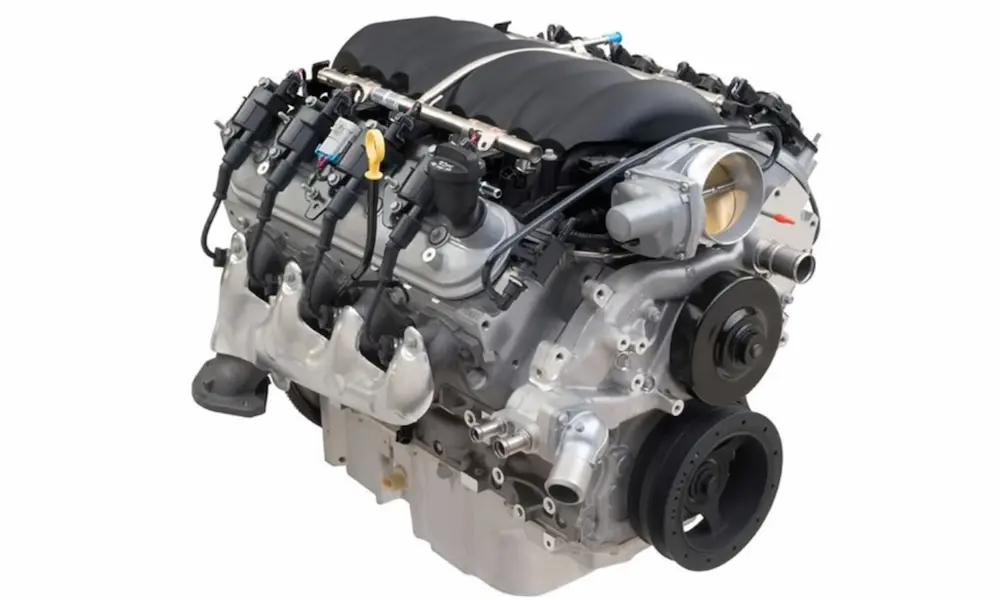
Got an oil puddle under your Chevy? That 5.3L Vortec might be trying to tell you something. The Chevy 5.3 engine powers countless Silverados, Tahoes, and Suburbans, but it’s notorious for developing oil leaks as the miles add up. I’ll show you exactly where to look, how to diagnose the real culprit, and what it’ll cost to fix it right the first time.
The Most Common Chevy 5.3 Oil Leak Spots
These are the leak points you’re most likely dealing with if you’re seeing fresh oil under your truck or smelling that distinctive burnt oil smell.
Oil Cooler Adapter Gasket: The Sneaky Leaker
The oil cooler adapter gasket (also called the block-off plate gasket) is hands-down the most common leak source on the 5.3L Vortec. Located just above your oil filter, this small gasket is secured by two 10mm bolts and loves to fail after years of heat cycles.
What makes this leak particularly frustrating is how often it’s misdiagnosed. Oil drips down from the adapter, travels along the engine block, and eventually appears to be leaking from the transmission bell housing. Many mechanics will incorrectly diagnose this as a rear main seal leak, leading to unnecessary transmission removal and expensive repairs.
The good news? This fix is relatively simple and inexpensive. The replacement gasket costs under $10, and with basic tools, you can tackle this in your driveway in about an hour.
Valve Cover Gaskets: The Smoky Culprit
When your Chevy 5.3 starts leaking from the valve covers, you’ll usually notice it first by smell rather than sight. These simple O-ring style gaskets deteriorate over time, allowing oil to seep out and drip onto the hot exhaust manifolds.
The result? That unmistakable burning oil smell coming through your vents when the engine gets hot. On older models (1999-2007), these leaks are especially common. GM actually updated the valve covers on later models to reduce oil consumption through the PCV system.
Replacing valve cover gaskets is a moderate DIY job that requires careful cleaning of the sealing surfaces. The gasket kit typically runs $30-50, and you’ll need a torque wrench to ensure proper tightening of the valve cover bolts.
Rear Engine Cover Gasket: Often Mistaken for Something Worse
The rear engine cover gasket is another common leak point that frequently gets misdiagnosed. This plate mounts to the back of the engine block, just above the oil pan. When this gasket fails, oil will appear to be coming from the area where your engine meets the transmission.
Many mechanics will quickly assume it’s a rear main seal leak, which requires transmission removal and is much more expensive to fix. The rear cover includes the rear main seal assembly but is a separate component that often fails first.
This repair is more involved than valve covers or the oil cooler adapter but still less complex than a true rear main seal job. You’ll need to remove some undercarriage components for proper access.
Intake Manifold Gaskets: The Silent Oil Consumer
If your 5.3L is mysteriously consuming oil without visible leaks, the intake manifold gaskets might be the culprit. GM even issued service bulletins acknowledging problems with the original plastic intake manifold gaskets on 1999-2015 models with 5.3L engines.
These gaskets can crack due to heat cycles and exposure to ethanol-blended fuels, causing oil to leak into the intake manifold where it burns invisibly. The Fel-Pro documentation confirms this is a known issue.
You won’t see drips under your truck with this leak, but you will notice your oil level dropping faster than normal. Replacing these gaskets is a more involved job that requires intake manifold removal.
Oil Pan Gasket: The Drip Factory
While less common than the leaks mentioned above, oil pan gaskets do fail on high-mileage 5.3L engines. This repair is straightforward on 2WD models but becomes much more complex on 4WD vehicles due to front differential interference.
The leak typically appears as a slow drip from the bottom of the engine, often collecting on the skid plate or crossmember. This leak may start small but will gradually worsen over time.
Less Common But Noteworthy Leak Points
Oil Pickup Tube O-Ring: Internal Trouble
While not technically causing external leaks, the oil pickup tube O-ring deserves mention because its failure can lead to catastrophic engine damage. Located inside the oil pan, this small O-ring can harden with age and cause low oil pressure, especially when the engine is cold.
Many owners report experiencing the dreaded low oil pressure warnings after this O-ring fails. Replacement requires dropping the oil pan, making it a more involved repair.
Oil Pressure Sensor: Easy to Fix
The oil pressure sensor, located toward the back of the engine near the firewall, can develop leaks at either the threaded connection or the electrical connector. This is sometimes misdiagnosed as other leak sources due to its somewhat hidden location.
This is one of the easiest and least expensive fixes on our list. The sensor itself costs around $20, and replacement is usually just a matter of unplugging the electrical connector and unscrewing the old sensor.
Crankshaft Position Sensor: Hidden Leaker
The crankshaft position sensor, mounted above the starter, has an O-ring that can leak oil. Due to gravity, this leak often appears to be coming from the oil pan area, leading to incorrect diagnoses.
Like the oil pressure sensor, this is a relatively simple fix that costs around $50 for parts and can be done with basic tools.
How to Properly Diagnose Chevy 5.3 Oil Leaks
Finding the true source of an oil leak requires a methodical approach. Here’s how to do it right:
Clean First, Diagnose Second
The most common mistake DIYers make is trying to find a leak source when the engine is covered in old oil residue. Start by thoroughly cleaning all oil residue with brake cleaner. Haynes repair manuals recommend this as the first diagnostic step.
Once clean, run the engine for 15-20 minutes and then look for fresh oil trails. The highest point of wetness is typically your leak source, as oil flows downward with gravity.
Check for Multiple Leaks
These engines commonly develop multiple leaks simultaneously. Fixing one leak may not solve your entire problem. Start with the most accessible and least expensive repairs first, then reassess.
A systematic approach saves both time and money. Many owners report finding multiple leak sources when they begin their inspection.
Watch for Common Misdiagnoses
As mentioned earlier, many leaks get misdiagnosed due to how oil travels along the engine block. The oil cooler adapter leak being mistaken for a rear main seal is the most costly misdiagnosis, potentially turning a $100 repair into a $1,000+ job.
If you’re told you need a rear main seal, always check the oil cooler adapter and rear engine cover gasket first, as they’re far more common failure points.
Repair Cost Comparison Table
| Leak Location | Parts Cost | Labor Hours | Total Cost Range | DIY Difficulty |
|---|---|---|---|---|
| Oil Cooler Adapter Gasket | $5-15 | 1-2 | $50-150 | Easy-Moderate |
| Valve Cover Gaskets | $30-50 | 2-3 | $200-400 | Moderate |
| Rear Engine Cover Gasket | $20-40 | 4-6 | $400-700 | Difficult |
| Intake Manifold Gaskets | $50-100 | 5-7 | $400-800 | Difficult |
| Oil Pan Gasket | $25-50 | 4-7 | $425-750 | Moderate (2WD) Difficult (4WD) |
| Oil Pressure Sensor | $15-30 | 0.5-1 | $50-150 | Easy |
| Crankshaft Position Sensor | $30-60 | 1-2 | $100-250 | Moderate |
Prevention Tips for Chevy 5.3 Oil Leaks
While some leaks are inevitable as these engines age, here are some proven ways to minimize your chances of developing serious oil leaks:
Use High-Quality Oil and Filters
Synthetic oil maintains its viscosity better at extreme temperatures, reducing strain on gaskets and seals. Regular oil changes with quality filters help prevent sludge buildup that can increase pressure on sealing surfaces.
Address Small Leaks Early
What starts as a minor seep can quickly become a major leak. Catching and fixing small leaks early often prevents more costly repairs later. That small oil spot on your driveway is your engine’s way of asking for help.
Keep Your Engine Clean
A clean engine makes it easier to spot new leaks early. Consider having your engine bay professionally steam cleaned once a year, then monitor for any fresh oil accumulation.
Use OEM or High-Quality Gaskets
When replacing gaskets, spend the extra money on OEM (Original Equipment Manufacturer) or high-quality aftermarket gaskets. Cheap gaskets often fail prematurely, putting you right back where you started.
Diagnostic Verification Techniques
Before spending money on parts, confirm your diagnosis with these techniques:
UV Dye Testing
Add UV dye to your engine oil, run the engine for 15-20 minutes, then use a UV flashlight to pinpoint the exact leak source. The dye will make even small leaks glow brightly, making identification much easier.
Pressure Testing
For suspected rear main seal or oil pan gasket leaks, a professional shop can perform a crankcase pressure test to verify the diagnosis before disassembly.
The Paper Test
Place clean cardboard under your parked vehicle overnight, then note the position of any oil spots in relation to your engine components. This helps narrow down the general area of the leak.
Final Thoughts
The Chevy 5.3L Vortec is a remarkably durable engine that can easily surpass 250,000 miles with proper maintenance. Oil leaks are an expected part of ownership as these engines age, but knowing where to look can save you significant time and money.
The most important takeaway: start with the most common leak points (oil cooler adapter, valve covers) before assuming it’s a major issue like a rear main seal. And when in doubt, get a second opinion from a mechanic who specializes in GM trucks.
With the right approach to diagnosis and repair, you can keep your Chevy 5.3 running strong and leak-free for many miles to come.