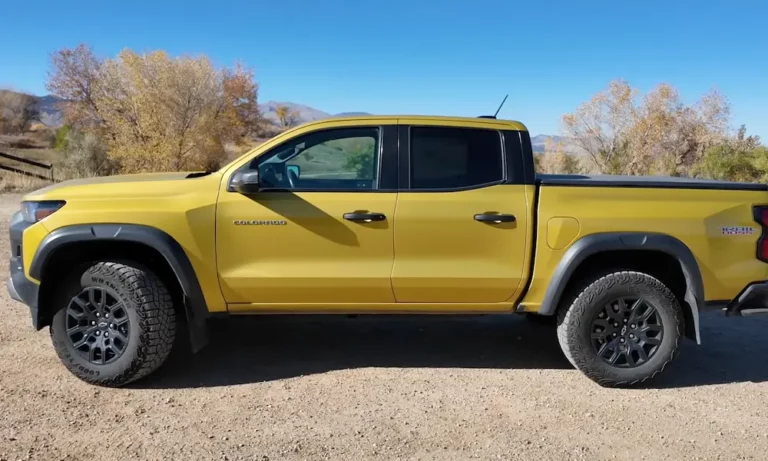
That moment when your Chevy Colorado’s check engine light pops on can trigger instant anxiety. Is it something minor or a major problem about to empty your wallet? Don’t worry – understanding these codes isn’t just for mechanics. With some basic knowledge, you can decode what your truck is trying to tell you and make smarter decisions about repairs.
What Do Chevy Colorado Check Engine Light Codes Mean?
When your Chevy Colorado’s check engine light illuminates, it’s actually your truck’s onboard diagnostic system flagging a problem it’s detected. These problems are stored as specific codes that identify exactly what’s wrong.
Each code follows a pattern – they typically start with “P” (for powertrain) followed by four digits. The first digit after P indicates whether it’s a generic code (0) or manufacturer-specific (1). The remaining digits pinpoint the exact system and issue.
For example, a P0171 code means your engine is running lean on bank 1 – too much air in the fuel mixture. Understanding these patterns helps you speak the same language as your mechanic.
Most Common Chevy Colorado Check Engine Light Codes
P0420: Catalyst System Efficiency Below Threshold
This incredibly common code indicates your catalytic converter isn’t working efficiently. Your truck’s oxygen sensors are detecting that exhaust gases aren’t being properly cleaned as they pass through the converter.
Potential causes include:
- Failing catalytic converter
- Damaged oxygen sensors
- Exhaust leaks
- Engine misfires damaging the converter
Before replacing your expensive catalytic converter, have a mechanic check for exhaust leaks and test your oxygen sensors. Faulty oxygen sensors often trigger this code but are much cheaper to replace than the converter itself.
P0440/P0455: Evaporative Emission Control System Malfunctions
These codes indicate leaks in your EVAP system – the sealed network that captures fuel vapors instead of releasing them into the atmosphere.
The P0440 typically indicates a general EVAP system malfunction, while P0455 points to a larger leak. In both cases, the most common culprit is surprisingly simple – a loose or damaged gas cap. About 50% of these codes are resolved by simply replacing the gas cap.
Other potential causes include:
- Cracked vapor hoses
- Faulty purge valve
- Damaged charcoal canister
If checking your gas cap doesn’t resolve the issue, a smoke test can identify where vapors are escaping.
P0300: Random/Multiple Cylinder Misfire Detected
When your engine misfires, it means one or more cylinders aren’t firing properly, causing rough running, power loss, and potentially serious damage if ignored.
Common causes include:
- Worn spark plugs
- Bad ignition coils
- Fuel delivery problems
- Vacuum leaks
- Intake manifold gasket failure
A CarGurus discussion thread documents several Colorado owners who found that even after replacing ignition components, persistent misfires were often traced to intake manifold gasket failures – especially in higher-mileage trucks.
P0171: System Too Lean (Bank 1)
This code means your engine is getting too much air compared to fuel. Your Colorado will typically run rough, may hesitate during acceleration, and get worse fuel economy.
The usual suspects include:
- Vacuum leaks
- Dirty or failing mass airflow sensor (MAF)
- Fuel pressure problems
- Clogged fuel injectors
- Faulty oxygen sensors
According to a Reddit thread, many Colorado owners have successfully resolved this code by cleaning their MAF sensor or replacing a deteriorated intake manifold gasket.
How to Read Chevy Colorado Check Engine Light Codes
Using an OBD-II Scanner
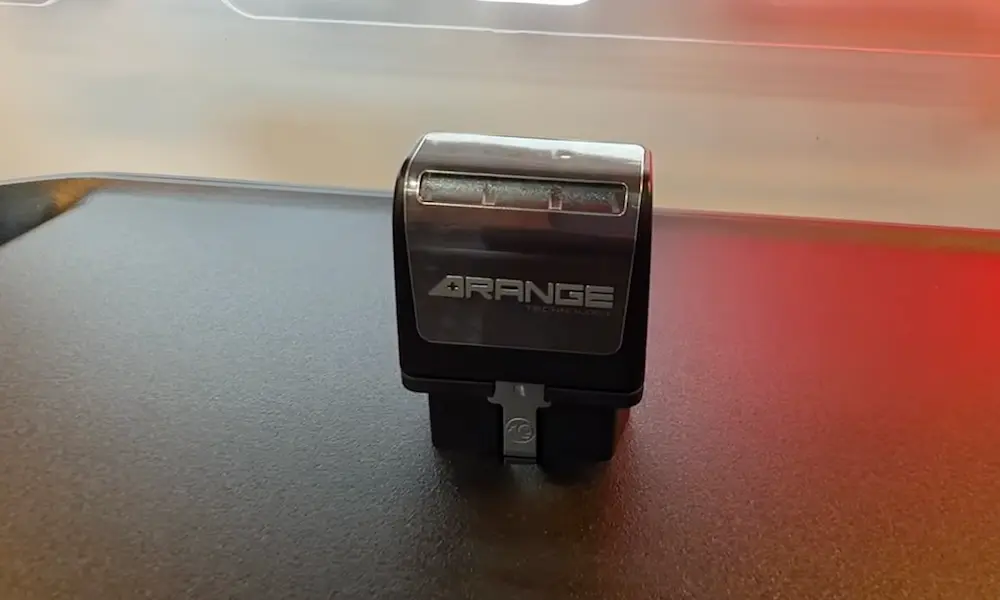
The simplest way to read these codes yourself is with an OBD-II scanner. These range from basic code readers ($20-50) to advanced diagnostic tools ($100-500+).
- Locate your truck’s OBD-II port (usually under the dashboard near the steering column)
- Plug in the scanner
- Turn the ignition to the “on” position (engine off)
- Follow your scanner’s instructions to retrieve the codes
Even basic scanners will show you the code number, while more advanced ones provide descriptions and potential solutions. Many auto parts stores will read your codes for free if you don’t have a scanner.
Understanding Freeze Frame Data
Modern scanners can also show “freeze frame” data – a snapshot of your truck’s operating conditions when the code was triggered. This includes information like engine temperature, RPM, speed, and fuel trim values that help diagnose intermittent problems.
This data is invaluable for diagnosing problems that come and go, as it shows exactly what was happening when the problem occurred.
DIY Diagnostics for Common Codes
Basic Visual Inspection
Before diving into complex diagnostics, start with a visual inspection:
- Check for obvious issues like disconnected hoses, damaged wiring, or loose connectors
- Inspect your gas cap for cracks or a worn seal
- Look for signs of vacuum leaks (listen for hissing, spray soapy water on suspected areas)
- Check fluid levels and condition
These simple checks can often identify the root cause quickly.
Tools You’ll Need
For more thorough DIY diagnostics, these tools are helpful:
| Tool | Purpose | Approximate Cost |
|---|---|---|
| OBD-II Scanner | Read codes, view live data | $25-300 |
| Multimeter | Test sensors, circuits | $20-100 |
| Vacuum Gauge | Check for vacuum leaks | $15-50 |
| Fuel Pressure Tester | Test fuel system | $30-80 |
P0420 DIY Diagnosis
Before replacing an expensive catalytic converter:
- Check for exhaust leaks – look for black soot around connections
- Monitor oxygen sensor readings with an advanced scanner – upstream and downstream sensors should show different patterns
- Test your oxygen sensors – they should respond quickly to changes in engine RPM
As demonstrated in this detailed video, using an infrared thermometer to check temperature differences across your catalytic converter can help determine if it’s actually failing.
P0440/P0455 DIY Diagnosis
For EVAP system leaks:
- First, check and replace your gas cap
- Inspect all visible EVAP hoses for cracks
- If available, use a smoke machine to pressurize the system and find leaks
According to CarParts.com, a home-made smoke test using a small pump and smoke source can work in a pinch, though professional equipment is more reliable.
Cost of Common Chevy Colorado Check Engine Light Repairs
Understanding potential costs helps you plan and evaluate repair quotes:
| Code | Common Repair | DIY Cost | Professional Cost |
|---|---|---|---|
| P0420 | Catalytic Converter | $300-800 parts | $800-1500 total |
| P0420 | Oxygen Sensors | $50-150 per sensor | $150-400 per sensor |
| P0440 | Gas Cap | $15-25 | $50-100 |
| P0440 | EVAP Canister | $150-300 | $400-600 |
| P0300 | Spark Plugs & Coils | $150-300 | $300-600 |
| P0171 | MAF Sensor | $80-200 | $200-400 |
What Happens If You Ignore Check Engine Light Codes?
Impact on Vehicle Performance
Ignoring check engine codes typically leads to:
- Decreased fuel economy
- Reduced power and acceleration
- Rough running or stalling
- Failed emissions tests
Potential for Cascading Damage
Minor issues often escalate into major problems:
- A simple misfire can damage your catalytic converter
- A small vacuum leak can cause lean running conditions that damage valves
- EVAP system leaks waste fuel through evaporation
The National Highway Traffic Safety Administration has documented cases where ignored check engine lights in Chevrolet vehicles led to significantly more extensive and expensive repairs.
Environmental and Legal Consequences
Beyond vehicle damage:
- Increased harmful emissions
- Failed emissions testing in states with inspection requirements
- Potential for being denied registration renewal
Understanding Your Chevy Colorado’s Onboard Diagnostic System
How the System Detects Problems
Your Colorado’s Engine Control Module (ECM) continuously monitors dozens of sensors and systems:
- It compares actual readings to expected parameters
- When values fall outside acceptable ranges, it triggers a code
- Some codes require multiple “failure cycles” before illuminating the check engine light
- The system stores codes even after the light goes out
This sophisticated monitoring explains why the light might come on seemingly without warning – the system has been tracking a developing issue.
The Difference Between Pending and Confirmed Codes
Advanced scanners can show both pending and confirmed codes:
- Pending codes represent issues detected but not yet serious enough to trigger the light
- Confirmed codes have met the criteria to illuminate the warning light
- Checking for pending codes can help catch problems before they worsen
According to Kbb.com, addressing pending codes often prevents the check engine light from activating at all.
Reading Your Chevy Colorado’s Check Engine Light Patterns
Your check engine light communicates through different patterns:
- Solid light: Issue detected but not immediately dangerous
- Flashing light: Severe condition that could damage catalytic converter or other components
- Light that comes on then goes off: Intermittent problem that the system is monitoring
A flashing check engine light requires immediate attention – reduce speed, minimize load on the engine, and seek repairs as soon as possible.
Real Colorado Owner Experiences
Colorado owners frequently report several common patterns with check engine lights:
- 2015-2016 models often experience P0440 codes due to purge valve issues
- Higher mileage trucks (100,000+) commonly develop intake manifold gasket leaks triggering P0171/P0174
- 2017-2019 models occasionally report P0420 codes due to oxygen sensor wiring issues rather than actual converter failure
According to multiple Reddit discussions, many owners have successfully resolved persistent check engine lights through a methodical approach to diagnosis rather than simply replacing parts based on the code alone.
Taking Action When Your Chevy Colorado’s Check Engine Light Appears
- Don’t panic – most codes don’t indicate immediate danger
- Check for any accompanying changes in how your truck runs
- Scan for the specific code(s)
- Research the meaning and common causes
- Decide if it’s a DIY fix or professional job
- Address the underlying cause, not just the code
Remember that modern vehicles are designed to enter “limp mode” if truly serious problems occur, limiting performance to protect the engine while allowing you to reach a repair facility safely.
By understanding these codes and taking a systematic approach to diagnosis, you can save money, prevent bigger problems, and keep your Chevy Colorado running strong for years to come.