Got a P0335 code on your Chevy and no idea where to start? You’re dealing with a crankshaft position sensor fault — and it can leave you stranded fast. This guide breaks down exactly what triggers the Chevy P0335, what symptoms to watch for, and how to diagnose it without throwing money at the wrong parts.
What Is the Chevy P0335 Code?
The Chevy P0335 is an OBD-II trouble code that means your powertrain control module (PCM) can’t detect a valid signal from the crankshaft position sensor (CKP). Technically, it’s called “Crankshaft Position Sensor A Circuit Malfunction.”
Here’s why that matters: your PCM uses the CKP signal to time every spark and every fuel injection pulse. No signal? No spark, no fuel, no start. It’s that simple — and that serious.
The PCM logs this code when it detects eight or more camshaft pulses during cranking with zero corresponding crankshaft pulses. At that point, it assumes the circuit has failed and shuts down the ignition and fuel delivery to protect the engine.
What Triggers the Code? (PCM Logic Explained)
The P0335 doesn’t just flag a dead sensor. It flags the entire circuit — including the wiring, connector, and the reluctor wheel the sensor reads. Here’s how the PCM decides to set the fault:
| Operational Phase | Triggering Condition | PCM Response |
|---|---|---|
| Engine Cranking | No signal after 8 camshaft pulses | Withholds spark and fuel |
| Engine Running | Signal lost for more than 2 revolutions | Sudden stall |
| Signal Pattern | Erratic or abnormal pulses detected | Rough idle or misfire |
| Signal Voltage | Drops below 200 millivolts | Tachometer drops to zero |
If the signal is absent or erratic, the PCM treats it the same way — as a critical failure. That’s important because it means you can’t assume the sensor itself is bad. You’ve got to test the whole circuit.
Chevy P0335 Symptoms You’ll Actually Notice
You won’t miss a P0335. The symptoms show up fast and hit hard.
No-Start Condition
This is the most common symptom. Your Chevy cranks normally — starter spins, battery’s fine — but the engine won’t fire. The PCM withholds fuel and spark because it has no crankshaft timing reference. It sounds like the car’s almost starting, but it never does.
Stalling While Driving
Your Chevy might run fine for 10 or 20 minutes, then die without warning. This is called thermal failure. The sensor’s internal electronics heat up, a microscopic break expands, and the circuit opens. Once the vehicle cools down and gets towed to a shop, the sensor might suddenly work again — making it one of the trickiest intermittent faults to catch.
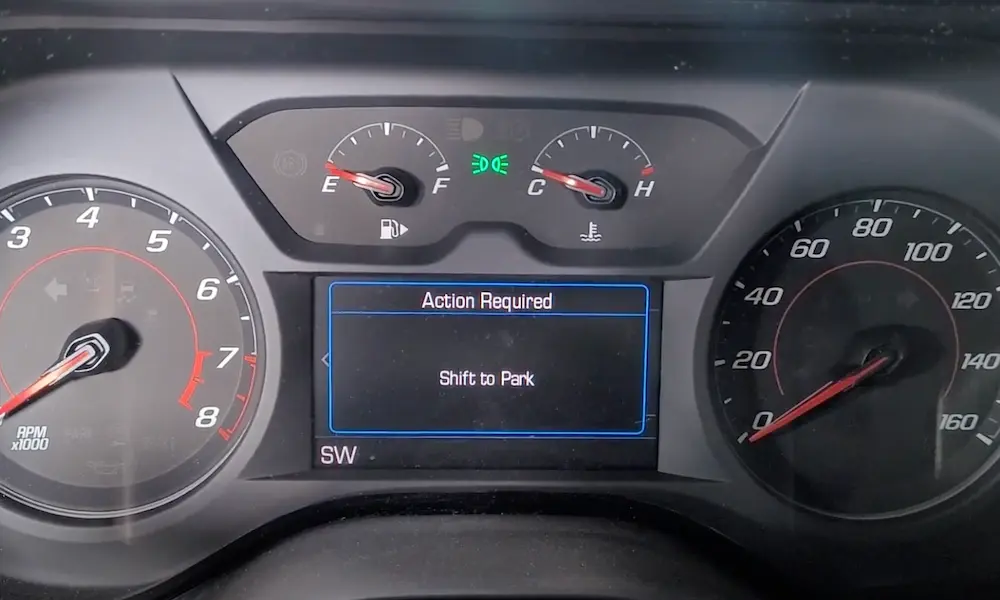
Tachometer Drops to Zero
Your tach pulls its data directly from the CKP signal. If the needle flutters randomly or sits at zero while the engine runs, that’s a clear indicator of a circuit fault.
Reduced Engine Power / Limp Mode
Some Chevys respond to P0335 by cutting throttle and pulling timing. You’ll see “Reduced Engine Power” on the dash, and traction control or StabiliTrak may disable. The PCM is protecting the engine from damage caused by bad timing data.
| Symptom | Severity | Likely Cause |
|---|---|---|
| No start / extended crank | High | Total loss of CKP signal |
| Stalling at operating temp | High | Thermal failure of sensor internals |
| Tachometer at zero | Medium | Signal not reaching instrument cluster |
| Rough idle or misfiring | Medium | Erratic or noisy signal |
| Limp mode / reduced power | Medium | PCM protecting engine from timing errors |
The 3 Root Causes of Chevy P0335
Skip the parts cannon. These three categories cover the vast majority of P0335 cases.
1. Sensor Electronics Failure (Most Common — ~75% of Cases)
The sensor itself fails most often. Hundreds of thousands of heat cycles crack the internal potting material or shear the bonding wires. Sensors can fail “hard” (never works again) or “soft” (only fails at a specific temperature or vibration frequency).
2. Wiring and Connector Problems (~15% of Cases)
The bottom of an engine block is a brutal environment. Watch for:
- Corrosion — salt and moisture sneak past damaged connector seals, coating pins in green copper oxide
- Chafing — a harness that’s lost its clip will slowly grind itself against the block or frame
- Oil wicking — oil leaks from valve covers or the oil pressure sensor travel down wires and contaminate the connector pins
- Rodent damage — soy-based wire insulation is a snack for mice, and they love hiding behind starters
3. Mechanical Reluctor Wheel Issues (~10% of Cases)
The reluctor wheel is the toothed ring the sensor reads. A chipped tooth, a missing tooth, or a wheel that’s shifted position sends a signal pattern that doesn’t match the PCM’s timing map. It also flags P0335 if the air gap between the sensor tip and the reluctor is too large — the signal just isn’t strong enough at low RPM.
Chevy-Specific P0335 Details: LS V8 vs. Ecotec I4
Not all Chevy P0335 fixes are the same. Your engine matters a lot here.
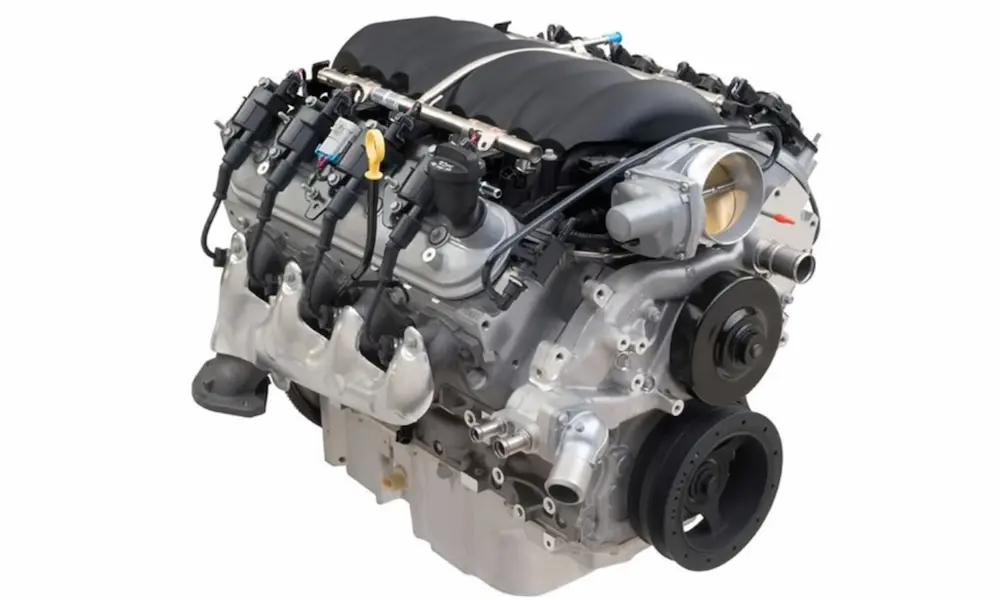
LS 5.3L V8 (Silverado, Tahoe, Suburban)
The CKP sensor sits on the passenger side of the block, behind the starter motor. You have to pull the starter to get to it — that’s just the job. Heat damage to the wiring harness is a top culprit here, since the harness runs close to the exhaust manifold and bakes over time.
Critical LS-specific detail: Know your reluctor wheel. Early Gen III LS engines use a 24x reluctor with a black sensor. Gen IV engines (roughly 2007+) use a 58x reluctor with a gray sensor. These are not interchangeable. Put the wrong one in and you’ll get an instant P0335 and a no-start — every time.
2.4L Ecotec I4 (Equinox, Malibu)
The sensor location is similar — behind the starter on the rear of the block — but the tight engine bay makes it more labor-intensive. On high-mileage Ecotecs, check the oil level and listen for a timing chain rattle before you touch the sensor.
GM issued Special Coverage Adjustments for excessive oil consumption and timing chain wear on these engines. A worn timing chain creates mechanical drift between the crank and cam that can trigger P0335 alongside P0016 or P0017. If the chain has “jumped,” the PCM may interpret the mismatched pulses as a circuit malfunction rather than a correlation error. Always verify oil level and chain condition first on an Ecotec. There’s also a GM Technical Service Bulletin on Ecotec oil consumption worth checking if you’re seeing repeat issues.
| Engine | Sensor Location | Access Difficulty | Key Failure Mode |
|---|---|---|---|
| LS V8 5.3L | Behind starter, passenger side | Moderate | Heat-damaged wiring harness |
| Ecotec I4 2.4L | Behind starter, rear block | High | Timing chain wear / oil loss |
| High Feature V6 | Front timing cover | Low | Sensor contamination |
How to Diagnose Chevy P0335 the Right Way
Don’t guess. Follow this three-phase process.
Phase 1: Scan Tool First
Plug in a scan tool and watch the Engine RPM reading during a crank attempt. If the scan tool shows 0 RPM while the starter is spinning, the signal isn’t reaching the PCM at all. If it shows a wildly jumping RPM, you’re likely looking at a reluctor wheel problem or electrical interference. That one data point tells you a lot.
Phase 2: Electrical Testing at the Connector
For a 3-wire Hall-Effect sensor, check these three things with the key in the “on” position:
- 5V Reference — You need 4.8–5.1V on the reference wire. No voltage here points to a PCM fault or another sensor shorted on the same reference rail.
- Ground Path — Should show near 0 ohms to the negative battery terminal. A poor ground causes the PCM to see a constant voltage instead of a switching square wave.
- Signal Wire — Briefly pulse the signal wire to ground while watching the scan tool. If RPM responds, the wiring between the sensor and PCM is intact. The fault is in the sensor or reluctor.
For a 2-wire inductive sensor, check resistance with a multimeter. You want 200–1,000 ohms. Open or shorted coils fall outside that range.
| Measurement | Expected Value | What Failure Means |
|---|---|---|
| Resistance (2-wire sensor) | 200–1,000 ohms | Open or shorted sensor coil |
| 5V Reference (3-wire sensor) | 4.8–5.1V | PCM fault or shorted sensor rail |
| Signal during cranking | Pulsing DC voltage | Bad sensor or damaged reluctor if absent |
| RPM on scanner | 150–300 RPM | Total signal loss if reads zero |
Phase 3: Oscilloscope for Intermittent Faults
A multimeter averages voltage. An oscilloscope shows the actual waveform in real time. A healthy 58x LS sensor produces a consistent square wave with a distinct index gap. Inconsistent pulse heights or extra voltage spikes point to interference from a failing alternator or a leaky ignition coil bleeding into the sensor harness. If the fault is intermittent, the scope is your best friend.
Don’t Skip the Crankshaft Variation Relearn
This is the most skipped step in Chevy CKP repairs — and it causes comebacks.
Whenever you replace the crankshaft sensor, the PCM, or the engine on a GM vehicle, you must perform a Crankshaft Position Variation Relearn. Skipping it almost guarantees a P0300 random misfire code or P0315 showing up within days of the repair.
Here’s why: every reluctor wheel and sensor has tiny manufacturing variations. The relearn lets the PCM map those imperfections and ignore them. Without it, the PCM thinks those variations are real misfires.
How to run the relearn:
- Bring the engine to full operating temperature (above 158°F)
- Apply the parking brake and block the wheels
- Turn off the A/C and all accessories
- Select “Crankshaft Variation Relearn” in your bi-directional scan tool
- When prompted, bring the engine to Wide Open Throttle
- The PCM cuts fuel at roughly 4,000–5,000 RPM — release the throttle immediately
- Wait for the scan tool to confirm “Learn Successful”
- Turn the key off for 30 seconds to save the values to permanent memory
No bi-directional scan tool = you can’t run this procedure. It’s not optional.
What Does a Chevy P0335 Fix Actually Cost?
Costs vary based on your specific model and how buried the sensor is.
| Vehicle | Avg. Parts Cost | Avg. Labor Cost | Total Estimate |
|---|---|---|---|
| Chevy Silverado 1500 | $84–$133 | $135–$199 | $220–$322 |
| Chevy Equinox 2.4L | $75–$110 | $110–$155 | $175–$256 |
| Chevy Suburban | $85–$130 | $140–$205 | $225–$335 |
| Chevy Cruze 1.4L | $60–$90 | $95–$140 | $155–$230 |
Stick with ACDelco or GM Genuine Parts. Generic $20 sensors often have weaker internal magnets that cause signal dropouts at high RPM — meaning you’ll be doing the job twice. Quality sensors run $84–$133 and are worth every cent.
If the sensor has seized into the block due to corrosion, add several hundred dollars for drilling and retapping. It happens more than people expect, especially on high-mileage trucks.
Why You Shouldn’t Ignore a P0335 Code
Two reasons to fix this fast:
Safety: A stalling Chevy on the highway means you lose power steering assist and brake vacuum instantly. On a heavy Tahoe or Suburban, stopping and steering without that assist is a real challenge — and in traffic, it’s a genuine hazard.
Catalytic Converter Damage: A bad CKP signal throws off injection timing, causing rich misfires. Raw fuel hits the catalytic converter, it overheats, and the substrate melts. That’s a $1,500+ repair on top of the sensor fix. The sensor itself is cheap. The downstream damage isn’t.
Fix the Chevy P0335 now — not next week.