Got a Chevy P1351 code and no idea where to start? You’re probably staring at a truck that cranks forever, stumbles, or won’t start at all. This code has a reputation for sending people down expensive rabbit holes. Stick around — we’ll walk through exactly what’s happening, why your PCM is upset, and how to fix it without throwing parts at it blindly.
What the Chevy P1351 Code Actually Means
The Chevy P1351 code translates to “Ignition Control Module (ICM) Circuit High Voltage.” That’s it. Your Powertrain Control Module (PCM) detected more than 10 volts on the ignition control circuit for over three consecutive seconds while the engine was running or cranking.
Here’s why that’s weird: the IC circuit is a 5-volt logic system. Anything above 10 volts on that line means something is pushing battery-level voltage where it doesn’t belong — either through a failing ICM, a wiring fault, or a lost ground.
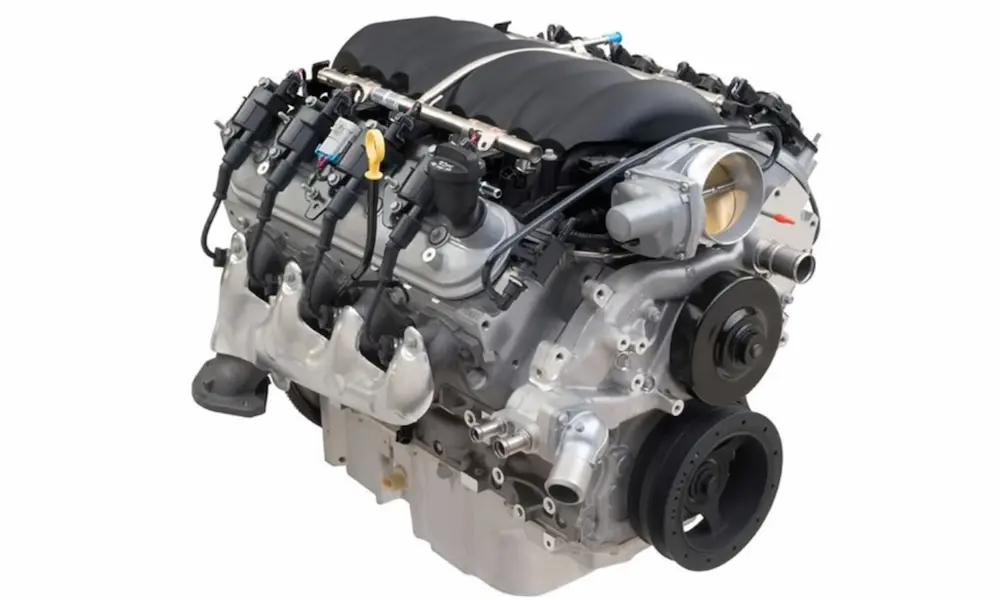
This code affects the 1996–2000 GMT400 trucks running 4.3L, 5.0L, and 5.7L Vortec engines. Think C/K1500, Suburban, Tahoe, Yukon, and Silverado.
How the Vortec Ignition System Works (The Short Version)
Before 1996, the distributor called the shots on spark timing. After OBD-II arrived, that job moved entirely to the PCM. The distributor became a passive relay — it just passes signals along.
The ICM sits between the PCM’s low-current digital signals and the high-current ignition coil. The PCM sends a 5-volt square wave to the ICM. The ICM uses that signal to switch the coil’s ground circuit on and off, which creates the spark. The PCM monitors this feedback loop constantly.
When the PCM commands the coil to charge (the “dwell period”), it expects the ICM to pull that circuit to ground. If it stays high? That’s your P1351 fault.
The 4-Pin ICM Connector: Your First Stop
The four-pin ICM connector is the nerve center of this entire diagnostic. Every test starts here.
| Pin | Wire Color | Function | How to Test It |
|---|---|---|---|
| A | Pink | Switched 12V supply | Should show battery voltage with key on |
| B | White | IC control signal from PCM | Look for 5V square wave during cranking |
| C | Black/White | Ground | Must measure under 0.5 ohms to cylinder head |
| D | White/Black | Coil negative trigger | Check continuity to ignition coil primary |
Don’t skip any of these. Each pin tells a different part of the story.
Why Your Multimeter Is Lying to You
Here’s something most people get wrong: a digital multimeter (DMM) can show 12 volts on a wire held together by one strand of copper. That circuit will collapse the moment the ICM tries to pull 6 amps through it.
The fix? Use an 1157 automotive bulb instead. Connect it between Pin A (power) and Pin C (ground). If it shines bright, the circuit is solid. If it’s dim or flickers, you’ve got a high-resistance connection hiding in the harness — one your multimeter would’ve completely missed.
This bulb test is the difference between a real diagnosis and a parts guessing game.
Is Your P1351 Actually a Fuel Problem?
This is the trap that catches everyone. P1351 can be a false positive triggered by an extended crank — meaning the engine is cranking too long because it’s not getting enough fuel, not because the ignition is actually broken.
The Vortec’s central port fuel injection system needs 60–66 PSI to pop open those poppet valves. A tired fuel pump delivering only 50 PSI means the engine cranks and cranks. The PCM sees those repeated pulses on the IC circuit without a successful start and logs P1351.
You replace the ICM. The truck still won’t start. Now you’re confused and $80 lighter.
Check fuel pressure first. Every single time.
| Engine State | Required Pressure | What Low Pressure Means |
|---|---|---|
| Key on, engine off | 60–66 PSI | Injectors won’t open properly |
| Engine running | 55–62 PSI | Rough running, misfires |
| Pressure leakdown (10 min) | Less than 5 PSI drop | Rapid drop = pump check valve failure |
| Cranking minimum | 55 PSI | Below this triggers the extended crank that sets P1351 |
The Ground Connection Nobody Checks
Grounding is the invisible half of your ignition system, and its failure is one of the top causes of Chevy P1351. The ICM and PCM share ground points on the back of the cylinder heads and the firewall. These spots collect oil, road salt, and heat for decades.
When Pin C’s ground gets compromised, the current from the ignition coil has nowhere to go. It back-feeds into the PCM’s control circuit. That back-feed raises the IC signal wire voltage well above 5 volts — and triggers P1351 directly.
Don’t just check continuity. Load-test the ground. A corroded terminal can show continuity on a multimeter while completely failing under the 6-amp spikes of the ignition system. Remove those ground terminals, wire-brush them clean, and re-torque them.
How to Read the IC Signal With a Lab Scope
A lab scope gives you the clearest picture of what’s actually happening on Pin B. The PCM sends a 5-volt square wave where the “on” time is the dwell period and the falling edge triggers the spark.
If P1351 is active, the scope will usually show one of two things:
- The signal never reaches 0 volts — the ICM’s transistor isn’t grounding the circuit
- Voltage floats above 5 volts — external voltage is leaking into the signal wire
That second scenario often happens when heat-brittle insulation on wires near the exhaust manifold allows contact between the 12V supply and the signal wire.
One real-world case from a 1998 K1500 showed the square wave’s ground level rising from 0V to 2V after 20 minutes of running. The culprit? A corroded ground strap between the engine block and the frame. As the engine heated up and vibrated, the connection got worse — and the PCM logged P1351 every single warm-up cycle.
Why Cheap ICMs Keep Failing
This one hurts people’s wallets repeatedly. Aftermarket ICMs that don’t meet OEM specs will trigger P1351 straight out of the box — or fail once the engine reaches operating temperature.
The PCM calculates exactly how long it should take the ICM to ground the circuit. If the new module’s internal transistors switch at a different speed or impedance, the PCM sees a timing mismatch and flags it as a circuit fault.
The modules that consistently work on these trucks:
- SMP (Standard Motor Products) LX381
- AC Delco D579
Even some Delphi units have shown problems in recent years, with reports of erratic behavior — including the speedometer jumping to 50 mph in accessory mode — suggesting internal component quality has slipped.
Don’t cheap out here. The $11 eBay module will cost you $200 in diagnostic time.
Don’t Forget the Thermal Grease
The ICM mounts on an aluminum heat sink bracket, and that interface requires dielectric thermal-conductive grease. The ICM handles rapid switching of a coil that can generate 400–600 volts of inductive kickback on every spark event. Without good thermal transfer, it overheats.
When the module gets hot enough, its switching efficiency drops. It starts failing to pull the IC signal to ground properly. The PCM sees the signal float high and logs P1351 — even on a brand-new module installed without grease.
Always apply fresh thermal grease when installing an ICM. It costs $3 and takes 30 seconds. Skipping it can kill a new module inside a week.
The Warm Restart Clue: Valve Guides
If your P1351 only shows up on warm restarts — never cold starts — you might be dealing with a mechanical issue, not an electrical one. Swollen exhaust valve guides are a known issue on these Vortec heads.
After a hot engine is shut off, heat soak causes the valve guides to expand. When you try to restart, the exhaust valves don’t fully seat, compression drops, and the engine cranks excessively without firing. That extended crank triggers P1351 — just like the fuel pressure scenario.
Replacing the ICM won’t touch this problem. The fix is a cylinder head rebuild or replacement.
The Real Cost of Ignoring Chevy P1351
Leaving P1351 unresolved isn’t just annoying — it’s expensive. When the ICM fails to deliver consistent spark, raw fuel gets pushed into the exhaust and into the catalytic converter. The converter tries to burn it off, but the overload causes it to melt internally.
A clogged converter chokes your engine and can hit over $1,000 to replace. And that’s before you factor in potential piston and rod bearing damage from detonation caused by mistimed spark.
The PCM’s P1351 alert exists specifically to warn you before those cascades happen. Take it seriously.
Your Step-by-Step Diagnostic Checklist
Don’t skip steps. Do them in order.
| Step | Action | Why It Matters |
|---|---|---|
| 1 | Check fuel pressure | Rules out extended-crank false trigger |
| 2 | Inspect 4-pin connector | Look for corrosion, bent pins, cracked insulation |
| 3 | 1157 bulb test on Pins A & C | Confirms the harness can handle actual load |
| 4 | Lab scope Pin B | Verifies 5V square wave from PCM during cranking |
| 5 | Measure coil primary resistance | Should read 0.5–2.0 ohms |
| 6 | Clean and load-test head grounds | Remove oxidation; check under actual current draw |
| 7 | Install OEM-spec ICM with thermal grease | SMP LX381 or AC Delco D579 only |
Work through this list and you’ll know exactly what’s causing your Chevy P1351 — no guesswork, no wasted parts, no repeat visits.