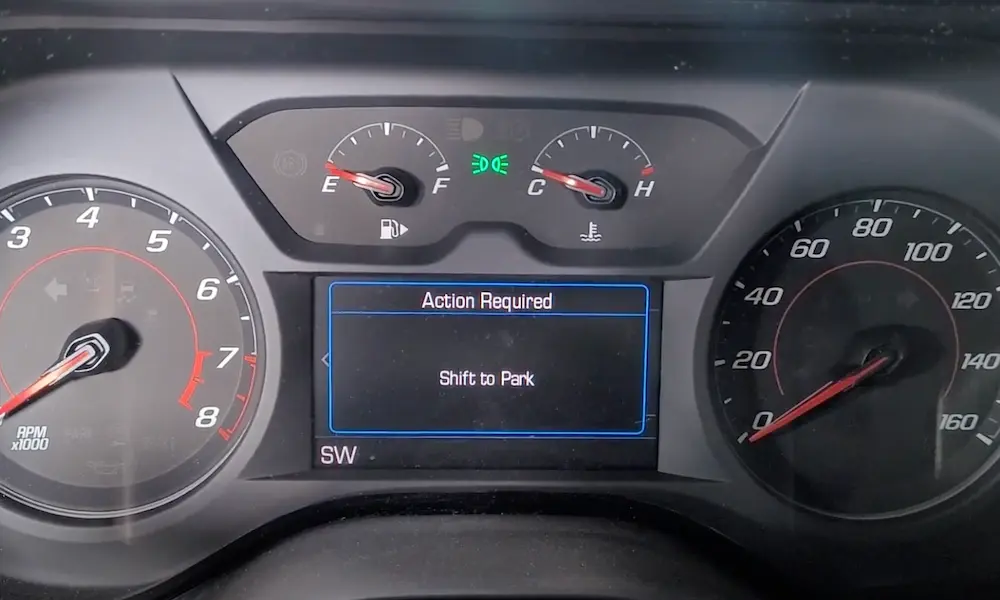
Got a “Reduced Engine Power” message and a P1518 code staring back at you? This guide breaks down exactly what’s happening inside your Chevy’s throttle system, why it triggers, and how to fix it without throwing parts at the wall. Stick around — the real cause might surprise you.
What Is the Chevy P1518 Code?
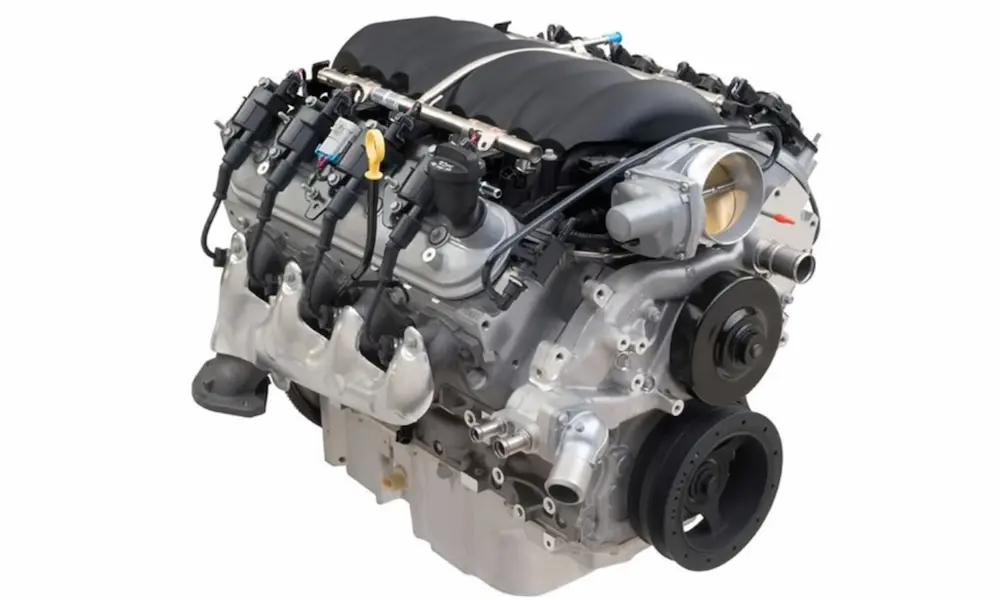
The Chevy P1518 code is a TAC Module Serial Data Malfunction. It means your Powertrain Control Module (PCM) and your Throttle Actuator Control (TAC) module stopped talking to each other. This shows up most often on Chevrolet Silverado, Tahoe, Suburban, and Corvette models built between 1999 and 2007, all running Gen III LS-series engines (4.8L, 5.3L, and 6.0L).
This isn’t a simple sensor glitch. The PCM and TAC module share a dedicated, high-speed serial data line that handles safety-critical throttle commands. When that link breaks down, your truck doesn’t guess — it immediately drops into Reduced Engine Power mode to stop unintended acceleration.
Quick note: Don’t confuse this with the Ford P1518 code. Ford uses P1518 for an “Intake Manifold Runner Control Stuck Open” fault — a completely different system. Using a Ford diagnostic chart on your Chevy will send you chasing parts that don’t even exist on your truck.
Here’s how the definitions break down by manufacturer:
| Manufacturer | P1518 Definition | System Type |
|---|---|---|
| Chevrolet (GM) | TAC Module Serial Data Malfunction | Electronic Throttle Control |
| Ford / Mercury | Intake Manifold Runner Control Stuck Open | Induction System |
| Subaru | Intake Manifold Runner Position Sensor Error | Induction System |
| Cadillac / Buick | TAC/PCM Communication Timing Mismatch | Electronic Throttle Control |
How the GM Electronic Throttle System Actually Works
Your Gen III Chevy uses a drive-by-wire throttle system. There’s no physical cable connecting your foot to the throttle plate. Instead, four components work together:
- Accelerator Pedal Position (APP) sensor — reads your foot input
- TAC module — a dedicated computer mounted on the driver’s side firewall
- Electronic Throttle Body — opens and closes the plate based on commands
- PCM — the main brain that decides the desired throttle angle
The PCM sends throttle commands over a dedicated serial data line to the TAC module. That line is intentionally isolated from other vehicle data networks so radio and climate control traffic can’t delay throttle commands. The TAC module executes the command, monitors two throttle position sensors inside the throttle body, and confirms the plate moved to the right spot.
If the PCM detects that the serial data stream has been corrupted, missing, or out of range for more than one second, it logs P1518 and restricts the throttle.
What You’ll Feel When P1518 Triggers
The symptoms range from annoying to genuinely dangerous:
- “Reduced Engine Power” message on the dashboard — your truck limits speed to roughly 15–30 mph
- Check Engine Light illuminates
- No throttle response — engine idles but won’t rev
- Engine won’t shut off after removing the key (in specific wiring fault scenarios)
- Flickering dash lights during cranking
That last one — the engine staying on after you pull the key — is documented in professional case reports. A short-to-voltage in the TAC harness can keep the module powered through a back-fed circuit, which holds the ignition relay closed. It’s rare, but it happens.
The Most Common Causes of Chevy P1518
A Weak Battery Is the #1 Culprit
This surprises a lot of people. Most P1518 faults aren’t caused by a dead module — they’re caused by a momentary voltage drop during cranking.
When you start the engine, the starter motor pulls massive current. If your battery is aging and has high internal resistance, voltage can briefly dip to 4.5–5.0V. The TAC module is more sensitive to voltage drops than the PCM. It experiences a brown-out and resets. When the PCM wakes up and tries to initiate communication, the TAC module is still rebooting. P1518 sets immediately.
This explains why many owners see P1518 only on cold morning starts — once the alternator takes over and stabilizes voltage, the code clears and the truck runs fine all day.
The fix: A battery load test. A standard volt meter showing 12.6V isn’t enough. You need a proper load test to check Cold Cranking Amps (CCA). A battery that holds 12.6V at rest but drops to 4.8V under load needs replacement.
Corroded or Loose Engine Ground Straps
The GMT800 chassis (1999–2007 Chevy trucks and SUVs) has a well-documented vulnerability to ground strap corrosion. Thermal cycling and road exposure eat away at the connections, especially on the cylinder heads.
For P1518, ground points G103 and G104 are the ones that matter most:
| Ground Point | Location | Associated Components | Failure Result |
|---|---|---|---|
| G101 | Engine Block, Front | Main Battery Ground | System-wide voltage drops |
| G102 | Engine Block, Left Rear | Ignition Coils | EMI noise into PCM serial data |
| G103 | Right Cylinder Head | TAC Module / PCM | P1518, P1516, Reduced Power |
| G104 | Left Cylinder Head, Rear | System Grounds | Intermittent communication loss |
When G103 gets loose or corroded, the TAC module’s reference ground “floats.” This shifts the voltage thresholds the module uses to read binary signals on the serial data line. Ones start looking like zeros. The PCM sees corrupted data and logs P1518.
Even worse — compromised ignition coil grounds at G102 can inject high-voltage electrical noise directly into the serial data lines, drowning out the PCM-TAC communication entirely.
The Throttle Body Wiring Pigtail
Here’s a sneaky one. The yellow TAC motor control wire often breaks inside its insulation, about one to four inches from the throttle body connector. You can’t see the break — the insulation looks fine. But when the engine vibrates, the broken wire loses contact. The TAC module can’t control the throttle motor, reports a failure to the PCM, and P1518 sets.
This hidden wire break is a common cause of intermittent “Reduced Engine Power” events that seem to come and go randomly. Wiggling the harness near the throttle body while the engine runs can sometimes recreate the fault.
Module Mismatch Between Model Years
Not all Gen III PCMs and TAC modules are interchangeable. GM made significant changes during the production run:
| Model Year | PCM Connector Color | TAC Module Type | Pedal Connector |
|---|---|---|---|
| 1999–2002 | Blue / Red | All-Plastic | Steel Arm / 9-Pin |
| 2003–2005 | Blue / Green | Plastic & Metal | Steel Arm / 10-Pin |
| 2006–2007 | Blue / Green | Integrated (Some) | Plastic / 6-Pin |
The 1999–2002 trucks used 512kb PCMs, while 2003+ trucks switched to 1MB PCMs. The data packet structures and timing intervals changed between generations. Swap a 2003 PCM into a 2002 truck and you’ll get a permanent P1518 because the two modules can’t agree on handshake timing.
Power-Up Sequence Timing Problems
The PCM needs to initialize before or at the same time as the TAC module. If the TAC boots first and finds no PCM to respond to, it logs P1518 as a safety measure.
This comes up constantly in LS engine swaps and after quick key cycles. Turning the key from “Off” to “Start” in under three seconds doesn’t give the TAC module time to fully power down and clear its communication buffer. The next restart hits a timing mismatch.
In one documented LS swap case, the builder wired the TAC module to a circuit with a large capacitor from the fuel pump. The capacitor kept the TAC module live for two seconds after the key turned off. Rapid restarts caused P1518 every time because the TAC never fully reset.
How to Diagnose Chevy P1518: Step-by-Step
Phase 1: Check the Electrical Foundation First
Don’t touch the modules until you verify the basics.
- Battery load test: Confirm the battery holds at least 9.6V during a 15-second load test
- Check the ETC/ECM fuse: A corroded fuse terminal causes voltage ripple that disrupts serial data even without a full blown fuse
- Voltage drop test on G103: Connect a DMM between the TAC module ground pin and the negative battery terminal with the engine running. Anything over 100mV means your ground is compromised — clean or replace it
Phase 2: Test the Serial Data Circuit
Once the power supply checks out:
- Pin-to-pin resistance: Disconnect both the PCM and TAC module. Measure resistance between Pin 14 and Pin 15 of the TAC module 16-way connector and the matching pins at the PCM. You want under 1 ohm — anything over 5 ohms points to harness damage or corrosion
- Short-to-voltage check: With the ignition on and modules disconnected, probe the serial data pins for voltage. Any voltage present means the harness has a short, likely from melted insulation or water intrusion through the firewall connector
- Water intrusion inspection: The TAC module sits right on the firewall near the windshield cowl. Water from the cowl drain can reach the connector seals. If water bridges the 12V feed pin to the serial data pins, it can permanently damage the communication circuits inside both modules
Phase 3: Check Module Compatibility and Relearns
If wiring checks out perfectly:
- Verify your PCM and TAC module are from the same compatible model year range
- If you replaced the PCM, perform a VATS relearn and a Crankshaft Position Variation relearn with a capable scan tool — skipping these steps can create communication synchronization errors that look exactly like P1518
Can You Tune Out the Chevy P1518 Code?
Short answer: no. Some performance tuners try to use software like EFILive or HP Tuners to set P1518 as “Not Reported.” The PCM ignores that setting for this specific code. If the serial data link fails, the truck enters Reduced Engine Power regardless of what the tune says. GM hard-coded this behavior intentionally — no software override can disable a hardware safety monitor for the throttle system.
The only real fix is finding and repairing the physical electrical fault.
Real-World Fixes That Actually Worked
Cold-start scenario: A 2003 Tahoe with 180,000 miles set P1518 every morning but ran fine the rest of the day. The battery showed 12.6V at rest, so it passed a basic voltage test. An oscilloscope during cranking revealed a 200-millisecond drop to 4.8V — enough to reset the TAC module but not the PCM. Replacing the battery with a higher CCA unit eliminated the fault completely.
Post-repair scenario: A Silverado 2500 HD developed P1518 immediately after an engine replacement. The technician found that ground G103 had been pinched between the engine block and the transmission bellhousing during installation. The truck ran fine at idle, but serial data corruption started the moment ignition system load increased. Rerouting and properly securing the ground resolved it.
Keeping Your GMT800 Chevy Running Clean
As these trucks pile on the miles, P1518 faults will get more common — not less. Copper wiring oxidizes, aluminum block ground points corrode, and connector seals dry out.
A few proactive steps keep these trucks healthy:
- Replace primary ground straps with fine-strand copper cable — it flexes better and resists corrosion longer
- Apply dielectric grease to the TAC module connectors and the throttle body pigtail connector
- Inspect the throttle body wiring harness every major service interval, paying close attention to the section near the throttle body motor
- Clean the throttle body on high-mileage trucks — carbon buildup increases motor load, which stresses the TAC module’s current monitoring
The Chevy P1518 code looks scary on a scanner, but it’s almost always an electrical foundation problem — a tired battery, a corroded ground strap, or a chafed wire — rather than a failed module. Start cheap, start simple, and test methodically. Most of the time, you won’t need to touch the TAC module or the PCM at all.