That “Service StabiliTrak” message just lit up your dash, and now you’re wondering if you’re about to spend a fortune — or if it’s something simple. Good news: many causes are straightforward fixes. Bad news: some aren’t. This guide breaks down every real cause, what the warning actually means, and exactly how to diagnose it — so read on before you hand over your wallet at the dealership.
What Is StabiliTrak and Why Does It Matter?
StabiliTrak is GM’s branded Electronic Stability Control (ESC) system. It watches how your truck is actually moving — then compares that to where you’re trying to go. If those two things don’t match, it brakes individual wheels and trims engine power to keep you pointed in the right direction.
Think of it as the invisible hand that catches your truck when it starts to slide. For a heavy, high-riding vehicle like the Silverado, that’s a big deal. Without StabiliTrak active, correcting a skid in a full-size truck is genuinely difficult — especially on wet or icy roads.
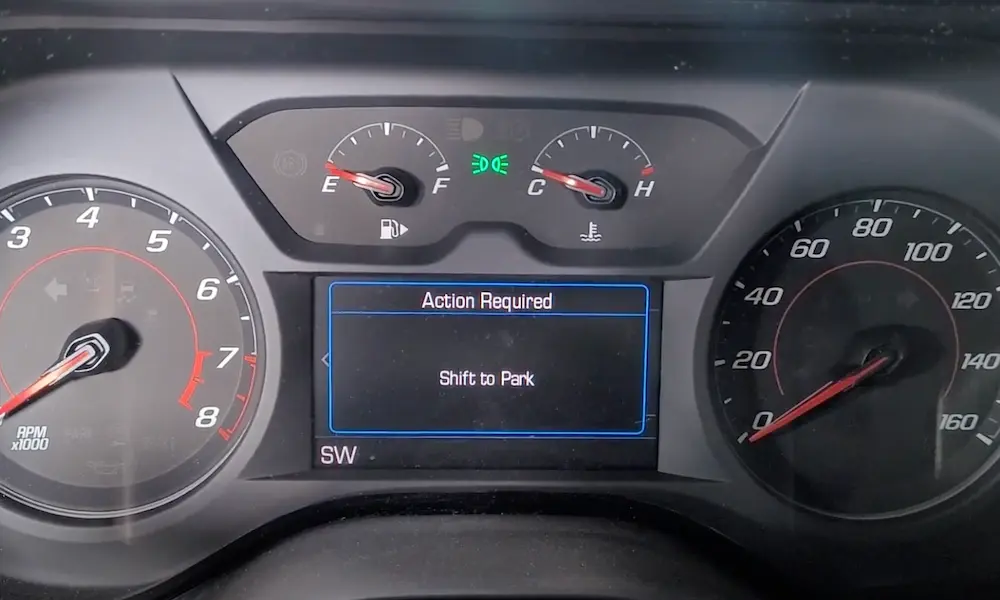
When the system detects a fault it can’t work around, it shuts itself off and tells you via the Driver Information Center. That’s the “Service StabiliTrak” message. It’s not a suggestion — it’s a warning that a key safety layer is gone.
The Most Common Causes of the Chevy Silverado Service StabiliTrak Warning
The system pulls data from a lot of sensors. Any one of them can trigger the light. Here are the biggest culprits, in order of how often they show up.
Wheel Speed Sensor Failure
This is the number-one cause across all Silverado generations. Each wheel has a sensor that tracks how fast it’s spinning. Research suggests over 99% of certain StabiliTrak fault codes trace back to a front wheel speed sensor.
On the Silverado, the front sensors are often built into the wheel bearing/hub assembly. When the bearing wears, mechanical play increases the gap between the sensor and the tone ring — and the signal gets flaky or disappears entirely. You’ll often see ABS and traction control lights come on at the same time.
Common DTCs: C0035, C0040, C0045, C0050
Repair cost: $234–$345 for a wheel speed sensor replacement, sometimes more if the hub needs replacing too.
Steering Angle Sensor (SAS) Issues
The steering angle sensor sits on the steering column and tells the system where you want to go. If it drifts out of calibration — or if your front-end alignment is off — the EBCM sees a conflict between where you’re steering and where the truck is actually heading.
This often shows up as an intermittent StabiliTrak light that comes on after turns, then clears on its own. A poor alignment can cause the same problem without any sensor failure at all.
Common DTCs: C0121, C0460
Fix: Correct the alignment first, then use a scan tool to perform a Digital Steering Center reset. Sensor replacement costs can range from $100 to over $1,000 depending on labor.
Brake Light Switch Problems
This one surprises people. The brake light switch tells the stability system when you’re braking. If it fails, the EBCM gets confused — and you’ll often lose cruise control at the same time, which is a big clue.
It’s one of the cheaper fixes on this list — often $50–$150 — and it’s a common culprit on GMT900-generation trucks (2007–2013).
Engine Misfires (P0300)
Here’s where things get interesting. StabiliTrak needs to control engine torque precisely to stabilize the truck during a skid. If the engine is misfiring, torque output is unpredictable — and the system can’t safely do its job.
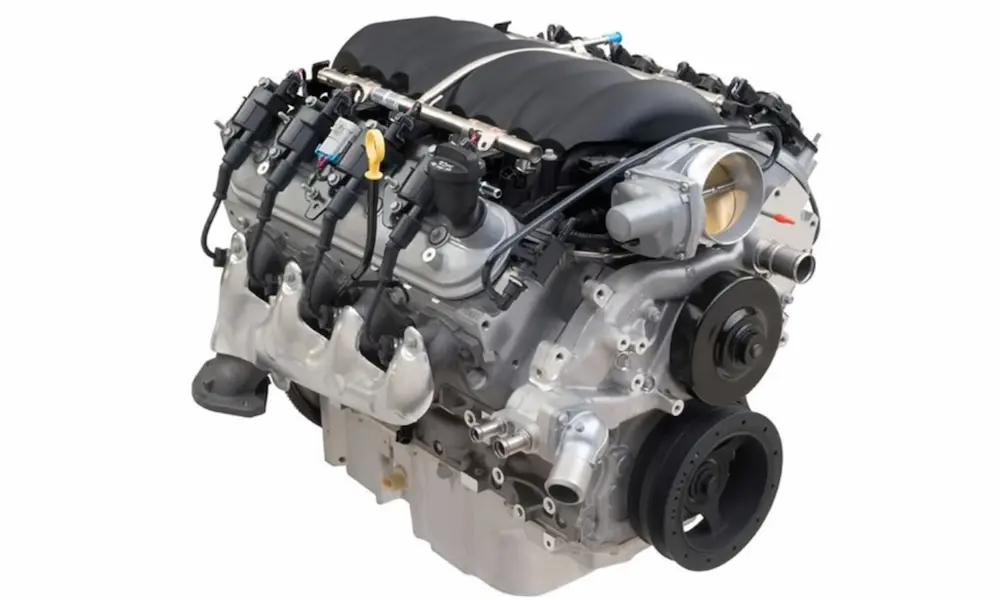
A P0300 random misfire code is one of the most direct triggers for a StabiliTrak shutdown. This is especially common on 5.3L and 6.2L engines from 2007–2019 equipped with Active Fuel Management (AFM). When an AFM lifter collapses — which happens — it causes a persistent cylinder misfire and kills StabiliTrak as a consequence.
| Engine Fault Code | What It Means | Effect on StabiliTrak |
|---|---|---|
| P0300 | Random/multiple cylinder misfire | System shuts down — torque is unpredictable |
| P0121 | Throttle position sensor range error | Disables stability power reduction |
| P2135 | TPS/APPS correlation error | Immediate limp mode + StabiliTrak off |
| P0101 | MAF sensor performance issue | Fuel and torque calculation errors |
| P0507 | Idle RPM higher than expected | Conflicts with stability braking logic |
Throttle Body Carbon Buildup
Carbon deposits — called “coking” — can build up on the throttle plate over time. When the throttle plate sticks or responds slowly, the PCM triggers Reduced Engine Power mode and disables StabiliTrak.
The fix is often a can of throttle body cleaner and 20 minutes of your time. After cleaning, you may need to run an Idle Relearn procedure to get smooth idle behavior back.
Why You’re Also Seeing “Reduced Engine Power” and Hard Shifting
These aren’t separate problems. They’re connected by design.
Reduced Engine Power (Limp Mode)
When StabiliTrak faults out alongside a throttle-related code like P2135 or P0121, the PCM limits your engine to roughly 20–30% power and caps your speed at 40–50 mph. This is the “limp home” mode — the truck’s way of getting you somewhere safe without making the problem worse.
The StabiliTrak light comes on because the system can’t function without full throttle control. The two warnings feed off the same root cause.
Hard or Jerky Shifting
Many Silverado owners report a violent 1-2 upshift when the StabiliTrak warning is active. Here’s why: under normal conditions, the PCM briefly reduces engine torque during gear changes to make shifts smooth. When a StabiliTrak fault is present, the Transmission Control Module (TCM) can’t rely on those torque reduction requests anymore.
To protect the transmission’s clutches, the TCM defaults to maximum line pressure. That means positive clutch engagement — but also that neck-snapping shift you’ve been feeling.
Fix the root cause of the StabiliTrak fault, and the harsh shifting usually goes away with it.
Bad Grounds: The Hidden Culprit Most People Miss
This one gets overlooked constantly. The Silverado’s body-on-frame design creates a lot of ground paths — and corrosion or loose bolts can add resistance to those circuits. A significant percentage of intermittent StabiliTrak warnings come from high-resistance grounds, not failed components.
According to GM Technical Service Bulletin 18-NA-161, voltage drops exceeding 100 mV on the positive cable or 200 mV on the negative cable are enough to disrupt the high-speed CAN bus — triggering false StabiliTrak messages.
Here are the ground points to check first:
| Ground ID | Location | What It Affects |
|---|---|---|
| G102 | Driver’s side engine block, near motor mount | EBCM and PCM power stability |
| G103 | Passenger side cylinder head, front corner | Engine sensor data quality |
| G300 | Frame rail behind left front tire | Main chassis ground; common ESC and radio issues |
| G101 | Front frame rail, passenger side | BCM and lighting communication |
The fix: Remove the bolt, sand the contact surface to bare metal, apply dielectric grease, and re-torque to 9 Nm (80 lb-in). It’s a cheap repair that solves a surprising number of “ghost” warnings.
Wiring Harness Chafing on 2019–2021 Silverados
If you own a T1XX-generation Silverado (2019–2021), there’s a documented issue with the engine wiring harness rubbing against the upper control arm or shock tower bolts. Missing harness clips during assembly let the harness vibrate against metal until the insulation wears through. The result is intermittent short circuits that trigger StabiliTrak and Reduced Engine Power codes seemingly at random.
GM Technical Service Bulletin 21-NA-149 covers this — the fix involves installing harness sleeves and securing the harness with zip ties.
How to Diagnose It the Right Way
Don’t guess and replace parts. Do this instead.
Step 1 — Scan all modules, not just the PCM. A basic OBD-II reader only reads engine codes. StabiliTrak faults live in the EBCM as “C” codes and network faults show up as “U” codes. You need a scanner that reads all modules. If you find both a P0300 and a C0035, fix the misfire first — it may be causing the stability fault, not the other way around.
Step 2 — Check live data while driving. Watch individual wheel speeds and the steering angle reading. If the steering angle shows 10 degrees while you’re driving straight, your sensor needs recalibration or your alignment is off. If one wheel speed shows 0 mph while the others show 35 mph, that sensor or hub is the problem.
Step 3 — Inspect grounds and wiring before buying parts. Check G102, G103, and G300. Look for corrosion, loose bolts, or damaged wiring near the frame rails. On T1XX trucks, check the harness routing near the control arms.
Step 4 — Clean the throttle body. If you have a P0121 or P2135, or if the truck just feels sluggish, clean the throttle body with a dedicated cleaner. Run an Idle Relearn after.
Step 5 — Replace confirmed failed sensors. If live data shows a dead wheel speed sensor, replace it. If the hub is rusted and the sensor won’t come out cleanly, replace the whole hub assembly to guarantee proper sensor gap.
Recalls and TSBs Worth Knowing About
GM has issued several campaigns directly related to StabiliTrak behavior. Check if your truck is covered before you pay for anything.
| Campaign | Model Years | Issue | Fix |
|---|---|---|---|
| 19V889000 | 2014–2018 | EBCM software error during wheel speed sensor failure | Reprogram EBCM |
| 20V797000 | 2020–2022 | Diesel TCM valve failure causing rear wheel lockup | Software update + valve repair |
| 21-NA-149 | 2019–2021 | Wiring harness chafing on control arms | Install harness sleeves |
| 18-NA-355 | 2015–2019 | 8-speed torque converter shudder | Mobil 1 Blue Label ATF flush |
You can check your VIN against open recalls directly through the NHTSA recall database.
What Does It Cost to Fix?
| Repair | Estimated Cost | Notes |
|---|---|---|
| Diagnostic scan | $100–$300 | Dealer vs. independent shop |
| Wheel speed sensor | $234–$345 | More if hub needs replacing |
| Steering angle sensor | $100–$1,050 | Labor-intensive column removal |
| Brake light switch | $50–$150 | Easy DIY fix |
| Throttle body cleaning | Under $100 | DIY with a can of cleaner |
| Transmission flush | $250–$450 | Requires specific Mobil 1 Blue Label fluid |
| AFM lifter repair | Up to $4,000+ | Common on 5.3L/6.2L engines |
Don’t Ignore the Service StabiliTrak Warning
It’s tempting to drive with it on if the truck feels fine. But without StabiliTrak, your Silverado loses the ability to brake individual wheels during a slide — and a fault in the stability system often compromises ABS too. On a heavy truck with a high center of gravity, that’s a real rollover and spin-out risk, especially on wet or icy roads.
The warning is telling you something broke. The faster you find it, the cheaper and safer the fix.