If you’re eyeing a Ford 3000 tractor or already own one, you’ll want the complete rundown on what makes this machine tick. Built from 1965 to 1975, this utility tractor earned its reputation through dependable performance and versatility. Let’s break down the Ford 3000 specs that matter most.
Engine Specifications: Gas vs. Diesel
The Ford 3000 came with two engine choices, and each has its fans.
The gasoline engine displaces 158 cubic inches (2.6 liters) while the diesel bumps up to 175 cubic inches (2.9 liters). Both pack 3 cylinders with liquid cooling and OHV architecture. Here’s where it gets interesting—the gas version cranks out 46.7 horsepower at 2100 RPM, while the diesel produces 44.1 hp at 2000 RPM.
Don’t let those numbers fool you. The diesel’s higher compression ratio (16.5:1 versus 8.0:1) gives it serious torque. You’re looking at 125.7 lb-ft at 1150 RPM compared to the gas engine’s 123 lb-ft at 1350 RPM. For PTO work, both engines deliver between 37-41 horsepower depending on configuration.
| Engine Feature | Gasoline | Diesel |
|---|---|---|
| Displacement | 158 cu in (2.6 L) | 175 cu in (2.9 L) |
| Bore x Stroke | 4.20×3.80 in | 4.20×4.20 in |
| Compression | 8.0:1 | 16.5:1 |
| Max HP | 46.7 @ 2100 RPM | 44.1 @ 2000 RPM |
| PTO HP | 37-39 | 38-41 |
| Max Torque | 123 lb-ft @ 1350 RPM | 125.7 lb-ft @ 1150 RPM |
Both engines hold 13 gallons of fuel and 8 quarts of oil. The gas version uses a dry air cleaner while the diesel gets an oil bath setup—something to remember during maintenance.
Transmission Options: From Simple to Complex
Ford didn’t mess around with transmission choices. The Ford 3000 transmission configurations range from basic to surprisingly sophisticated for a tractor of this era.
The entry-level 4-speed gave you 4 forward gears and 1 reverse. Simple, reliable, gets the job done. But Ford offered way more flexibility if you needed it.
The 4-speed with over/under option provided 12 forward and 3 reverse gears until they discontinued it in 1970. After that, a straight 6-speed with 6/2 gearing took its place. The 8-speed setup used a 4-speed selector with high-low range for 8 forward and 2 reverse options.
Here’s the wild card: the 10-speed Select-O-Speed transmission. This full powershift system let you change gears while moving—pretty slick for 1960s tractor technology. Some rare units even came with a 12-speed over/under arrangement, though you won’t see many of those around.
All transmissions supported live, independent, or transmission-driven PTO configurations. This matters when you’re running implements that need constant power regardless of what the wheels are doing.
Power and Performance Numbers
Tested performance shows the Ford 3000 delivering 35.43 horsepower at the drawbar and 40.63 horsepower at the PTO. That’s solid pulling power for a utility tractor in this class.
The hydraulic system specifications run open center design with 6.3 gallons of capacity. The pump flows 5 gallons per minute at 2500 psi—enough pressure to handle Category I implements on the 3-point hitch.
Speaking of the hitch, it’ll lift 1700 pounds at 24 inches. Not groundbreaking by modern standards, but adequate for the equipment this tractor was designed to handle.
Dimensions and Weight Specs
The Ford 3000 measures 127 inches long, 64 inches wide, and 58 inches high to the steering wheel (83 inches to the exhaust tip). The wheelbase sits at 75.8 inches with 13.4 inches of ground clearance.
Weight varies by configuration. Standard weight ranges from 3700 to 4185 pounds. Add ballast and you can push it up to 6940 pounds—useful when you need extra traction for heavy pulling or loader work.
Standard tire sizing puts 5.50-16 rubber up front with 12.4-28 rear tires, though various tire options were available depending on your needs.
| Dimension | Measurement |
|---|---|
| Wheelbase | 75.8 inches |
| Length | 127 inches |
| Width | 64 inches |
| Height (steering) | 58 inches |
| Ground Clearance | 13.4 inches |
| Weight Range | 3700-6940 lbs |
Electrical and Hydraulic Systems
The electrical system runs 12 volts with a negative ground setup. Ford equipped these with a 22-amp generator—this was before alternators became standard on farm equipment.
Battery capacity differs between fuel types. The gas version uses an 80 amp-hour battery while the diesel needs a beefier 128 amp-hour unit to handle higher compression cranking.
Hydraulic pressure maxes out at 2500 psi through the open center system. The steering comes manual as standard, though you could spec power steering if you didn’t mind the extra cost. Brakes are mechanical expanding shoe type—simple and serviceable.
Model Variants and Configurations
Ford offered three chassis configurations under the 3000 designation. The 3100 was your standard all-purpose setup. The 3300 vineyard model sat lower with a narrower profile for orchard work. The 3310 narrow chassis served specialized farming operations where width restrictions mattered.
Factory options included a loader package, rear blade attachment, and optional mechanical differential lock on the rear axle. The operator station came open as standard, though you could order a canvas cab for weather protection.
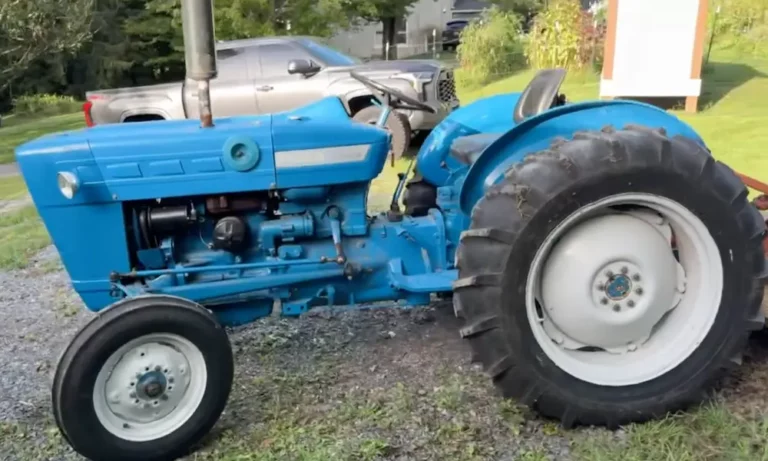
Paint followed Ford’s standard scheme: blue enamel for the body, grey for wheels and fenders, white for trim accents.
Production History and Serial Numbers
Ford built the 3000 from 1965 through 1975 in three locations: Highland Park, Michigan; Basildon, England; and Antwerp, Belgium. Serial numbers tell you where yours originated—”A” prefix means Belgium, “B” indicates England, and “C” shows USA production.
You’ll find the serial number stamped on the upper right front corner of the transmission housing. US-built tractors started at C100000 in 1965 and ran through C450700 by 1975.
| Year | Starting Serial |
|---|---|
| 1965 | C100000 |
| 1968 | C190200 |
| 1971 | C292100 |
| 1974 | C405200 |
Production numbers climbed steadily through the run, with approximately 37,000 units built in 1965 alone ramping up to over 45,000 by the final production year.
Fuel System and Capacity Details
Both engine options carry 13 gallons of fuel—enough for a solid day’s work without constant refueling stops. The gas engine runs on regular gasoline with its 8.0:1 compression ratio, so you won’t need premium fuel.
The diesel’s 16.5:1 compression ratio means it’ll fire up on standard diesel fuel without glow plugs in most conditions. Cold weather starting can get interesting, though—that’s just the nature of indirect injection diesels from this era.
Oil capacity sits at 8 quarts for both engines. Regular oil changes matter more than oil type with these simple engines. They’ll run on conventional motor oil just fine if you stay on top of maintenance intervals.
What Makes the Ford 3000 Specs Stand Out
Here’s what separates the Ford 3000 from its competitors: transmission variety. Most tractors in this class offered maybe two or three transmission options. Ford gave you six different configurations to match your specific operation.
The dual-engine approach also deserves credit. Farmers could choose based on fuel preference, operating costs, and performance needs rather than being locked into one powerplant.
Category I 3-point hitch compatibility meant you could run a huge range of implements. The open center hydraulics kept things simple—fewer components to fail, easier repairs when something did break.
Real-World Performance Expectations
On paper, 40 horsepower at the PTO doesn’t sound like much. In practice, it’s plenty for rotary cutting 6-8 acres, running a 2-bottom plow in most soil types, or powering a hay baler through moderate windrows.
The drawbar rating of 35.43 hp translates to pulling a 2-3 ton load on level ground or handling a 6-foot box blade for road maintenance. Push it harder and you’ll know—these engines don’t have power to waste.
Fuel economy varies by workload and engine type. Expect 2-3 gallons per hour under moderate load with the gas engine, slightly better with the diesel. Light work like rotary cutting might drop consumption to 1.5 gallons per hour.
Comparing Gas and Diesel Performance
The gasoline engine wins on initial cost, simpler maintenance, and cold-weather starting. It’ll also rev a bit higher, which some operators prefer for PTO work.
The diesel counters with better fuel economy, longer engine life, and superior low-end torque. That compression ratio means it’ll lug down and pull through tough spots where the gas engine might need a downshift.
For restoration projects, parts availability runs about even between the two. Neither engine is particularly rare, and the Ford 3000 engine specifications share components with other Ford models from the same era.
If you’re buying used, condition matters more than fuel type. A well-maintained gas engine beats a neglected diesel every time.
Operating Weight and Ballast Considerations
The 3700-pound operating weight feels light for a tractor with this much power. That’s actually by design—Ford aimed for a nimble utility tractor rather than a heavyweight field machine.
Light weight helps in soft conditions where you don’t want deep rutting. It also makes the 3000 easier to transport on a trailer without needing a heavy-duty truck.
The downside? You’ll need ballast for serious pulling work or front-end loader use. Wheel weights, suitcase weights, or liquid ballast in the rear tires bring you up to that 6940-pound maximum.
Front weights become essential with a loader. The 3000’s short wheelbase and light front end mean it’ll lift the front wheels pretty easily if you’re not careful.
Hydraulic Capacity and 3-Point Hitch Performance
The 6.3-gallon hydraulic reservoir might seem small, but remember—this is an open center system. It’s constantly circulating fluid rather than relying on stored pressure like a closed center setup.
The 5 GPM pump flow limits how fast you can raise and lower implements, but it’s adequate for Category I equipment. Don’t expect lightning-fast cycle times, though.
That 1700-pound lift capacity at 24 inches handles most Category I implements without issue. A 6-foot rotary cutter, 2-bottom plow, or disk harrow all fall within range. Start looking at heavy-duty equipment and you’ll hit the limits quickly.
The Category I hitch pins and link ends are still readily available, which makes maintaining the 3-point system straightforward. Wear happens over decades, but replacement parts won’t break the bank.
Electrical System Reliability
The 12-volt negative ground system was pretty standard by 1965, so you won’t deal with oddball 6-volt quirks. The 22-amp generator keeps up with basic electrical loads—lights, maybe an electric fuel pump on later models.
Converting to an alternator is popular and relatively straightforward if your generator gives up. The alternator provides better charging at lower RPMs and handles modern accessories better.
Battery location varies slightly by model year, but accessibility is generally good. The diesel’s larger battery needs more mounting space, but Ford engineered that into the design from the start.
Wiring harnesses age poorly on any tractor this old. Cracked insulation, corroded connections, and brittle wires are common issues. Budget for rewiring if you’re doing a full restoration.
Why the Ford 3000 Specs Still Matter Today
These tractors keep working 50+ years after production because the specs hit a sweet spot. Enough power to be useful, simple enough to maintain, versatile enough to handle varied tasks.
The Ford 3000’s proven reliability comes from conservative engineering. Ford didn’t push the engines to their limits or use unproven technology. They built a straightforward utility tractor using tested components.
Parts availability remains strong thanks to the large production numbers and ongoing demand. Reproduction parts supplement original Ford components, keeping repair costs reasonable.
The transmission variety means you can find a Ford 3000 configured for almost any task. That flexibility maintains value in the used market and keeps these tractors working rather than gathering dust in barns.
Understanding the Ford 3000 specs helps you make smarter decisions whether you’re buying, maintaining, or restoring one of these classic tractors. The numbers tell you what the machine can do—and just as importantly, what it can’t do. Respect those limits and a Ford 3000 will keep earning its keep for years to come.