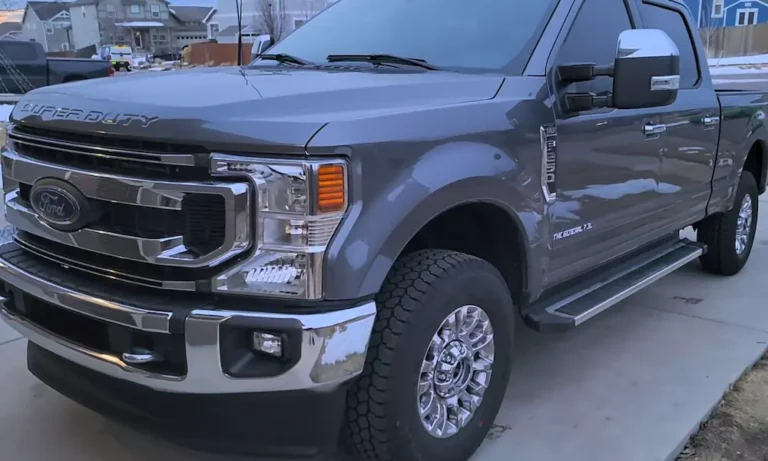
Looking to understand what makes Ford’s massive 7.3L V8 “Godzilla” engine tick? Whether you’re considering a Super Duty truck purchase or just fascinated by this modern pushrod powerhouse, you’ve come to the right place. I’ll break down everything about this beast of an engine—from its surprisingly traditional architecture to its impressive performance numbers.
What is the Ford 7.3 Godzilla Engine?
Ford’s 7.3L “Godzilla” is a naturally aspirated gasoline V8 introduced for the 2020 model year. It’s the largest displacement gas engine currently made by Ford, designed primarily for heavy-duty trucks and commercial applications.
What makes this engine unique is Ford’s return to a traditional overhead valve (OHV) pushrod design—a surprising move considering the industry’s trend toward overhead cam engines. Don’t mistake this for old technology, though. The Godzilla combines classic architecture with modern engineering for a powerplant that delivers impressive output with remarkable durability.
Key 7.3 Godzilla Specs and Dimensions
Let’s get right to the numbers that matter:
| Specification | Measurement |
|---|---|
| Displacement | 7.3L (445 cubic inches) |
| Bore | 4.22 inches (107.2mm) |
| Stroke | 3.976 inches (101mm) |
| Compression Ratio | 10.5:1 |
| Horsepower | 430 hp @ 5,500 RPM |
| Torque | 485 lb-ft @ 4,000 RPM (2023+ models) |
| Engine Weight | Approximately 580 lbs |
| Block Material | Cast iron |
| Head Material | Aluminum |
| Valve Configuration | 2 valves per cylinder |
The engine’s physical dimensions are surprisingly compact for its displacement, especially compared to overhead cam designs:
- Height: 757.73mm
- Width: 833.87mm
- Length: 767.32mm
This relatively compact size makes the Godzilla an attractive option for engine swaps, as it’s not much larger than the classic 351 Windsor despite having nearly twice the displacement.
Engine Design and Architecture
The Godzilla engine represents a fascinating mix of old-school design and modern engineering. Let’s explore what makes it special.
Block and Bottom End Construction
The foundation of the 7.3 is a deep-skirt cast iron block with four-bolt main caps reinforced by two additional lateral cross bolts. This creates an exceptionally rigid foundation—one reason why the Godzilla has quickly gained popularity with performance enthusiasts.
The block features siamesed cylinders with saw cuts between the bores to improve cooling. With a bore spacing of 4.530 inches, there’s plenty of metal between cylinders for durability under heavy loads.
What’s unusual for a truck engine is the forged steel crankshaft—a premium component typically reserved for high-performance applications. Connecting to this crank are cracked powdered metal rods, which provide excellent strength while keeping manufacturing costs reasonable.
Cylinder Head Design
Despite using a traditional pushrod layout, the Godzilla’s aluminum cylinder heads incorporate several modern features. The intake and exhaust ports are designed for high airflow despite having just two valves per cylinder.
Perhaps the most significant modern touch is the incorporation of Dual Equal Variable Camshaft Timing (DEVCT). This system allows the engine’s single in-block camshaft to adjust valve timing based on operating conditions—improving both power and efficiency. It’s a rare feature in pushrod engines and shows Ford’s commitment to modernizing this traditional architecture.
Performance and Output
In stock form, the 7.3 Godzilla delivers impressive numbers that make it the class leader among gasoline engines in the heavy-duty truck segment.
Power and Torque
The standard output in Ford Super Duty trucks is:
- 430 horsepower at 5,500 RPM
- 475 lb-ft of torque at 4,000 RPM (2020-2022)
- 485 lb-ft of torque at 4,000 RPM (2023+)
What’s impressive isn’t just the peak numbers but how the engine delivers power. The torque curve is remarkably flat, providing substantial pulling power throughout the RPM range—exactly what you want in a work truck.
In E-Series van applications, Ford offers different tuning profiles:
- Economy tune: 300 horsepower at 3,750 RPM
- Premium tune: 325 horsepower at 3,750 RPM
- High output: 335 horsepower at 3,750 RPM
This versatility shows how Ford can tailor the engine’s character to match specific vehicle needs.
Fuel System and Efficiency
The Godzilla uses a sequential multi-port fuel injection system rather than direct injection. This balance of performance and simplicity helps keep maintenance costs down while avoiding carbon buildup issues that can affect direct injection engines.
One of the most appealing aspects of the 7.3 is its ability to run on regular 87 octane fuel—an important consideration for fleet operators watching their fuel budgets.
Fuel economy figures vary by application, but the engine incorporates several efficiency-enhancing technologies:
- Variable oil pump to reduce parasitic losses
- Variable valve timing to optimize combustion
- 10-speed transmission with three overdrive gears
Transmission Pairing and Drivetrain
In Super Duty trucks, the 7.3L Godzilla typically comes paired with Ford’s impressive TorqShift 10-speed automatic transmission. This transmission features multiple drive modes to optimize performance for different conditions:
- Normal
- Tow/Haul
- Eco
- Slippery
- Deep Sand/Snow
The wide ratio spread and close gear spacing ensure the engine is always operating in its optimal range, whether you’re towing a heavy load up a mountain pass or cruising down the highway.
Vehicle Applications
The Godzilla engine has found its way into several Ford vehicles since its 2020 introduction:
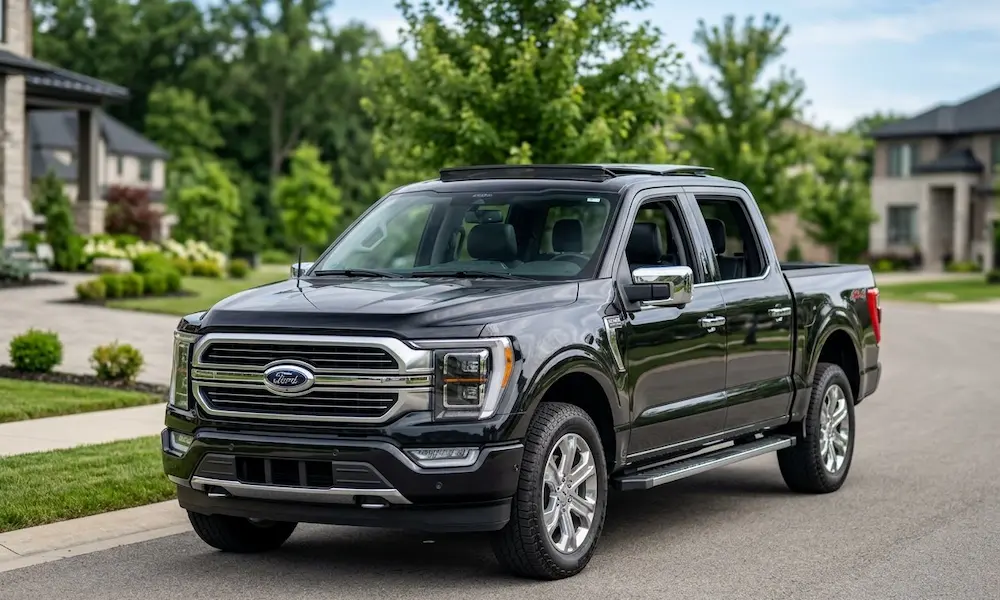
- Ford Super Duty F-250, F-350, and F-450 pickup trucks
- Ford F-550, F-650, and F-750 commercial trucks
- Ford E-Series cutaway and chassis cab vans (E-350 and E-450)
- F-59 commercial stripped chassis
In the Ford lineup, the 7.3L sits between the standard 6.2L gas V8 and the premium 6.7L Power Stroke diesel. It offers significantly more capability than the smaller gas engine without the higher purchase and maintenance costs of the diesel option.
In 2023, Ford also introduced a smaller 6.8L version of the same architecture for use in F-150 trucks and potentially other applications.
Maintenance Requirements
The 7.3L Godzilla is designed for long service life with reasonable maintenance needs. Here are the key specifications:
- Oil capacity: 8 quarts (7.57 liters)
- Recommended oil: Motorcraft SAE 5W-30 Synthetic Blend (XO-5W30-Q1SP)
- Oil filter: Motorcraft FL-820-S
- Fuel: Regular 87 octane gasoline
- Spark plugs: Motorcraft SP-578 (platinum-tipped)
The pushrod design potentially simplifies some maintenance compared to overhead cam engines. There are no timing belts to replace, and the valvetrain is less complex overall.
Aftermarket Potential
One of the most exciting aspects of the Godzilla engine is its potential as a performance platform. Ford Performance Parts offers the engine as a crate motor for custom installations, and it’s quickly gained popularity for several reasons:
- Compact design: The pushrod layout means it fits where many modern OHC engines won’t
- Robust construction: The block and rotating assembly are overbuilt from the factory
- Substantial displacement: Starting with 7.3 liters gives a big head start on power production
- Modern features: Variable valve timing and electronic controls provide a great foundation
Early aftermarket development has shown impressive results. Simple modifications like intake, exhaust, and tuning changes can yield significant power increases. More extensive modifications including forced induction have pushed these engines well beyond 1,000 horsepower.
How the 7.3 Godzilla Compares to Other Ford Engines
To understand the Godzilla’s position in Ford’s lineup, it helps to compare it to related engines:
Versus 6.2L Boss V8
The 6.2L V8 is the standard gas engine in Super Duty trucks. Compared to this engine, the Godzilla offers:
- 45 more horsepower
- 56 more lb-ft of torque
- More advanced variable valve timing
- Generally better towing capability
Versus 6.7L Power Stroke Diesel
The Power Stroke diesel remains the torque champion with up to 1,200 lb-ft in high-output form. However, the Godzilla offers:
- Lower initial purchase cost (often $10,000+ less)
- Lower maintenance costs
- No DEF fluid requirements
- Less complexity
- Better high-RPM power delivery
Versus Older V10 Engine
The Godzilla effectively replaces the older 6.8L Modular V10 engine in the E-Series and other commercial applications with:
- More power and torque
- Better fuel efficiency
- Smoother operation
- More modern electronic controls
Why Ford Returned to Pushrod Design
You might wonder why Ford went “backwards” to a pushrod design when overhead cam engines have dominated their lineup for decades. There are several compelling reasons:
- Compact packaging: The pushrod design allows for a narrower, shorter engine that fits better in truck frames and leaves more room for accessories
- Low-end torque: The architecture naturally favors torque production at lower RPMs—ideal for truck applications
- Simplicity and durability: Fewer moving parts mean fewer potential failure points
- Cost-effectiveness: The simpler design costs less to manufacture than equivalent OHC engines
- Weight distribution: The lower center of gravity improves vehicle handling
This approach allows Ford to offer a purpose-built truck engine that excels in its intended role without the compromises that might come from adapting a passenger car engine design.
Is the 7.3 Godzilla Right for You?
Whether the 7.3L Godzilla engine is the right choice depends on your specific needs:
It’s likely a great fit if you:
- Need more capability than the base 6.2L gas V8 offers
- Want to avoid the higher costs of diesel ownership
- Use your truck for frequent towing that doesn’t approach maximum ratings
- Prefer the simpler maintenance of a gas engine
You might want to consider the diesel instead if you:
- Regularly tow very heavy loads
- Need maximum torque for specific applications
- Drive high annual mileage where diesel efficiency might offset the higher initial cost
- Want the longest possible engine life under constant heavy use
Real-World Performance and Reliability
After several years on the market, the Godzilla engine has established a strong reputation for reliability. Its overbuilt nature means it handles heavy workloads without complaint, and the simple architecture avoids many common failure points of more complex engines.
Owners consistently report:
- Smooth, consistent power delivery
- Excellent towing stability
- Better-than-expected fuel economy when not under heavy load
- Minimal maintenance issues
The engine’s torque characteristics make it particularly well-suited to towing, where it delivers steady pulling power without the need to rev high. Combined with the 10-speed transmission, this creates a powertrain that’s both capable and comfortable for long hauls.
The Future of the 7.3 Godzilla Engine
With automotive propulsion rapidly moving toward electrification, the 7.3L Godzilla may represent one of the last all-new internal combustion engines developed by a major manufacturer. However, its future looks secure for several reasons:
- The commercial and heavy-duty segments it serves will likely be among the last to fully electrify
- Ford has already expanded the architecture to the 6.8L displacement variant
- The engine has proven popular in aftermarket and performance applications
- Its robust design should allow it to meet emissions standards for years to come
Ford has committed to continuing support for this engine platform even as they develop electric alternatives like the F-150 Lightning.
Wrapping Up: The 7.3 Godzilla’s Place in Ford’s Engine Lineup
The 7.3L Godzilla engine represents a fascinating blend of traditional architecture and modern engineering. By returning to a pushrod V8 design while incorporating features like variable valve timing and advanced materials, Ford has created a powerplant that delivers impressive performance with excellent durability.
With 430 horsepower and up to 485 lb-ft of torque, the Godzilla provides class-leading power among gasoline engines in the heavy-duty truck segment. Its expanding use across Ford’s commercial vehicle lineup demonstrates its versatility, while its availability as a crate engine has opened new possibilities for custom builders and the performance aftermarket.
For Super Duty truck buyers, the Godzilla offers a compelling middle ground—substantially more capable than the base gas V8 without the significant cost premium of diesel power. It’s a thoroughly modern approach to the traditional American V8, and one that seems destined to earn its “Godzilla” nickname for years to come.