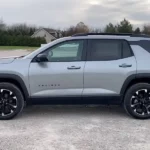
Thinking about towing with your Ford Bronco? You’ve got questions — what’s included, what it actually tows, and whether the factory package is worth it. This guide breaks it all down clearly, so you can hook up with confidence and hit the road (or the trail) without second-guessing yourself.
What’s Actually in the Ford Bronco Tow Package?
The Ford Bronco tow package isn’t just a hitch bolted to the bumper. It’s a complete system — hardware and software working together.
Here’s what you get with the full package:
| Component | What It Does |
|---|---|
| Class II 2-inch hitch receiver | Bolts directly to the rear frame cross-member |
| 4/7-pin wiring harness | Powers trailer lights and electric brakes |
| Integrated Trailer Module (by Lumen) | Connects the trailer to the Bronco’s computer systems |
| Auxiliary oil cooler | Keeps transmission temps in check under heavy load |
| Smart Trailer Connector | Monitors trailer lights and sends dash alerts |
Since the 2024 model year, Ford shifted hitch and wiring installation to the dealer level for full-size Broncos. Most models now come with a Trailer Tow Prep Package from the factory — meaning the structural reinforcements and internal wiring are already there. You just need the dealer to install the hitch and run the software update.
The Bronco Raptor? It ships with the complete Tow Package 2 as standard. No extra steps needed.
Ford Bronco Towing Capacity by Engine
Your engine choice drives your towing limit — literally. Here’s how the numbers stack up across the full Bronco lineup:
| Engine | Displacement | Horsepower | Torque (lb-ft) | Max Towing |
|---|---|---|---|---|
| EcoBoost I-3 | 1.5L | 181 hp | 200 | 2,000 lbs |
| EcoBoost I-4 | 2.0L | 250 hp | 280 | 2,200 lbs |
| EcoBoost I-4 | 2.3L | 300 hp (premium) | 325 | 3,500 lbs |
| EcoBoost V6 | 2.7L | 330 hp (premium) | 415 | 3,500 lbs |
| EcoBoost V6 | 3.0L | 418 hp (premium) | 440 | 4,500 lbs |
One thing that surprises people: the 2.7-liter V6 and the 2.3-liter four-cylinder both cap out at 3,500 pounds — even though the V6 pumps out significantly more torque. Why? The limit comes down to wheelbase and suspension stability, not raw engine muscle. The 3.0-liter Raptor engine gets the higher 4,500-pound rating because it also gets a reinforced frame and upgraded axles.
The Lumen Trailer Module: Why It Matters More Than You Think
Most people don’t know this exists. But the Lumen Integrated Trailer Module is arguably the most important piece of the Ford Bronco tow package.
It’s not just a junction box. This module actively communicates with the vehicle’s Body Control Module and the SYNC 4 infotainment system. When you plug in a trailer, the module:
- Protects your LED lighting from being overloaded by the trailer’s electrical draw
- Activates trailer-specific software in the stability control and blind-spot systems
- Enables the Trailer Light Check — so one person can verify all trailer lights from the driver’s seat
This is exactly why using an aftermarket hitch without the official Ford Trailer Tow Kit by Lumen creates problems. Your Bronco simply won’t “know” a trailer is attached — and that affects safety systems across the whole vehicle.
Weight Limits You Need to Know
Understanding the weight specs keeps you safe and legal. The Gross Combined Weight Rating (GCWR) is the number that matters most — it’s the total weight of your loaded Bronco plus your loaded trailer combined.
| Metric | Full-Size Bronco | Bronco Raptor | Bronco Sport |
|---|---|---|---|
| Max Trailer Weight | 3,500 lbs | 4,500 lbs | 2,000–2,700 lbs |
| Max Tongue Load | 350 lbs | 450 lbs | 220–270 lbs |
| Max Frontal Area | 30 sq. ft. | 40 sq. ft. | 20–30 sq. ft. |
| Payload Capacity | 1,000–1,500 lbs | ~1,100 lbs | 1,000–1,100 lbs |
Here’s the catch people miss: every pound of passenger and cargo you add reduces how much trailer you can tow. A 4-door Bronco with the Sasquatch package already weighs more — which can push the actual max trailer weight down to 3,460 pounds when you factor in a full cab.
Also worth knowing: Ford’s 2025 Bronco Towing Guide sets a 30-square-foot frontal area limit for standard models. A tall, boxy trailer creates way more drag than a streamlined boat — even at the same weight. Blow past that limit and you’re cooking your transmission.
Smart Tech That Makes Towing Safer
The Ford Bronco tow package unlocks some genuinely useful driver-assist features. Here’s what actually works.
BLIS With Trailer Coverage
The Blind Spot Information System normally monitors the lanes beside your Bronco. With the tow package active, it extends coverage behind your trailer too.
Setup is simple:
- Measure from your hitch ball center to the rear of the trailer
- Enter that distance in the SYNC 4 Towing menu (supports 9–33 feet)
- The radar detection zone stretches back automatically
If a car enters your trailer’s blind spot and you flip on the turn signal, the mirror indicator flashes a warning. It’s a small thing that prevents big mistakes at highway speed.
Trailer Sway Control
This one can genuinely save your rig. The AdvanceTrac with Roll Stability Control system uses gyroscopic sensors to catch the early signs of trailer sway — those rhythmic side-to-side oscillations that can spiral fast.
When it detects sway, it:
- Brakes individual wheels to counteract the motion
- Cuts engine torque to help the whole rig slow down
- Displays a “Trailer Sway Reduce Speed” warning on the cluster
You don’t have to do anything. The system handles it before most drivers even feel what’s happening.
Tow/Haul Mode
Activate this through the G.O.A.T. Modes selector when you’re pulling a trailer on pavement. Tow/Haul mode delays upshifts for better power delivery, sharpens downshifts for engine braking, and stiffens the steering response for more stability on the highway.
It also reduces “gear hunting” on hills — where the transmission keeps shifting up and down. That hunting generates heat and wears your drivetrain faster.
Bronco Sport Towing: What You Can Pull
The Bronco Sport runs a unibody platform, so its numbers are more conservative. But it’s surprisingly competitive in the compact crossover class.
| Bronco Sport Trim | Engine | Tow Package | Max Towing |
|---|---|---|---|
| Big Bend / Outer Banks | 1.5L I-3 | Optional | 2,000–2,200 lbs |
| Heritage Edition | 1.5L I-3 | Not Available | 1,500 lbs |
| Badlands | 2.0L I-4 | Included | 2,700 lbs |
The Badlands trim is the one to get if towing matters. The Class II Tow Package is standard and the 2.0-liter engine pushes it to 2,700 pounds max — one of the highest ratings in this segment.
Important: any trailer over 1,500 pounds requires the Class II Tow Package to keep your powertrain warranty intact.
In 2025, Ford also added the Sasquatch Package to the Bronco Sport. For Outer Banks buyers, adding Sasquatch unlocks the 2,200-pound towing rating along with the Class II hardware and upgraded suspension.
Factory vs. Aftermarket Hitch: Which Should You Choose?
Aftermarket hitches from brands like Curt or EcoHitch cost less up front and look easy to install. But there are real tradeoffs.
The core problem: Modern Bronco tail lights use multiplexed signals. A cheap clip-on wiring harness can cause hyper-flashing, no signal at all, or interference with your LED circuits. You’ll also lose:
- Automatic rear parking sensor deactivation when reversing with a trailer
- Extended BLIS coverage for your trailer’s blind spots
- Towing menus in SYNC 4 — none of that activates without the proper module flash
The official Ford Trailer Tow Kit runs $700–$1,000 installed (dealer labor included), but it includes the mandatory software update that makes everything work together. Many owners offset the cost with FordPass Reward points.
If you go aftermarket and something fails while towing, Ford’s documentation notes that towing without the required cooling and structural equipment may affect your warranty coverage.
Trailer Brake Controllers for the Bronco
The Bronco doesn’t include a factory dash-mounted brake controller like the F-150 does. You have two solid options.
Ford Accessory Proportional Controller — A dealer-installed unit that reads your Bronco’s hydraulic brake pressure and syncs the trailer brakes perfectly with your slowdowns. Clean, integrated, and it works seamlessly with the vehicle’s systems.
Plug-and-Play Aftermarket Controllers — Brands like Redarc and Curt make kits built specifically for the Bronco’s factory 7-way harness. The Redarc Tow-Pro Trail even includes an off-road mode with more aggressive braking for steep descents — handy if you’re pulling a trailer down a loose gravel grade.
Most states require trailer brakes for any trailer over 1,500 to 3,000 pounds. State laws vary, so check the rules for every state you plan to drive through.
The 2026 Trailer Module Recall: Check Your VIN
In February 2026, Ford issued Recall 26V104000 affecting roughly 4.4 million vehicles — including 2021–2026 Broncos with the Integrated Trailer Module.
The issue: A software bug can cut communication between the trailer module and the vehicle’s main computer network. The result: total loss of trailer brake lights and turn signals, plus failure of the electric trailer brakes if you’re using an integrated controller.
Warning signs to watch for:
- “Trailer Brake Module Fault” message on your instrument cluster
- Turn signal indicator flashing rapidly (hyper-flash)
The fix: Ford is pushing an Over-the-Air (OTA) software update. If your Bronco is connected to Wi-Fi or a mobile hotspot, it downloads automatically while parked. No connection? Any Ford dealership will apply it for free.
Pre-Tow Checklist: Don’t Skip These
Before you pull out of the driveway, run through this list:
- ✅ Check tire pressure cold — rear tires especially, since they carry tongue load
- ✅ Run the Trailer Light Check from the SYNC 4 towing menu — verify brake lights, turns, and running lights
- ✅ Cross your safety chains under the tongue in an X pattern — this creates a cradle if the coupler fails
- ✅ Set your BLIS trailer length in the towing menu before you hit the highway
- ✅ Engage Tow/Haul mode once you’re loaded and rolling
On longer trips, check engine oil at every fuel stop — towing is hard on oil consumption. And if you’re hauling a new trailer, re-torque the trailer’s wheel lug nuts after the first 50–100 miles. They loosen during break-in and most people never check.
How the Bronco Stacks Up Against the Competition
The Bronco holds its own, but it’s worth knowing where it sits in the class.
| Feature | Ford Bronco | Jeep Wrangler | Toyota 4Runner | Jeep Grand Cherokee |
|---|---|---|---|---|
| Max Towing (Standard) | 3,500 lbs | 2,000–3,500 lbs | 5,000 lbs | 6,200 lbs |
| Max Towing (Peak) | 4,500 lbs (Raptor) | 5,000 lbs (392) | 5,000 lbs | 7,200 lbs |
| Chassis | Body-on-Frame | Body-on-Frame | Body-on-Frame | Unibody |
The 4Runner’s 5,000-pound rating beats the standard Bronco — but that gap narrows significantly with the Raptor’s 4,500-pound capacity. And the Bronco’s edge is off-road performance. Its suspension is tuned for technical trail work and high-speed desert running, not dead-weight hauling. If you need to tow 5,000+ pounds regularly, the 4Runner or Grand Cherokee make more sense. If you want to tow 3,500 pounds and run the Rubicon Trail on the same trip, the Bronco is your vehicle.
Altitude and the Bronco’s Turbocharged Engines
Heading to the Rockies or the Sierra Nevada? Turbocharged EcoBoost engines handle altitude better than naturally aspirated engines — but they’re not immune to thin air.
Ford recommends reducing your total load by about 10% for every 1,000 feet of elevation gain above normal operating conditions. So if you’re towing 3,500 pounds at sea level, plan to tow closer to 3,000–3,200 pounds at 5,000 feet. Cooling efficiency drops at altitude too, making that auxiliary oil cooler in the tow package genuinely earn its keep.