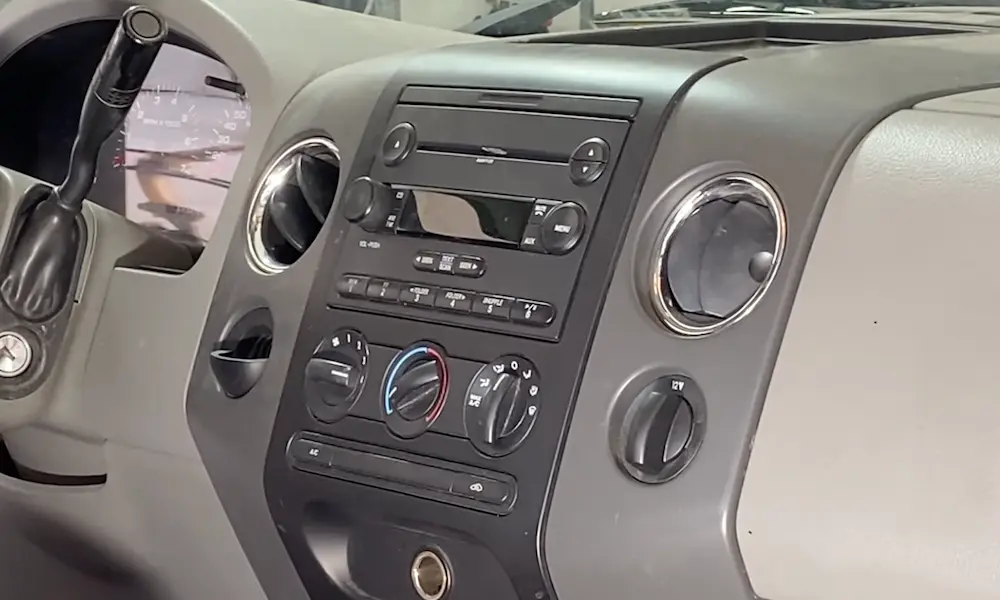
Having your F150’s 4WD fail when you need it most is frustrating. You turn the knob, but nothing happens – no engagement, no indicator light, just silence. This guide walks you through the most common causes and fixes for this specific problem, saving you time and potentially expensive mechanic visits.
Why Your F150’s 4WD System Isn’t Engaging
When your Ford F150’s four-wheel drive won’t engage and the dashboard indicator stays dark, the issue almost always lies within the Electronic Shift-On-the-Fly (ESOF) control system. The most common culprits include:
- Blown fuses or bad relays
- Failed transfer case shift motor or switch
- Faulty Generic Electronic Module (GEM)
- Problems with the vacuum-actuated hub system
Let’s tackle each potential issue systematically.
Start With the Basics: Checking Fuses and Relays
The first step in diagnosing your F150’s 4WD issues is checking the fuses and relays that power the entire system. If these fail, nothing will work – including the indicator light.
Fuses to Check Based on Your F150 Model Year
For 2009–2014 F150s (Under Hood Fuse Box):
- Fuse 20 (20A) – Powers the 4WD control systems
- Fuse 29 (10A) – Controls 4WD logic circuits
- Fuse 54 (5A) – Manages 4WD control signals
- Fuse 68 (20A) – Supplies power to the transfer case motor
For 2004–2008 F150s (Passenger Compartment TIPM):
- Fuse 11 (10A) – Powers the 4×4 solenoid
- Fuse 29 (15A) & Fuse 30 (15A) – Supply power to the PCM 4WD systems
Relays (Under-hood Relay Box for 2004–2008):
- Relays R01 & R02 – Control 4WD motor and solenoid power
How to Check Fuses Properly
- Locate the fuse box (either under the hood or inside the passenger compartment)
- Remove each relevant fuse using fuse pullers (usually included in the fuse box)
- Hold the fuse up to light – a blown fuse will have a broken metal strip inside
- Replace any blown fuses with new ones of the exact same amperage rating
- For relays, try swapping them with identical relays from the same box
If replacing a fuse immediately fixes your 4WD, great! But if the fuse blows again quickly, you likely have a short circuit elsewhere in the system requiring further diagnosis.
Inspecting the Transfer Case Shift Motor and Switch
If your fuses are good, the next likely culprit is the transfer case shift motor assembly. This electric motor physically moves the transfer case between 2H/4H/4L modes, and its built-in position switch tells the computer when it’s reached the correct position.
Signs of a Failed Transfer Case Motor or Switch:
- No audible engagement sounds when selecting 4WD
- No dash indicator light (the switch never closes the circuit)
- The vacuum solenoids for the hubs never activate
How to Test the Transfer Case Motor and Switch
- With the key in the ON position, listen near the transfer case (center of the undercarriage) when switching between 2WD and 4WD
- No sound? Check for 12V at the motor’s power pins using a multimeter
- If voltage is present but the motor doesn’t turn, the motor has likely failed
- Sometimes a stuck transfer case motor can be temporarily freed by gently tapping it with a rubber mallet
For the position switch:
- Unplug the transfer case switch connector
- Using a multimeter, check for continuity between the appropriate pins
- The switch should show continuity only when in 4H or 4L positions
- Worn or corroded switches will never close the circuit, meaning no dash light
Many F150 owners find that replacing the entire “shift motor and switch” module solves their problems, as these components tend to fail as a unit after years of use and exposure to the elements.
The Vacuum-Actuated Hub System: A Common Failure Point
Many 2004–2014 F150s use a vacuum-operated system called Integrated Wheel End (IWE) to engage the front hubs. This system relies on vacuum pressure directed by solenoids that are controlled by the GEM module.
Testing the IWE System
If fuse 11 (IWE solenoid power) is intact but your hubs never engage:
- Listen for the click of the vacuum solenoid (located under the firewall) when switching to 4H mode
- Check vacuum lines for damage, cracks, or disconnections which are common in older trucks
- Test the system by manually applying vacuum to the hub actuator—if the wheels engage, the vacuum path and hub motor are functioning correctly, pointing to issues with the solenoid or GEM control
A damaged vacuum line is a surprisingly common cause of 4WD failure in the F150. These lines can become brittle with age and crack, especially in cold weather. Inspect all vacuum lines carefully, paying special attention to connection points.
When the GEM Module Is the Problem
The Generic Electronic Module (GEM), also known as the Body Control Module (BCM) in newer models, is the electronic brain that coordinates your 4WD system. It reads input from the transfer case switch and controls the vacuum solenoids and indicator lights.
Signs of GEM Failure:
- Proper voltage at all fuses and components, but no 4WD engagement
- No ground signal sent to the solenoids when 4WD is selected
- Multiple electrical issues across different systems (since the GEM controls many vehicle functions)
Testing for GEM Issues
- Using a multimeter, probe the solenoid’s control lead for a grounding signal when turning the 4WD selector
- If voltage is present at the solenoid but there’s no ground signal when 4WD is selected, the GEM is likely at fault
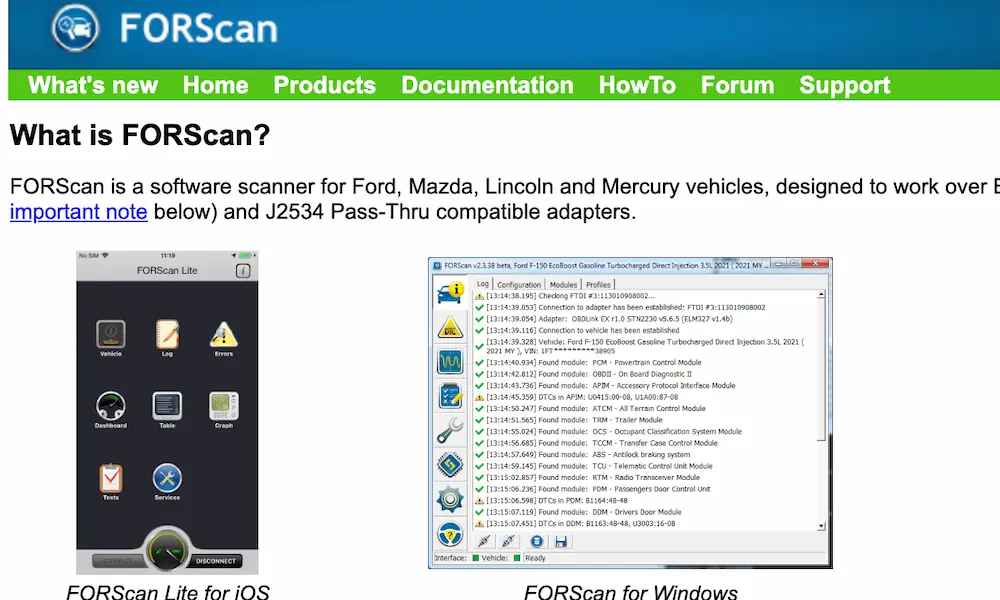
- Verify by checking other GEM-controlled circuits or scanning for body-module codes with an OBD-II scan tool
GEM module problems typically require dealer intervention or specialized repair, as these modules often need reprogramming after replacement.
Complete Troubleshooting Workflow for F150 4WD Issues
Follow this step-by-step approach to efficiently diagnose your F150’s 4WD problems:
| Step | Action | What You’re Checking | Next Step If Failed |
|---|---|---|---|
| 1 | Check all relevant 4WD fuses and relays | Power supply to the entire system | Replace blown fuses/relays |
| 2 | Observe dashboard for messages | “Shift in Progress” or “Check 4×4” indicators | Check error codes with scan tool |
| 3 | Listen for noise at transfer case | Motor operation when selector is moved | Proceed to motor testing |
| 4 | Test transfer case motor | Apply 12V directly to motor leads | Replace if motor doesn’t turn |
| 5 | Test transfer case position switch | Continuity in 4H/4L positions | Replace if faulty |
| 6 | Check vacuum solenoid operation | 12V presence and proper ground | Replace solenoid or check GEM |
| 7 | Test IWE hub system | Apply vacuum directly to hubs | Repair vacuum lines or hub actuators |
| 8 | Investigate GEM/BCM | Control signals to all components | Dealer service for reflash or replacement |
Common F150 4WD Problems by Model Year
Different generations of the F150 have their own common 4WD failure points:
2004-2008 F150s
These trucks commonly experience vacuum line failures and IWE hub issues. The plastic vacuum lines become brittle with age and often crack at connection points. The transfer case motor is also a frequent point of failure in this generation.
2009-2014 F150s
This generation typically experiences electronic issues with the transfer case position switch and GEM module problems. Many owners report intermittent 4WD operation before complete failure occurs.
2015+ F150s
The newer models have more complex electronic systems but similar failure points. Additional sensors and more integration with other vehicle systems can make diagnosis more challenging without dealer-level scan tools.
Preventative Maintenance to Avoid F150 4WD Failures
To keep your F150’s 4WD system operating properly:
- Regularly engage the 4WD system (at least monthly), even in summer
- Check and replace transfer case fluid according to Ford’s maintenance schedule
- Inspect vacuum lines for cracks or damage annually, especially before winter
- Clean electrical connections and apply dielectric grease to prevent corrosion
- Address unusual noises or hesitation in 4WD engagement immediately before complete failure occurs
Parts and Tools You’ll Need for F150 4WD Repairs
If you’ve diagnosed your F150’s 4WD issue, here are the common parts and tools required for repairs:
Parts:
- Fuses (various amperage ratings based on your model year)
- Transfer case shift motor and switch assembly
- Vacuum lines and connectors
- IWE solenoid
- Hub actuator assemblies
Tools:
- Basic socket and wrench set
- Digital multimeter
- Vacuum pump tester
- Fuse pullers
- Jack and jack stands
- OBD-II scanner capable of reading body module codes
Having these items on hand will make your repair process much smoother and prevent multiple trips to the parts store.
Understanding How Your F150’s 4WD System Works
The better you understand your truck’s 4WD system, the easier it is to diagnose problems. Here’s a simplified explanation of the F150’s ESOF 4WD operation:
- You turn the 4WD selector knob on the dashboard
- The GEM/BCM receives this input and sends power to the transfer case motor
- The motor physically shifts the transfer case into the selected position
- When properly positioned, the transfer case switch closes
- The GEM/BCM receives this signal and grounds the vacuum solenoids
- The solenoids direct vacuum to engage the front wheel hubs (IWE system)
- When all systems are engaged, the GEM/BCM illuminates the dashboard indicator
Any break in this chain—from power supply to mechanical shifting to electronic signaling—can cause your 4WD to fail with no dashboard indication.
By systematically testing each component in this sequence, you can pinpoint exactly where your F150’s 4WD system is failing. Most owners find that starting with the fuses and working through the transfer case components resolves the majority of “no light, no engagement” 4WD issues relatively inexpensively.
Remember that while some 4WD problems can be fixed in your driveway with basic tools, others—particularly those involving the GEM/BCM—may require professional assistance with specialized diagnostic equipment.