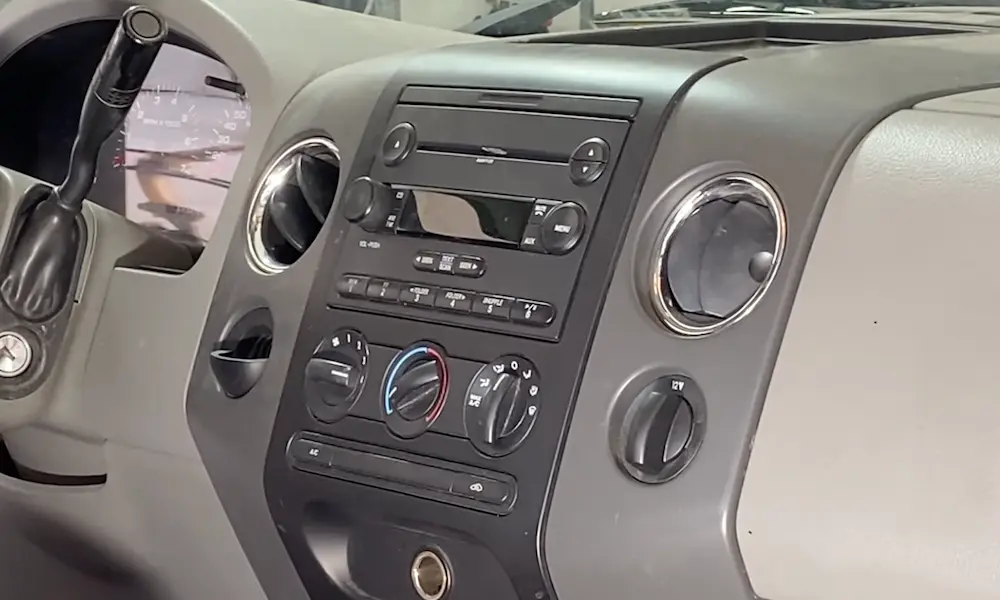
Is your Ford F150’s AC just not putting out the powerful airflow you need during those hot summer drives? You’re dealing with a common issue that affects many F150 owners. The good news is that most AC airflow problems have straightforward causes and solutions you can tackle yourself, potentially saving hundreds in repair costs.
Why Is My Ford F150 AC Not Blowing Hard?
When your truck’s AC airflow is weak, seven common culprits are typically to blame. Let’s explore each one:
1. Blower Motor Resistor Failure
The blower motor resistor is the #1 cause of weak AC airflow in F150s, especially in 2009-2014 models. This small component controls your fan speeds, and when it fails, you’ll notice:
- AC only works on the highest fan setting
- Some fan speeds work while others don’t
- Fan works intermittently or not at all
- Clicking sounds when changing fan speeds
The resistor sits behind your glove box and costs $25-70 to replace. If you notice burned or melted connector pins, both the resistor and wiring harness need replacement.
Here’s what the different fan speed scenarios tell you:
| Fan Speed Behavior | Likely Cause |
|---|---|
| Works on high only | Blower resistor failure |
| Weak on all speeds | Air blockage or blower motor issue |
| Intermittent operation | Electrical connection problems |
| No operation at all | Blown fuse, bad relay, or motor failure |
2. Clogged Cabin Air Filter
A dirty cabin air filter dramatically restricts airflow. In 2015 and newer F150s, this filter hides behind the glove box. Interestingly, 2004-2014 F150s didn’t come with cabin filters from the factory, though some have dealer-installed aftermarket ones.
Checking your cabin filter is easy:
- Remove your glove compartment (squeeze the sides to release)
- Locate the filter housing behind the glove box
- Pull out the filter and inspect it
- Replace it if it’s dirty or clogged ($15-25)
If your filter looks like it’s covered in dirt, leaves, or debris, you’ve found your culprit.
3. Blower Motor Problems
The blower motor itself can fail, causing weak or no airflow. Signs include:
- Unusual noises when the fan runs
- Inconsistent operation
- Complete failure to blow air
- Only certain speeds working
Blower motor issues often happen alongside resistor failures since electrical problems can damage both components.
4. Electrical Gremlins
Faulty relays, blown fuses, and wiring issues can all cause airflow problems. The blower motor relay controls power to the fan. When it goes bad, your fan may work intermittently or not at all.
Check for:
- Blown fuses in the fuse box
- Bad relays (try swapping with an identical one)
- Burned or corroded wiring connections
- Loose connections at the blower motor or resistor
The blower motor fuse and relay are typically in the engine compartment fuse box. Your owner’s manual shows their exact locations.
5. HVAC Door Actuator Failures
Your F150’s HVAC system has several small motors (actuators) that control internal doors directing airflow. When these break, air may not reach your vents properly.
Common actuator problems include:
- Stuck doors from broken actuators
- Foam insulation falling into door mechanisms
- Stripped plastic gears inside actuator motors
If you hear clicking sounds without airflow changes, or air comes out different vents than selected, suspect door actuator issues.
6. Fresh Air Intake Blockage
The fresh air intake sits in the cowl area near your windshield and can become clogged with leaves, pine needles, or debris. This restricts outside air entering your system.
To check it:
- Open your hood
- Look at the plastic cowl area where your windshield meets the hood
- Remove any visible debris
- Use compressed air to blow out the intake vents
Many owners are surprised by how much debris can accumulate here, especially if you park under trees.
7. Evaporator Core Issues
A dirty or iced-over evaporator core (the cold coil inside your dash) can restrict airflow significantly. Signs include:
- Reduced cooling efficiency
- Weak airflow despite proper fan operation
- Musty smells from your vents
The evaporator sits deep inside your dashboard, making inspection difficult without special tools.
How to Diagnose Your F150’s AC Airflow Problem
Follow these simple steps to pinpoint the cause:
Step 1: Check All Fan Speeds
Test each fan speed setting. If only specific speeds don’t work (especially if high works but low doesn’t), you likely have a resistor issue. If all speeds are weak, look for blockages or motor problems.
Step 2: Inspect Your Cabin Filter
Remove and check your cabin filter for dirt and debris. Even a partially clogged filter can significantly reduce airflow.
Step 3: Listen for Unusual Noises
Turn on your AC and listen carefully:
- Clicking sounds? Suspect actuator problems
- Grinding or squealing? Likely blower motor issues
- Whistling? Possible air leaks or blockages
Step 4: Test Electrical Components
Check fuses first (they’re the easiest). Then inspect wiring connections for signs of damage. Look closely at the blower motor resistor connector for melting or corrosion.
Step 5: Check the Fresh Air Intake
Remove any debris from the cowl area intake vents. This simple step often resolves airflow issues, especially in vehicles regularly parked outdoors.
DIY Fixes for Ford F150 AC Airflow Problems
Many AC airflow issues can be fixed at home with basic tools:
Replacing the Blower Motor Resistor
- Disconnect the battery
- Remove the glove box (squeeze sides to release)
- Locate the resistor (usually right behind glove box)
- Unplug the electrical connector
- Remove screws holding the resistor
- Install the new resistor and reassemble
This typically takes 20-30 minutes and costs under $70 for parts.
Changing the Cabin Air Filter
- Open glove compartment
- Squeeze sides to release stops
- Lower the glove box completely
- Remove filter cover
- Pull out old filter and slide in new one
- Replace cover and glove box
This 5-minute job costs about $15-25 for a quality filter.
Cleaning the Air Intake
- Open the hood
- Locate the cowl area (where windshield meets hood)
- Remove visible debris
- Use compressed air to blow out remaining debris
- Check drainage holes are clear
This free maintenance can dramatically improve airflow.
Checking and Replacing Fuses
- Locate the fuse box (under dash or in engine compartment)
- Find the blower motor fuse (check owner’s manual)
- Remove and inspect the fuse for breaks
- Replace if blown
Fuses cost just a few dollars at any auto parts store.
When to Call a Professional
Some AC problems require specialized knowledge or tools:
- Evaporator core cleaning/replacement (requires dashboard removal)
- Refrigerant system service (requires special equipment)
- Complex electrical issues (requires diagnostic tools)
If you’ve checked the easy fixes and still have problems, a professional diagnosis might be your best option. Expect to pay $100-150 for diagnosis, with repairs potentially costing more depending on the issue.
Preventing Future AC Airflow Issues
Keep your F150’s AC blowing strong with these maintenance tips:
- Replace cabin air filters every 15,000 miles
- Keep fresh air intakes clear of debris
- Address unusual noises promptly
- Have the AC system inspected annually
Regular maintenance prevents small issues from becoming bigger, more expensive problems.
Common Ford F150 AC Airflow Questions
Which F150 model years have the most AC blower problems?
The 2009-2014 F150s are most notorious for blower resistor failures, while 2015+ models tend to have more issues with cabin filter clogs and blend door actuators.
How much does it cost to fix weak AC airflow in an F150?
Costs vary widely based on the cause:
- DIY resistor replacement: $25-70 for parts
- Cabin air filter: $15-25
- Professional blower motor replacement: $200-400
- Actuator replacement: $150-300
- Evaporator core service: $800-1500
Can I drive with weak AC airflow?
Yes, it’s safe to drive, but depending on the cause, the problem might worsen over time. Electrical issues like burned wiring connections can potentially cause more serious problems if left unaddressed.
How long does it take to fix an F150 AC blower problem?
Simple fixes like replacing a resistor or cabin filter take 15-30 minutes. More complex repairs involving dashboard disassembly can take 3-8 hours.
Remember, most F150 AC airflow issues have simple solutions, and catching them early can save you significant repair costs down the road.