Is your F150 idling rough or running poorly? A vacuum leak might be the culprit. This guide walks you through identifying, locating, and fixing vacuum leaks on your Ford F150 without breaking the bank or spending days at the mechanic.
What Exactly Is a Vacuum Leak on a Ford F150?
A vacuum leak occurs when unwanted air enters your F150’s intake system through cracks, damaged hoses, or faulty gaskets. Your truck’s engine relies on a precise air-to-fuel ratio to run properly. When unmetered air sneaks in, this ratio gets thrown off, causing numerous performance issues.
Think of it like trying to drink from a straw with a tiny hole in it – you can still drink, but it’s inefficient and frustrating.
Telltale Signs Your F150 Has a Vacuum Leak
Your truck will practically beg you to fix vacuum leaks through these obvious symptoms:
Check Engine Light Illumination
The most common vacuum leak codes on Ford F150s are P0171 and P0174, indicating a lean fuel condition (too much air, not enough fuel) in bank 1 or bank 2 of your engine. Your truck’s computer detects excess oxygen and tries to compensate by adding more fuel.
Rough, Unstable Idle
Does your F150’s engine RPM fluctuate when sitting at a stoplight? A vacuum leak allows inconsistent amounts of air into the intake, causing the idle to surge up and down or feel rough.
Stalling or Hard Starting Issues
In severe cases, your truck might stall at idle or require multiple attempts to start. You might need to press the gas pedal slightly when starting to keep it running.
Higher-Than-Normal Idle Speed
Vacuum leaks often cause elevated idle RPMs since more air is entering the system than the computer expects.
Mysterious Hissing Noises
A distinct hissing or whistling sound coming from under the hood, especially near the intake manifold or vacuum hoses, is a dead giveaway of a vacuum leak.
4WD Engagement Problems
If your 4×4 F150 struggles to engage properly or makes grinding noises when shifting into 4WD, the problem might be vacuum-related. The 4WD system often relies on vacuum-operated front axle actuators.
Common Vacuum Leak Sources in Ford F150s
Knowing where to look first can save you hours of frustration:
| Component | How It Fails | What You’ll Notice |
|---|---|---|
| Vacuum Hoses & Lines | Cracks, splits, loose connections | Visible damage, hissing sounds |
| Intake Manifold Gasket | Deterioration or warping | Rough idle, leak sounds near manifold |
| PCV Valve System | Clogging or sticking | Rough idle, oil leaks, rattling noise |
| Brake Booster Check Valve | Internal leakage | High idle, reduced brake assist |
| 4WD Vacuum Actuator Lines | Cracked rigid lines | Front hubs won’t engage/disengage properly |
| Intake Runner Controls (4.6L/5.4L) | Leaking seals | Bank-specific lean codes |
How to Find a Vacuum Leak on Your F150 (Step-by-Step)
Finding an invisible air leak might seem impossible, but these methods make it straightforward:
1. Basic Visual Inspection
Start with the obvious – carefully inspect all vacuum hoses and connections for:
- Cracks or splits in rubber hoses
- Loose connections or damaged fittings
- Brittle, hardened, or collapsed hoses
- Rubbing or chafing against other components
Pay special attention to the PCV system, brake booster hose, and intake manifold gasket edges.
2. Listen for the Leak
With your F150 idling in park (with parking brake engaged):
- Use a length of hose or even a paper towel tube as a makeshift stethoscope
- Place one end near your ear and move the other end around potential leak areas
- Listen carefully for hissing or whistling sounds
- Feel along hoses with a gloved hand for suction or escaping air
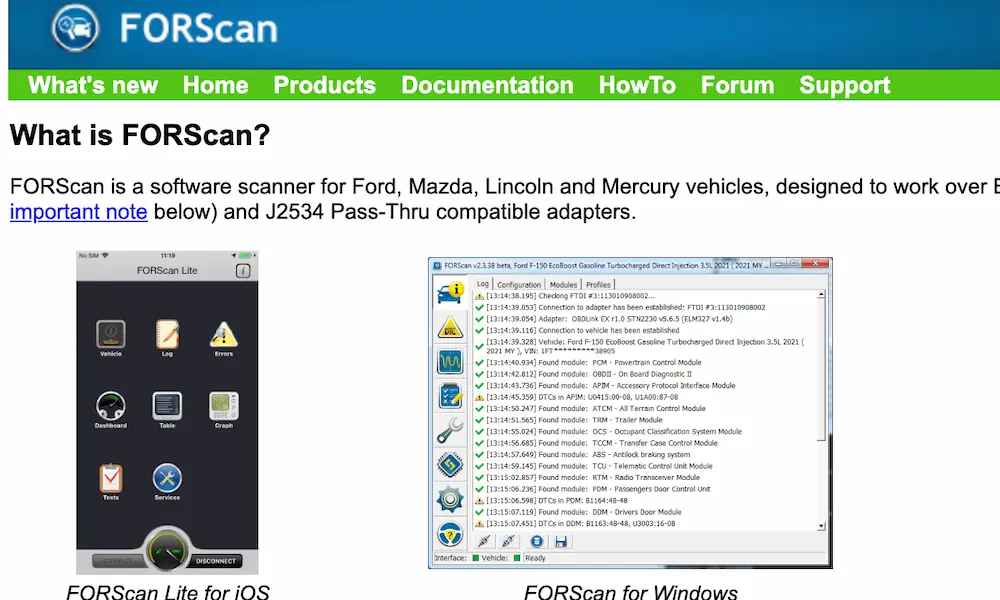
3. Check Fuel Trim Data
If you have an OBD-II scanner:
- Connect it and view both short-term and long-term fuel trim values
- Look for consistently high positive numbers (above 10-15%)
- Compare readings at idle versus at 2,500 RPM
- If trims remain high at idle but improve at higher RPMs, that’s a classic vacuum leak signature
4. Perform a Smoke Test (Most Effective Method)
This professional-grade test can be done at home with the right equipment:
- With engine off, introduce non-combustible smoke into the intake system
- Use a flashlight to look for smoke escaping from leak points
- Smoke will visibly exit through any vacuum leak
- This method pinpoints even the smallest leaks with high accuracy
5. Try the Propane or Carb Cleaner Test
A budget-friendly alternative:
- With engine idling, use a small propane torch (unlit) or spray carb cleaner near suspected leak areas
- When you hit the leak spot, engine RPM will briefly increase as it burns the additional fuel
- CAUTION: Be extremely careful with this method to avoid fire hazards
6. Systematically Isolate Components
For tough-to-find leaks:
- Temporarily disconnect and plug one vacuum component at a time
- If idle improves after clamping off a specific line, you’ve found your leak source
- This works especially well for identifying which system contains the leak
7. Check the 4WD Vacuum Circuit
For 4×4 F150 models with engagement issues:
- Disconnect vacuum lines at the front hubs
- Use a hand vacuum pump to test the actuator and line integrity
- If vacuum doesn’t hold, you’ve identified a leak in the 4WD system
Fixing F150 Vacuum Leaks: DIY Solutions
Most vacuum leaks are surprisingly simple to fix yourself:
Replacing Damaged Vacuum Hoses
- Purchase the correct size vacuum hose from any auto parts store
- Remove the damaged section by gently pulling it off fittings
- Cut new hose to proper length (slightly longer than original)
- Install by firmly pressing onto fittings
- Secure with small hose clamps if needed
Resealing the Intake Manifold
For intake manifold gasket leaks:
- Confirm the leak location first (this is a bigger job)
- Gather a new intake manifold gasket kit specific to your F150’s engine
- Remove the intake manifold following a service manual
- Clean all mating surfaces thoroughly
- Install new gasket and reassemble with proper torque specs
Replacing a Failed PCV Valve
One of the easiest fixes:
- Locate the PCV valve (typically in a valve cover or intake)
- Remove by twisting or pulling (depends on your engine)
- Install new valve by pressing firmly into place
- Ensure connected hoses are in good condition
Fixing 4WD Vacuum Actuator Issues
For 4×4 engagement problems:
- Replace cracked lines with OEM-spec vacuum tubing (part FL3Z-7A785-A works for many models)
- If actuators won’t hold vacuum, replace with direct-fit units like Dorman 600-105
- Verify proper operation after repair by testing 4WD engagement
After the Repair: Verification
Once repairs are complete:
- Clear any check engine codes
- Monitor fuel trim values if possible
- Listen for any remaining hissing sounds
- Verify smooth idle and proper 4WD operation
- Test drive to ensure the problem is resolved
Most Common Vacuum Leak Locations by F150 Engine Type
Different F150 engine configurations have their own trouble spots:
4.6L and 5.4L Triton V8s
- Intake manifold gaskets (especially rear areas)
- Vacuum line connections to EGR valve
- PCV system components
- Intake runner control vacuum seals
3.5L EcoBoost
- PCV valve and associated hoses
- Brake booster vacuum line
- Charge air cooler connections
- Vacuum amplifier system (if equipped)
2.7L EcoBoost
- Turbo-related vacuum lines
- PCV system components
- Brake booster check valve
- EVAP system hoses
5.0L Coyote V8
- Intake manifold gasket
- PCV valve and hoses
- Vacuum lines to brake booster
- Emissions control valves
Preventing Future Vacuum Leaks on Your F150
An ounce of prevention is worth a pound of cure:
- Replace vacuum hoses every 5-7 years before they deteriorate
- Use silicone vacuum lines for longer life in extreme climates
- Keep engine bay clean to spot leaks early
- Address check engine lights promptly before small issues become big ones
- Use OEM or quality replacement parts for vacuum components
By understanding how vacuum systems work in your F150 and following this diagnostic approach, you can tackle vacuum leaks with confidence. Not only will you save money on repairs, but you’ll also restore your truck’s performance and efficiency to factory standards.