Your F-250’s AC is blowing warm air, and you’re sweating through your seat on the way to a job site. Not ideal. This guide covers everything you need for a proper Ford F-250 AC recharge — the right refrigerant, where to find the service port on your specific engine, and how to read pressures correctly. Stick around, because getting this wrong can cost you a compressor.
First, Check the Label Under Your Hood
Before you touch anything, open the hood and find the AC specification sticker. It’s usually on the underside of the hood, the radiator shroud, or near the strut tower.
This label tells you two critical things:
- Which refrigerant your truck uses (R-134a or R-1234yf)
- Exactly how much refrigerant it needs
Don’t skip this step. The Ford F-250 refrigerant type changed depending on the model year and engine — and mixing the wrong refrigerant destroys the system.
What Refrigerant Does Your F-250 Use?
Here’s the quick answer by year:
| Production Year | Engine | Refrigerant | Lubricant |
|---|---|---|---|
| 1999–2007 | 5.4L, 6.8L Gas / 6.0L Diesel | R-134a | PAG Oil |
| 2008–2010 | 5.4L, 6.8L Gas / 6.4L Diesel | R-134a | PAG Oil |
| 2011–2016 | 6.2L Gas / 6.7L Diesel | R-134a | WSH-M1C231-B |
| 2017–2020 | 6.2L, 6.7L, 7.3L | R-134a or R-1234yf* | PAG specific to type |
| 2021–2025 | 6.7L Diesel / 6.8L & 7.3L Gas | R-1234yf | HFO-compatible oil |
2017–2020 trucks are a mixed bag. Always confirm via the under-hood label for these years.
Why does this matter so much? R-1234yf became the federal standard for new vehicles by 2021 due to its near-zero global warming potential — it breaks down in the atmosphere in just 11 days, compared to R-134a’s 13 years. Putting R-134a into an R-1234yf system isn’t just a bad idea — it’s a violation of federal law under the Clean Air Act.
Also, the service ports are physically different between the two refrigerants, so a standard R-134a kit won’t connect to a 2023 F-250. If someone’s selling you an adapter to make it fit, walk away.
How Much Refrigerant Does an F-250 Need?
Your F-250 needs more refrigerant than a typical passenger car. A regular sedan takes 14–18 oz. Many F-250 models, especially 2017–2024 configurations, need around 27 oz (about ¾ kg) for a full charge.
Overcharging is just as bad as undercharging. Too much refrigerant spikes internal pressure beyond what the hoses and compressor can handle. The high-pressure safety switch will cut the system out — or worse, something ruptures.
Always add refrigerant in small bursts and check pressure between each one.
Where’s the Low-Side AC Port on Your F-250?
You only add refrigerant through the low-side service port. It sits on the large-diameter line that carries low-pressure gas back toward the compressor. Never connect to the high-side port — that line carries pressurized liquid and will blow the canister back at you.
Here’s how to tell them apart:
| Feature | Low-Side Port | High-Side Port |
|---|---|---|
| Line diameter | Large (~0.5–0.75 in) | Small (~0.375 in) |
| Cap color | Black or Blue | Black or Red |
| Typical pressure | 25–55 PSI | 150–350 PSI |
| Fitting size | Smaller quick-connect | Larger quick-connect |
Now, the port location shifts depending on which engine is under your hood.
6.0L & 6.4L Powerstroke Diesel (2003–2010)
These engine bays are packed tight with intercooler piping and turbo gear. The low-side port hides on the passenger side near the firewall, usually behind the air filter housing. You’ll likely need to loosen the intake clamps and move the air filter assembly to reach it. The port mounts on the accumulator — that cylindrical metal canister on the passenger side.
5.4L V8 & 6.8L V10 Gas (1999–2010)
These engines give you more room to work. The low-side port sits high on the passenger side, on the refrigerant line running between the compressor and the firewall. It’s usually visible without removing anything.
6.2L V8 Gas (2011–2022)
This is the most accessible port in the F-250 lineup. The compressor sits on the lower passenger side driven by the serpentine belt. The low-side line travels upward from the compressor toward the firewall — the service port is roughly midway along that line. Easy access, no components to move.
6.7L Powerstroke Diesel (2011–Present)
The port is on the passenger side near the back of the engine bay, mounted on the thick suction line leading into the evaporator housing. On 2017 and newer models, pay close attention to the port design — these trucks span the R-134a to R-1234yf transition, and the fitting style tells you which refrigerant the system needs.
7.3L V8 Gas (2020–Present)
The “Godzilla” engine has a clean, open engine bay. The compressor mounts at the front of the engine, and the low-side port is on the large suction line on the passenger side, near the coolant degas bottle. Plenty of room to connect a gauge set or recharge hose.
Understanding AC Pressure: Temperature Changes Everything
There’s no single “correct” pressure for your F-250’s AC system. Pressure changes with the outside temperature. A reading of 40 PSI on a cool day signals a problem — that same reading on a hot day might be slightly low.
Here’s your R-134a pressure target chart for diagnostics. Take readings with the engine at ~1,500 RPM, AC on max, and windows open:
| Ambient Temp (°F) | Low-Side (PSI) | High-Side (PSI) |
|---|---|---|
| 65° | 25–35 | 135–155 |
| 75° | 35–45 | 150–170 |
| 80° | 40–50 | 175–210 |
| 90° | 45–55 | 250–270 |
| 100° | 50–55 | 315–325 |
| 110° | 50–55 | 340–345 |
For R-1234yf systems, the targets shift slightly. At 80°F, expect a low-side of 43–48 PSI and a high-side of 173–205 PSI.
How to Recharge Your F-250 AC Step by Step
Gear Up First
Grab wrap-around safety goggles and insulated gloves. Work outside or in a ventilated space — refrigerant displaces oxygen in an enclosed area, and frostbite from direct contact is a real risk.
Quick engine bay check before you start:
- Serpentine belt intact?
- Condenser fins clear of mud or debris?
- Any obvious line damage or oil stains near fittings?
Connect the Recharge Hose
Wipe down the low-side port with a clean rag to keep dirt out of the system. Pull the cap off. Pull back the coupler’s locking collar, press it onto the port until it seats fully, then release the collar.
Check if the Compressor Clutch Engages
Start the engine and turn AC to max. Watch the center of the compressor pulley. If it’s spinning with the outer ring, the clutch is engaged and the system has enough charge to trigger the compressor. If the center is stationary while the outer ring spins, the system is likely very low — or there’s an electrical fault worth diagnosing before you add refrigerant.
Add Refrigerant
Hold the canister upright and add in short bursts. Never flip it upside down — liquid refrigerant entering the compressor causes liquid slugging, which destroys it internally. Wait at least 30 seconds between bursts to let the system equalize, then check the gauge. Stop when you hit the target pressure for your ambient temperature.
Why Your AC Might Still Be Blowing Warm
Low refrigerant isn’t always the culprit. Here are the actual causes worth checking before you buy a recharge kit.
There’s a Leak Somewhere
The AC system is designed to be sealed for life. If it’s low, refrigerant leaked out. Common F-250 leak spots include:
- O-ring seals at the compressor and condenser connections
- The evaporator core behind the dashboard (pinhole leaks from corrosion)
Technicians use electronic sniffers or UV dye to track down leaks. Recharging without fixing the leak just delays the same problem.
Skip the leak sealer products found in some consumer kits. They form hard deposits inside the evaporator and condenser, and they contaminate professional recovery equipment — costing shops thousands to repair. Shops will turn you away if your system has been treated with sealers.
The Compressor Clutch Is Worn Out
The electromagnetic clutch on your compressor wears over time. If the air gap between the clutch plate and pulley gets too wide, the magnetic field can’t pull the plate in — so the compressor won’t spin. This often causes intermittent cooling that fails completely when the engine heats up. A technician can measure the gap with feeler gauges and remove shims to restore the proper distance without replacing the whole compressor.
The Orifice Tube Is Clogged
A clogged orifice tube starves the evaporator of refrigerant. The telltale sign: low-side pressure drops into a vacuum while high-side stays normal or climbs. The orifice tube contains a fine mesh screen that catches debris from a failing compressor or ice from moisture in the system. A clogged tube also cuts off the oil supply to the compressor — leading to rapid mechanical failure.
The Condenser Is Blocked
F-250s work in dirty environments. A condenser packed with road grime can’t shed heat, which sends high-side pressures through the roof and shuts the system down. A low-pressure rinse with a garden hose is simple preventive maintenance that’s easy to overlook.
It’s a Blend Door Problem, Not Refrigerant
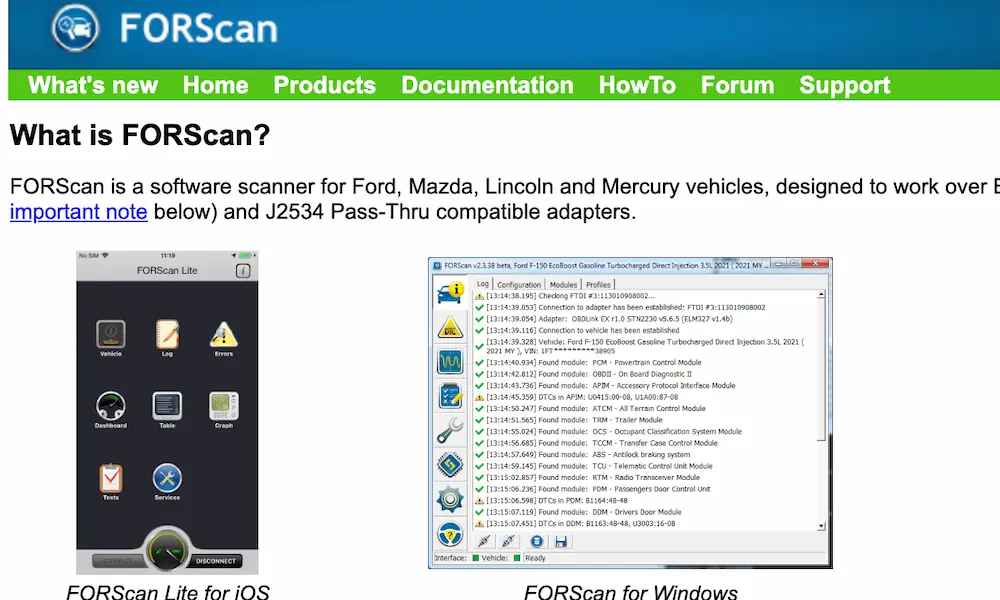
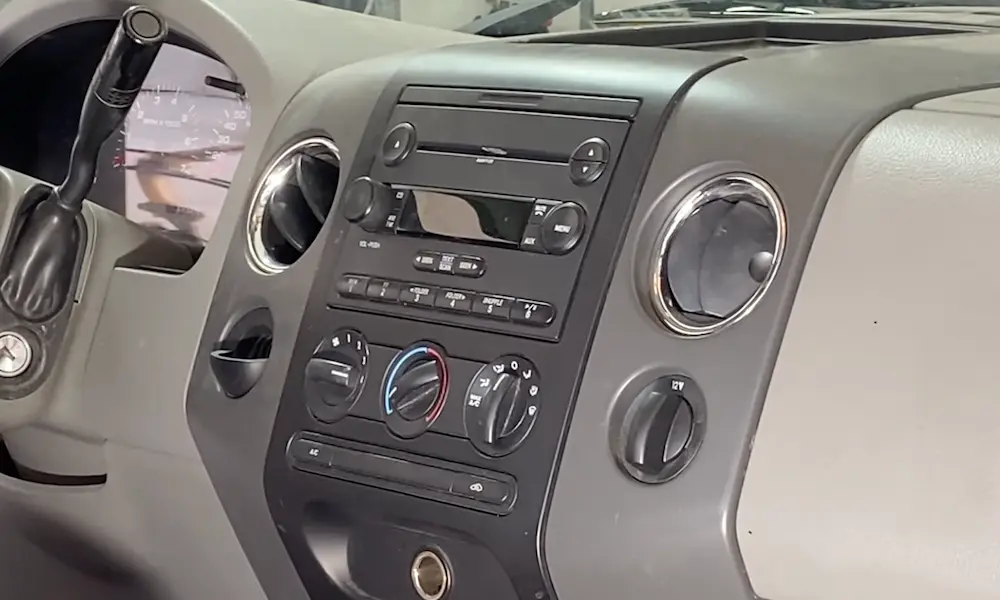
If your truck blows cold on the driver’s side but warm on the passenger’s side, the refrigerant level is probably fine. Dual-zone climate control uses blend door actuators — small motors that control airflow mixing inside the dash. These strip their plastic gears or fail electrically over time. An OBD-II scan tool that accesses the climate control module can read fault codes and run a system calibration to diagnose this quickly.
The Oil Your System Needs
Refrigerant doesn’t travel alone — it carries compressor oil throughout the system. Without it, your compressor seizes fast.
R-134a systems use PAG (polyalkylene glycol) oil. R-1234yf systems require a specialized HFO-compatible lubricant — the newer refrigerant is chemically aggressive toward standard PAG oil, breaking it down into acid that destroys everything it touches.
The total oil capacity for a 2021 Super Duty is approximately 3.7 fl oz (110 mL). When you replace an accumulator or compressor, you need to add back exactly the right amount of oil. Too little causes wear. Too much foams up and reduces cooling performance.
Mixing oil types causes what technicians call “black death” — the oil and refrigerant react into a thick black sludge that coats every internal surface and kills the compressor. It’s as bad as it sounds.
R-134a vs. R-1234yf: Can You Swap Them?
Short answer: no. Don’t try it.
The systems use different seals, different hoses, different oil, and different service port fittings. R-1234yf ports include modified coupling grooves specifically so they can’t be connected to R-134a equipment. Bypassing that with an adapter violates EPA regulations and risks physical failure of pressurized components.
The price difference between the two refrigerants is significant — R-1234yf costs considerably more per ounce due to complex manufacturing and patent licensing. That’s frustrating, but it’s the cost of running a newer truck with a modern climate system.
What the EPA Says About All of This
The Clean Air Act prohibits intentionally venting refrigerant. If your system needs a recharge, a leak occurred — because a properly sealed system doesn’t lose refrigerant. That leak needs to be found and fixed, not ignored.
The AIM Act of 2020 is also phasing down R-134a production, which means servicing older F-250s will get more expensive over time as supply tightens. If you’re running a pre-2017 truck, that’s worth factoring into your long-term maintenance budget.
For late-model F-250s with R-1234yf, the EPA requires shops to use certified recovery and recycling equipment. That’s another reason a full system service belongs in a professional shop — not just because it’s complicated, but because the law requires proper handling of these refrigerants.