If your Ford’s check engine light just clicked on and the scan tool spits out P0420, you’re probably wondering if you’re staring down an expensive repair. The short answer: maybe. But before you panic or hand over your credit card for a new catalytic converter, let’s dig into what’s actually happening under your truck—and whether you can avoid a four-figure bill.
What Does the P0420 Code Actually Mean?
The P0420 diagnostic code signals that your catalytic converter on Bank 1 (the side with cylinder #1) isn’t doing its job efficiently.
Here’s the thing: your Ford isn’t measuring actual pollution coming out of the tailpipe. Instead, it’s watching how the oxygen sensors before and after the cat behave. When everything’s healthy, the downstream sensor should show a steady, flat signal—proof the converter is buffering oxygen. When it starts mimicking the upstream sensor’s rapid swings, the computer knows the cat’s oxygen storage capacity is toast.
Think of it like a shock absorber. A working one smooths out bumps. A blown one? Every pothole transfers straight through.
How Your Ford Monitors the Cat
Your truck runs a clever test while you’re cruising at highway speeds. It counts how many times each oxygen sensor switches between rich and lean readings. The ratio between them tells the whole story:
- Healthy converter: Downstream switches maybe 10-30% as often as upstream
- Failing converter: Both sensors dance in lockstep—ratio climbs toward 100%
When that ratio crosses Ford’s threshold (usually around 60-75%), boom—check engine light.
The Real Culprits Behind Ford P0420
Don’t jump straight to replacing the cat. That’s exactly what dealerships want, but the actual problem might be cheaper to fix.
Exhaust Leaks (The Silent Killer)
On F-150s with the 3.5L EcoBoost, warped exhaust manifolds are notorious. Those broken rear studs create tiny air leaks upstream of the converter. Fresh air gets sucked in through the Venturi effect, confusing the oxygen sensor into thinking the engine’s running lean.
Your computer compensates by dumping extra fuel. Now you’ve got:
- A rich mixture overheating the cat
- Air pulses messing with the oxygen storage monitor
- A false P0420 code
Check this first: Look for sooty marks around manifold joints or listen for ticking at startup.
The Focus Canister Purge Valve Disaster
If you’re driving a 2012-2018 Focus with the 2.0L engine, stop reading and check your purge valve right now.
Ford issued recalls (18S32 and 19S22) because these valves stick open, creating constant vacuum on the fuel tank. The symptoms:
- Fuel trims swing wildly negative
- Rich fuel vapors flood the engine during acceleration
- Raw fuel hits the cat and literally cooks it from the inside
- Your fuel tank might actually collapse inward
Replacing a cat without fixing this valve? You’ll be back in a month with the same code.
Misfires and Oil Consumption
Any misfire code (P0300, P0301, etc.) sends unburned fuel straight into the exhaust. That fuel ignites in the converter, spiking temperatures above 1600°F. At those temps, the precious metals inside literally melt together—a process called sintering.
EcoBoost turbos with worn seals are particularly guilty of burning oil. Every drop of oil carries phosphorus from the ZDDP additives. That phosphorus coats the catalyst’s active surface like a glaze on pottery—permanent and performance-killing.
How to Actually Diagnose Ford P0420
Scan tools are cheap. Good diagnostics aren’t. Here’s the methodical approach.
Step 1: Mode $06 Data (Your Secret Weapon)
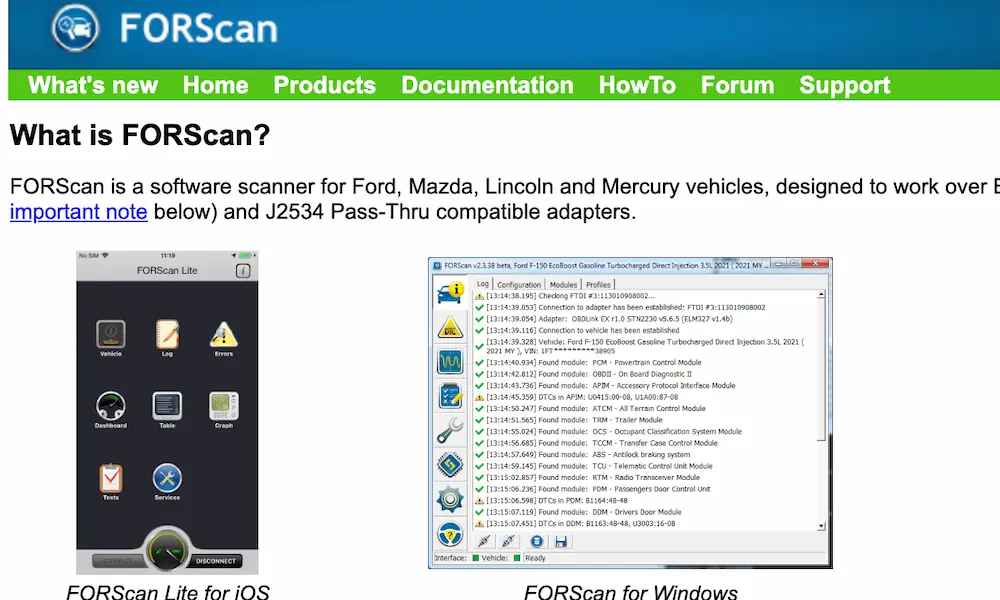
Most people never look past the basic code. That’s amateur hour. Mode $06 shows you the actual test results that triggered the code.
Find Monitor ID $21 (Catalyst Bank 1). You’ll see two numbers:
- Test Value: What your cat measured
- Max Limit: Ford’s failure threshold
| Scenario | Test Value | Limit | What It Means |
|---|---|---|---|
| Healthy cat | 0.200 | 0.600 | You’re golden—maybe a bad sensor |
| Dying cat | 0.580 | 0.600 | Borderline. Code might come back |
| Dead cat | 0.750 | 0.600 | Time for replacement |
If your value’s barely over the limit, you might have options. Way over? The cat’s cooked.
Step 2: Watch the Oxygen Sensors Live
Hook up a graphing scan tool and take a drive. Here’s the 2000 RPM test:
With the engine fully warmed up, hold steady at 2000-2500 RPM for three minutes. Watch both Bank 1 sensors:
Healthy: Downstream (sensor 2) flatlines around 0.6V
Failed: Both sensors wave up and down together like synchronized swimmers
Try a snap throttle test too. Floor it, then let off completely:
Healthy: Downstream reacts slowly to both the rich spike and lean fuel-cut
Failed: Downstream drops to zero volts instantly during decel—no buffering happening
Step 3: Temperature Check
Grab an infrared thermometer and measure the cat housing:
- Point 1: Inlet pipe
- Point 2: Outlet pipe
A working converter generates heat through chemical reactions. The outlet should run 50-100°F hotter than the inlet. Same temp or cooler? The reaction isn’t happening.
Model-Specific Ford Issues You Should Know
F-150 and Expedition EcoBoost (2.7L/3.5L)
Ford released TSB 22-2260 specifically addressing false P0420 codes caused by sulfur buildup on 2018-2020 2.7L EcoBoost engines.
The fix: A high-temperature drive cycle to burn off the sulfur deposits. Drive at 60+ mph for 30 minutes with moderate throttle. Check Mode $06 values after—if they don’t improve below 0.40, then replace the cat.
For 2022-2023 F-150 PowerBoost Hybrids, TSB 25-2233 provides a software update. The original calibration was too sensitive, flagging cats that were still legally compliant.
2019-2020 Ranger (2.3L EcoBoost)
TSB 22-2245 covers similar software sensitivity issues. Interestingly, this bulletin requires both reprogramming and cat replacement—suggesting the overly strict software actually caused premature degradation.
The Lacquer Thinner “Fix” Is Garbage
You’ll see this all over YouTube and Reddit: dump a gallon of lacquer thinner in your tank to “clean” the cat and clear P0420.
Don’t.
Why It Doesn’t Work
Lacquer thinner contains acetone, toluene, and methyl ethyl ketone. Sure, they burn hot. But they combust in the cylinders, turning into CO₂ and water vapor like any hydrocarbon. Nothing survives the explosion to “wash” the cat downstream.
These solvents might remove carbon from intake valves. They can’t reverse:
- Melted precious metals (sintering)
- Phosphorus glazing from oil
- Physical substrate damage
Why It’s Dangerous
Modern fuel systems use specific rubbers and plastics tested for gasoline and 15% ethanol—not aggressive solvents. Lacquer thinner attacks:
- Fuel pump O-rings (causes pressure loss)
- Fuel line inner liners (creates leaks)
- Plastic pump impellers (melts them)
Mechanics report hard starting, rough idle, and dead fuel pumps days after trying this hack. You might save $1,200 on a cat only to spend $800 on a fuel pump replacement.
What Replacement Actually Costs
If diagnostics confirm the cat’s genuinely dead—and you’ve fixed any underlying causes—here’s what you’re looking at:
| Ford Model | Part Type | Part Cost | Labor Hours | Total Estimate |
|---|---|---|---|---|
| F-150 (per bank) | OEM | $1,280-$1,700 | 1.5-2.5 | $1,500-$2,000 |
| Focus 2.0L | OEM Manicat | $850-$1,000 | 2.0-3.0 | $1,100-$1,500 |
| Fusion 2.5L | OEM | $1,200-$1,500 | 1.0-2.0 | $1,350-$1,700 |
| Generic aftermarket | EPA compliant | $300-$600 | 1.0-2.0 | $450-$900 |
OEM vs. Aftermarket: The Real Story
OEM converters have the precious metal loading Ford’s computer expects. They’re guaranteed to work.
Generic EPA-compliant aftermarket cats use maybe 60% of the platinum, palladium, and rhodium. They’ll pass the monitor when new, but often trigger P0420 again within 12-24 months as they age.
The sweet spot: CARB-compliant aftermarket converters. Required in California, New York, Maine, and Colorado, these units have higher precious metal loading than standard aftermarket. Even if you live in a non-CARB state, they’re worth the extra $200-300 for peace of mind.
Don’t Ignore the Code (But Don’t Panic Either)
P0420 won’t strand you on the roadside tomorrow. Your Ford will run fine—just dirtier. But here’s what happens if you ignore it:
Short term: Failed emissions testing in states that require it
Long term: The real underlying problem (misfires, leaks, stuck valves) continues damaging other components
That said, the code itself isn’t an emergency. You’ve got time to diagnose properly and shop for parts.
The Fix Checklist
Before spending a dime on catalytic converters, work through this:
1. Pull and analyze Mode $06 data (not just the code)
2. Inspect for exhaust leaks (especially manifold studs on EcoBoost)
3. Check for related codes (misfires, O2 sensor faults, EVAP issues)
4. Test purge valve (Focus/Fusion owners—seriously)
5. Verify fuel trims (big negative numbers suggest a vacuum leak)
6. Watch live sensor data during test drive
7. Check for TSBs specific to your model year
8. Only then consider cat replacement
Fix root causes first. Otherwise, you’re just buying time until the new converter fails too.
The ford p0420 code isn’t the death sentence dealerships make it out to be—but it’s also not something you can wish away with a $10 bottle of mystery cleaner. Diagnose it right, fix what’s actually broken, and you’ll get it sorted without getting fleeced.