That check engine light just popped on after filling up your tank. Sound familiar? There’s a good chance you’re dealing with the Ford P0457 code. The good news? It’s often a straightforward fix. This guide walks you through exactly what’s happening, why it triggers, and how to sort it out — so stick around.
What Is the Ford P0457 Code?
The Ford P0457 code stands for Evaporative Emission System Leak Detected (Fuel Cap Loose/Off). It means your car’s powertrain control module (PCM) detected a large leak in the evaporative emission (EVAP) system — and it happened right after you filled up your tank.
That last part is important. P0457 isn’t just a generic leak alarm. The PCM noticed fuel was recently added, then caught a gross leak equivalent to a hole larger than 0.080 inches. It puts two and two together and flags the fuel inlet as the likely culprit.
Here’s how P0457 stacks up against its close cousins:
| Code | Leak Size | What Triggers It |
|---|---|---|
| P0456 | Very small (under 0.020″) | Continuous monitoring |
| P0442 | Small (0.020″–0.040″) | Continuous monitoring |
| P0455 | Large (over 0.080″) | Continuous monitoring |
| P0457 | Large (over 0.080″) | Refuel event + large leak |
What Symptoms Come With Ford P0457?
You’ll likely notice one or more of these:
- Check engine light illuminated on your dash
- “Check Fuel Fill Inlet” message in your instrument cluster display
- Smell of raw gasoline near the rear of the vehicle, especially after parking
- Failed emissions test — the EVAP monitor will show a fault state
P0457 doesn’t usually hurt drivability, so your engine won’t stumble or lose power. But don’t ignore it. A leaking EVAP system releases hydrocarbons into the atmosphere and can quietly cost you one to two miles per gallon over time — fuel you paid for that’s just evaporating into the air.
How the EVAP System Actually Works
Your Ford’s EVAP system captures fuel vapors from the gas tank before they escape into the atmosphere. Those vapors get stored in a charcoal canister, then pulled into the engine and burned during normal operation.
Here’s what each core component does:
| Component | Normal State (Engine Off) | Role During Leak Testing |
|---|---|---|
| Fuel Tank Pressure Sensor | Monitoring | Measures vacuum decay rate |
| Canister Purge Valve | Closed | Opens to pull initial vacuum |
| Canister Vent Valve | Open | Closes to seal the system |
| Fuel Inlet (cap or capless) | Sealed | Acts as a potential leak point |
The PCM runs a vacuum decay test to check for leaks. It seals the system, pulls a vacuum to roughly -8.0 inches of water, then watches the pressure sensor. If vacuum bleeds off faster than 0.1 inches of mercury per minute, it registers a leak. When that failure follows a refueling event, you get P0457.
The Most Common Causes of Ford P0457
Loose or Damaged Gas Cap
On older Fords with a traditional threaded cap, this is the first thing to check. A loose cap, a cracked rubber gasket, or cross-threaded seal will break the EVAP system’s airtight seal immediately. Inspect the gasket for cracks or grit on the threads and replace the cap if it looks worn.
Dirty or Damaged Capless Fuel Inlet
Ford introduced the “Easy Fuel” capless system around 2009. It’s convenient, but the spring-loaded flap relies entirely on a rubber gasket to seal. When that seal gets contaminated by:
- Dirt and dust settling on the seating surface
- Road salt corroding the metal flap components
- Debris jamming the hinge, so the spring can’t close fully
…you get a gross leak right at the fuel inlet, triggering P0457.
Faulty Canister Purge Valve
The purge valve is arguably the most frequent hardware failure behind EVAP codes. These solenoids cycle thousands of times and can stick partially open. When that happens, the PCM can’t seal the system properly. On EcoBoost models, a failing purge valve can also cause a rough start right after filling up, as vapors flood the intake in one shot.
Corroded Fuel Filler Neck
On older F-150s, Rangers, and SUVs, the metal filler neck rusts through over time — especially in salt-belt states. Pinholes or structural cracks in the neck prevent any meaningful seal from forming. This one requires physical replacement.
Saturated or Cracked Charcoal Canister
Overfilling your tank repeatedly pushes liquid fuel into the charcoal canister. Charcoal is only designed to handle vapor. Once it saturates, the canister can fail structurally or break down into dust that clogs the purge and vent valves — creating a cascading failure across the whole system.
How to Diagnose Ford P0457 Step by Step
Step 1: Check the Obvious First
Start at the fuel inlet. If your Ford has a gas cap, remove it, inspect the gasket, and reinstall it snugly. If it has a capless system, grab the white plastic emergency funnel (it’s usually stored in your trunk or fuse box area) and insert it into the filler neck. Watch for smooth, unobstructed movement of the inner flap.
Look for visible dirt or debris on the rubber seal around the inlet.
Step 2: Clean the Capless Inlet
Before spending money on parts, try this maintenance fix:
- Blow out the inlet area with compressed air
- Apply a small amount of silicone lubricant or WD-40 to the emergency funnel
- Insert and remove the funnel 10–15 times to work the lubricant into the seals
- Wipe the area clean with a microfiber cloth
This process is well-documented as a first fix for capless inlet P0457 triggers and clears the code for many owners without any parts involved.
Step 3: Use a Scan Tool for Live Data
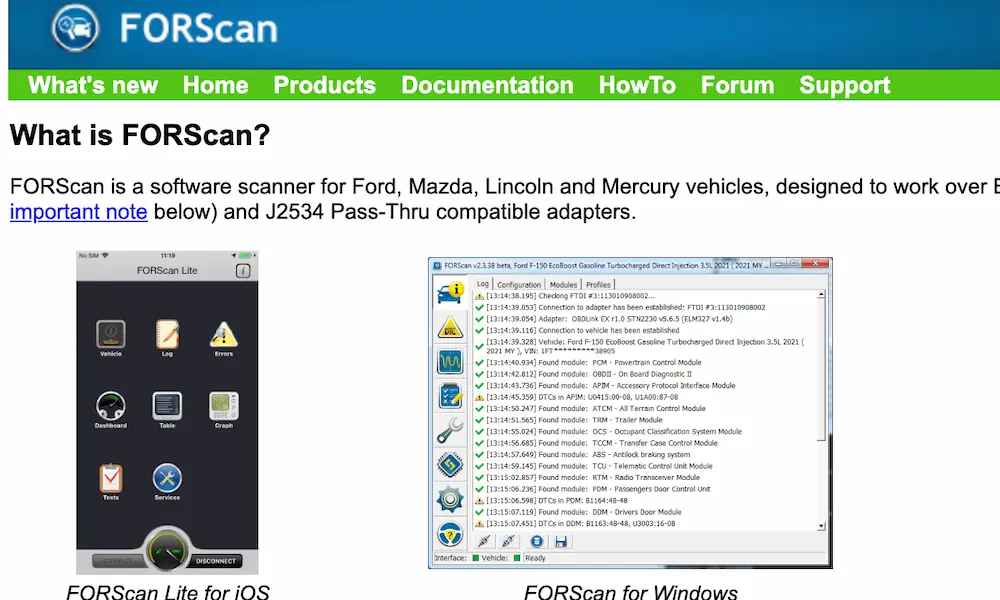
Connect an OBD-II scan tool and pull up live data from the Fuel Tank Pressure Sensor. You should see stable vacuum readings when the system runs its self-test. If the vacuum bleeds off immediately, you’ve confirmed an active leak. A capable scan tool can also command the “Evaporative System Integrity Test” while the engine runs, showing you in real time whether the system holds pressure.
Step 4: Smoke Test for Hidden Leaks
If the visual inspection and scan tool data don’t point to a clear cause, a smoke machine is the most reliable tool available. The machine injects low-pressure, non-toxic smoke (no more than 0.5 psi) into the EVAP system. Follow the smoke trail to find cracks in vapor lines, a leaking canister housing, or a failed filler neck seal.
Step 5: Test the Purge Valve
Disconnect the vapor line at the canister side of the purge valve while the engine idles. Place your finger over the valve port. You should feel no suction with the valve commanded closed by the PCM. If you feel suction, the valve is leaking internally and needs replacing.
Ford-Specific Technical Service Bulletins for P0457
Ford has issued several TSBs directly related to P0457 and EVAP system failures. Here’s a quick-reference table:
| TSB Number | Affected Models | Issue | Fix |
|---|---|---|---|
| 19-2207 | 2013–2017 C-Max, Fusion, MKZ Hybrid | Purge valve sealing fault | Replace purge valve + reprogram PCM |
| 14-0132 | Various Ford/Lincoln/Mercury 2008–2015 | Capless inlet obstruction or damage | Replace fuel filler pipe |
| 12-02-14 | F-250/F-350 (2005–2012) | Dirt-clogged canister | Replace canister + relocate vent |
| 22-2433 | Escape, Explorer, Aviator | Slow fill or spit-back | Replace fuel tank filler pipe |
If your vehicle falls into one of these categories, check with a dealer or service database before throwing random parts at the problem.
How to Reset the EVAP Monitor After Fixing P0457
Clearing the code with your scan tool turns off the light — but it doesn’t set the monitor to “Ready” for an emissions test. Your Ford needs to run a specific drive cycle to verify the fix worked.
The Ford EVAP drive cycle has strict requirements:
- Soak overnight (at least 8 hours) so intake air and coolant temperatures match
- Ambient temperature must be between 40°F and 100°F
- Fuel level must be between 15% and 85% full
- Drive at 45–65 mph steadily for roughly 10 minutes — avoid sharp turns and hills that cause fuel slosh
The EVAP monitor only runs within the first 30 minutes of engine operation, so don’t wait until after a long trip to check if it passed.
How to Prevent Ford P0457 From Coming Back
A few habits go a long way:
- Stop at the first pump click. Topping off the tank forces liquid fuel into vapor lines and the charcoal canister. That canister is only built for fumes — not liquid. This habit is a leading cause of premature canister and purge valve failure.
- Clean the capless inlet a few times a year. Especially if you drive in dusty or muddy conditions. The 10-second funnel-and-lubricant routine is far cheaper than a new filler pipe.
- Rinse the fuel door area in winter. If you live in a salt-belt state, road salt corrodes the filler neck and inlet flap fast. A quick rinse when you wash the wheel wells makes a real difference over time.
- Don’t ignore it. P0457 won’t strand you, but it will fail your emissions test and slowly waste fuel. It’s one of the easiest codes to address early and one of the most expensive to neglect.