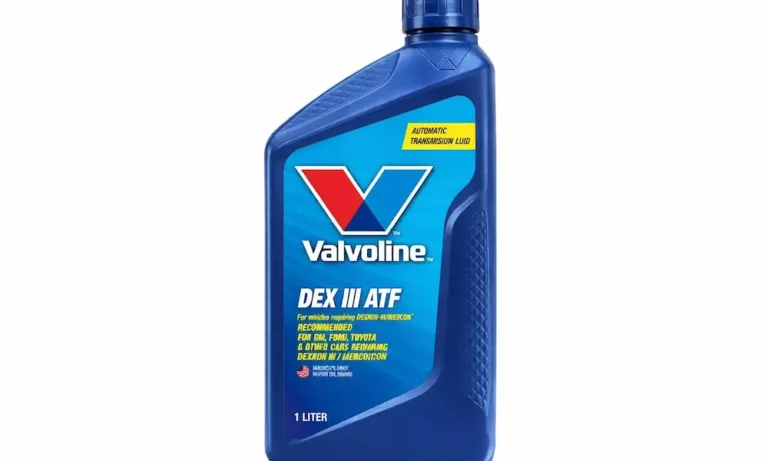
Finding the right Dexron III ATF equivalent feels harder than it should be. GM pulled the plug on the official spec back in 2006, and now the market is flooded with options that claim to work. Some do. Some don’t. Read this before you pour anything in.
Why Dexron III No Longer Exists as an Official Standard
GM officially terminated the Dexron III licensing program in 2006. No more factory certification. No more GM oversight. Just fluid makers stamping “Dexron III equivalent” on bottles without anyone checking their homework.
That’s a big deal if you own a vehicle built between the early 1990s and mid-2000s. Dexron III was everywhere — GM, Ford (as Mercon), Toyota, Lexus, and dozens of European and Japanese brands all used it. Now you’re shopping blind unless you know what to look for.
Here’s the short version of what Dexron III actually was:
- Base oil: Group II hydro-cracked mineral oil
- Viscosity at 100°C: 7.0–7.5 centistokes
- Cold viscosity at -40°C: Max 20,000 centipoise
- Primary job: Balance hydraulic pressure, heat dissipation, and friction management
That 7.5 centistoke viscosity number matters more than anything else on this page. Keep it in mind.
Dexron VI: Better Fluid, But Not Always Better for Your Car
In 2006, GM introduced Dexron VI alongside its new six-speed Hydra-Matic 6L80 transmission. The new fluid used fully synthetic Group III base oil and ran thinner — around 6.0 centistokes at operating temperature versus the 7.5 of Dexron III.
GM claimed Dexron VI was fully backwards compatible with everything that ever ran Dexron III. That claim didn’t survive contact with reality.
The viscosity problem in worn transmissions
In a transmission with high mileage, internal seals and valve bores wear down. Clearances get bigger. A thinner fluid like Dexron VI can slip past those worn seals more easily, causing a drop in line pressure. Drop the pressure and you get:
- Delayed gear engagement
- Clutch slipping under load
- Hunting shifts
The friction problem in older clutch packs
Older transmissions rely on higher static friction to keep clutch packs locked. Dexron VI’s friction modifiers are tuned for modern clutch materials. Put Dexron VI in an old clutch pack and you might trigger clutch chatter — rapid grabbing and slipping that generates intense heat and destroys friction material fast.
The Transfer Case Problem Nobody Talks About
This is where Dexron VI can cause serious, expensive damage.
GM issued bulletin PIP3836B explicitly warning against using Dexron VI in manual transmissions or transfer cases that originally called for Dexron III. In these components, the fluid isn’t acting as a hydraulic medium — it’s a straight lubricant for gears, bearings, and chains.
Four-wheel-drive transfer cases (including military HMMWVs and many light trucks) use heavy-duty chain and sprocket systems. Those chains need the higher viscosity of Dexron III to maintain a protective film. Field reports confirmed that Dexron VI caused:
- Rapid chain stretch under load
- Premature sprocket wear
- In extreme cases, chain rub through the aluminum housing — total loss of fluid and catastrophic failure
Here’s exactly which hardware needs what:
| Application | Original Spec | Correct Modern Equivalent | Risk of Using Dexron VI |
|---|---|---|---|
| GM Manual Transmissions | Dexron III | GM Manual Transmission Fluid 88861800 | Synchronizer wear, hard shifts |
| 4WD Transfer Cases | Dexron III | GM Manual Transmission Fluid 88861800 | Chain stretch, housing damage |
| HMMWV (All Variants) | Dexron III | GM Manual Transmission Fluid 88861800 | Accelerated drivetrain failure |
| Auto Trak II Systems | Dexron III | GM Auto Trak II Fluid 88900402 | Clutch pack incompatibility |
Allison Transmissions: A Completely Different Problem
If you run an older Allison transmission — common in school buses, motorhomes, and medium-duty trucks — standard Dexron VI is a risky choice.
Allison ran its own internal testing and found that Dexron VI’s synthetic base oils and additive packages cause older nitrile-butadiene rubber seals to harden and shrink. That means internal cross-leaks, external fluid loss, and eventually a full transmission teardown to replace seals.
Allison created its own independent standard: TES-389 for standard compatibility, and TES-295 for premium synthetic fluids like TranSynd. For pre-2006 Allison 1000 and 3000 series transmissions, the fluid must carry one of these certifications. Standard Dexron VI doesn’t cut it.
Power Steering Systems: The Overlooked Compatibility Issue
Toyota, Lexus, and many domestic manufacturers specified Dexron II or Dexron III for their hydraulic power steering systems. Using Dexron VI as a replacement creates two problems:
- Noise: The thinner fluid doesn’t dampen the pump as effectively, leading to whining or groaning
- Seal damage: Dexron VI can be chemically aggressive toward older rubber components in steering linkages and suspension bushings. If fluid escapes the system, it can dissolve rubber boots and bushings nearby
For power steering systems originally calling for Dexron III, the better choice is a dedicated Dex/Merc ATF or a quality power steering fluid that matches the original viscosity. Products like Valvoline MaxLife and Mobil 1 Synthetic ATF include synthetic esters that condition older seals and keep them pliable.
The Three Categories of Dexron III Equivalents
Dex/Merc Multi-Purpose Fluids
These are your most direct replacements for general use. They’re formulated to meet both the discontinued Dexron III(H) and Ford Mercon specs. Most are mineral-based or semi-synthetic and maintain the critical 7.5 centistoke viscosity.
Good examples: Valvoline DEX/MERC, Castrol Transmax ATF Dex/Merc. Look for Allison C-4 and Mercon on the label as quality indicators.
Quality varies between brands since there’s no official licensing oversight. Stick to reputable names.
Multi-Vehicle Synthetic ATFs
For anyone who tows, lives in extreme climates, or just wants longer drain intervals, synthetic multi-vehicle ATFs are the step up. They use Group III or Group IV base oils with a higher viscosity index — meaning their thickness stays more consistent from cold start to highway temperatures.
| Product | Key Compatibility | Main Benefit |
|---|---|---|
| Valvoline MaxLife Multi-Vehicle | Dexron III, VI, Mercon LV, Toyota WS | Seal conditioners prevent leaks in older units |
| Mobil 1 Synthetic ATF | Dexron III, Mercon V, Allison C-4 | Excellent cold-temperature flow |
| Castrol Transmax Multi-Vehicle | Dexron III, Mercon, JASO 1A | Strong choice for European and Asian imports |
| Amsoil Signature Series | Dexron III, VI, ULV | Maximum shear stability for severe service |
These fluids technically run slightly thinner than classic Dexron III, but their additive packages are engineered to compensate with better film strength and clutch protection.
Manufacturer-Specific and Heavy-Duty Fluids
For manual transmissions, transfer cases, and Allison transmissions, skip the multi-vehicle stuff entirely. Use GM Manual Transmission Fluid part number 88861800 for gear-driven applications. Use Allison TranSynd or a TES-389 certified fluid like Petro-Canada D3M for older Allison units.
How Modern Equivalents Actually Compare to the Original
Here’s the good news: modern synthetic Dexron III equivalents outperform the original 1993 spec in almost every measurable way.
| Performance Metric | Original 1993 Dexron III | 2025 Synthetic Equivalent |
|---|---|---|
| Viscosity Index | 160 | 185 |
| Flash Point | 190°C | 225°C |
| Pour Point | -40°C | -54°C |
| Oxidation Resistance | Standard | Superior |
Modern additive technology also handles torque converter shudder much better than 1990s fluids did. That rumble-strip vibration from a slipping lockup clutch? A quality modern equivalent often eliminates it in high-mileage vehicles.
Which Fluid Belongs in Your Vehicle
Standard passenger car automatics (1993–2005): Use a high-quality multi-vehicle synthetic ATF. The advanced additive chemistry more than compensates for the slight viscosity difference.
High-mileage or worn transmissions with slipping/slow shifts: Use a traditional high-viscosity Dex/Merc mineral fluid at 7.5 centistokes. The extra thickness helps maintain line pressure in worn clutch packs. A modern ultra-low-viscosity synthetic can sometimes push a worn transmission over the edge.
Manual transmissions and transfer cases: GM Manual Transmission Fluid 88861800 only. Non-negotiable.
Pre-2006 Allison transmissions: TES-389 or TES-295 certified fluid only. TranSynd is the gold standard here.
Toyota/Lexus power steering systems: Choose a Dex/Merc ATF or dedicated power steering fluid that lists Dexron III compatibility. Don’t use straight Dexron VI.
The right Dexron III ATF equivalent isn’t one-size-fits-all. Know your hardware, check for manufacturer-specific warnings like GM’s PIP3836B, and match the fluid’s viscosity profile — 7.5 centistokes — to what your system was designed for. Do that, and your transmission will outlast the car around it.