Your Ford is idling like it’s ready for a race, but you’re just sitting in your driveway. Sound familiar? That P1506 code on your scanner means your engine’s running faster than it should at idle — and your car’s computer can’t fix it on its own. Here’s exactly what’s happening, why it matters, and how to sort it out.
What Does the Ford P1506 Code Actually Mean?
The Ford P1506 code is a manufacturer-specific trouble code that signals an Idle Air Control Overspeed Error. In plain terms, your engine is spinning faster than it should when you’re not touching the gas pedal.
Your car’s powertrain control module (PCM) constantly compares your engine’s actual speed against a target. When your real idle speed climbs above that target — and the PCM runs out of ways to bring it back down — it throws P1506 and lights up the check engine light.
This isn’t a generic code. Ford engineers wrote it specifically to tell you the PCM has lost control of your idle speed. It shows up across Ford, Lincoln, Mercury, and Mazda platforms from the mid-90s through the late 2000s.
P1506 vs. Similar Idle Codes: What’s the Difference?
Don’t confuse P1506 with other idle-related codes. They might sound similar, but they point to completely different problems.
| Code | Definition | Engine Speed State | Common Cause |
|---|---|---|---|
| P1506 | Idle Air Control Overspeed Error | Higher than target | Stuck valve or vacuum leak |
| P1507 | Idle Air Control Underspeed Error | Lower than target | Clogged valve or restricted intake |
| P0506 | IAC System RPM Lower Than Expected | Lower than target | Carbon fouling or open circuit |
| P0507 | IAC System RPM Higher Than Expected | Higher than target | Failed throttle body or vacuum leak |
P1506 is Ford-specific. It tells you the PCM already tried closing the idle air control (IAC) valve all the way — and the engine still wouldn’t slow down. That’s the key difference between P1506 and the generic P0507.
How the Idle Air Control System Works
When you’re not pressing the gas, your throttle plate closes almost completely. So how does the engine breathe? Through a small bypass passage controlled by the Idle Air Control valve.
The IAC valve sits on your throttle body or intake manifold. Inside it, a small plunger called a pintle opens or closes that bypass port. The PCM sends rapid electrical pulses to the valve’s solenoid — a technique called pulse width modulation — adjusting how long the valve stays open each cycle.
More air in = higher idle. Less air in = lower idle. The PCM constantly fine-tunes this balance.
When something goes wrong — the pintle sticks open, carbon gunks up the passage, or air sneaks in from somewhere else — the system loses that balance. The PCM closes the valve to its minimum position. Engine speed still stays high. P1506 gets logged.
What Causes Ford P1506? The Four Main Culprits
1. A Stuck or Dirty IAC Valve
This is the most common cause. Carbon deposits build up on the pintle over time, physically preventing the valve from seating properly. Even a tiny gap lets enough air through to spike your idle speed.
Vehicles used for short trips are especially vulnerable. The engine never fully warms up, so oil vapors condense and harden on internal surfaces fast.
2. Vacuum Leaks
This one’s sneaky. If air enters your intake manifold downstream of the mass airflow sensor, your PCM never accounts for it. That “unmetered air” raises engine speed — and there’s nothing the IAC valve can do to stop it, because the leak is completely independent of the valve.
Here are the most common vacuum leak spots on Ford engines:
| Leak Location | Affected Models | Impact on P1506 |
|---|---|---|
| PCV hose | Windstar, Ranger | High — often causes audible hissing |
| Intake manifold gaskets | Taurus, Windstar | Moderate to High — varies with temperature |
| Throttle body gasket | High-mileage vehicles | Moderate — check mounting bolts first |
| EVAP purge valve | All Ford models | Moderate — often causes intermittent issues |
| Brake booster vacuum line | All Ford models | Low to Moderate — idle changes when braking |
Vacuum leaks hit hardest at idle. At highway speeds, a small leak is a drop in the ocean. At idle, that same leak can represent 50% of your total air intake — enough to send your RPMs through the roof.
3. Carbon Buildup on the Throttle Plate
Your throttle plate should close to a nearly airtight position at idle. But after years of oil vapors cycling through the intake, a ring of carbon can form around the plate’s edge. It acts like a tiny wedge, holding the plate slightly open.
That permanent air leak bypasses the IAC valve entirely. The valve can’t compensate because the extra air isn’t going through the bypass passage — it’s going straight through the main throttle bore.
4. Electrical Failures in the IAC Circuit
A corroded connector, broken wire, or failed solenoid can prevent the PCM’s commands from reaching the valve. If the valve can’t receive the “close” signal, it stays in whatever position it’s in — often partially or fully open.
Symptoms Beyond the Check Engine Light
The P1506 code rarely stays quiet. Here’s what you’ll likely notice:
- High idle at a standstill — instead of ~700 RPM, you’re sitting at 1,200–1,500 RPM
- Harsh shifts into Drive or Reverse — the transmission absorbs extra energy with every engagement, which wears it out faster
- Car wants to creep forward — you’re fighting the engine with your brakes at every stoplight
- Worse fuel economy — you’re burning fuel at a driving rate while parked
- Lean fuel mixture — if a vacuum leak is the cause, the PCM may dump extra fuel to compensate, which can overheat and damage your catalytic converter over time
How to Diagnose Ford P1506 Step by Step
Don’t start throwing parts at it. Work through this in order.
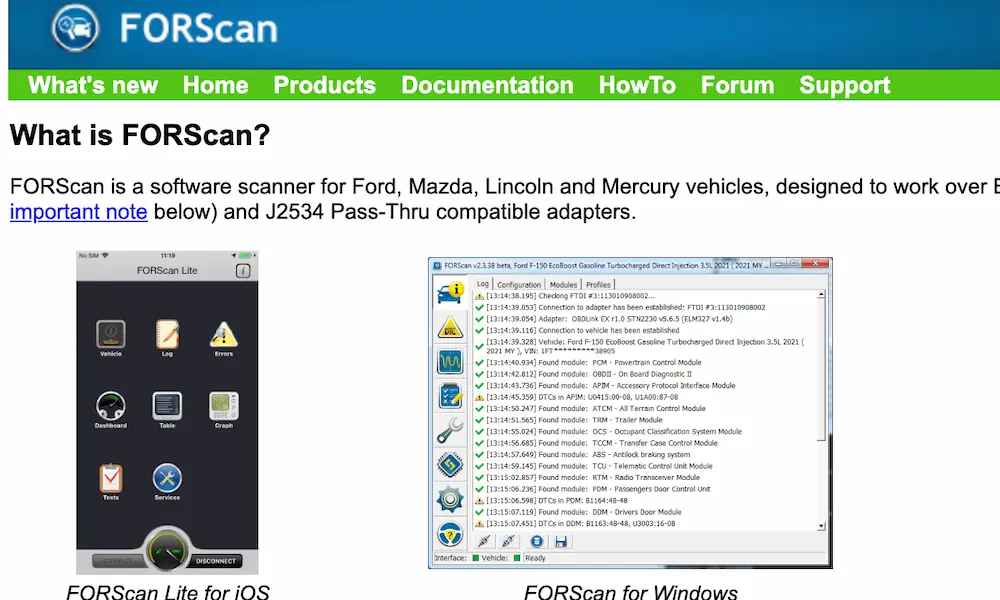
Step 1: Pull the Codes and Read Freeze Frame Data
Connect a scanner and look for every stored code, not just P1506. Check the freeze frame — it shows engine conditions at the exact moment the code triggered. If your actual idle is 400+ RPM above the desired idle, you’ve confirmed a real overspeed condition rather than a sensor glitch.
Step 2: Watch Live Data
With the engine running, monitor “Desired Idle,” “Actual Idle,” and “IAC Duty Cycle” in real time. If the duty cycle is sitting below 10%, your PCM is already commanding the valve to close as far as it can go. That tells you either the valve is mechanically stuck or air is coming in from somewhere else.
Step 3: Unplug the IAC Valve
With the engine running, disconnect the IAC valve’s electrical connector. A healthy valve with a functioning spring should snap shut immediately — the idle should drop or the engine should stall. If the idle stays high with the valve unplugged, air is definitely entering from another source. A light tap on the valve body with a wrench handle can also free a stuck pintle and confirm a mechanical failure inside the valve.
Step 4: Hunt for Vacuum Leaks with a Smoke Machine
Spray-and-pray methods with carb cleaner are outdated and risky. Use a smoke machine instead. Pump smoke into the intake manifold and watch where it escapes. Pay close attention to intake manifold gaskets and PCV hose connections — these fail most often on Ford engines.
Step 5: Test the IAC Valve Electrically
Grab a multimeter and check these values at the IAC connector:
| Test | Expected Value | What It Means if Off |
|---|---|---|
| Solenoid resistance | 6–14 ohms | Low = short; infinite = open/blown coil |
| Power supply voltage | 10–16 volts | Low = battery or wiring issue |
| Signal circuit voltage | 2–4 volts (running) | Out of range = wiring short |
| Connector continuity | Under 5 ohms to PCM | High = corrosion or damaged wire |
Green corrosion on the connector terminals can create an intermittent connection that mimics a bad PCM. Clean the terminals before condemning anything expensive.
How to Fix Ford P1506
Cleaning the IAC Valve
Remove the valve by taking out its two mounting bolts and unplugging the connector. Only use a cleaner labeled “Throttle Body and Air Intake Cleaner” — not carburetor cleaner. Many Ford throttle bodies have a specialized internal coating that harsh chemicals destroy.
Hold the valve with the solenoid facing up when spraying. This stops liquid cleaner from running into the electrical windings. Use a soft-bristle brush to scrub the internal passages, and replace the gasket before you bolt it back on — those gaskets crack when disturbed and create new vacuum leaks.
For a full DIY cleaning walkthrough, follow the steps carefully and don’t skip the gasket.
Cleaning the Throttle Body
If you’re already in there, clean the throttle body too. On vehicles with electronic throttle control, never manually force the throttle plate open. You’ll damage the motor gears or scramble the PCM’s calibration. Use the right spray and let the chemical do the work.
Fixing Vacuum Leaks
Replace any cracked PCV hoses, intake manifold gaskets, or vacuum lines you found during the smoke test. On Ford Windstar models with the 3.8L V6, check the upper intake manifold isolation bolts — their rubber grommets shrink and harden with age, creating a massive leak between the two manifold halves. Ford released an updated bolt kit to address this exact design issue.
Reset the PCM After Your Repair
Here’s something most people miss: after fixing a P1506 issue, your PCM might still idle badly. That’s because Ford’s Keep Alive Memory (KAM) stores years of learned corrections. If it learned to compensate for a bad valve or vacuum leak, it’ll keep applying that compensation — even after the problem’s fixed.
Reset the KAM by disconnecting the negative battery terminal for at least 15 minutes. Then run through this idle relearn sequence:
- Start the engine and idle for one minute in Park with all accessories off
- Turn on the A/C and idle for another minute
- Hold the brake, shift into Drive, idle for one minute
- Drive at varied speeds for about 10 miles to let the PCM re-map fuel and air delivery
Model-Specific Notes
Ford Windstar (3.8L V6): P1506 here is almost always the upper intake manifold isolation bolts. A new IAC valve won’t fix it.
Ford Taurus / Mercury Sable: A low humming or “mooing” sound at idle combined with P1506 points to a failed IAC valve diaphragm.
Ford Crown Victoria / Police Interceptor: High-mileage patrol cars often wear down the throttle plate edges physically. Cleaning helps, but many of these need a full throttle body replacement.
Ford Ranger with aftermarket intake: Check every clamp and connection on non-factory air intakes. Poor seals create turbulence that confuses the mass airflow sensor and can trigger P1506.
Keep P1506 From Coming Back
Prevention beats repair every time. Here’s your maintenance checklist:
- Clean the throttle body and IAC valve every 30,000–50,000 miles — this stops carbon from hardening into a stubborn layer
- Replace the air filter every 15,000 miles — abrasive dust wears down the throttle plate and pintle
- Inspect and replace the PCV valve every 60,000 miles — a failing PCV pushes extra oil vapor into your intake, accelerating carbon buildup
- Use quality fuel with detergent additives — cleaner combustion means fewer deposits cycling back through the intake
- Change your oil on schedule — less degraded oil means less vapor entering the PCV system
A P1506 code is your engine’s way of saying it’s lost control of its own idle. Fix the root cause — not just the symptom — and your Ford will run exactly as it was built to.