Trying to figure out what transmission lurks inside your Ford? You’re not dealing with a simple parts identification issue—you’re solving a mechanical mystery that impacts everything from routine maintenance to major repairs. Whether you’re working on a classic Mustang or a modern F-150, knowing your exact transmission type is the first step to making the right decisions for your vehicle.
How to Identify Your Ford Transmission Using VIN Numbers
The Vehicle Identification Number (VIN) offers your first clue in the transmission identification process. Ford provides official VIN decoder services through their website where you can enter your 17-digit VIN to retrieve detailed vehicle specifications.
But here’s what most guides won’t tell you: transmission information isn’t consistently encoded in Ford VINs across all models and years. While some manufacturers reliably include transmission data in positions 4-8 of the VIN, Ford’s approach varies significantly between vehicle lines and production years.
Try these resources for VIN decoding:
- Ford’s customer support website at ford.com/support
- Ford’s commercial vehicle division at fordpro.com (for fleet applications)
If the VIN doesn’t provide clear transmission information, don’t worry. We’ve got several more reliable methods to try.
Finding Transmission Codes on Your Door Jamb
The Safety Compliance Certification Label on your driver’s side door jamb (B-pillar) is one of the most reliable identification sources for Ford transmissions. This label contains a specific “TR” code that directly corresponds to your factory-installed transmission.
Here’s how to read these codes:
| TR Code | Transmission Type |
|---|---|
| U | 4R70W or 10R80 (context dependent) |
| E | E4OD and 4R100 heavy-duty units |
| 6 | 6F35 six-speed automatics |
| J | 6F50 transmissions |
| C | 6F55 variants |
| T | 10R60 ten-speed automatic |
| B | A10R80-MHT hybrid variant |
This method is particularly helpful because you don’t need to crawl under your vehicle or remove any parts. Just open your driver’s door and look for the sticker.
Visual Identification: Transmission Pan Shapes
If you can access the underside of your vehicle, the transmission pan shape provides a foolproof identification method. Each Ford transmission has a distinctive pan shape and bolt pattern that serves as a reliable marker.
Here’s what to look for with common Ford transmissions:
- Ford C4 (1964-1981): Features an 11-bolt pan with relatively shallow depth. Its lightweight aluminum construction and removable bellhousing were popular for small-block applications.
- Ford C6 (1966-1996): Uses a distinctive 17-bolt pan with an S-shaped rear edge. The C6’s one-piece aluminum case with integrated bellhousing reflects its heavy-duty design philosophy.
- E4OD and 4R100: Utilize larger 20-bolt pans, showing their substantial size and heavy-duty construction.
- 4R70W: Features a 14-bolt pan with greater depth than its AOD predecessor to accommodate an improved filter design.
The pan shape method is especially helpful when working with removed transmissions or when you have good access to the underside of your vehicle.
Checking Transmission Tags and Serial Numbers
Most Ford transmissions feature identification tags containing crucial information. These tags typically appear on the left or right side of the transmission case and contain part numbers, serial numbers, and strategy codes.
For classic Ford transmissions like the C6, identification tags follow Ford’s standard numbering system:
- First letter indicates the decade (C=1960s, D=1970s, E=1980s)
- Following digits indicate the specific year
For example, a tag starting with D5TP indicates 1975 production. This system helps with precise year identification for restoration and parts sourcing.
Modern Ford transmissions, particularly 6F-series and 10-speed units, use sophisticated solenoid strategy identification systems. These transmissions feature strategy tags with 13-digit codes that must match the transmission control module programming. When valve bodies are replaced, these strategy codes ensure proper calibration between hardware and software.
Classic Ford Transmissions: C4, C6, and FMX
The Ford C4 and C6 form the backbone of Ford’s classic automatic transmission lineup. Let’s look at their key features:
C4 Transmission (1964-1981)
The C4 was Ford’s first light-duty three-speed automatic with fully synchronized operation. Key identification features include:
- Removable bellhousing (bolt-on design)
- 11-bolt pan pattern
- Relatively compact size
- Two dipstick configurations:
- Case-fill C4s have the dipstick tube entering the case
- Pan-fill versions route the dipstick through the pan (typically indicating heavy-duty applications)
C6 Transmission (1966-1996)
The C6 addressed heavy-duty applications requiring greater torque capacity. Distinctive features include:
- One-piece aluminum case with integral bellhousing
- 17-bolt pan with S-shaped rear edge
- Larger internals and robust construction for big-block V8 applications
- Substantially heavier and larger than the C4
The C6’s distinctive one-piece case design makes it immediately distinguishable from the C4’s bolt-on bellhousing approach.
Ford’s Four-Speed Overdrive Transmissions
Ford’s transition to overdrive transmissions marked a significant evolution in their lineup:
AOD (Automatic Overdrive, 1980-1993)
The AOD represented Ford’s first four-speed automatic, featuring:
- 14-bolt rectangular pan
- Mechanical overdrive control
- Direct descendant of the C4 with added overdrive gear
E4OD (1989-1998)
The E4OD marked Ford’s entry into electronically controlled transmissions:
- Based on C6 components but featuring electronic control
- Massive 20-bolt pan
- Substantial weight (270 lbs dry)
- Speed sensor locations vary (some in the case, others in the tailhousing)
- Used primarily in F-Series trucks and larger SUVs
4R100 (1998-2005)
The 4R100 succeeded the E4OD with internal improvements for diesel applications:
- Similar 20-bolt pan to E4OD
- Output speed sensors typically on top of the case (vs. E4OD’s tailhousing sensors)
- Enhanced internal components for higher torque applications
- Primarily used with Ford’s Power Stroke diesel engines
4R70W (1993-2008)
The 4R70W emerged as the electronic successor to the AOD:
- 14-bolt pan with greater depth than the AOD for improved filter design
- Door jamb TR code “U” indicates 4R70W installation
- Enhanced durability compared to AOD
- Used primarily in Mustangs, Crown Victorias, and light-duty trucks
Modern Ford Multi-Speed Transmissions
Ford’s modern transmission lineup offers improved efficiency and performance:
6F-Series Six-Speed Automatics
Ford’s collaboration with General Motors produced the 6F-series six-speed automatics:
- 6F35: Handles up to 280 lb-ft of torque (smaller vehicles like Focus, Fusion)
- 6F50: Manages 300 hp applications (midsize sedans and crossovers)
- 6F55: Enhanced version of 6F50 for higher-performance applications
Identifying 6F-series transmissions requires examining valve body markings and door jamb codes. The 6F50 and 6F55 look nearly identical externally but differ in internal valve body configurations.
10R80 Ten-Speed Automatic (2017-Present)
The 10R80 represents Ford’s latest transmission technology:
- Featured in F-150 and Mustang applications since 2017
- Sophisticated solenoid strategy system requires precise calibration
- 13-digit strategy numbers must match between physical components and electronic programming
- Door jamb TR code “U” (same as 4R70W, so context matters for identification)
The 10R80’s complex electronic integration represents the cutting edge of Ford’s transmission technology, offering improved efficiency and performance.
Troubleshooting Identification Challenges
What to Do With Missing or Damaged Tags
When identification tags are missing or illegible:
- Ford dealers can provide replacement stickers for vehicles up to five model years old
- Older vehicles require Technical Data Sheets from Ford’s Customer Relationship Center
- Physical measurement of case length, bellhousing bolt patterns, and pan configurations can substitute for missing tags
For example, C4 cases measure approximately 10.875 inches in length, while C6 cases are substantially larger.
Dealing With Modern Electronic Systems
Contemporary Ford transmissions integrate complex electronic systems:
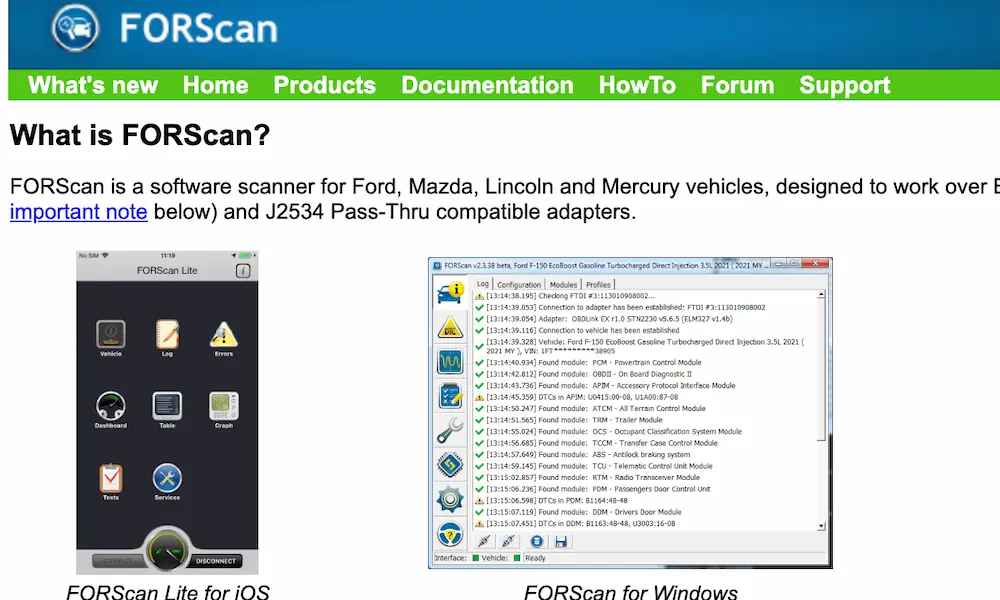
- Solenoid strategy identification for 6F and 10R series transmissions requires scan tool access
- Mismatched strategies can cause transmission damage or drivability issues
- Each solenoid features specific flow rates measured during manufacture
- Replacement valve bodies include new strategy tags ensuring proper system operation
Ford’s shift to strategy-based identification reflects the precision required in modern transmission control.
Common Ford Transmission Combinations by Vehicle
Understanding common pairings helps narrow your identification:
| Vehicle Model | Common Transmission Options |
|---|---|
| Mustang (1964-1973) | C4, C6, manual 3-speed |
| Mustang (1980-1993) | AOD, 5-speed manual |
| Mustang (1994-2004) | AODE/4R70W, T-5/T-45 manual |
| Mustang (2005-2010) | 5R55S, TR-3650 manual |
| Mustang (2011-2017) | 6R80, MT-82 manual |
| Mustang (2018+) | 10R80, MT-82 manual |
| F-150 (1980-1986) | C6, C4 (small engines) |
| F-150 (1987-1996) | E4OD (V8), C6 (some models), AOD |
| F-150 (1997-2004) | 4R70W, 4R100 (heavy duty) |
| F-150 (2005-2010) | 4R75E, 6R80 (later years) |
| F-150 (2011-2016) | 6R80 |
| F-150 (2017+) | 10R80 |
Using Multiple Methods for Confirmation
For foolproof transmission identification, use a combination of methods:
- Start with the VIN lookup and door jamb code
- Confirm with visual pan shape inspection if accessible
- Check transmission tags or stamps for final verification
- For modern vehicles, use electronic diagnostic tools to verify strategy codes
This multi-pronged approach ensures accurate identification across Ford’s extensive transmission lineup.
Ford Transmission Identification Resources
For additional research, these resources provide valuable information:
- Ford’s official support website offers VIN-based identification
- NHTSA.gov provides safety information and recall notices for specific transmissions
- Ford Technical Service Bulletins frequently address transmission identification issues
Whether you’re maintaining a classic Mustang with a C4 transmission or servicing a modern F-150 with a 10R80, proper identification is the foundation of successful transmission service. By using these methods, you’ll be able to confidently identify your Ford transmission, ensuring you get the right parts and service for your specific needs.