Wondering when to service your Honda Accord? Keeping up with your car’s maintenance needs doesn’t have to be complicated. Your Accord is designed to last for years—even hundreds of thousands of miles—but only with proper care. This guide breaks down exactly what your Honda needs and when, helping you avoid costly repairs and keep your car running smoothly for years to come.
Understanding Honda’s Maintenance Minder System
Gone are the days of guessing when your Honda needs service. Modern Honda Accords come equipped with the Maintenance Minder System, an intelligent monitoring system that tracks your actual driving conditions rather than relying on arbitrary time intervals.
The system watches several factors including:
- Your engine’s operating temperature
- How fast you drive and your driving patterns
- The temperature outside
- How much you use your car
- How hard your engine works
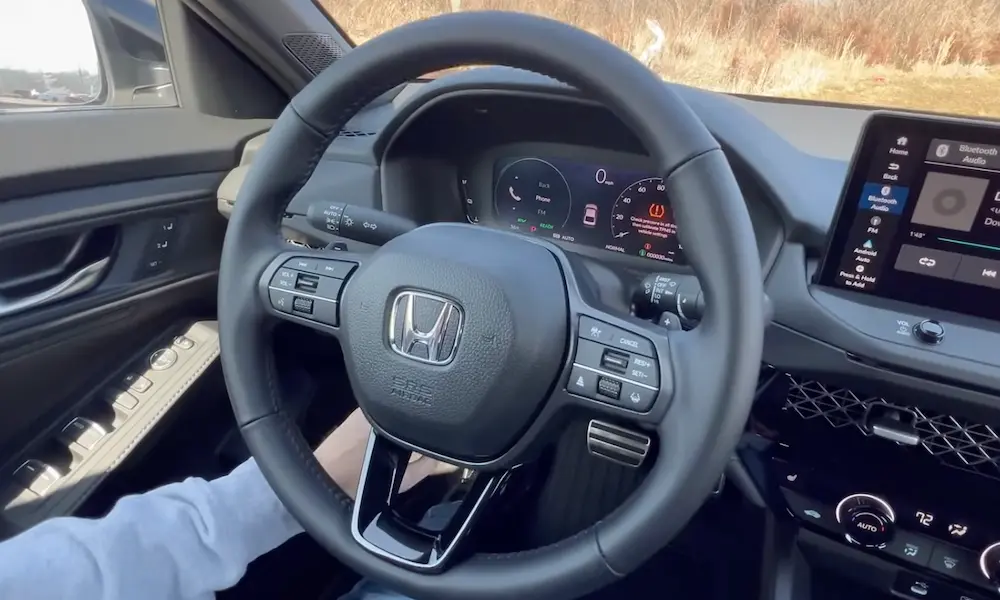
When it’s time for maintenance, you’ll see codes on your dashboard along with your oil life percentage. These aren’t random numbers—they’re your car telling you exactly what it needs.
Decoding Your Maintenance Minder Messages
Your Honda’s oil life indicator starts at 100% with fresh oil and counts down based on your driving habits. Here’s what the percentages mean:
- 100% – 40%: All good! Keep driving.
- 30% – 15%: Time to think about scheduling service soon.
- 15% – 5%: You’ll see a “Service Due Soon” message (yellow warning).
- 5% – 1%: “Service Due Now” message appears.
- 0% to -10%: You’re overdue—get service immediately!
The maintenance codes tell you exactly what services you need:
Main Codes
- Code A: Oil change required
- Code B: Oil and filter change, plus brake inspection
Sub-Codes
- Code 1: Tire rotation
- Code 2: Air filter, pollen filter replacement
- Code 3: Transmission fluid replacement
- Code 4: Spark plugs, timing belt service
- Code 5: Engine coolant replacement
- Code 6: Rear differential fluid (if equipped)
- Code 7: Brake fluid replacement
So if you see “A1” on your dashboard, that means you need an oil change and tire rotation. Simple!
Honda Accord Maintenance Schedule Breakdown
While the Maintenance Minder will guide you, here’s a general schedule of what to expect at different mileage points:
Every 7,500 Miles (Basic Service)
These services happen at 7,500, 22,500, 37,500, 52,500, 67,500, and 82,500 miles:
- Oil and filter change
- Tire rotation and pressure check
- Brake inspection
- Multi-point inspection
- Fluid level checks
Every 15,000 Miles (Enhanced Service)
At 15,000, 45,000, 75,000, and 105,000 miles, you’ll need:
- All 7,500-mile services
- Air filter replacement
- Transmission service inspection
- Comprehensive brake system check
- Chassis lubrication
- Wiper replacement (if needed)
- Steering and exhaust system inspection
Every 30,000 Miles (Major Service)
These major services happen at 30,000, 60,000, 90,000, and 120,000 miles:
- All 15,000-mile services
- PCV valve service
- Fuel system inspection
- Battery service and cable cleaning
- Differential oil service
- Complete lamp inspections
Oil Change Intervals: When to Change Your Honda’s Oil
Oil change recommendations have changed dramatically over the years. Here’s what Honda recommends for different Accord models:
| Model Year | Recommended Oil Change Interval | Oil Type |
|---|---|---|
| 2018-2024 | 7,500-10,000 miles | Synthetic |
| 2013-2017 | 7,500-10,000 miles | Synthetic |
| 2008-2012 | 7,500-10,000 miles | Synthetic |
| 2003-2007 | 5,000-7,500 miles | Conventional/Synthetic Blend |
| Pre-2003 | 3,000-5,000 miles | Conventional |
Most modern Accords use synthetic oil, which lasts longer and provides better protection. The Honda Maintenance Minder system will alert you when it’s time to change your oil based on your actual driving conditions, not just mileage.
Severe Driving Conditions: When Your Honda Needs Extra Care
Your maintenance schedule changes if you drive in “severe” conditions. According to Honda, severe driving includes:
- Short trips (less than 5 miles, or less than 10 miles in freezing weather)
- Driving in very hot weather (over 90°F)
- Excessive idling or stop-and-go traffic
- Towing or carrying heavy loads
- Driving in mountains
- Driving on muddy, dusty, or salted roads
If these conditions sound like your typical driving, you’ll need more frequent maintenance—including oil changes every 3,750 miles instead of the standard interval.
Timing Belt vs. Timing Chain: What Your Honda Accord Has
Whether your Accord has a timing belt or chain depends on the engine:
- V6 Engine Models: These use timing belts that need replacement every 60,000-100,000 miles or 7 years. When replacing the timing belt, it’s smart to replace the water pump too as preventive maintenance.
- 4-Cylinder Models: Most Honda Accord 4-cylinder engines use timing chains, which typically last much longer than belts and don’t require regular replacement.
Skipping timing belt replacement can lead to catastrophic engine damage, so this is one service you don’t want to postpone if your car has a belt.
Honda Accord Service Costs: What to Expect
Maintenance costs vary by service type and location, but here’s a general range of what to expect:
| Service Type | Estimated Cost Range |
|---|---|
| Oil Change | $50-$100 |
| Brake Service | $150-$400 per axle |
| Timing Belt Replacement | $500-$900 |
| Transmission Fluid Change | $100-$250 |
| Major Service (30K/60K/90K) | $300-$700 |
While these costs might seem significant, they’re much less than the repairs you’ll face if you skip regular maintenance. A well-maintained Accord can easily reach 200,000-300,000 miles with proper care.
DIY vs. Professional Honda Maintenance
Some maintenance tasks are perfect for DIY enthusiasts, while others require professional attention:
DIY-Friendly Tasks
- Oil and filter changes
- Air filter replacement
- Wiper blade replacement
- Battery checks and replacement
- Tire pressure monitoring and rotation
Tasks for Professionals
- Timing belt replacement
- Transmission service
- Major engine work
- Electrical system diagnostics
- Safety system calibration
Always use genuine Honda parts when possible, as they’re designed specifically for your vehicle and help maintain warranty coverage.
Keys to Honda Accord Longevity
Want your Honda to last? Follow these essential maintenance tips:
- Trust the Maintenance Minder – It’s designed specifically for your driving habits and conditions.
- Don’t delay recommended services – Putting off maintenance often leads to more expensive repairs later.
- Check fluids regularly – Even with the Maintenance Minder, you should check your oil level monthly.
- Keep records of all service – Detailed maintenance records boost resale value and help with warranty claims.
- Address small issues before they become big ones – That strange noise or warning light won’t fix itself!
Honda Service Schedules vs. Independent Shops
You have options when it comes to servicing your Honda:
Dealership Service Centers:
- Technicians specifically trained on Hondas
- Access to the latest Honda technical information
- Genuine Honda parts
- Can be more expensive than independent shops
Independent Shops:
- Often less expensive
- May offer more flexible scheduling
- Quality varies widely
- May use aftermarket parts
The National Highway Traffic Safety Administration reminds car owners that under federal law, you can have your vehicle serviced anywhere without affecting your warranty coverage.
Special Maintenance Considerations for Hybrid Accords
If you drive a Honda Accord Hybrid, your maintenance needs are slightly different:
- The hybrid battery doesn’t require regular maintenance but should be inspected during major services
- Regenerative braking means brake pads often last longer than in conventional cars
- Coolant systems require special attention as they cool both the engine and electric components
- The hybrid system performs a self-check each time you start the car
Your Honda hybrid’s Maintenance Minder is programmed to account for these differences.
Staying On Top of Honda Recalls and Service Bulletins
Even the most reliable cars occasionally have recalls or service bulletins. To stay informed:
- Register your vehicle with Honda to receive notifications
- Periodically check for recalls using your VIN at Honda’s recall website or the NHTSA website
- Address any recalls promptly—they’re fixed at no cost to you
How Honda’s Maintenance Schedule Compares to Competitors
Honda’s maintenance requirements are generally comparable to other Japanese manufacturers like Toyota and Mazda, but there are some differences:
- Honda’s Maintenance Minder is more personalized to your driving habits than many competitors
- Honda typically recommends longer intervals between major services than some American manufacturers
- Honda’s use of timing chains in 4-cylinder engines reduces maintenance compared to belt-equipped competitors
The Benefits of Following Honda’s Service Schedule
Sticking to your Honda Accord’s maintenance schedule offers several important benefits:
- Maximized fuel efficiency
- Reduced breakdown risk
- Lower long-term ownership costs
- Preserved resale value
- Extended vehicle lifespan
- Maintained warranty coverage
The small investment in regular maintenance pays off in your car’s reliability, longevity, and overall performance.
Winter and Summer Maintenance for Your Honda Accord
Your Honda needs special attention during extreme seasons:
Winter Preparation:
- Check battery strength (cold weather reduces battery power)
- Inspect tires for adequate tread
- Test heater and defrost systems
- Check antifreeze protection level
Summer Preparation:
- Ensure cooling system is in good condition
- Check A/C performance
- Inspect belts and hoses for cracks
- Test battery (heat is also hard on batteries)
Seasonal checks help prevent the most common weather-related breakdowns.
Tech Tools to Track Your Honda’s Maintenance
Several tools can help you stay on top of your Honda’s maintenance needs:
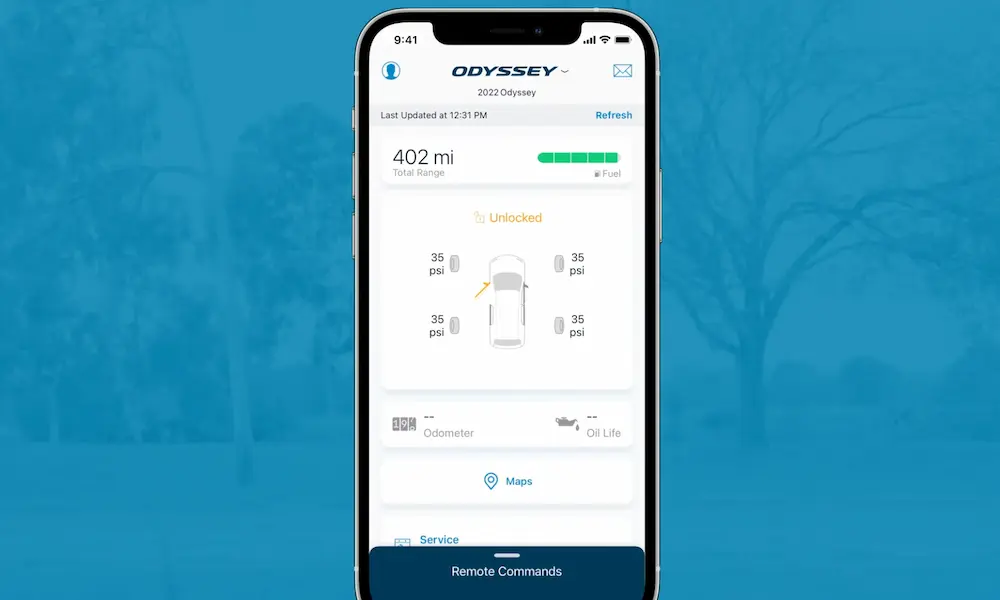
- The HondaLink app tracks service history and provides maintenance reminders
- Service reminder stickers from your mechanic
- Digital maintenance tracking apps like CarCareKiosk or CARFAX Car Care
- Simple spreadsheets or digital calendars with reminders
The best system is the one you’ll actually use consistently.