Your Honda dashboard just flashed a B12 code, and now you’re wondering if it’s serious or something you can ignore for a few more weeks. It’s more than a routine oil change reminder — it’s your car’s way of telling you it needs a proper checkup. Stick around, and you’ll know exactly what the Honda B12 service covers, what it costs, and whether you can handle any of it yourself.
What Is the Honda B12 Service?
The Honda B12 service is a multi-part maintenance alert generated by Honda’s Maintenance Minder system. It shows up on vehicles like the Civic, Accord, CR-V, and Pilot. The code isn’t random — it breaks down into three specific tasks:
- B = Oil/filter change + full mechanical inspection
- 1 = Tire rotation and condition check
- 2 = Replace engine and cabin air filters + inspect drive belt
Each part targets a different system in your car. Together, they cover the biggest wear items your Honda needs addressed at this point in its service life.
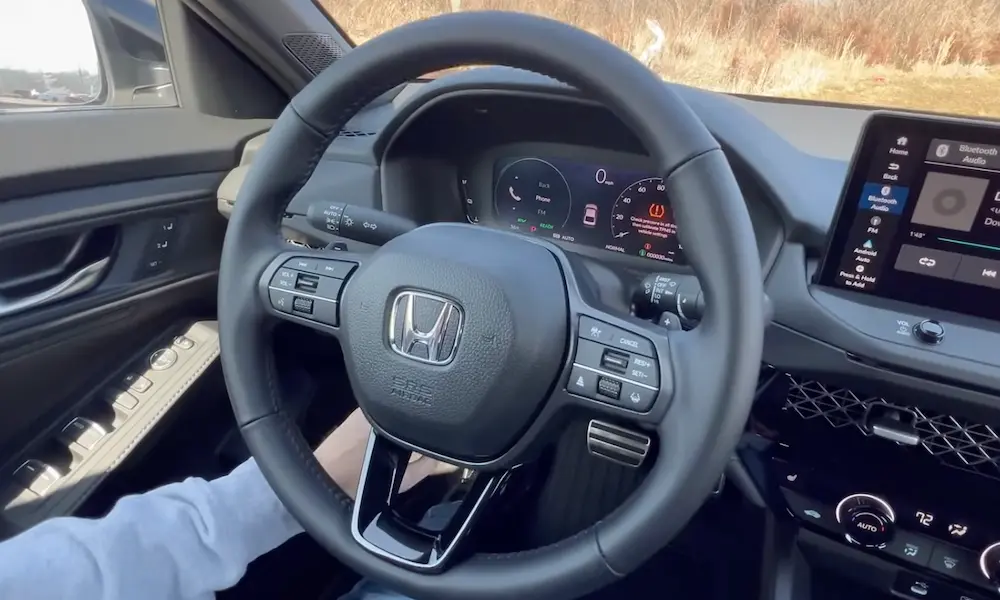
How Honda’s Maintenance Minder Actually Works
Forget the old “every 3,000 miles” rule. Honda’s Maintenance Minder is smarter than that. It tracks engine load, RPM, and operating temperature to calculate how fast your oil is actually degrading. If you’re highway driving in mild weather, your oil lasts longer. If you’re crawling through city traffic in the dead of winter, it burns through faster.
The system shows you an oil life percentage and triggers alerts at specific thresholds:
| Oil Life % | Alert Status | What You Should Do |
|---|---|---|
| 100% – 16% | No message | Normal range — no action needed |
| 15% | Maintenance Due Soon | Start scheduling your service |
| 5% | Maintenance Due Now | Get it in immediately |
| 0% | Past Due | Negative mileage counter appears — don’t wait any longer |
Once it hits zero, your oil’s protective additives are functionally gone. Driving on depleted oil accelerates wear on your engine’s bearings and journals. That’s an expensive problem you don’t want.
What the “B” Code Actually Covers
The B code is where the real work happens. It’s not just an oil change — it’s a comprehensive mechanical inspection that covers your car’s most important safety systems.
Oil and Filter Replacement
The oil filter traps metal shavings, carbon soot, and silica particles suspended in your oil. Once it’s saturated, its bypass valve can open and send dirty, unfiltered oil directly to your engine’s precision components. That’s why both the oil and filter get replaced together during every B service — fresh oil through a clogged filter defeats the purpose.
Most Honda engines (including the 1.5L turbo and 2.0L naturally aspirated) use 0W-20 or 5W-20 full synthetic oil that meets API certification standards.
Brake System Inspection
Technicians measure pad thickness and rotor condition against Honda’s safety specifications. In areas with road salt, they also check the brake caliper slide pins for corrosion — a corroded pin causes the brakes to drag and wear unevenly. The parking brake also gets checked to confirm it holds the car securely on a slope.
Steering and Suspension Check
This part catches problems before you feel them. Technicians look for play in the tie rod ends, check the steering gearbox, and inspect ball joints and bushings for rubber deterioration or grease leaks. Worn suspension components affect your handling and stability — you often won’t notice until something fails.
CV Boots and Exhaust Inspection
Split CV boots let grease escape and let road grit in, which destroys the joint quickly. The exhaust gets checked for leaks too — not just for noise, but because exhaust leaks can throw off your oxygen sensors and mess with your fuel trim, and in worst cases, allow carbon monoxide into the cabin.
Fluid Level and Condition Check
Every secondary fluid gets eyeballed: coolant, transmission fluid, brake fluid, and rear differential fluid on AWD models. Discoloration in these fluids is an early warning sign — dark brake fluid means moisture absorption, cloudy coolant could mean oil contamination.
Sub-Item 1: Tire Rotation and Inspection
The “1” in B12 means your tires need rotating and a full condition check. On front-wheel-drive Hondas, the front tires handle power delivery, most of the braking, and all steering inputs. They wear significantly faster than the rears — especially on the outer shoulders.
Rotating them extends overall tire life and keeps your ABS and VSA systems working as intended. A full tire inspection covers more than just tread depth:
| Inspection Point | What to Check | Why It Matters |
|---|---|---|
| Inflation Pressure | Match the door placard (usually 32–35 PSI) | Optimizes fuel economy and prevents sidewall heat buildup |
| Tread Depth | Measure in 32nds of an inch | Determines hydroplaning resistance and winter grip |
| Wear Pattern | Look for cupping or feathering | Flags alignment or suspension issues early |
| Sidewall Condition | Check for bulges, cuts, or cracks | Prevents high-speed blowouts |
Lug nuts go back on in a star pattern and torqued to 80–94 ft-lbs depending on your model. Skip that sequence and you risk warped rotors or a loose wheel.
Sub-Item 2: Air Filters and Drive Belt
The “2” covers your car’s “breathing” systems and the belt that keeps everything running.
Engine Air Filter
Your engine needs a massive volume of clean air for efficient combustion. A clogged filter creates a pressure drop in the intake — the engine works harder, uses more fuel, and in severe cases, lets fine dust act as an abrasive inside the cylinders. That leads to oil consumption and lost compression over time.
In dusty environments like construction sites, the replacement interval drops from around 30,000 miles to 15,000 miles.
Cabin Air Filter
The cabin filter keeps pollen, mold spores, soot, and dust out of your interior. It also protects your HVAC blower motor and evaporator core from debris buildup. A blocked or moldy evaporator is an expensive fix — replacing a $25 cabin filter is the far smarter move.
Drive Belt Inspection
The serpentine belt drives your alternator, water pump, power steering pump, and A/C compressor — all from one continuous loop. If it snaps, the water pump stops immediately and your engine overheats within minutes.
During the B12 service, technicians check for these specific failure signs:
| Failure Mode | What It Looks Like | What It Means |
|---|---|---|
| Rib Cracking | Cracks running across the ribs | High-temp stress; 3+ cracks in 3 inches means 80% life depleted |
| Glazing | Shiny, hardened belt surface | Slippage-caused friction; reduces power transfer |
| Chunk-Out | Missing rubber segments | Failure is imminent — replace immediately |
| Pilling | Balled-up rubber in the grooves | Noise and vibration; often signals a worn pulley |
| Gravel Penetration | Pinholes or embedded grit on the back | Can cause cord separation and belt tearing |
Honda B12 Service Cost: Dealer vs. Independent Shop vs. DIY
Your options range from full-service convenience to roll-up-your-sleeves savings. Here’s how they break down:
Dealership: Expect to pay $200–$400 for the full B12 service. You get factory-trained techs, OEM parts, and a service record that shows up across Honda dealerships — useful for warranty claims and resale value.
Independent Shop: A good independent shop typically runs 20–40% less than a dealer. Many use genuine Honda fluids and parts. Ask for a detailed inspection checklist to confirm the full B-service scope was completed.
DIY: If you’re comfortable turning wrenches, the air filters and oil change are straightforward. Here’s what genuine Honda parts cost:
| Component | Part Number | Estimated Cost |
|---|---|---|
| Oil Filter | 15400-PLM-A02 | $7.87 – $9.36 |
| Engine Air Filter (Civic/CR-V) | 17220-6MA-J01 | $24.81 – $32.62 |
| Cabin Air Filter | 80291-TF3-E01 | $21.57 – $29.25 |
| Drain Plug Washer | 94109-14000 | ~$0.50 – $1.00 |
| 0W-20 Full Synthetic Oil (5 qt) | N/A | $30.00 – $45.00 |
DIY total lands around $80–$120 vs. $300+ at a dealer. That said, the B service includes a detailed inspection of your brakes, suspension, and CV boots. If you skip those checks, you’re only doing half the job.
Normal vs. Severe Driving: Does It Change Your Schedule?
Honda defines severe driving as stop-and-go traffic, frequent short trips under 5 miles, extreme temperatures, towing, or driving in dusty or mountainous areas. Under these conditions, your Maintenance Minder counts down oil life faster.
| Maintenance Task | Normal Conditions | Severe Conditions |
|---|---|---|
| Engine Oil & Filter | Every 7,500–10,000 miles | Every 3,750 miles or 6 months |
| Air Filters | ~30,000 miles | 15,000 miles in dusty areas |
| Transmission Fluid | 30,000–45,000 miles | 30,000 miles in mountain terrain |
| Brake Fluid | Every 3 years | Every 3 years |
Short trips are particularly hard on oil because the engine never reaches a full operating temperature. Water and unburned fuel build up in the crankcase, which speeds up oxidation and sludge formation.
Your Warranty and the Magnuson-Moss Act
Here’s something many Honda owners don’t know: the Magnuson-Moss Warranty Act lets you service your car at an independent shop — or even do it yourself — without voiding your manufacturer’s warranty. Honda can’t require you to use their dealership for routine maintenance.
The catch? You need to prove the work was done correctly. Keep receipts for parts and fluids, log the date and mileage, and note which inspections you completed. That paper trail protects you if a warranty dispute comes up later.
How the B12 Service Protects Your Honda Long-Term
Consistent B12 service is one of the biggest reasons Hondas regularly reach 200,000 miles and beyond. A documented service history also directly affects resale value — used Honda buyers actively look for Maintenance Minder records because they signal the car was looked after, not just driven.
Skipping or delaying the B12 service doesn’t just risk engine wear. It means your brakes, suspension, CV joints, and drive belt go unchecked — and those systems don’t announce failures politely. They just fail.
The B12 code is your Honda’s way of asking for a thorough checkup. Treat it that way, and it’ll keep running the way Honda intended.