Confused about what your Honda warranty actually covers? You’re not the first person to stare blankly at that booklet in the glove box. This guide breaks down every layer of Honda warranty coverage in plain English — from the factory basics to extended plans and the stuff that can void your coverage entirely. Stick around, because some of this will genuinely surprise you.
What Honda’s New Vehicle Warranty Actually Covers
Every new Honda sold in the U.S. starts with a 3-year/36,000-mile bumper-to-bumper warranty. Honda calls it the New Vehicle Limited Warranty, but think of it as your all-inclusive safety net during those first few years.
This covers:
- Electronics and sensors
- Air conditioning and heating systems
- Control modules
- Your 12-volt battery (yes, the whole 3 years — not a shorter window like some brands offer)
After that, your powertrain warranty kicks in for 5 years or 60,000 miles. That covers the engine, transmission, drive axles, CV joints, and hub bearings. It’s the protection that matters most long-term, since those are the most expensive repairs you’ll ever face.
The Seat Belt Warranty Nobody Talks About
Here’s one that shocks most Honda owners: your seat belts carry a 15-year or 150,000-mile warranty. That includes the retractors and latching mechanisms. Honda’s logic is simple — safety systems should work for the life of the car, not just the warranty period.
| Warranty Category | Duration | Miles | What It Covers |
|---|---|---|---|
| New Vehicle Limited | 3 years | 36,000 | Electronics, A/C, 12V battery, sensors |
| Powertrain Limited | 5 years | 60,000 | Engine, transmission, drivetrain |
| Seat Belt Limited | 15 years | 150,000 | Seat belt assemblies and retractors |
| Rust Perforation | 5 years | Unlimited | Inside-out body panel corrosion |
| Roadside Assistance | 3 years | 36,000 | Towing, lockouts, jump-starts, fuel |
Honda EV and Hybrid Battery Warranty: What’s the Deal?
Honda warranty coverage for electric and hybrid vehicles works differently — and it should, because high-voltage batteries are a completely different beast.
Hybrid Models
For hybrid Hondas, the Hybrid Powertrain Warranty covers Integrated Motor Assist systems and two-motor hybrid setups. This includes regenerative braking hardware, electric torque components, and power management electronics.
EV Battery Degradation Coverage
The big question with any EV is: “What happens when the battery loses capacity?” Honda answers that with an 8-year or 100,000-mile high-voltage battery warranty.
For the Honda Prologue specifically, Honda sets a clear line in the sand: if your battery drops below 75% of its original capacity during that window, Honda will repair or replace it. That’s a concrete, measurable standard — not vague language.
Worth noting: extreme temperatures, neglect, and improper charging habits can accelerate degradation. Those situations aren’t covered, so treat your battery right.
Federal and California Emissions Warranties: Yes, These Apply to You
Most Honda owners don’t realize their car comes with a federally mandated emissions warranty. Under Clean Air Act requirements, manufacturers must warrant three major emissions components for 8 years or 80,000 miles:
- Catalytic converter
- Engine/powertrain control module (ECU/PCM)
- Onboard emissions diagnostic device (OBD)
Everything else in the emissions system gets 2 years or 24,000 miles of coverage under federal rules.
Living in California? You Get More
If you’re in California — or one of the states that follows California’s stricter standards — your emissions coverage is significantly broader. That means expanded coverage for fuel injection components, evaporative systems, and more, often up to 7 years or 70,000 miles for specific high-cost parts.
| Emissions Component | Federal Coverage | California Coverage |
|---|---|---|
| Catalytic Converter | 8 yr / 80k mi | 8 yr / 80k mi (often expanded) |
| Engine Control Module | 8 yr / 80k mi | 7 yr / 70k mi (specific terms) |
| OBD System | 8 yr / 80k mi | Expanded |
| Fuel Injection System | 2 yr / 24k mi | Broader coverage |
| Evaporative System | 2 yr / 24k mi | Broader coverage |
HondaTrue Certified Pre-Owned: Buying Used With a Safety Net
Shopping for a used Honda? The HondaTrue Certified Pre-Owned program comes in three tiers — and understanding the difference can save you real money.
HondaTrue Certified+
This is the top shelf. Vehicles under 2 model years old with fewer than 12,000 miles qualify. You get:
- Non-powertrain coverage: 5 years or 86,000 miles from original sale date
- Powertrain coverage: 7 years or 100,000 miles
That’s nearly new-car level protection on a used vehicle.
HondaTrue Certified
Covers vehicles up to 6 model years old with under 80,000 miles. Powertrain coverage stays strong at 7 years or 100,000 miles. For non-powertrain components, coverage depends on where the vehicle sits in its original warranty:
- Still within original warranty? Extended to 4 years or 48,000 miles
- Original warranty expired? You get 1 year or 12,000 miles from purchase
HondaTrue Used
This tier covers vehicles up to 10 years old with no mileage cap. You get 100 days or 5,000 miles of coverage on both powertrain and non-powertrain parts, plus a 182-point inspection. It’s a short window, but it catches any immediate issues right after purchase.
The Maintenance Minder System and Honda Service Pass
Skipping scheduled maintenance is the fastest way to kill a warranty claim. Honda built the Maintenance Minder system specifically to remove the guesswork.
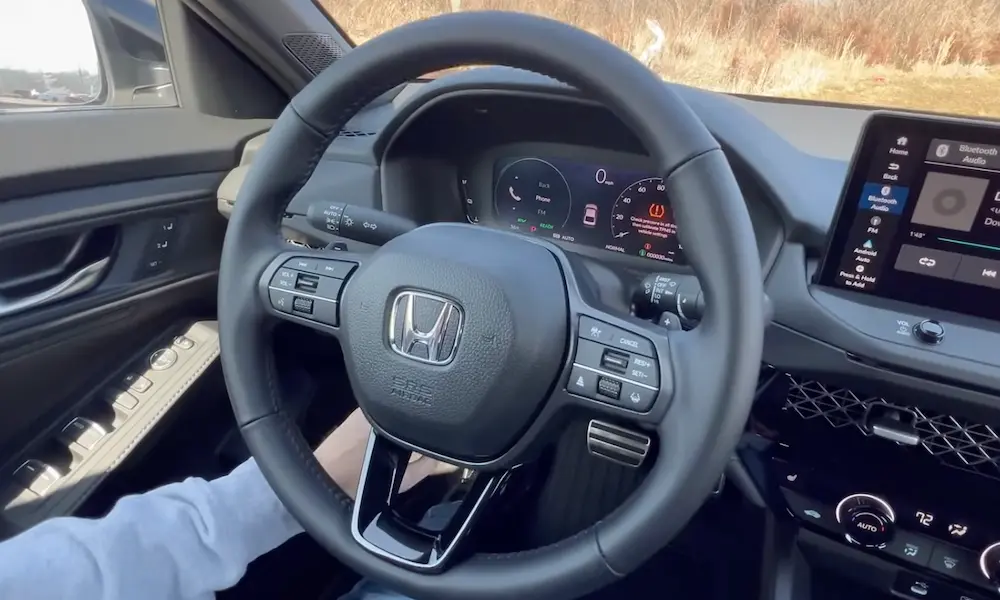
Instead of a fixed mileage schedule, your Honda monitors engine speed, temperature, and driving duration to calculate actual service needs. When it’s time, your dashboard shows an alphanumeric code:
- Code A — Oil change needed
- Code B — Oil, filter, brake inspection, suspension and steering check
- Sub-codes 1–9 — Tire rotation (1), air filter (2), transmission fluid (3), and more
If a mechanical failure happens and Honda can prove you ignored a Maintenance Minder alert, your claim can be denied on grounds of neglect. Keep those records.
Honda Service Pass: Free Maintenance Built In
New Hondas include the Honda Service Pass for complimentary scheduled maintenance. The terms:
- 2023–2024 models: 2 years or 24,000 miles
- 2025+ models: 1 year or 12,000 miles
This covers oil and filter changes, tire rotations, and multi-point inspections. It transfers to the next owner automatically — no extra cost — which makes it a nice selling point down the road.
Honda Care Extended Protection: Your Options After the Factory Warranty
Once your factory Honda warranty coverage winds down, Honda Care steps in as the official extended protection option. Because it’s backed by American Honda directly, repairs happen at Honda dealerships using genuine parts. That matters more than it sounds — third-party warranties often push aftermarket parts that may not meet factory specs.
Honda Care Plans Compared
Honda Care VSC (Vehicle Service Contract)
The most comprehensive option. It’s exclusionary coverage, meaning everything is covered unless it’s specifically listed as excluded. Terms go up to 8 years or 120,000 miles. This includes the engine, transmission, brakes, ABS, navigation, and security systems.
Honda Care Maintenance
A prepaid service plan that locks in current labor rates for future Maintenance Minder services. If labor rates go up (and they will), you’ve already paid yesterday’s prices.
Honda Care Sentinel
This plan adds Road Hazard Tire Protection on top of mechanical coverage. If a nail or piece of road debris takes out a tire, Honda covers repair or prorated replacement. It typically includes regular oil changes too.
All Honda Care contracts transfer between private owners, which adds tangible resale value.
Roadside Assistance: What You Get and For How Long
Your Honda warranty coverage includes 24-hour roadside assistance for the full 3 years or 36,000 miles of the base warranty. It covers the contiguous U.S., Alaska, Hawaii, Puerto Rico, and Canada.
Services include:
- Emergency towing to the nearest Honda dealer
- Lockout assistance for lost or locked-in keys
- Battery jump-starts for a dead 12-volt battery
- Flat tire changes using your spare
- Fuel delivery — up to 2 gallons, twice per year
Trip Interruption Benefits
Break down more than 100 miles from home? Honda reimburses up to $100 per day for 3 days for food and lodging. The concierge service also handles hotel reservations, airline information, and can relay messages to family or your employer. It’s a small detail that makes a real difference when you’re stranded.
Parts, Accessories, and Some Surprisingly Long Guarantees
Accessories: Timing Is Everything
Genuine Honda accessories installed at purchase get the full 3 years or 36,000 miles of coverage. Accessories added after delivery? Just 1 year. More importantly, non-genuine accessories that cause damage to factory systems can result in denied claims for those affected parts.
The 100-Month Replacement Battery Warranty
Buy a replacement 12-volt battery from a Honda dealer, and you get a 100-month (8 years, 4 months) limited warranty. The first 36 months cover full replacement including labor. After that, you get a prorated credit toward a new battery based on how old the failed unit is.
Lifetime Exhaust Warranty
Muffler, A-pipe, B-pipe — if Honda originally sold and installed them, those components carry a Lifetime Limited Warranty for as long as you own the vehicle. This is especially valuable if you live somewhere that uses road salt, since exhaust systems corrode fast in those conditions.
What Actually Voids Your Honda Warranty
Knowing your coverage matters — but knowing what removes it matters just as much.
The Two Hard Stops
Salvage title: If your car is totaled and branded with a salvage title, the manufacturer’s warranty is gone entirely. The structural integrity can’t be guaranteed after a total-loss event.
Odometer tampering: Because warranty terms are mileage-based, Honda can’t honor a contract when accurate mileage can’t be verified. Rollback or disconnection voids coverage completely.
Misuse and Modifications
These activities can result in denied claims for the related systems:
- Track or racing use — Any competitive driving voids coverage for involved mechanical components
- Off-road use — Using a non-off-road vehicle in terrain it wasn’t designed for
- Overloading or excessive towing — Exceeding owner’s manual weight specs
- Natural disasters — Flood, fire, or earthquake damage goes to your auto insurance, not Honda
On modifications: the Magnuson-Moss Warranty Act protects you somewhat here. Honda can’t void your entire warranty because you added an aftermarket part. But they can deny a specific claim if that part caused the failure. Install a performance tune that blows the engine, and Honda can deny that engine claim while leaving the rest of your coverage intact.
How Honda Warranty Coverage Transfers When You Sell
One of Honda warranty coverage’s best features is that it follows the VIN, not the owner. The factory warranty and Honda Service Pass transfer automatically to the next buyer at no cost. Honda Care service contracts are also transferable between private parties.
This makes a Honda with remaining warranty or an active Honda Care plan meaningfully more attractive on the used market. If you’re selling, document your service history and highlight whatever coverage remains — it’s a real selling point that buyers will pay for.