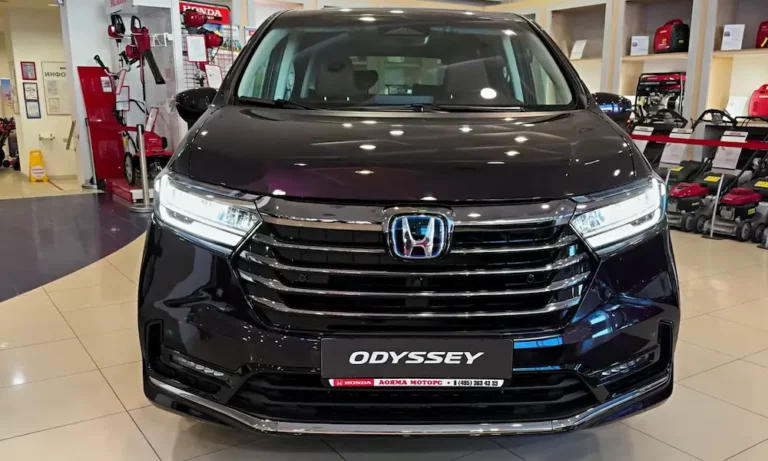
Does your Honda Odyssey burn through oil faster than it should? Experiencing rough idling, misfires, or strange vibrations at highway speeds? Your van’s Variable Cylinder Management (VCM) system might be the culprit. While designed to improve fuel economy, this technology has caused significant problems for many Odyssey owners. Let’s dive into why disabling VCM might be the best decision for your vehicle’s long-term health.
What Is Variable Cylinder Management in the Honda Odyssey?
Honda’s Variable Cylinder Management is an engine technology that selectively deactivates cylinders when full power isn’t needed. When cruising on the highway or under light acceleration, VCM shuts down 2-3 cylinders to save fuel and reduce emissions.
The system uses solenoids to unlock cam followers from their rockers, keeping the valves closed in the deactivated cylinders. When you need full power, all cylinders reactivate. You’ll know when VCM is operating because the “ECO” light illuminates on your dashboard.
VCM Evolution in Honda Odyssey Models
Honda has implemented several versions of VCM in the Odyssey:
| Model Years | VCM Version | Cylinders Deactivated | Known Issues |
|---|---|---|---|
| 2005-2010 (EX-L/Touring) | VCM-1 | 3 cylinders (rear bank) | Oil consumption, misfires |
| 2008-2013 | VCM-2 | 3 or 2 cylinders | Most problematic, subject to lawsuits |
| 2011-Present | VCM-3 | 3 cylinders | Less aggressive, but still problematic |
| 2025+ (potential) | VCM-4 | Unknown | Newest iteration |
While Honda claims the system operates seamlessly, many owners report noticeable jolts or vibrations when VCM engages or disengages, typically between 35-55 mph.
Common Problems Caused by VCM in the Honda Odyssey
The VCM system, particularly in 2008-2013 models, has been linked to several serious issues:
Excessive Oil Consumption
The most common complaint is abnormal oil consumption—sometimes a quart every 1,000 miles. This happens because when cylinders deactivate, they can create a vacuum that pulls oil past the piston rings. This not only requires constant oil level monitoring but can lead to more severe engine damage if left unchecked.
Engine Misfires and Rough Operation
As oil gets pulled into the cylinders, it can foul spark plugs, leading to misfires. This manifests as:
- Rough idling
- Hesitation during acceleration
- Check engine light activation
- Sputtering or stalling
Premature Component Failure
The constant switching between cylinder modes creates unusual stresses on several components:
- Engine Mounts: The vibration and shifting loads wear out engine mounts prematurely
- Piston Rings: Oil contamination can cause rings to stick or wear
- Catalytic Converters: Oil burning can damage expensive catalytic converters
- Transmission Torque Converters: VCM operation can contribute to torque converter shudder
Legal Actions and Honda’s Response
The problems with VCM were so widespread that they led to a class-action lawsuit against Honda. The case, Soto, et al. v. Honda Motor Co. Inc., alleged that Honda manufactured over 1.5 million vehicles with defective VCM-equipped engines.
Although Honda denied wrongdoing, they settled the lawsuit in 2014. This settlement included:
- Reimbursement for certain repair costs
- Warranty extensions for engine misfire repairs (8 years from purchase)
More recently, Honda extended warranties on 2013-2017 Odysseys to cover engine misfire repairs for 10 years/150,000 miles.
How to Disable VCM in Your Honda Odyssey
Disabling VCM has become a popular solution among Odyssey owners. The process works by manipulating the engine coolant temperature (ECT) sensor signal, “tricking” the ECU into believing the engine hasn’t reached operating temperature for VCM activation.
VCM Disabler Options
Three main types of VCM disablers are available:
1. Basic Resistor Solutions ($10-15)
- Simple fixed-resistance devices
- Inexpensive but less adaptable to temperature changes
- May cause temperature gauge inaccuracies
- Often found on eBay or Amazon
2. Adjustable Resistor Solutions ($30-60)
- Allow manual adjustment via dial
- Can be tuned for different seasons
- Better temperature gauge accuracy
- Original VCMTuner falls in this category
3. Microcontroller-Based Solutions ($70-145)
- Dynamically adjust resistance based on conditions
- Maintain accurate temperature readings
- Include safety features (reactivate VCM if engine overheats)
- Higher quality construction
- Examples include VCMTuner II and S-VCM
Installation Process
Installing a VCM disabler is usually straightforward:
- Locate the coolant temperature sensor (typically ECT1)
- Disconnect the wiring harness from the sensor
- Connect the VCM disabler between the sensor and vehicle harness
- Secure wiring away from hot or moving parts
Most installations take 5-15 minutes and require minimal tools. For best results, install when the engine is cold.
Benefits of Disabling VCM in Your Honda Odyssey
Owners who disable VCM consistently report several significant improvements:
Reduced Oil Consumption
By preventing the vacuum condition that pulls oil past piston rings, VCM disablers effectively reduce or eliminate excessive oil burning. This directly addresses one of the most common and costly issues.
Eliminated Engine Misfires
With less oil contamination, spark plugs stay cleaner longer. This prevents misfires and rough running conditions, improving overall drivability.
Smoother Operation
The elimination of that transition “jolt” when cylinders activate or deactivate results in a noticeably smoother driving experience. Many owners describe the difference as significant and immediately apparent.
Extended Component Life
With normal cylinder operation restored, the abnormal stresses on engine mounts, piston rings, and transmission components are eliminated, potentially saving thousands in repair costs.
Potential for Restored Engine Health
If caught early enough, disabling VCM can reverse some existing damage. Many owners report that oil consumption issues improve or resolve completely after installation.
Potential Drawbacks to Consider
While the benefits are substantial, there are a few minor drawbacks:
Slight Reduction in Fuel Economy
Most owners report a modest decrease in fuel economy, typically around 1 MPG on the highway, with minimal impact on city driving. Considering the potential repair costs avoided, this slight efficiency loss is widely considered a worthwhile trade-off.
Warranty Considerations
While aftermarket modifications can potentially affect warranty coverage, Honda must prove that the VCM disabler directly caused a specific failure to deny coverage. Many owners simply remove the device before dealer visits to avoid potential issues.
Temperature Gauge Reading
With basic resistor-type disablers, you might notice your temperature gauge reading slightly lower than normal. More advanced microcontroller-based units minimize or eliminate this issue.
Is Disabling VCM Right for Your Honda Odyssey?
The decision to disable VCM should be based on several factors:
High-Risk Models
If you own a 2008-2013 Odyssey with VCM-2, the documented risks are highest, and proactive disablement is strongly recommended by most owners and many independent mechanics.
Symptom Assessment
If you’re experiencing any of these symptoms, disabling VCM could provide immediate benefits:
- Excessive oil consumption
- Check engine light with misfire codes
- Rough idle or hesitation
- Vibration or shudder at highway speeds
- Premature engine mount failure
Preventative Approach
Even if your vehicle isn’t showing symptoms yet, many owners of VCM-equipped Odysseys choose to disable the system preventatively. This is particularly common for those who plan to keep their vehicle long-term.
Additional Maintenance Recommendations
Along with disabling VCM, consider these maintenance practices:
Regular Oil Changes
Maintain a consistent oil change schedule, ideally every 5,000 miles or less, especially if your vehicle has previously experienced oil consumption.
Spark Plug Inspection
If your Odyssey has been running with active VCM, consider inspecting and possibly replacing spark plugs, as they may have oil fouling.
Engine Mount Inspection
Have your engine mounts checked for wear or damage, as they’re commonly affected by VCM operation.
Transmission Fluid Service
If experiencing transmission-related issues, consider performing multiple drain and fills of the automatic transmission fluid using Honda DW-1 fluid.
Real World Experience
Thousands of Honda Odyssey owners have disabled VCM with overwhelmingly positive results. Here’s what the owner community reports:
- Immediate improvement in driving smoothness
- Reduced or eliminated oil consumption
- Prevention of further engine damage
- Improved overall reliability
- Minimal fuel economy impact
Making the Right Choice for Your Odyssey
Honda’s Variable Cylinder Management, while well-intentioned for fuel economy, has proven problematic in real-world application. The potential for expensive repairs and shortened engine life has led many informed owners to disable the system.
If you value long-term reliability and want to avoid the common issues associated with VCM, installing a quality VCM disabler is a relatively simple and effective solution. The small compromise in fuel economy is far outweighed by the improved driving experience and reduced risk of costly repairs.
For most Odyssey owners, especially those with 2008-2013 models, disabling VCM isn’t just an option—it’s considered essential preventative maintenance for anyone planning to keep their vehicle beyond the warranty period.