Your Honda Pilot is acting up — slipping gears, shuddering at highway speed, or just refusing to cooperate — and you need real answers fast. This guide breaks down every major Honda Pilot transmission problem by generation, tells you which model years to avoid, and shows you exactly what to do to protect your investment. Stick around — the maintenance section alone could save you thousands.
The Honda Pilot’s Transmission History Isn’t Pretty
Let’s be honest: the Honda Pilot has a complicated relationship with its transmissions. Since the first model rolled off the line in 2002, every generation has dealt with its own brand of drivetrain drama — from catastrophic meltdowns in the early 2000s to software glitches in brand-new 2025 models.
The good news? Most of these Honda Pilot transmission problems are well-documented, and many are fixable — or avoidable entirely — if you know what to look for.
First-Generation Pilot (2003–2008): Where the Trouble Started
The 2003 Model Year Was a Mechanical Disaster
No generation suffered more than the original. The 2003 Honda Pilot sits at the top of the “worst years” list — and it earned that spot. The five-speed automatic transmission in these early models regularly died around 100,000 miles due to internal heat damage.
According to CarBuzz’s reliability analysis, the 2003 model saw some of the highest rates of catastrophic transmission failure in the Pilot’s entire history. The heat would destroy internal components, causing gears to slip — and in the worst cases, the transmission would drop into first gear at highway speeds, which is as dangerous as it sounds.
The average cost to fix this? Around $3,470 for a rebuild or replacement. Honda eventually issued a recall focused on oil cooler return line modifications to cut down on overheating.
2005: The “Pink Milkshake” Problem
The 2005 Pilot introduced a nastier failure: the radiator’s internal transmission fluid cooler cracked, mixing automatic transmission fluid (ATF) and engine coolant together. Mechanics called the result the “pink milkshake” — a contaminated blend that destroyed clutch friction materials and wrecked the cooling system simultaneously.
Fixing this mess meant replacing the radiator and rebuilding the transmission. Total costs often topped $5,000.
| Model Year | Transmission Type | Primary Failure | Reliability Status |
|---|---|---|---|
| 2003 | 5-Speed Automatic | Internal heat destruction | Critical |
| 2004 | 5-Speed Automatic | Gear slipping and power loss | Poor |
| 2005 | 5-Speed Automatic | Radiator/ATF contamination | Poor |
| 2006–2008 | 5-Speed Automatic | Harsh shifting (improved over 2003) | Average |
By 2008, Honda had ironed out most of these early kinks. The final first-gen model year is actually one of the better used-car options from this era.
Second-Generation Pilot (2009–2015): The VCM and Shudder Era
The second generation brought a truck-inspired redesign and a troublesome new system: Variable Cylinder Management (VCM). VCM deactivates half the engine’s cylinders to save fuel — and that decision came with serious long-term costs.
What Is Torque Converter Judder?
Owners of 2009–2015 Pilots kept reporting a shuddering or vibrating sensation between 20 and 60 mph. It felt mechanical, but Honda’s engineering analysis traced it back to fluid degradation — not a broken part.
Here’s why it happens: VCM forces the torque converter to run in a “partial lock-up” mode to absorb the extra vibrations from a three-cylinder engine. That partial engagement creates friction and heat, which oxidizes the ATF rapidly. Once the fluid breaks down, the lock-up clutch starts a “stick-slip” cycle — which is exactly what that judder feels like.
How VCM Damages More Than Just Fluid
VCM’s impact doesn’t stop at the transmission fluid. According to the Honda Pilot Reddit community, the system also stresses:
- Piston rings — Deactivated cylinders cause oil blow-by, leading to oil consumption and fouled spark plugs
- Motor mounts — The Active Control Engine Mounts fight constant vibrations, causing premature failure
- Drivetrain feel — That choppy 20–40 mph sensation many Pilot owners complain about
The VCM Muzzler Fix
A popular aftermarket fix called the VCM Muzzler (or VCM Tuner) plugs into the coolant temperature sensor and tricks the ECU into keeping the engine in full V6 mode at all times. You’ll lose maybe 0.5–1.0 MPG, but you eliminate the heat cycles that destroy your fluid, torque converter, and mounts. Many long-term Pilot owners swear it’s worth it.
2012–2015: The Sweet Spot
Honda pushed software updates and revised maintenance schedules to address judder in this era. By 2012, most of the early bugs were sorted. Model years 2012, 2014, and 2015 consistently score as the most reliable second-gen options, with high owner satisfaction and fewer mechanical surprises.
Third-Generation Pilot (2016–2022): Two Transmissions, Double the Trouble
2016 Was a Step Backward
The 2016 redesign introduced two transmissions: a Honda-built six-speed for lower trims and a ZF-sourced nine-speed for top-tier trims. Unfortunately, 2016 became one of the most problematic years in the model’s history.
Six-speed owners dealt with the familiar torque converter judder returning. Nine-speed owners faced something different — and worse.
The ZF 9-Speed: Ambitious and Flawed
The ZF nine-speed was a genuinely advanced piece of engineering, but its real-world execution in the Pilot fell short. Two major problems dominated:
1. The wiring harness defect. A manufacturing flaw in the transmission’s wiring harness — specifically, under-crimped connections — caused high electrical resistance. This made the transmission unexpectedly shift into Neutral while driving. NHTSA issued Recall 16V-614 to address this, covering hundreds of thousands of vehicles across Honda and Acura models. The fix was a software update that triggers a “limp home” mode instead of a sudden neutral drop.
2. Drive-to-Reverse lag. Nine-speed Pilot owners reported a 3–4 second pause when shifting from Drive to Reverse. Honda eventually addressed this with a software recalibration in the 2019 refresh, but early owners were stuck with it.
| Component | Architecture | Notable Defect | Fix Applied |
|---|---|---|---|
| 6-Speed (Honda) | Traditional Planetary | Torque converter fluid degradation | TSB 23-078 – Software update + fluid flush |
| 9-Speed (ZF) | Dog-Clutch / Planetary | Wiring harness crimp defect | NHTSA Recall 16V-614 |
| 9-Speed (ZF) | Dog-Clutch / Planetary | Drive-to-Reverse lag | Software recalibration (2019+) |
By 2021–2022, Honda had stabilized most of the nine-speed’s issues. These two years represent the best of the third generation.
TSB 23-078: Honda’s Official Judder Fix
If you own a 2016–2019 Pilot with the six-speed, this Technical Service Bulletin matters to you. TSB 23-078 acknowledges that the torque converter judder comes from degraded fluid — not a mechanical failure — and the fix involves two steps:
- A software update to better manage ATF temperatures
- A triple drain-and-fill of the transmission fluid
Honda even extended the warranty on this specific issue to 8 years or 80,000 miles. If you’ve already paid out of pocket for this repair, you may be eligible for reimbursement — keep your service records.
Fourth-Generation Pilot (2023–2025): Honda’s Fresh Start
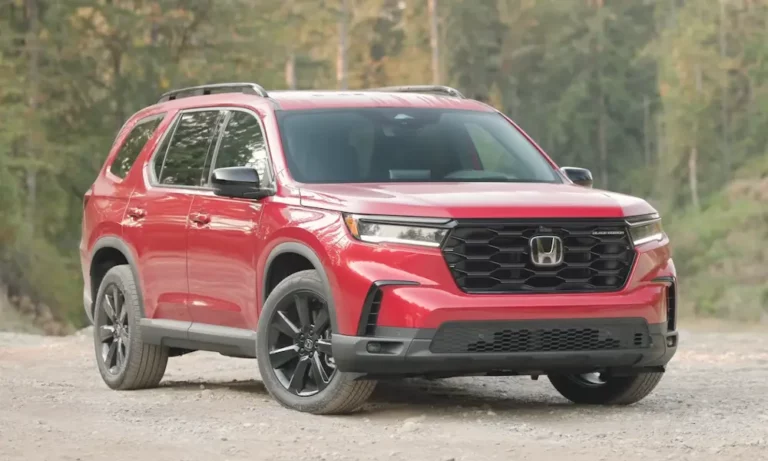
Honda ditched the ZF nine-speed and built its own ten-speed automatic for the 2023 Pilot. It’s smoother than its predecessor, but it hasn’t been completely problem-free.
Low-Speed Jerkiness
Some 2023–2025 Pilot owners report a “jerky” or “hunting” feeling at low speeds, particularly during shifts between first and fourth gear. Dealers often reset the transmission’s adaptive learning logic — and some owners find the behavior smooths out after a few thousand miles. Others worry it signals early wear. It’s not catastrophic, but it’s worth monitoring.
The 2025 ECU Recall
In early 2025, Honda recalled nearly 295,000 vehicles — including 2023–2025 Pilots — due to a software bug in the Fuel Injection ECU. The error could stall the engine unexpectedly under low-load conditions. If the engine stalls, the transmission has nothing to work with. NHTSA is also investigating the Auto Idle Stop function across 2016–2025 models for failing to restart at traffic lights.
These are software problems, not mechanical ones — which is a much easier fix, but a reminder that modern transmissions live and die by their electronics.
Spot Trouble Early: Warning Signs You Shouldn’t Ignore
Catching a Honda Pilot transmission problem early can turn a $300 fluid service into a $6,000 replacement avoided. Watch for these:
- Gear slippage — Engine revs climb, but the car doesn’t accelerate to match
- Hard or jarring shifts — Audible “thunks” when changing gears, especially cold
- Delayed engagement — Lurching pause when shifting from Park to Drive or Reverse
- Burning smell — A sweet or acrid odor means fluid is overheating
- Dark or dirty fluid — Healthy ATF looks bright red; brown or black fluid means internal wear
If any of these symptoms come with a “Transmission System Problem” warning light, get it scanned immediately. The computer has found a fault in the hydraulic pressure or electronic sensors.
The Right Way to Change Honda Pilot Transmission Fluid
This one maintenance habit could prevent most Honda Pilot transmission problems. Factory intervals aren’t enough — especially if you tow or drive in stop-and-go traffic.
Never Use a Power Flush Machine
Honda’s own TSBs warn against high-pressure “power flush” machines. The pressure can knock loose internal debris that then clogs narrow hydraulic passages or damages seals. Avoid any shop that insists on this method for a Honda.
Do the 3x Drain and Fill Instead
A single drain only removes about one-third of the total fluid — the rest stays trapped in the torque converter and valve body. The approved method:
- Drain approximately 3.3–3.5 quarts of old fluid
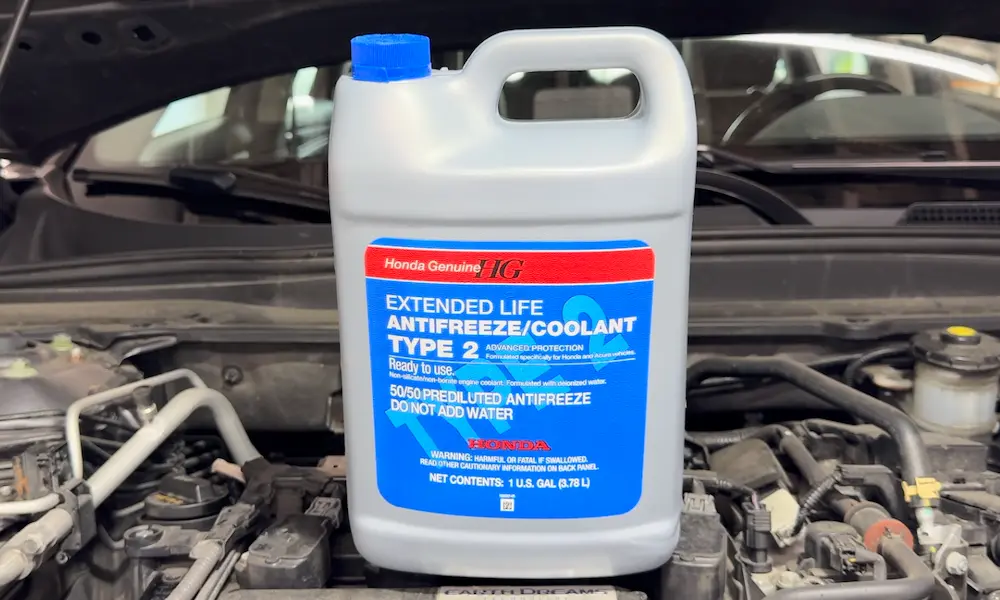
- Refill with genuine Honda ATF-DW1 (older models) or Type 2.0 (newer models)
- Cycle the vehicle through all gears, including Reverse, to mix the fluids
- Repeat the process two more times until the fluid runs bright red and clear
This method replaces roughly 80% of old fluid — enough to restore the frictional properties that prevent judder and slipping. Do this every 30,000 miles, not just when the Maintenance Minder tells you to.
What a Transmission Replacement Actually Costs
If prevention fails, here’s the financial reality:
| Repair Item | Estimated Cost |
|---|---|
| Full transmission replacement | $5,892 – $6,402 |
| Transmission unit alone | ~$4,800 |
| Labor | $1,092 – $1,602 |
| Transmission cooler lines | $354 – $430 |
| Engine oil cooler | $656 – $783 |
For 2020 and newer Pilots, stick with a Honda dealership — the software integration on the ten-speed requires specialized tools and training. For older first and second-gen Pilots, a reputable independent transmission shop can save you real money while still delivering quality work.
Best and Worst Honda Pilot Years for Transmission Reliability
Years to Avoid
- 2003 — Highest rate of complete transmission failure in the model’s history
- 2005 — Critical “pink milkshake” radiator/ATF contamination risk
- 2016 — Rough redesign year; ZF nine-speed harness defects and six-speed judder
- 2017–2018 — Continued nine-speed software bugs before the 2019 refresh
Years Worth Buying
- 2008 — Cumulative first-gen fixes make this the most refined early model
- 2012 — Significantly improved over the early second-gen models
- 2014–2015 — Peak second-generation reliability; high owner satisfaction
- 2021–2022 — Third generation at its most refined; most nine-speed issues resolved
The Honda Pilot’s transmission story is one of genuine engineering ambition bumping up against real-world complexity. Honda’s reliability reputation is something you build — not something that just happens — and that’s just as true for you as it is for the engineers. Stay on top of your fluid changes, grab the free recall fixes, and know which model years carry baggage. Do those three things, and you’ll get far more out of your Pilot than the people who didn’t read this far.