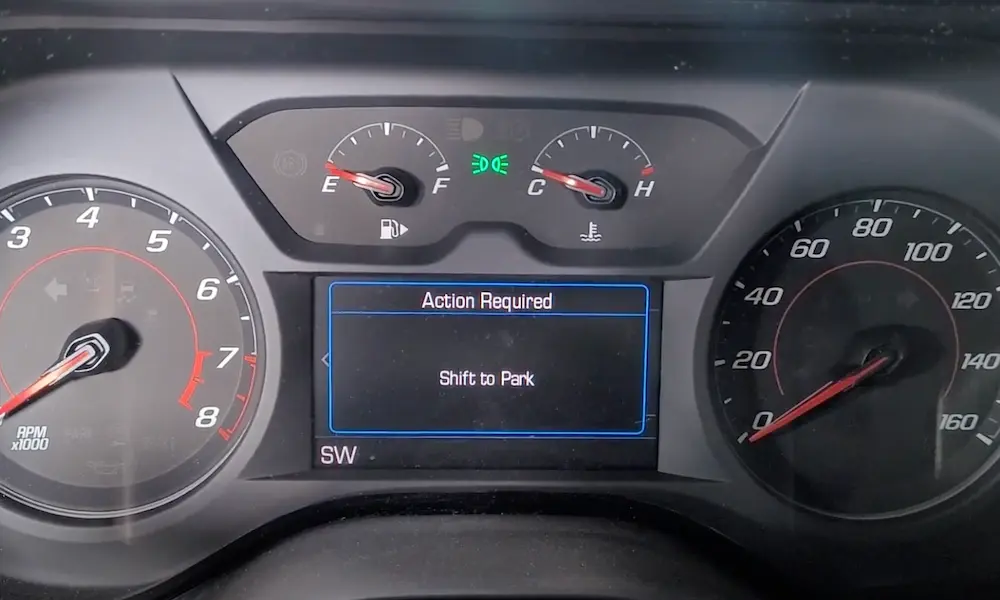
That dreaded “Service ESC” light just popped up on your Silverado’s dashboard, and you’re wondering what the heck is going on. Don’t panic – this comprehensive guide shows you exactly how to reset ESC on Chevy Silverado trucks, plus what to do if the problem keeps coming back.
What Is ESC and Why Does It Need Resetting?
Your Silverado’s Electronic Stability Control (ESC) system – GM calls it StabiliTrak – is like having a co-pilot that prevents skids and rollovers. When sensors detect your truck going sideways or losing grip, the system applies individual brakes and cuts engine power to keep you pointed straight.
The ESC warning light appears when something’s wrong with this safety net. Common triggers include faulty wheel speed sensors, steering angle sensor problems, or simple electrical glitches that a reset can fix.
How ESC Actually Works in Your Silverado
Your truck uses multiple sensors to monitor what’s happening:
- Wheel speed sensors track each tire’s rotation
- Steering angle sensor knows where you’re pointing the wheels
- Yaw rate sensor detects if the truck’s spinning
- Lateral acceleration sensor measures sideways forces
When these inputs don’t match what the computer expects, it throws up warning lights and potentially limits your truck’s performance.
Quick Reset Methods That Work First
Method 1: Steering Wheel Calibration Reset
This fixes the most common ESC issue – a confused steering angle sensor. Here’s how to reset ESC on Chevy Silverado using steering calibration:
- Turn ignition to “On” position (don’t start the engine)
- Turn steering wheel fully left until it stops
- Turn steering wheel fully right until it stops
- Center the steering wheel and hold for 15 seconds
- Start the engine and drive for a few minutes
The steering angle sensor recalibrates itself during this process. You’ll know it worked when the ESC light goes off after driving.
Method 2: Battery Disconnect Reset
Sometimes your Silverado just needs a electronic “reboot” to clear temporary glitches:
- Turn off the engine and remove keys
- Disconnect negative battery terminal with a wrench
- Wait 15 minutes (this drains stored power completely)
- Reconnect battery terminal tightly
- Start truck and let it idle for 2-3 minutes
This hard reset clears the Engine Control Module’s memory and often eliminates phantom ESC warnings caused by electrical hiccups.
Method 3: Accelerator Pedal Position Reset
A miscalibrated throttle position sensor can trigger ESC warnings. Here’s the reset procedure:
- Disconnect battery for 5 minutes
- Reconnect battery and turn ignition to “On”
- Press accelerator pedal fully down and release (do this 3 times)
- Turn ignition off for 10 seconds
- Start engine normally
This recalibrates how the computer reads your throttle input, which affects stability control calculations.
Using an OBD-II Scanner for Permanent Fixes
Basic resets work for temporary issues, but persistent ESC problems need deeper diagnosis. An OBD-II scanner reveals the exact problem through diagnostic trouble codes.
Common ESC-Related Trouble Codes
| Code | Problem | Solution |
|---|---|---|
| C0035-C0040 | Wheel speed sensor fault | Clean connections or replace sensor |
| C0460-C0465 | Steering angle sensor | Professional recalibration needed |
| C0550 | ECU communication error | Check wiring and fuses |
| C0896 | Device voltage low | Test alternator and battery |
Scanner Reset Procedure
- Connect OBD-II scanner to port under dashboard
- Read all codes and write them down
- Address underlying problems first
- Clear codes using scanner menu
- Drive truck to verify fix worked
Don’t just clear codes without fixing the root cause – the warning will return immediately if the problem persists.
Fixing Common ESC Trigger Problems
Wheel Speed Sensor Issues
Dirty or damaged wheel speed sensors cause most ESC warnings. These sensors read wheel rotation and feed data to the stability system.
Symptoms of bad wheel speed sensors:
- ESC warning light
- ABS light also on
- Speedometer acting erratic
- False ABS activation on dry roads
How to check wheel speed sensors:
- Locate sensors at each wheel hub
- Inspect wiring for damage or corrosion
- Clean sensor tips with brake cleaner
- Test resistance with multimeter (should read 800-1,400 ohms)
Replace any sensor showing incorrect resistance readings. Wheel speed sensors typically cost $30-60 each and take 30 minutes to swap.
Steering Angle Sensor Problems
The steering angle sensor tells your Silverado’s computer exactly where the front wheels are pointed. When this sensor gets confused, the ESC system can’t properly predict vehicle behavior.
Common causes of steering angle sensor issues:
- Recent wheel alignment
- Suspension modifications
- Steering wheel removal
- Battery disconnection during repairs
Professional recalibration using GM-specific diagnostic tools often fixes persistent steering angle sensor problems that manual resets can’t resolve.
Brake System Integration Issues
Your Silverado’s ESC system works closely with the ABS and brake system. Problems in one area affect the others.
Post-brake service ESC reset:
- Engine off, press brake pedal 2/3 of the way down
- Hold for 45 seconds then release slowly
- Repeat 3-4 times until pedal feels firm
- Use scanner to clear brake system codes
- Test drive at low speeds
This procedure helps the ESC system relearn proper brake pressure after pad replacement or brake bleeding.
Electrical and Grounding Problems
Intermittent ESC warnings often trace back to poor electrical connections. Your Silverado’s stability system is sensitive to voltage fluctuations.
Critical Electrical Checks
Battery and alternator health:
- Battery should test 12.6V with engine off
- Alternator should produce 13.5-14.4V while running
- Load test battery if it’s over 4 years old
Ground connection inspection:
- Main chassis ground near driver’s side firewall
- Engine block to frame ground strap
- Battery terminal tightness and corrosion
Clean all ground connections with wire brush and apply dielectric grease to prevent future corrosion.
Fuse and Relay Verification
Check these fuses in your Silverado’s fuse boxes:
- ESC/StabiliTrak fuse (usually 10-15 amp)
- ABS pump fuse (typically 30-40 amp)
- ECM fuses (multiple locations)
Replace any blown fuses, but investigate why they failed before driving.
Environmental Factors That Trigger ESC Warnings
Sometimes external conditions cause legitimate ESC activation that seems like a malfunction.
Cold Weather Considerations
Extreme cold affects sensor accuracy and battery performance. ESC warnings in winter often disappear once everything warms up.
Winter troubleshooting tips:
- Let truck warm up 5-10 minutes before driving
- Check tire pressure (cold air reduces PSI)
- Verify battery terminals aren’t corroded from road salt
- Clean wheel speed sensors of ice and debris
Tire and Suspension Related Issues
Mismatched tires or suspension problems confuse the ESC system’s calculations.
Tire-related ESC triggers:
- Significantly different tread depths between tires
- Wrong tire size compared to factory specs
- Severely under-inflated tires
- Aftermarket wheels with different offset
The ESC system expects all four tires to rotate at predictable speeds. When they don’t match, warning lights appear.
Advanced Diagnostic Techniques
Module Communication Testing
Your Silverado’s ESC system talks to multiple other modules. Communication errors between modules trigger warnings even when individual components work fine.
Professional-grade scanners can test data bus communication and identify which module isn’t responding properly.
Sensor Signal Analysis
Advanced diagnostics involve monitoring sensor signals in real-time while driving. This reveals intermittent problems that don’t show up during static testing.
Live data to monitor:
- Wheel speed sensor signals (should be nearly identical)
- Steering angle sensor position vs. actual wheel position
- Lateral acceleration during turns
- Yaw rate sensor output during direction changes
Year-Specific Reset Considerations
Different Silverado generations have slightly different ESC reset procedures.
2007-2013 Silverado ESC Reset
Older Silverados often respond well to the steering wheel calibration method. The NHTSA database shows these years had some ESC-related recalls that may affect reset procedures.
2014-2018 Silverado ESC Reset
Mid-generation Silverados introduced more sophisticated ESC systems that may require scanner-based resets for permanent fixes.
2019+ Silverado ESC Reset
Newer Silverados have integrated ESC systems that communicate with advanced driver assistance features. Manual resets work less often on these trucks.
Preventing Future ESC Problems
Regular Maintenance Schedule
| Maintenance Item | Frequency | Why It Matters |
|---|---|---|
| Wheel alignment check | Every 12,000 miles | Prevents steering sensor drift |
| Brake fluid flush | Every 2 years | Maintains ABS/ESC hydraulic performance |
| Battery load test | Every 3 years | Ensures stable voltage supply |
| Wheel speed sensor cleaning | During tire rotations | Prevents debris buildup |
Driving Habits That Help
Avoid aggressive driving that unnecessarily activates the ESC system. Hard acceleration, abrupt steering inputs, and excessive speeds stress the system components.
Modification Considerations
Aftermarket suspension, wheels, or tires can interfere with ESC operation. Research compatibility before modifying your Silverado.
Professional vs. DIY Reset Decision
When DIY Resets Work
Simple ESC warning resets work for:
- Intermittent warnings with no other symptoms
- Warnings after battery disconnection
- Post-alignment or tire rotation issues
- Cold weather-related false alarms
When Professional Help Is Needed
Seek professional diagnosis for:
- Persistent warnings after multiple reset attempts
- ESC warnings combined with other system alerts
- Post-accident ESC problems
- Warnings accompanied by actual handling problems
Professional shops have access to GM’s Global Diagnostic System (GDS) software that can perform module reprogramming and advanced calibrations beyond consumer-grade tools.
Testing Your ESC Reset Success
Verification Procedures
After resetting ESC on your Chevy Silverado, verify the fix worked:
- Drive normally for 10-15 minutes
- Make several turns at parking lot speeds
- Accelerate moderately from stops
- Check for warning light return
The ESC system needs to relearn normal driving patterns after a reset. Give it time to adapt before declaring success.
Long-Term Monitoring
Keep track of when ESC warnings occur:
- Weather conditions
- Driving situations
- Recent maintenance or repairs
- Mileage since last occurrence
This information helps identify patterns that point to root causes rather than just symptoms.
Knowing how to reset ESC on Chevy Silverado trucks saves you diagnostic fees for simple problems while helping you recognize when professional help is necessary. Start with the basic reset methods, but don’t ignore persistent warnings that could indicate real safety system problems.